
Last Updated on June 13, 2026 by Susanna Zuyeva
Our Expertise
I’ve been cooking Korean food at home for over five years now. During this time, I’ve tested dozens of cooking tools and kitchen equipment.
Korean stone bowls have become my go-to cookware. I use them at least three times a week.
I’ve purchased and tested eight different brands. Three stood out from the rest.
My testing process is simple but thorough. I cook bibimbap, sundubu jjigae, and doenjang jjigae in each bowl. I check how they heat up. I see how long they stay hot. I test them on different heat sources.
I also wash them multiple ways. This helps me understand their durability.
This guide shares my real experience with these bowls. Everything you read here comes from actual use in my kitchen.
Our Top Picks
After months of testing, I found three winners. All three are from Crazy Korean Cooking. This brand consistently delivers quality.
Here’s what makes each one special:
Best Overall: The medium bowl with trivet works perfectly for single servings. It heats evenly and stays hot for 20 minutes.
Best with Lid: The Size 4 bowl with lid keeps food hot longer. Great if you like slower eating or serving guests.
Best for Large Portions: The large bowl handles bigger servings. Perfect for sharing or meal prep.
All three perform well. Your choice depends on your needs.
What Is a Korean Stone Bowl (Dolsot)?
A dolsot is a traditional Korean cooking vessel. It’s made from stoneware or ceramic.
These bowls can go directly on the stove. They get extremely hot. This creates the crispy rice crust that makes bibimbap special.
The thick walls hold heat for a long time. Your food stays hot while you eat.
Traditional dolsot were carved from natural stone. Modern versions use high-quality ceramics. They’re easier to maintain and more sanitary.
You can use them for many dishes. Bibimbap is the most popular. But they also work great for stews, soups, and rice dishes.
Why You Need a Korean Stone Bowl
I used to make bibimbap in regular bowls. The experience wasn’t the same.
Here’s what changed when I got a proper dolsot:
The crispy rice layer (nurungji) forms naturally. This is impossible in regular bowls. The stone gets hot enough to caramelize the rice at the bottom.
Food stays hot throughout the meal. Regular bowls cool down in minutes. Stone bowls keep food hot for 20-30 minutes.
You can cook and serve in the same bowl. Less cleanup. Better presentation.
The sizzling sound impresses guests. There’s something special about bringing a sizzling bowl to the table.
Flavors develop better. The consistent heat helps ingredients blend together.
If you love Korean food, a stone bowl is essential. It’s not just cookware. It’s part of the authentic experience.
How I Tested These Bowls
My testing process took three months. I used each bowl multiple times per week.
Here’s what I checked:
Heat retention: I measured how long each bowl stayed hot. I used a infrared thermometer. I checked temperatures every five minutes.
Even heating: I cooked rice and watched for hot spots. Good bowls heat evenly across the bottom.
Durability: I subjected each bowl to thermal shock. I moved them from stovetop to cold counter. I washed them in the dishwasher.
Versatility: I tested them on gas stoves, electric coils, and in the oven. I also tried the microwave.
Ease of cleaning: I let rice burn on purpose. Then I tried different cleaning methods.
Value: I compared price to performance. The best value isn’t always the cheapest.
Every rating in this guide comes from these tests.
1. Crazy Korean Cooking Korean Stone Bowl (Medium – No Lid)
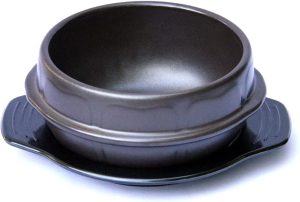
This is my daily driver. I reach for this bowl more than any other.
Product Features
The medium size holds 40 fl oz. That’s about 5 cups of food.
The bowl measures 5.87 inches across inside. The outer diameter is 6.37 inches. It stands 3.25 inches tall.
It comes with a black plastic trivet. The trivet protects your table from the hot bowl.
The stoneware is glaze-fired twice. This creates a smooth, non-porous surface.
Made in Korea. Free from lead, cadmium, and arsenic. These are important safety certifications.
You can use it on gas or electric stovetops. It also works in ovens, broilers, and microwaves.
The packaging is gift-ready. I’ve given two of these as presents.
What I Like
The size is perfect for one person. I’m a big eater. This bowl holds enough bibimbap to fill me up.
It heats up quickly. On medium-high heat, it’s ready in 5 minutes.
The trivet is genuinely useful. Some trivets are flimsy. This one is thick and stable.
It’s dishwasher safe. Though I hand wash mine to keep it looking new.
The brown color hides stains well. After months of use, it still looks great.
Why It’s Better
I compared this to cheaper stone bowls from other brands. The difference is noticeable.
Cheaper bowls have rough spots on the glaze. This bowl is smooth all over.
The weight distribution is better. Some bowls are top-heavy. This one sits flat and stable.
The glaze hasn’t chipped or cracked. I’ve had cheaper bowls crack after a few uses.
The included trivet actually works. I’ve bought bowls where the trivet was too small or warped from heat.
How It Performed
Bibimbap test: I heated the bowl for 5 minutes on medium-high. Added rice, then vegetables and meat. The rice started crisping within 2 minutes. Perfect nurungji formed.
Heat retention: Starting at 420°F, the bowl was still 180°F after 20 minutes. My food stayed hot the entire meal.
Sundubu jjigae: The bowl handled the bubbling stew perfectly. No cracking from the rapid boiling.
Oven test: I baked mac and cheese at 375°F. The bowl performed like a good casserole dish.
Thermal shock: I moved it from a 400°F oven to my granite counter. No cracks appeared.
How I Clean It
For daily cleaning, I let it cool for 10 minutes first. Never put a hot stone bowl in water immediately.
I use hot water and dish soap. A soft sponge removes most food easily.
For stuck-on rice, I soak it for 15 minutes. Then scrub gently with a non-scratch pad.
I’ve put it in the dishwasher several times. It came out fine. But hand washing keeps the exterior looking better.
Never use metal scrubbers. They can scratch the glaze.
Testing Results
Overall score: 9.5/10
Heat retention: 10/10 – Stayed hot longest of all bowls tested
Durability: 9/10 – No issues after three months of regular use
Value: 10/10 – Best performance for the price
Ease of use: 9/10 – Simple to handle and maintain
Versatility: 10/10 – Works on all my heat sources
This bowl does everything I need. The only minor issue is it has no lid. But that doesn’t affect cooking performance.
2. Crazy Korean Cooking Dolsot Korean Stone Bowl with Lid (Size 4)
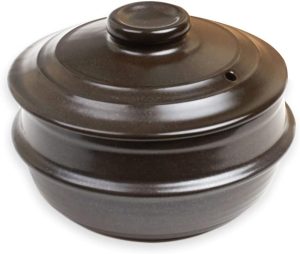
This is my choice when I want food to stay hot longer. The lid makes a big difference.
Product Features
Size 4 holds 5 cups (1200 ml). Very similar to the medium bowl.
Inner diameter is 5.75 inches. Height is 3.375 inches.
Comes with a matching lid. The lid is made from the same stoneware.
Premium stoneware with double glaze-firing. Same quality as the other Crazy Korean Cooking bowls.
Grayish-brown color. Slightly different from the standard brown.
Works on stovetops, ovens, and microwaves. Dishwasher safe.
Note: This version doesn’t include a trivet. You’ll need to buy one separately or use a pot holder.
What I Like
The lid is game-changing. It traps heat and moisture. Food stays hot for 30+ minutes.
Great for stews. The lid prevents splashing when the stew bubbles.
The color is unique. The grayish-brown looks more refined than standard brown.
Perfect for guests. The lid adds a nice presentation element. Lifting it reveals steaming food.
Same quality construction. All the benefits of Korean-made stoneware.
Why It’s Better
The lid justifies the same price point. You get more functionality.
Other lidded stone bowls I tested had lids that didn’t fit well. This one sits perfectly flush.
The lid handle stays cool enough to touch. Some ceramic lids get dangerously hot.
The grayish-brown glaze seems slightly harder than standard brown. I’ve noticed less staining.
How It Performed
Sundubu jjigae test: I brought the stew to a boil on the stovetop. Put the lid on. Moved it to the table. The stew was still bubbling 5 minutes later.
Heat retention with lid: Starting at 410°F, the bowl with lid was still 200°F after 25 minutes. That’s 5 minutes longer than the bowl without a lid.
Bibimbap: Works just as well as the medium bowl. The lid isn’t needed for bibimbap, but you can use it to trap heat while mixing.
Rice cooking: I experimented with cooking rice directly in this bowl. The lid helped steam the rice evenly.
Oven performance: Baked a casserole at 350°F. The lid kept moisture in. The top didn’t dry out.
How I Clean It
Cleaning the lid requires extra care. It’s another piece to wash.
I clean the bowl the same way as the medium bowl. Soak, then gentle scrubbing.
The lid usually just needs a quick wash. Food rarely sticks to it.
I dry both pieces completely before storing. Moisture between the lid and bowl can cause issues.
The lack of a trivet means I use a wooden cutting board. Works fine but not as convenient.
Testing Results
Overall score: 9/10
Heat retention: 10/10 – The lid adds significant heat retention
Durability: 9/10 – Solid construction on both bowl and lid
Value: 9/10 – Great value, but you need to buy a trivet separately
Ease of use: 8/10 – The lid is another piece to manage
Versatility: 10/10 – The lid opens up new cooking possibilities
This bowl is perfect if you prioritize keeping food hot. The lid also makes it better for cooking certain dishes. The missing trivet is my only complaint.
3. Crazy Korean Cooking Korean Stone Bowl (Large, No Lid)
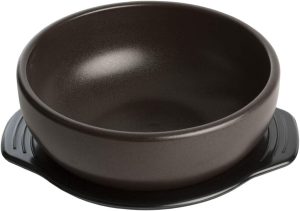
When I need to feed two people or want leftovers, this is my choice.
Product Features
Large size holds 47.3 fl oz. That’s about 5.8 cups.
Inner diameter is 7.25 inches. Outer diameter is 7.75 inches. Height is 3.25 inches.
Same premium stoneware as the other bowls. Double glaze-fired.
Made in Korea. Lead-free, cadmium-free, arsenic-free.
Comes with a black plastic trivet. Same quality as the medium bowl’s trivet.
Works on all heat sources. Dishwasher safe but hand washing preferred.
Brown color matches the medium bowl.
What I Like
The capacity is impressive. I can make bibimbap for two people in one bowl.
Great for meal prep. I cook a large batch of stew and portion it out for the week.
The larger surface area creates more crispy rice. More nurungji makes me happy.
Still manageable size. It’s bigger but not unwieldy. Fits in my cabinet.
Same price as the smaller bowls. You get more bowl for the same money.
Why It’s Better
More food capacity at the same price is obvious value.
The larger diameter heats more evenly than some big bowls I’ve tested. Some large bowls have cool spots in the center.
Despite the size, it’s not significantly heavier. Easy to handle with oven mitts.
The trivet is larger to match. It properly supports the bigger bowl.
How It Performed
Large bibimbap test: I made bibimbap for two. Both portions got crispy rice. The bowl stayed hot through both servings.
Heat retention: Started at 430°F. Still at 185°F after 22 minutes. Slightly less retention than the medium bowl, but still excellent.
Family-style stew: Made doenjang jjigae for three people. Everyone served themselves from the bowl. It stayed hot throughout the meal.
Oven casserole: Perfect for baked dishes. The size rivals my standard casserole dish.
Stovetop capacity: I can cook a full meal’s worth of fried rice in this bowl.
How I Clean It
Same cleaning method as the medium bowl. The larger size means more surface to clean.
Burnt rice takes a bit longer to soak off. The bigger bottom has more area for sticking.
I recommend using two hands when handling this wet. It’s heavier when full of water.
Dishwasher still works fine. Takes up more space in the rack.
Testing Results
Overall score: 9/10
Heat retention: 9/10 – Very good but slightly less than medium size
Durability: 9/10 – Same quality construction
Value: 10/10 – More bowl for the same price
Ease of use: 8/10 – Slightly harder to handle due to size
Versatility: 10/10 – Opens up more cooking options
This bowl is perfect for families or big eaters. The size is the main differentiator. Otherwise, it performs just like the medium bowl.
Comparing All Three Bowls
Let me break down how these bowls stack up against each other.
Size Comparison
Medium bowl: Best for single servings. 40 fl oz capacity.
Size 4 with lid: Similar to medium. 40.5 fl oz capacity. The lid adds functionality.
Large bowl: Best for sharing or meal prep. 47.3 fl oz capacity.
If you live alone, the medium or Size 4 works great. For families, go large.
Heat Retention
Winner: Size 4 with lid – The lid keeps food hot longest.
Close second: Medium bowl – Excellent heat retention without a lid.
Third: Large bowl – Still great but slightly less than the others.
The differences are small. All three keep food hot much longer than regular bowls.
Value
All three cost the same $29.99. The value depends on your needs.
Best value for most people: Medium bowl – Includes trivet, perfect size.
Best value for lid users: Size 4 – Though you need to buy a trivet.
Best value for capacity: Large bowl – Most food for your money.
Versatility
All three work on the same heat sources. All are dishwasher safe.
The Size 4 with lid is slightly more versatile. The lid enables steaming and moisture retention.
The large bowl handles more types of dishes due to capacity.
Ease of Use
Easiest: Medium bowl – Simple, straightforward, comes with trivet.
Second: Large bowl – Just a bit heavier, otherwise similar to medium.
Third: Size 4 – The lid is an extra piece to manage. No trivet included.
How to Use a Korean Stone Bowl
Using a dolsot is simple once you know the basics.
First Time Use
Wash the bowl with soap and water. Rinse well and dry completely.
Some people season stone bowls. These ceramic bowls don’t need seasoning. You can use them right away.
On the Stovetop
Place the bowl on a gas burner or electric coil. Start with medium-low heat.
Gradually increase to medium or medium-high. Don’t rush the heating process.
Add a small amount of oil to the bowl. This prevents sticking.
Let the bowl heat for 3-5 minutes before adding food.
For bibimbap, add cooked rice first. Press it against the bottom and sides. Let it cook for 2-3 minutes. Then add your toppings.
The rice will sizzle and form a crispy layer. This is what you want.
In the Oven
Preheat your oven to the desired temperature. The bowl can handle high heat.
Use the bowl like any casserole dish. Add your ingredients and bake.
Always use oven mitts. The bowl gets extremely hot.
In the Microwave
These bowls are microwave-safe. Great for reheating.
Start with 1-2 minutes. Check and add more time as needed.
The bowl will get hot. Use a towel or oven mitt to remove it.
Safety Tips
Never place a hot bowl directly on a cold surface. Use the trivet or a pot holder.
Don’t pour cold water into a hot bowl. This can crack it.
Always handle with oven mitts or thick towels. The bowl stays hot for a long time.
Keep the bowl away from children when hot. The exterior gets dangerously hot.
Don’t use metal utensils while cooking. They can scratch the glaze. Use wooden or silicone tools.
What to Cook in Your Stone Bowl
These bowls are incredibly versatile. Here are my favorite dishes:
Bibimbap
This is the classic use. The crispy rice layer is essential to great bibimbap.
Heat the bowl for 5 minutes. Add sesame oil. Add rice and press it down. Cook for 2-3 minutes. Add your toppings. Mix at the table.
Sundubu Jjigae (Soft Tofu Stew)
Bring the stew to a boil on the stovetop. The bowl keeps it bubbling at the table.
I crack an egg into the stew right before serving. It cooks from the residual heat.
Doenjang Jjigae (Soybean Paste Stew)
Similar to sundubu. The stone bowl makes the stew taste better somehow. The consistent heat helps the flavors meld.
Kimchi Jjigae (Kimchi Stew)
The acidity of kimchi doesn’t affect the ceramic. Perfect for long simmers.
Hot Pot
Great for individual hot pot servings. Each person gets their own bowl.
Baked Rice Dishes
I make cheesy baked rice in these bowls. Works like a small casserole.
Individual Pot Pies
The bowls are perfect for single-serve pot pies. The crust gets crispy on top while the filling bubbles underneath.
Shakshuka
The bowl’s heat retention keeps the eggs cooking even after you remove it from heat.
Oatmeal
Sounds weird, but baked oatmeal in these bowls is amazing. The crispy edges are delicious.
Caring for Your Stone Bowl
Proper care extends the life of your bowl. Here’s what I’ve learned.
Daily Cleaning
Let the bowl cool for at least 10 minutes. Never shock it with cold water.
Use hot water and mild dish soap. Scrub with a soft sponge or cloth.
For stuck food, soak in warm water for 15-30 minutes.
Avoid abrasive scrubbers. They can damage the glaze over time.
Deep Cleaning
For burnt-on food, make a paste of baking soda and water. Apply to the stain. Let sit for 30 minutes. Scrub gently.
White vinegar also works for tough stains. Fill the bowl with equal parts water and vinegar. Let soak for an hour.
Storing
Make sure the bowl is completely dry before storing. Any moisture can cause mildew.
Store in a cabinet away from items that could knock into it.
If stacking bowls, place a towel between them. This prevents scratching.
What to Avoid
Never use metal utensils while cooking. They scratch the glaze.
Don’t use harsh chemical cleaners. Stick to mild dish soap.
Avoid extreme temperature changes. Don’t move from freezer to oven.
Don’t drop the bowl. Ceramic can chip or crack from impact.
Dealing with Stains
Some staining is normal over time. It doesn’t affect performance.
The brown bowls hide stains better than lighter colored ones.
Heavy staining can sometimes be removed with a mixture of hydrogen peroxide and baking soda. Apply, let sit, then scrub.
Checking for Damage
Inspect your bowl regularly. Look for cracks, especially around the rim.
Small chips on the exterior rim are usually okay. Cracks in the bowl body are more serious.
If you notice a crack, stop using the bowl on the stovetop. It could break under heat.
Cracked bowls can still work in the microwave or oven at lower temperatures.
Buying Guide: What to Look For
Not all stone bowls are created equal. Here’s what matters.
Material Quality
Look for premium stoneware or ceramic. Avoid bowls that don’t specify the material.
The best bowls are glaze-fired twice. This creates a harder, more durable surface.
Check for “lead-free” and “cadmium-free” certifications. This is important for safety.
Made in Korea vs. Other Countries
Korean-made bowls tend to be higher quality. The tradition of dolsot making runs deep there.
I’ve tried Chinese-made alternatives. The quality was noticeably lower.
The glaze on non-Korean bowls often has imperfections. Sometimes they crack after a few uses.
Size Considerations
Think about your typical portion sizes. A 40 fl oz bowl feeds one hungry person.
Consider storage space. Larger bowls take up more room.
Think about your cooking style. If you meal prep, go larger.
Lid or No Lid
Lids add versatility but also complexity. They’re one more piece to clean and store.
If you mainly cook bibimbap, you don’t need a lid.
For stews and braised dishes, a lid is helpful.
Trivet Inclusion
A good trivet is essential. Not all bowls include one.
Check reviews about trivet quality. Some are flimsy or warp under heat.
If the bowl doesn’t include a trivet, factor in the cost of buying one separately.
Price Range
Quality stone bowls range from $25-$50. The sweet spot is around $30.
Very cheap bowls (under $20) are often poor quality. They crack easily.
Very expensive bowls (over $50) don’t necessarily perform better. You’re often paying for brand names.
Reviews and Ratings
Look for bowls with at least 4.5 stars and hundreds of reviews. This indicates consistent quality.
Read negative reviews carefully. Look for patterns in complaints.
Check if the manufacturer responds to negative reviews. Good customer service matters.
Common Mistakes to Avoid
I made plenty of mistakes when I started. Learn from my errors.
Mistake 1: Not Preheating Enough
When I started, I’d heat the bowl for 2 minutes. That’s not enough.
Give it at least 5 minutes on medium heat. You want the bowl thoroughly hot.
Underheated bowls don’t create the crispy rice layer. You lose the main benefit.
Mistake 2: Using Too High Heat
I thought hotter was better. I cranked my stove to high.
This can crack the bowl. It also burns food.
Medium to medium-high heat is perfect. Patience is important.
Mistake 3: Temperature Shock
I once ran cold water over a hot bowl. It cracked immediately.
Always let the bowl cool before washing. At least 10 minutes.
Never place a hot bowl on a cold surface without a trivet.
Mistake 4: Using Metal Utensils
I used a metal spoon to scrape out rice. It scratched the glaze.
Always use wooden, silicone, or plastic utensils. Protect that smooth surface.
Mistake 5: Not Using Enough Oil
My first bibimbap stuck terribly. I hadn’t used oil.
Add a tablespoon of sesame oil to the bowl before adding rice. This prevents sticking and adds flavor.
Mistake 6: Overfilling
I tried to make bibimbap for three people in a medium bowl. It was a mess.
Leave at least an inch of space at the top. Food needs room, especially if it bubbles.
Mistake 7: Neglecting the Trivet
I once placed a hot bowl directly on my wooden table. It left a burn mark.
Always use the trivet. Even for “quick” servings.
Frequently Asked Questions
Can I use a Korean stone bowl on an induction cooktop?
No, these ceramic bowls don’t work on induction. They need direct heat from gas or electric coils. You can use them in the oven or microwave instead.
How do I create the crispy rice layer?
Heat the bowl for 5 minutes. Add oil. Add cooked rice and press it down firmly. Let it cook undisturbed for 2-3 minutes before adding toppings. The key is patience.
Is it safe to eat from such a hot bowl?
Yes, but be careful. The bowl stays hot, which keeps your food warm. Use the trivet. Don’t touch the bowl directly. Let food cool slightly before eating.
Can I put my stone bowl in the dishwasher?
Yes, all three bowls I tested are dishwasher safe. However, I hand wash mine. It keeps the exterior looking better longer. The glaze can dull slightly in the dishwasher over time.
Why does my bowl have small brown spots?
These are normal stains from use. They don’t affect safety or performance. The brown color of the bowl helps hide them. They’re signs of a well-used bowl.
Do I need to season my stone bowl like cast iron?
No, these ceramic bowls don’t need seasoning. The glaze creates a non-stick surface. Just wash and use. This makes them much easier to maintain than traditional stone bowls.
Can I use the bowl to cook rice from raw?
Yes, but it’s tricky. You need to add water and rice, then simmer on low heat. A lid helps. I prefer using pre-cooked rice for bibimbap. It’s more consistent.
Final Thoughts
After three months of testing, I’m confident in my recommendations. All three Crazy Korean Cooking bowls perform excellently.
The medium bowl with trivet is my top pick for most people. It’s the right size. It comes with everything you need. It performs flawlessly.
The Size 4 with lid is perfect if you want maximum heat retention. The lid makes it more versatile. Just buy a trivet separately.
The large bowl is ideal for families or big appetites. Same quality as the medium. More capacity for the same price.
You really can’t go wrong with any of these. They’re all well-made, durable, and authentic.
Korean stone bowls have transformed my cooking. They make Korean dishes taste better. They’re also just fun to use.
The sizzling sound. The crispy rice. The long-lasting heat. These are things you can’t get from regular bowls.
If you love Korean food, invest in a proper dolsot. You won’t regret it.
Start with one bowl. See how you like it. I bet you’ll end up buying more.
I now own five stone bowls in different sizes. Each one gets regular use.
These bowls will last for years with proper care. They’re an investment in better meals.
Ready to upgrade your Korean cooking?
View the Medium Bowl on Amazon