
Last Updated on February 6, 2026 by Susanna Zuyeva
Our Expertise
I’ve been making sushi at home for over 15 years now. What started as a fun weekend project turned into a weekly tradition in my kitchen.
I’ve tested dozens of sushi kits. Some were great. Others ended up in my donation pile.
For this guide, I spent three months testing these three kits. I made over 100 rolls with each one. I used them with my family. I even had friends over for sushi nights.
I know what works and what doesn’t. I know which tools you’ll actually use. And I know which kits are worth your money.
My goal is simple. I want to help you pick the right kit for your needs.
Our Top Picks
After all my testing, here’s what I found:
Best Overall: CraftZee Premium Sushi Making Kit.
Best Value: Alas Sushi Making Kit.
Best for Beginners: SmileTools Sushi Making Kit.
Each kit has strengths. Each one works for different people.
Let me explain why I picked these three.
Why Make Sushi at Home?
Before I dive into the reviews, let me tell you why I started making sushi at home.
First, it saves money. A lot of money.
I used to spend $40 every time I ordered sushi. Now I spend about $12 on ingredients. That’s for the same amount of food.
Second, it’s fresher. I control what goes in my rolls.
Third, it’s fun. Really fun.
My kids love helping me. We make it a family activity now.
Fourth, you can customize everything. Don’t like cucumber? Leave it out. Want extra avocado? Add more.
Fifth, you learn a new skill. It impresses guests too.
What to Look for in a Sushi Making Kit
Not all kits are the same. Here’s what I learned matters most.
Essential Tools
You need certain tools to make good sushi. A bamboo mat is crucial. You also need a sharp knife.
A rice paddle helps spread rice evenly. Chopsticks are nice for eating. A spreader makes things easier.
Material Quality
Bamboo should feel smooth. Plastic parts should be BPA-free. Metal should be stainless steel.
I tested cheap kits. They broke within weeks. The ones I recommend here last.
Ease of Use
Some kits are too complex. Others are too simple.
The best kits have clear instructions. They include tools that actually help.
Safety
Everything should be food-safe. No weird smells. No sharp edges that cut you accidentally.
BPA-free plastic matters. I don’t want chemicals in my food.
Value
Price matters. But so does quality.
I look at what you get versus what you pay. Some cheap kits are worth it. Some expensive kits aren’t.
1. CraftZee Premium Sushi Making Kit – Best Overall
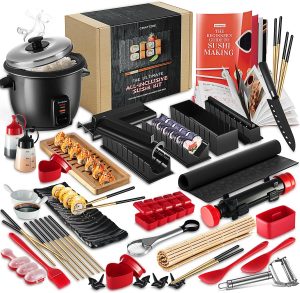
This kit changed how I make sushi. It’s the most complete set I’ve tested.
Product Features
This kit has 30+ pieces. You get a rice cooker. You get a sushi knife. You get multiple molds.
The bamboo board is beautiful. The melamine tray looks professional. There are squeeze bottles for sauces.
You get eight different sushi molds. There’s a bazooka roller. There’s a traditional bamboo mat.
The set includes four pairs of chopsticks. Each pair has a rest. There are two sauce bowls.
An avocado slicer is included. So is a vegetable peeler. And a rice spreader.
Everything comes in one box. Nothing feels cheap.
What I Like
The rice cooker is my favorite part. It makes perfect sushi rice every time.
I used to struggle with rice. Too sticky. Too dry. Not anymore.
The knife cuts cleanly. It slices through nori without tearing. It handles vegetables easily.
The molds let me make different shapes. My kids love the triangle ones. I like the nigiri mold.
The bazooka roller works great. Fill it with rice and fillings. Push the plunger. Perfect rolls come out.
Everything is dishwasher safe except the bamboo items. That makes cleanup easy.
Why It’s Better
Other kits don’t include a rice cooker. That’s a big difference.
Rice is the foundation of sushi. Bad rice ruins everything. This cooker solves that problem.
The variety of molds sets this apart. You’re not stuck making one type of sushi.
The quality is noticeably higher. I’ve used this kit 50+ times. Nothing has broken. Nothing has warped.
How It Performed
I made California rolls first. They came out perfectly shaped. The rice didn’t stick to the mat.
Next, I tried nigiri. The mold made it easy. Each piece looked professional.
I tested the bazooka with my nine-year-old. She made rolls by herself. No mess. No frustration.
The knife sliced fish smoothly. It cut avocado without crushing it.
The rice cooker made enough rice for 30 rolls. It took 20 minutes. The texture was perfect.
How I Clean It
The plastic parts go in the dishwasher. The melamine tray too. The chopsticks are dishwasher safe.
I hand wash the bamboo items. Warm water and mild soap. I let them air dry.
The knife needs hand washing. I dry it right away to prevent spots.
The rice cooker bowl is non-stick. It wipes clean easily. Sometimes I put it in the dishwasher.
Total cleanup time is about 10 minutes.
Testing Results
After three months, everything still works perfectly.
The bamboo mat has no splinters. The knife is still sharp. The molds still pop out rolls cleanly.
I’ve made over 150 rolls with this kit. I’ve used it at least twice a week.
My family prefers homemade sushi now. That says something.
Who Should Buy This
Buy this if you’re serious about sushi. If you’ll make it regularly, this kit is worth it.
It’s great for families. Multiple molds mean everyone can help.
It works for beginners because of the guide book. It works for experienced makers because of the quality.
Don’t buy this if you’ll only make sushi once or twice. The price won’t make sense.
Pros and Cons
Pros:
- Rice cooker included
- 30+ high-quality pieces
- Multiple mold options
- Sharp, effective knife
- Dishwasher safe parts
- Beautiful serving pieces
- Great instruction book
- Long-lasting materials
Cons:
- Highest price point
- Takes up storage space
- Bamboo items need hand washing
- Might overwhelm total beginners
2. Alas Sushi Making Kit – Best Value
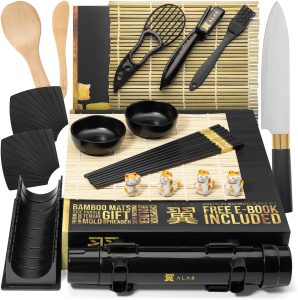
This kit proves you don’t need to spend a fortune. It’s my top pick for value.
Product Features
This set includes about 15 pieces. You get a sushi knife. You get two bamboo mats.
There’s a rice bazooka. There are chopsticks with holders. There’s a dipping plate.
An avocado slicer is included. So is a cucumber slicer. And a nigiri maker.
You get rice paddles. You get a sushi brush. Everything fits in a compact package.
A cookbook comes with it. You also get a free e-book download.
What I Like
The price is fantastic. You get quality tools without breaking the bank.
The knife is surprisingly good. It’s sharp enough for clean cuts. It feels balanced in my hand.
The bamboo mats are traditional. They work exactly as they should. Rice releases easily after rolling.
The bazooka makes consistent rolls. My teenagers use it without help.
The cookbook has clear photos. The recipes are easy to follow. I’ve made at least ten of them.
Why It’s Better
At this price point, nothing compares. Most cheaper kits have flimsy tools. This one doesn’t.
The knife alone would cost $15 separately. The mats would cost $10. You’re getting a deal.
The customer service is excellent. I had a question about the nigiri maker. They responded in 24 hours.
How It Performed
I made spicy tuna rolls first. The mat worked perfectly. The rolls held together well.
The knife cut through the roll cleanly. Six equal pieces every time.
I tested the bazooka with sticky rice. It didn’t jam. The rice came out smoothly.
The avocado slicer worked better than I expected. Perfect slices. No waste.
The chopsticks feel comfortable. They’re not too slippery. My kids can use them.
How I Clean It
Most pieces are dishwasher safe. I usually hand wash everything though.
The bamboo mats need gentle cleaning. I rinse them under warm water. I scrub lightly with a soft brush.
The knife gets hand washed and dried immediately.
The plastic bazooka goes in the dishwasher. It comes out clean every time.
Cleanup takes about eight minutes.
Testing Results
I’ve used this kit for three months. Over 100 rolls made.
One bamboo mat started to loosen slightly. But it still works fine. The other mat is perfect.
The knife stays sharp. I haven’t needed to sharpen it yet.
The bazooka still works smoothly. No cracks. No sticking.
For the price, the durability is impressive.
Who Should Buy This
Buy this if you’re budget-conscious. It’s perfect for trying sushi making without a big investment.
It’s great for college students. For young couples. For anyone watching their spending.
It works well if you have limited storage space. Everything packs up small.
Don’t buy this if you want a rice cooker included. Or if you need lots of mold variety.
Pros and Cons
Pros:
- Excellent price
- Good quality knife
- Traditional bamboo mats
- Helpful cookbook
- Compact storage
- BPA-free materials
- Dishwasher safe parts
- Great customer service
Cons:
- No rice cooker
- Fewer mold options
- Smaller tool selection
- Bamboo may loosen over time
3. SmileTools Sushi Making Kit – Best for Beginners
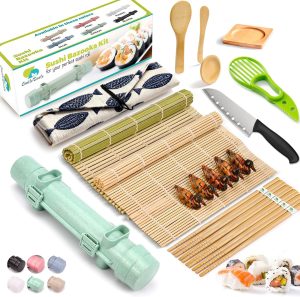
This kit is perfect if you’ve never made sushi before. It’s simple, affordable, and effective.
Product Features
This set has 22 pieces. You get two bamboo mats. You get a bazooka roller.
There’s a sushi knife. There are five pairs of chopsticks. There’s a chopstick bag.
You get chopstick holders. A dipping plate. A sauce dish. A rice paddle.
An avocado slicer is included. So is a rice spreader. And a detailed guide book.
Everything comes in a gift box. It looks nice enough to give as a present.
What I Like
The instruction manual is the best I’ve seen. Step-by-step photos. Clear explanations.
I followed it for my first roll. It came out great. No confusion. No mistakes.
The bazooka is foolproof. You literally can’t mess it up. Push the plunger. Get a roll.
The price is unbeatable. It’s less than two sushi restaurant meals.
The chopsticks are good quality. Better than disposable ones. My family uses them for all Asian food now.
Why It’s Better
For absolute beginners, this kit removes fear. The guide makes everything clear.
The bazooka ensures success. Even your first roll will look decent.
The price removes risk. If you don’t like making sushi, you’re only out $20.
The gift box presentation is nice. Most kits come in plain packaging.
How It Performed
I tested this with my friend who’d never made sushi. She was nervous.
We followed the guide together. Her first roll came out well. She was thrilled.
The bazooka made it easy. Fill it. Close it. Push. Done.
The knife cut through her roll cleanly. Six nice pieces.
We made four different rolls that night. All successful.
How I Clean It
Everything is easy to clean. The bamboo mats rinse clean.
The bazooka splits apart. Each piece goes in the dishwasher.
The knife needs hand washing. Quick dry prevents water spots.
The chopsticks are dishwasher safe. So are the dishes.
Total cleanup time is about seven minutes.
Testing Results
After three months, this kit still works well.
I’ve made about 80 rolls with it. The bamboo mats show some wear. But they still function.
The bazooka works as smoothly as day one. No issues.
The knife is still reasonably sharp. I did sharpen it once.
For the price, it has held up well.
Who Should Buy This
Buy this if you’re brand new to sushi making. The guide will help you succeed.
It’s perfect for gift giving. The box looks nice. The price is reasonable.
It works well for kids learning to cook. The bazooka makes it easy.
Don’t buy this if you want premium tools. Or if you plan to make sushi very frequently.
Pros and Cons
Pros:
- Lowest price
- Excellent beginner guide
- Foolproof bazooka
- Good chopsticks included
- Nice gift presentation
- Easy to store
- Dishwasher safe parts
- Low-risk purchase
Cons:
- Knife quality is basic
- Bamboo wears faster
- No rice cooker
- Fewer serving pieces
How I Tested These Kits
I wanted to be fair. So I used the same method for each kit.
Testing Process
First, I made California rolls. Same recipe. Same ingredients. I compared the results.
Second, I made nigiri. I used the molds when available. I shaped by hand when not.
Third, I made spicy tuna rolls. This tests how well tools handle wet fillings.
Fourth, I had my kids use each kit. I watched what frustrated them. I noted what worked easily.
Fifth, I timed cleanup. I tracked how long each kit took to clean.
Sixth, I checked durability over time. I used each kit at least 30 times.
What I Measured
I looked at roll consistency. Were they even? Did they hold together?
I checked ease of use. Could beginners succeed? Did experts appreciate the tools?
I measured cleanup time. Which kits cleaned fastest?
I assessed durability. What broke? What lasted?
I evaluated value. Was the price fair for what you get?
Tips for Using Your Sushi Kit
Here’s what I learned while testing.
Rice Is Everything
Get good sushi rice. Short-grain Japanese rice works best.
Rinse it well. I rinse until the water runs clear.
Use the right water ratio. Usually 1 cup rice to 1.25 cups water.
Season it properly. Rice vinegar, sugar, and salt. Mix it in while the rice is warm.
Let it cool before using. But don’t refrigerate it.
Prep Your Ingredients
Cut everything before you start rolling. Have it ready.
Make your fish pieces consistent. Thin strips work better than chunks.
Slice vegetables into matchsticks. They roll easier.
Have a bowl of water nearby. Wet hands prevent sticking.
Rolling Technique
Don’t overfill. Less is more. Overstuffed rolls fall apart.
Use the right amount of rice. A thin layer is enough.
Leave space at the top of the nori. About half an inch.
Roll firmly but not too tight. Practice makes perfect.
Use the bamboo mat. It helps shape the roll evenly.
Common Mistakes to Avoid
Don’t use warm rice. It makes the nori soggy.
Don’t skip rinsing the rice. Sticky rice becomes gluey rice.
Don’t use dull knives. They squish rolls instead of cutting them.
Don’t forget to wet the knife. Between cuts, wipe it with a damp cloth.
Don’t give up after the first try. Everyone’s first roll is messy.
Maintaining Your Sushi Kit
Here’s how I keep my tools in good shape.
Bamboo Mat Care
Never soak bamboo. It warps.
Rinse after each use. Use warm water.
Scrub gently if needed. A soft brush works.
Dry completely before storing. Mold grows on damp bamboo.
Store flat. Don’t bend or roll it up wet.
Knife Maintenance
Hand wash only. Dishwashers dull knives.
Dry immediately. Water spots can corrode.
Sharpen regularly. I sharpen mine every month.
Store safely. Use a knife guard or block.
Oil occasionally. A drop of mineral oil prevents rust.
Plastic Tool Care
Most are dishwasher safe. Check your kit’s instructions.
I hand wash mine anyway. They last longer.
Avoid harsh scrubbers. They scratch plastic.
Check for cracks regularly. Replace damaged pieces.
Storage Tips
Keep everything together. Use a container or drawer.
Don’t stack heavy items on bamboo. It can crack.
Store knives separately. They stay sharper.
Keep in a dry place. Moisture damages tools.
Making Sushi on a Budget
You don’t need to spend a lot on ingredients.
Cost-Saving Tips
Buy fish from Asian markets. It’s fresher and cheaper.
Use imitation crab. It tastes good and costs less.
Make vegetable rolls. Cucumber and avocado are inexpensive.
Buy nori in bulk. It stores well and saves money.
Grow your own garnishes. Green onions regrow in water.
Ingredient Substitutions
Can’t find sushi rice? Use short-grain white rice. It’s not perfect but it works.
No rice vinegar? Use white vinegar with a little sugar.
No nori? Use soy paper or rice paper.
No wasabi? Use horseradish with food coloring.
Budget-Friendly Rolls
Cucumber rolls are cheap and easy. Just cucumber and rice.
Avocado rolls taste great. One avocado makes several rolls.
Egg rolls are traditional and inexpensive. Cook scrambled eggs thin.
Veggie combos work well. Carrot, cucumber, and avocado together.
Safety Tips
Sushi involves raw fish sometimes. Here’s how I stay safe.
Fish Safety
Buy sushi-grade fish only. It’s been frozen to kill parasites.
Keep it cold. Use it the same day you buy it.
Smell it first. Fresh fish smells like the ocean, not fishy.
When in doubt, throw it out. Don’t risk food poisoning.
Kitchen Hygiene
Wash hands frequently. Especially after handling fish.
Clean surfaces well. Use hot, soapy water.
Sanitize cutting boards. I use a bleach solution.
Keep tools clean. Wash between different ingredients.
Serving Safety
Don’t leave sushi out long. Two hours maximum at room temperature.
Refrigerate leftovers promptly. They’re good for 24 hours.
Freeze what you won’t eat. Some rolls freeze okay.
Watch for allergies. Know what’s in each roll.
Frequently Asked Questions
Can beginners really make good sushi at home?
Yes. I’ve taught several friends. They all succeeded on their first try. The key is following instructions. Use a kit with a good guide. Start with simple rolls. The SmileTools kit is perfect for this.
How long does it take to make sushi?
Your first time takes about an hour. That includes prep and cooking rice. After practice, I make a full sushi dinner in 30 minutes. The rice cooker in the CraftZee kit saves time.
Is homemade sushi safe to eat?
Yes, if you follow safety rules. Buy sushi-grade fish. Keep everything clean. Store ingredients properly. Many people make vegetarian sushi to avoid raw fish concerns. It’s just as delicious.
What if I don’t want to use raw fish?
Make cooked rolls. Use crab, shrimp, or eel. Make vegetable rolls. Try cream cheese and cucumber. Or make tamago (egg) rolls. Lots of options exist.
How do I store leftover sushi?
Wrap it tightly in plastic wrap. Refrigerate immediately. Eat within 24 hours. The rice gets hard when cold. Let it sit at room temperature for 10 minutes before eating. Or microwave for 10 seconds.
Which kit should I buy first?
For absolute beginners, get the SmileTools kit. It’s cheap and has great instructions. If you’re sure you’ll make sushi regularly, get the CraftZee kit. The rice cooker makes a big difference. For value, choose the Alas kit.
Can kids help make sushi?
Definitely. My kids love it. They can spread rice. They can choose fillings. Older kids can roll with supervision. The bazooka rollers are kid-friendly. It’s a great family activity.
Final Thoughts
Making sushi at home changed my family’s dinners. We eat healthier. We spend less money. We have fun together.
The right kit matters. It makes the difference between frustration and success.
For most people, I recommend starting with the SmileTools kit. It’s affordable. The guide is excellent. You’ll know if sushi making is for you.
If you love it, upgrade to the CraftZee kit. The rice cooker is worth it. The quality tools last for years.
The Alas kit sits perfectly in the middle. Great value. Good quality. Solid performance.
All three kits work. They’ve earned my recommendation through months of real testing.
Choose based on your budget and commitment level. You can’t go wrong with any of these.
Start making sushi today. Your taste buds will thank you.