
Last Updated on February 22, 2026 by Erin Jahan Eva
Why a Kitchen Scale Matters in Baking
Baking is a science. Every gram counts.
When you bake, small errors in measuring add up fast. Too much flour can make your cake dry. Too little sugar can ruin your cookies. A weight scale removes all the guesswork.
Many beginner bakers rely on measuring cups. But cups are not always accurate. A cup of flour can weigh anywhere from 120 grams to 165 grams depending on how you scoop it. That is a 45-gram difference. In baking, that is a big deal.
A kitchen scale gives you the same result every single time. Professional bakers always use a weighing machine or digital weighing scale. There is a reason for that. Precision equals consistency. Consistency equals perfect bakes.
If you want to improve your baking, a kitchen scale is the best tool you can buy. It is simple to use, affordable, and it will change the way you bake forever.
Types of Kitchen Scales to Know
Not all kitchen scales are the same. Here are the main types you will find:
Digital Kitchen Scales (Electronic Scales) These are the most popular today. They show a clear number on a screen. They are easy to read and very accurate. Models like the SF 400 and KD 8000 are well-known digital weighing scales used by home bakers and professionals alike.
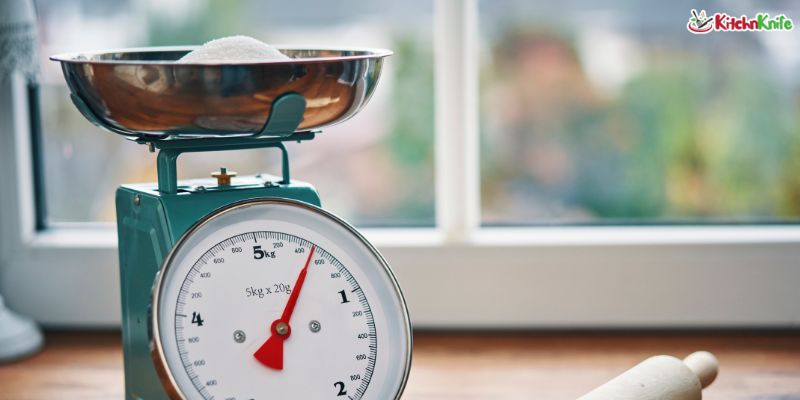
Mechanical Kitchen Scales These use a spring and a dial. They do not need batteries. But they are less accurate than digital models. Most bakers prefer digital for this reason.
High-Capacity Weighing Machines These are built for larger batches. Bakeries and professional kitchens use them. For home baking, a standard digital electronic scale works perfectly.
For most home bakers, a good digital measuring scale in the 1kg to 5kg range is ideal.
Parts of a Kitchen Scale
Before you use one, know what each part does.
The platform (weighing surface) This is where you place your bowl or ingredients. It should be flat and wide enough to hold a mixing bowl.
The display screen This shows the weight. Most digital weighing scales show grams, ounces, pounds, and milliliters.
The tare button This is the most important button on a kitchen scale. It resets the display to zero. You use it to subtract the weight of your bowl.
The unit button Press this to switch between grams, ounces, and other units.
The on/off button Simple. Press to turn on. Press and hold to turn off.
How to Use a Kitchen Scale for Baking — Step by Step
This is the process I use every time I bake. It is simple and it works.
Step 1: Place Your Scale on a Flat Surface
Set your weight scale on a flat, stable counter. Do not use an uneven surface. An uneven surface gives you wrong readings. Make sure the scale is not near a window or fan. Air movement can affect readings on sensitive scales.
Step 2: Turn the Scale On
Press the on button. Wait for the display to show zero. Some digital weighing scales take a second or two to calibrate. Do not place anything on the scale until it shows 0.0.
Step 3: Select Your Unit
Most recipes give weights in grams. Press the unit button until the display shows “g” for grams. If your recipe uses ounces, switch to “oz.” Always match the unit to your recipe before you start.
Step 4: Place Your Bowl on the Scale
Set your mixing bowl on the weighing surface. The screen will show the weight of the bowl. Do not add any baking ingredients yet.
Step 5: Press the Tare Button
Press the tare button. The screen will go back to zero. Now the scale ignores the weight of the bowl. Every reading from this point shows only the weight of your ingredients. This step is very important. Never skip it.
Step 6: Add Your First Ingredient
Slowly pour or spoon your first ingredient into the bowl. Watch the screen. Stop when you reach the exact weight your recipe calls for. Go slow near the target weight. It is easy to overshoot.
Step 7: Press Tare Again for the Next Ingredient
After weighing the first ingredient, press tare again. The screen resets to zero. Now add your next ingredient. Repeat this for every baking ingredient in your recipe.
This method is called sequential weighing. It lets you measure everything into one bowl. No extra dishes. No mess.
Step 8: Check Your Total (Optional)
Some bakers like to know the total weight of all ingredients before mixing. Turn off the tare function and the scale will show the full combined weight. This is useful when you want to divide batter evenly between cake pans.
How to Use the Tare Function
The tare function deserves its own section. It is that important.
Tare comes from an old French word meaning “waste.” In measuring terms, it means “subtract the container weight.”
Here is how it works step by step:
- Place your empty bowl on the scale.
- Press tare. The screen shows zero.
- Add your ingredient.
- The scale shows only the ingredient weight.
- Press tare again before adding the next ingredient.
- Repeat for every ingredient.
The tare function saves time. It also saves on washing up. You never need more than one bowl when you use tare correctly.
Most digital weighing scales and electronic scales have a clearly marked tare button. On the SF 400, it is labeled “TARE.” On the KD 8000, it is labeled “T.” Both work the same way.
Measuring Common Baking Ingredients by Weight
Here are standard weights for common baking ingredients. Use these as a guide when your recipe lists cups instead of grams.
| Ingredient | 1 Cup Weight |
|---|---|
| All-purpose flour | 120–125 grams |
| Bread flour | 127 grams |
| Cake flour | 100 grams |
| Granulated sugar | 200 grams |
| Brown sugar (packed) | 220 grams |
| Powdered sugar | 120 grams |
| Butter | 227 grams |
| Cocoa powder | 85 grams |
| Oats (rolled) | 90 grams |
| Honey | 340 grams |
These numbers vary slightly by brand. But they give you a reliable starting point when converting cup-based recipes to weight-based ones.
Kitchen Scale vs. Measuring Cups and Measuring Spoons
Many bakers ask: do I really need a scale if I have measuring cups and measuring spoons?
The short answer is yes. Here is why.
Measuring cups have inconsistencies. How you scoop flour into a cup matters a lot. If you pack it in, you get more flour. If you spoon it in lightly, you get less. Two people using the same recipe and the same measuring cup can get very different amounts.
Measuring spoons are better for small amounts. Measuring spoons work well for baking powder, salt, and baking soda. But for flour, sugar, or butter, they are too slow and too imprecise.
A measuring scale removes all variables. 100 grams of flour is always 100 grams. No matter who measures it. No matter which bowl they use. A measuring scale makes every bake reproducible.
That said, measuring spoons are still useful. Use them for very small amounts like 1/4 teaspoon of salt or a pinch of spice. A scale is not always practical for amounts under 1 gram.
The best kitchen setup uses both: a digital electronic scale for most baking ingredients and measuring spoons for tiny amounts.
Tips for Getting Accurate Readings
These tips come from years of baking experience. Follow them and your readings will always be spot on.
Always tare before each ingredient. Never add a second ingredient without pressing tare first. This is the number one rule.
Use a bowl, not your hands. Always place a bowl or container on the scale. Holding ingredients in your hand while weighing throws off the reading.
Add ingredients slowly. Pour flour or sugar in a slow, steady stream. It is hard to remove too much. Go slowly near the target weight.
Keep the scale level. A tilted scale gives wrong readings. Check that your counter is flat before you start.
Replace batteries regularly. Low batteries cause inaccurate readings on digital weighing scales. If your reading seems off, change the batteries first.
Calibrate your scale. Some measuring scales let you calibrate with a known weight. A 200-gram calibration weight is cheap and easy to find. Do this once a month if you bake often.
Avoid placing the scale near heat. Heat from an oven or stove can affect your weighing machine’s readings. Keep it away from heat sources.
Common Mistakes to Avoid
Even experienced bakers make these errors. Watch out for them.
Not pressing tare between ingredients. This is the most common mistake. If you forget to press tare, your second ingredient weighs will include the first ingredient’s weight. Your recipe will be off.
Using the wrong unit. Always double-check that your scale is set to the right unit. Mixing up grams and ounces is a very easy mistake. One ounce is about 28 grams. That difference can ruin a recipe.
Weighing ingredients in the air. Never hold a bag of flour in one hand and weigh it mid-air. Always rest the bowl on the weighing surface first.
Relying on the scale after low battery warnings. When batteries run low, your digital weighing scale may give random or jumpy readings. Replace them right away.
Eyeballing small additions. When a recipe says 3 grams of yeast, measure it. Do not guess. Small amounts like yeast, baking powder, and salt have a huge impact on the final product.
How to Clean and Care for Your Kitchen Scale
A clean scale is an accurate scale. Here is how to care for yours.
After each use:
- Wipe the weighing surface with a damp cloth.
- Never submerge the scale in water. Electronics and water do not mix.
- Remove any spills right away. Sugar and flour can get into the buttons if left too long.
Once a week:
- Use a slightly damp cloth with mild soap to clean the platform.
- Dry it thoroughly before using again.
Storage tips:
- Store your scale in a dry place.
- Do not stack heavy items on top of it.
- Keep it away from moisture and steam (avoid storing near your stovetop or sink).
Battery care:
- Remove batteries if you will not use the scale for more than two months.
- This prevents battery corrosion inside the unit.
Taking good care of your electronic scale extends its life by years. A well-maintained measuring scale can last a decade or more.
Top Kitchen Scale Models to Know
SF 400 Digital Kitchen Scale The SF 400 is one of the most popular entry-level digital weighing scales on the market. It is accurate, affordable, and easy to use. It measures in grams, ounces, and pounds. It is a great choice for anyone just starting to bake with a weight scale.
KD 8000 Digital Scale The KD 8000 is a step up. It is a high-precision electronic scale loved by serious bakers. It can measure in grams, ounces, pounds, and kilograms. It has a large, easy-to-read display and a very responsive tare button. Many professional pastry chefs use the KD 8000 as their everyday weighing machine.
Both scales are available online and in kitchen stores. Read recent reviews before buying to make sure the model you choose fits your baking style and batch sizes.