
Last Updated on March 2, 2026 by Erin Jahan Eva
What Is a Vegetable Spiralizer? A Complete Beginner’s Guide
Have you ever wanted to eat pasta but skip the carbs? A vegetable spiralizer makes that possible. It turns simple vegetables into long, curly noodles. These noodles look just like spaghetti or fettuccine but they are made from veggies.
This tool has become very popular in healthy kitchens. It is simple to use. It saves time. And it makes meals more fun and colorful.
In this guide, you will learn everything about spiralizers. We cover how they work, the types available, what you can make, and how to pick the right one.
What Is a Vegetable Spiralizer?
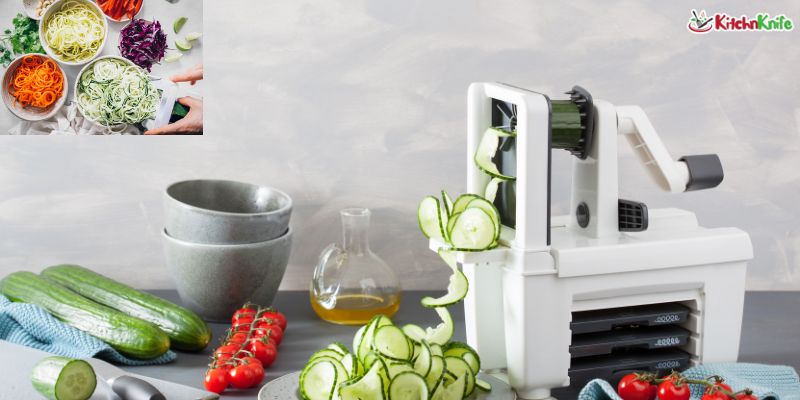
A vegetable spiralizer is a kitchen tool. It cuts vegetables into long, spiral-shaped strips. These strips look like noodles or ribbons.
It is also called a:
- Vegetable noodle maker
- Zoodle maker
- Veggie pasta maker
- Spiral cutter
The most popular use is making zucchini noodles, often called “zoodles.” But you can use many other vegetables too.
A spiralizer is a great tool for anyone who wants to eat healthier. It helps you replace heavy pasta with light, nutrient-rich veggies. You still get to enjoy your favorite dishes — just in a better way.
How Does a Spiralizer Work?
A spiralizer works by pushing a vegetable through a sharp blade. The blade spins or cuts the veggie in a spiral motion. This creates long, curly strands.
Most spiralizers have a few key parts:
- A blade — cuts the vegetable into spirals
- A handle or motor — drives the vegetable through the blade
- A suction base or clamp — holds the tool steady on your counter
You simply attach your vegetable to the spiralizer. Then you push or turn it against the blade. Out come perfect veggie noodles in seconds.
It is that easy.
Types of Spiralizers
There are two main types of spiralizers. Each has its own pros and cons.
1. Hand-Cranked Spiralizer (Manual)
This is the most common type. You place the vegetable on a prong. Then you turn a handle. The blade cuts the veggie into spirals.
Pros:
- Affordable
- Easy to clean
- No electricity needed
- Compact and easy to store
Cons:
- Requires some hand effort
- Can be slow with hard vegetables
2. Electric Spiralizer
An electric spiralizer does the work for you. You just push the vegetable into the machine. A motor does the spinning and cutting.
Pros:
- Very fast
- Great for large batches
- Less effort on your hands
- Good for hard vegetables like beets or sweet potatoes
Cons:
- More expensive
- Takes up more counter space
- Harder to clean
If you cook for a family or meal prep often, an electric vegetable spiralizer is worth it. If you cook for one or two people, a manual one works just fine.
What Can You Spiralize?
You can spiralize a wide range of vegetables and even some fruits. Here are the best ones to use:
Best Vegetables for Spiralizing:
- Zucchini — makes the best zoodles; soft and mild in flavor
- Carrots — firm and colorful; great in salads
- Cucumber — light and refreshing
- Beets — bold color; works well in salads
- Sweet potato — thick and hearty noodles
- Butternut squash — creamy and rich
- Broccoli stems — crunchy and nutritious
- Radish — peppery and crisp
Best Fruits for Spiralizing:
- Apple — great in salads or as a snack
- Pear — pairs well with cheese
Tip: Choose firm, straight vegetables. Curved or soft ones are harder to spiralize evenly.
Benefits of Using a Spiralizer
A food spiralizer is more than just a fun gadget. It offers real health and lifestyle benefits.
1. Supports Healthy Meals
Veggie noodles have far fewer calories than wheat pasta. A cup of zucchini noodles has about 20 calories. A cup of regular pasta has around 200 calories. That is a huge difference.
Using a spiralizer helps you build healthy meals every day without giving up the foods you love.
2. Adds More Vegetables to Your Diet
Many people do not eat enough vegetables. A spiralizer makes veggies more exciting. When food looks fun, people eat more of it — including kids.
3. Gluten-Free Eating Made Easy
Veggie pasta is naturally gluten-free. This is great for people with celiac disease or gluten sensitivity.
4. Saves Money
Vegetables are cheap. A zucchini costs less than a box of pasta. Over time, using a spiralizer can save you real money.
5. Speeds Up Meal Prep
A vegetable chopper or spiralizer cuts your prep time fast. In under two minutes, you can have a full plate of veggie noodles ready to cook.
How to Choose the Best Spiralizer
Picking the best spiralizer depends on your needs. Here are key things to look for:
Blade Options
More blades mean more versatility. Look for a spiralizer with at least three blade sizes — thin, medium, and thick.
Build Quality
Choose a spiralizer made with strong, BPA-free materials. Stainless steel blades last longer and stay sharp.
Ease of Cleaning
Look for parts that are dishwasher-safe. Blades can be tricky to clean by hand.
Suction Base
A good suction base keeps your spiralizer stable. This makes it safer and easier to use.
Size
Think about your storage space. Some spiralizers are bulky. Others fold flat for easy storage.
Manual vs. Electric
Choose a manual model if you want something simple and affordable. Go electric if you spiralize often or in large amounts.
Tips for Perfect Spiralizing
Follow these simple tips to get the best results every time:
- Trim the ends flat before attaching the vegetable. This gives a clean, even cut.
- Use firm vegetables. Soft ones will mush instead of spiral.
- Cut long vegetables in half if they are longer than 6 inches. This makes them easier to handle.
- Pat zoodles dry before cooking. Zucchini holds water, which can make your dish watery.
- Do not overcook veggie noodles. They cook fast — usually 2 to 3 minutes. Overcooked zoodles turn mushy.
- Spiralize in batches and store in the fridge for up to 3 days.
Easy Spiralizer Recipes to Try
Here are some quick and tasty spiralizer recipes to get you started:
1. Classic Zoodles with Marinara
Make zucchini noodles. Sauté for 2 minutes. Top with warm marinara sauce and fresh basil. Done in 10 minutes.
2. Carrot Noodle Salad
Spiralize carrots. Toss with sesame oil, soy sauce, lime juice, and sesame seeds. Chill and serve.
3. Sweet Potato Noodle Stir-Fry
Spiralize sweet potatoes. Stir-fry with garlic, bell peppers, and soy sauce. Add a fried egg on top.
4. Beet Noodles with Goat Cheese
Spiralize beets. Roast for 15 minutes. Toss with arugula, walnuts, and crumbled goat cheese.
5. Cucumber Noodle Bowl
Spiralize cucumber. Add cherry tomatoes, olives, red onion, and feta. Drizzle with olive oil and lemon.
These veggie pasta maker meals are easy, healthy, and full of flavor. They take less than 20 minutes each.
Frequently Asked Questions (FAQ)
Q1: What is a vegetable spiralizer used for? A vegetable spiralizer turns vegetables into spiral-shaped noodles. People use it to make low-carb pasta dishes, healthy salads, and creative meals.
Q2: Is a spiralizer worth buying? Yes. If you want to eat more vegetables and fewer carbs, a spiralizer is a great investment. It is affordable, easy to use, and makes cooking more fun.
Q3: What is the difference between a manual and electric spiralizer? A manual spiralizer uses hand power. An electric spiralizer uses a motor. Electric models are faster and better for large batches.
Q4: Can I spiralize any vegetable? Not all vegetables work well. Firm, straight vegetables work best. Zucchini, carrots, sweet potatoes, and beets are top choices. Soft or very watery vegetables do not spiralize well.
Q5: How do I clean a spiralizer? Most spiralizers come apart easily. Rinse the blades under water right after use. Many parts are dishwasher-safe. Use a small brush to clean between the blade teeth.
Q6: Are zucchini noodles healthy? Yes. Zucchini noodles are low in calories, high in water content, and rich in vitamins. They are a great swap for regular pasta.
Q7: Can kids use a spiralizer? Adults should handle the blades. But kids can help feed vegetables into the spiralizer. It is a fun way to get them interested in healthy eating.
Conclusion
A vegetable spiralizer is a simple but powerful kitchen tool. It helps you eat more vegetables, cut carbs, and enjoy healthy meals every day. Whether you choose a manual model or an electric spiralizer, the results are the same — fresh, fun, and nutritious food.
Start with zucchini noodles. Then try carrots, sweet potatoes, or beets. Once you get the hang of it, the possibilities are endless.
A spiralizer does not just change how your food looks. It changes how you eat — for the better.