
Last Updated on March 19, 2026 by Susanna Zuyeva
Most people never think about their dinner plates.
You buy a dish set. You eat off it every day. You wash it and repeat. But the material your dinnerware is made from matters more than most people realize.
Some dishware leaches harmful chemicals into food. Some releases heavy metals when heated or exposed to acidic foods. Some is marketed as safe but contains compounds that build up in your body over time.
I have researched dinnerware materials carefully for years. I have switched my own household dishware based on what I found. And I want to share a clear, honest breakdown of every common material so you can make an informed choice for your family.
This guide covers all the main options. Ceramic plates, porcelain dinnerware, bone china, glass, stainless steel, melamine plates, and plastic. I will tell you what is safe, what to avoid, and what to look for when buying the best dinnerware sets for your health.
Let us get into it.
Food sits on your plates and in your bowls every single day. Sometimes it sits for a long time. Sometimes it is hot. Sometimes it is acidic think tomato sauce, citrus dressings, and vinegar-based dishes.
These conditions create the opportunity for materials in your dishware to transfer into your food.
The main health concerns with dinnerware materials are:
Lead and cadmium leaching. Some glazed ceramic plates and decorative dishware contain lead and cadmium in the glaze. Heat and acidic food accelerate the leaching of these heavy metals into food. Lead is a neurotoxin. There is no safe level of lead exposure, particularly for children.
Chemical migration from plastic. Plastic dinnerware can leach hormone-disrupting chemicals including BPA and phthalates into food. Heat accelerates this process significantly.
Melamine migration. Melamine plates release melamine compounds into food, particularly when used with hot food or acidic dishes. Melamine has been associated with kidney and bladder problems in animal studies.
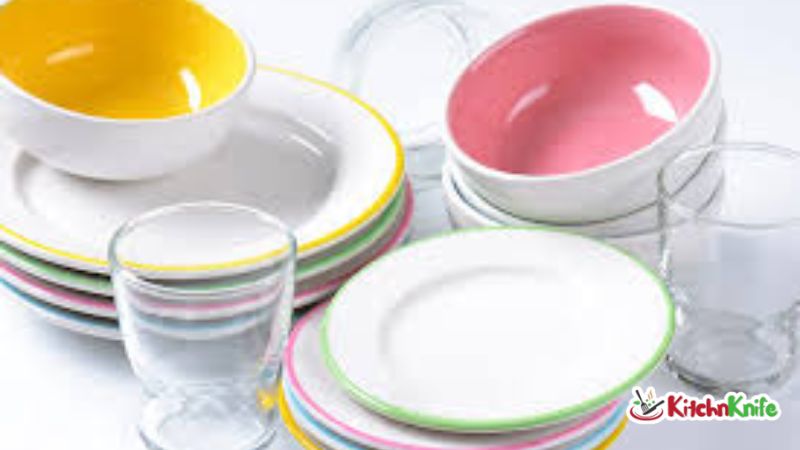
Cadmium from decorative glazes. Bright decorative patterns on dishware sometimes use cadmium-based pigments. Chipping or wear on these surfaces can accelerate leaching into food.
Understanding these risks is the first step to choosing genuinely safe dinnerware.
The Safest Dinnerware Materials for Health
Here are the safest options ranked from most recommended to least, based on research and real-world use.
1. Plain White Ceramic Plates Top Choice
Plain white undecorated ceramic plates are one of the safest dinnerware options available.
Here is why white ceramic is the safest ceramic option. The decoration on ceramic dinnerware is where most of the lead and cadmium risk sits. Colored glazes and decorative patterns sometimes contain these heavy metals as pigments and stabilizers. Plain white ceramic uses a clear glaze with no decorative color compounds.
High-quality lead free ceramic dinnerware from reputable dinnerware brands is tested to confirm that lead and cadmium are below safe threshold levels. Look for ceramic plates specifically labeled as lead free and cadmium free.
From my own experience, plain white ceramic dinner plates are my everyday choice. They are durable, easy to clean, microwave safe, dishwasher safe, and completely non reactive with food. Hot food, acidic sauces, and long sitting times do not affect the safety of a properly glazed lead free ceramic plate.
What to look for:
- Lead free labeling from the manufacturer
- Cadmium free confirmation
- No metallic paint or decorative rim treatments
- Smooth, chip-free glaze with no cracks
A cracked or chipped ceramic plate should be discarded. Cracks in the glaze create pathways for bacteria and can accelerate any potential leaching from the underlying material.
2. Porcelain Dinnerware Excellent Safety Profile
Porcelain dinnerware is a refined form of ceramic made from kaolin clay fired at very high temperatures.
The high firing temperature creates a dense, non-porous surface. This density makes porcelain dinnerware extremely resistant to leaching. The surface is hard, smooth, and does not absorb food, liquid, or bacteria.
Plain white porcelain is one of the safest dishware options available. Like plain white ceramic, the risk in porcelain comes primarily from decorative glazes and metallic treatments. Undecorated or simply decorated porcelain dinner sets from quality dinnerware brands with lead free certification are an excellent everyday choice.
Porcelain dinnerware is also very durable. It resists chipping better than standard ceramic. It handles microwave and dishwasher use well. A quality porcelain dinner set lasts for many years with normal care.
I recommend porcelain for families who want long-lasting, safe, easy-care dishware. Many of the best dinnerware sets available today are porcelain, and they represent excellent value for the safety and durability they offer.
3. Bone China Safe With Caveats
Bone china is a type of porcelain that includes bone ash in the clay composition. This gives it exceptional whiteness and translucency.
The safety profile of bone china is very good for plain, undecorated pieces. It is non-porous, dense, and resistant to leaching when properly manufactured and fired.
The caveat is decorative treatments. Bone china dinner sets often feature elaborate gold, platinum, or colored rim treatments. These metallic decorations sometimes contain trace amounts of heavy metals. Avoid putting metallic-decorated bone china in the microwave. The metallic treatment can degrade over time with repeated microwave use.
For everyday safe use, choose bone china dish sets with minimal decoration or plain white finishes. Reputable dinnerware brands that produce bone china specifically test their products for lead and cadmium compliance.
Bone china is also thinner and lighter than standard porcelain. This makes it slightly more fragile. For families with young children, thicker porcelain dinner plates may be more practical.
4. Tempered Glass Very Safe and Non-Reactive
Tempered glass dinnerware is an excellent non-toxic option.
Glass is completely non-porous. It does not leach chemicals into food under any conditions. It is inert. Hot food, cold food, acidic food, and alkaline food all sit on glass without any material transfer.
Tempered glass is treated to be significantly stronger than standard glass. It resists thermal shock from temperature changes. It is dishwasher safe and microwave safe.
The limitations of tempered glass dinnerware are weight and fragility compared to ceramic and porcelain. Tempered glass dinner plates are heavier than ceramic. When they do break, they shatter into small fragments rather than large pieces.
For health-conscious households that want the most chemically inert dinnerware possible, tempered glass is an outstanding choice.
5. Stainless Steel Excellent for Durability and Safety
Stainless steel dishware is extremely safe and virtually indestructible.
Food-grade stainless steel does not leach chemicals into food under normal use. It is non-reactive with acidic foods. It is completely non-porous. It does not harbor bacteria. It does not chip, crack, or degrade over time.
Stainless steel dinnerware is not traditional dinner plate material in most Western households. But it is widely used in South Asian and East Asian households and in professional catering environments for good reason.
For children specifically, stainless steel dinner plates and bowls are a practical and safe alternative to ceramic. They are completely unbreakable, lead free, non-toxic, and easy to clean.
The main limitation is that stainless steel cannot go in the microwave. For households that microwave food on the plate, this is a practical drawback.
Materials to Use With Caution
These options are not necessarily unsafe in all situations. But they require specific knowledge and careful use.
Decorated Ceramic and Earthenware
Standard earthenware pottery the kind commonly found at markets and in handmade dishware collections — sometimes uses traditional glazes that contain lead and cadmium.
Handmade and artisan ceramic plates are beautiful. But without lead free certification from the maker, there is no guarantee they meet modern safety standards. I do not use handmade or vintage ceramic plates for everyday eating without confirmed lead free certification.
Vintage dishware sets from before the 1990s are particularly risky. Lead was more commonly used in ceramic glazes before modern regulations tightened.
If you have vintage dinner sets: Do not use them for hot food. Do not use them for acidic food. Do not put them in the microwave or dishwasher. Display them if you love them. Do not eat off them regularly.
Plastic Dinnerware
Plastic dinner plates vary enormously in safety depending on the type of plastic.
BPA-free plastics are safer than older BPA-containing plastics. But BPA-free does not mean chemical-free. Many BPA-free plastics still contain other plasticizers and additives that may migrate into food.
The biggest risk with plastic dinnerware is heat. Microwaving food on plastic plates significantly accelerates chemical migration. Even plastics labeled microwave safe are permitted to leach small amounts of chemicals under FDA guidelines. Microwave safe means the container will not deform not that it is free of chemical migration.
For cold food and non-microwave use, quality food-safe plastic dinnerware poses limited risk for adults. For children and for microwave use, I recommend switching to ceramic, porcelain, or glass.
Never use scratched, cracked, or heavily worn plastic dishware. Damage to the surface significantly increases chemical migration into food.
Materials to Avoid
Melamine Plates
Melamine plates are widely used because they are lightweight, colorful, and very difficult to break. They look like ceramic. They are popular for outdoor use and children’s dishes.
But melamine dinnerware has a significant health concern. Melamine compounds migrate into food — and the migration increases sharply with hot food and acidic food.
Studies have shown that hot soups and acidic dishes served in melamine plates produce measurable melamine levels in the food after short contact times. Melamine has been associated with kidney stones and kidney damage in studies involving high exposure levels.
I do not use melamine plates for hot food. I do not recommend them for everyday use with children. If you have melamine dinnerware, use it for cold food only and do not microwave food in or on it under any circumstances.
Plastic With Recycling Codes 3, 6, and 7
Avoid plastic dishware marked with recycling codes 3 (PVC), 6 (polystyrene), and 7 (other, which may include polycarbonate containing BPA).
Code 3 PVC contains phthalates. Code 6 polystyrene leaches styrene. Code 7 polycarbonate may contain BPA. These materials are not appropriate for food contact dinnerware.
How to Choose Safe Dinnerware Sets
Here is exactly what to look for when buying new dishware.
Look for lead free and cadmium free labeling. Reputable dinnerware brands explicitly state this on packaging and product descriptions. If no mention of lead or cadmium testing is made, look for another option.
Choose plain white or minimally decorated pieces. The more decoration on a piece of dinnerware, the more potential for decorative pigments to contain heavy metals. Plain white dinnerware is the safest visual choice.
Avoid metallic rim treatments for microwave use. Gold, silver, and platinum rim treatments should never go in the microwave. The metallic treatment degrades with repeated microwave exposure.
Buy from established dinnerware brands. Established brands with long track records are more likely to comply with current safety standards. They have more to lose from safety violations and more resources for proper testing.
Check for Prop 65 compliance if buying in the United States. California’s Proposition 65 requires disclosure of chemicals above certain levels in consumer products including dinnerware. Products that comply with Prop 65 meet some of the strictest chemical safety standards in the world.
My Personal Everyday Dishware Setup
I use plain white porcelain dinner plates for everyday family meals. They are lead free certified, dishwasher safe, microwave safe, and completely non-reactive with food.
I also keep tempered glass bowls for soups and hot liquids. Glass is the most chemically inert option for hot acidic foods like tomato-based soups.
I stopped using melamine plates several years ago after researching migration rates with hot food. I keep one set of stainless steel dishes specifically for outdoor use.
For any household with young children, I strongly recommend plain white ceramic or porcelain dinner sets with lead free certification. Children eat multiple meals a day from the same plates for years. The cumulative exposure from unsafe dinnerware matters more for children than for adults.
Quick Safety Summary by Material
| Material | Safety Rating | Microwave Safe | Key Risk |
|---|---|---|---|
| Plain white ceramic (lead free) | Excellent | Yes | Chipping exposes risks |
| Porcelain dinnerware (lead free) | Excellent | Yes | Metallic decoration |
| Bone china (undecorated) | Very Good | Yes (no metal trim) | Metallic rim treatments |
| Tempered glass | Excellent | Yes | Weight and breakage |
| Stainless steel | Excellent | No | Cannot microwave |
| Decorated ceramic/earthenware | Caution | Caution | Lead and cadmium in glaze |
| Plastic (BPA-free) | Limited | Not recommended | Chemical migration with heat |
| Melamine plates | Avoid for hot food | Never | Melamine migration |