
Last Updated on May 6, 2026 by Kathay Lee
Small kitchens have big cooking challenges.
You have limited counter space. Limited storage. Sometimes no built-in gas range at all. But you still need to cook real meals every day.
A compact gas stove solves this problem better than almost any other kitchen appliance.
I have lived in small apartments. I have cooked in studio flats, tiny kitchens, and spaces where the counter was barely wider than a cutting board. I have used portable stove setups, butane stove models, tabletop gas ranges, and compact cooking stove designs to cook full meals in tight spaces.
This guide tells you exactly what to look for, what types are available, how to use them safely, and which situations each type suits best.
Why a Compact Gas Stove Makes Sense for Small Spaces
Electric induction cooktops are one option for small kitchens. They are clean and precise.
But gas has real advantages that many cooks do not want to give up.
Gas heats instantly. There is no warm-up time. You can see and control the flame directly. You can use any type of cookware including cast iron, stainless steel, and carbon steel without compatibility concerns. And when gas is connected to a portable gas cylinder rather than a fixed line, it works even where no built-in cooking infrastructure exists at all.
For renters who cannot install a fixed gas range, for people in studio apartments, for anyone living in an RV or tiny home, and for those who need a secondary cooking station when the main oven is in use, a compact gas stove is a practical and reliable answer.
A portable stove running on a portable gas cylinder or butane canister gives you real flame cooking anywhere with no permanent installation required.
Types of Compact Gas Stoves for Small Spaces
Not all compact gas stoves are the same. Understanding the different types helps you choose the right one.
1. Tabletop Single Burner Gas Stove
This is the most common compact gas cooking stove for small spaces.
A single burner tabletop model sits on any flat surface. It connects to a small portable gas cylinder or a butane canister. It has one burner ranging from around 1,500 watts to 3,500 watts depending on the model.
These are excellent for solo cooking and couples. They handle boiling, frying, sautéing, and simmering without any issue. The footprint is small — most models take up roughly the same counter space as a large book.
I used a tabletop single burner cooking stove as my primary hob for over a year in a studio apartment. With smart meal planning, I cooked full dinners, soups, stews, and fried rice on it every day. It never let me down.
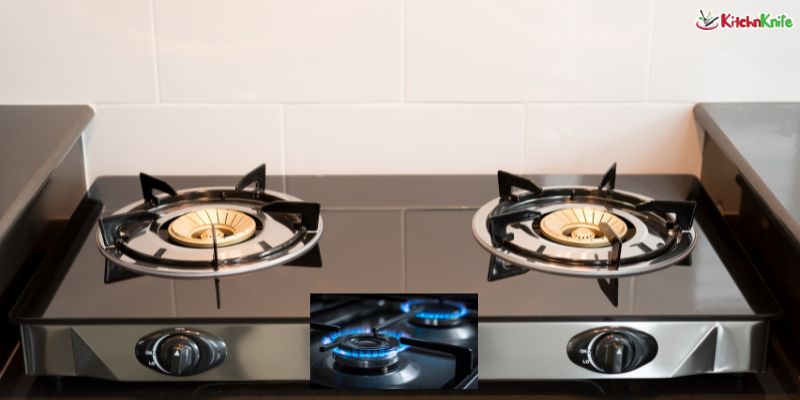
2. Tabletop Double Burner Gas Stove
A double burner tabletop model gives you two burners on one compact unit.
This is a significant step up for cooking flexibility. You can boil pasta on one burner and make the sauce on the other simultaneously. You can keep food warm on one side while cooking on the other.
For families and anyone who cooks multiple dishes at once, a double burner compact gas stove is far more practical than a single burner.
The footprint is larger than a single burner but still dramatically smaller than a full gas range. A good double burner tabletop stove takes up roughly half the counter space of a standard four-burner gas range.
3. Butane Stove
A butane stove is the most portable compact gas option available.
It uses a sealed butane canister that clicks or slides directly into the stove body. No hose. No external portable gas cylinder. No regulator. The canister and stove are one integrated unit.
Butane stoves are extremely popular across Southeast Asia and East Asia for tabletop cooking at restaurants and homes. They are also widely used for camping stoves and outdoor cooking where a lightweight portable stove is needed.
The limitations of a butane stove are lower maximum heat output compared to propane setups and reduced performance in cold temperatures. Butane does not vaporize as efficiently below around 5°C. For indoor small-space cooking, neither of these is usually a concern.
For emergency cooking, picnics, small apartment cooking, and temporary kitchen setups, a butane stove is one of the most practical and inexpensive options available.
4. Propane Portable Stove
A propane portable stove connects to a small portable gas cylinder containing liquefied propane.
Propane burns hotter than butane and performs much better in cold weather. This makes propane portable stoves popular as camping stoves for outdoor use in variable temperatures.
For indoor small space use, propane is effective but requires more careful ventilation than butane because of slightly higher combustion output. Always use a propane portable stove in a space with good airflow.
The portable gas cylinder for propane stoves is slightly bulkier than a butane canister but still very manageable for storage in a small kitchen cabinet or under a countertop.
5. Compact Two-Burner Gas Range with Mini Oven
If your small space needs an oven as well as burners, a compact tabletop gas range with an integrated gas oven is worth considering.
These units are larger than a simple tabletop burner but dramatically smaller than a full-size freestanding gas range. They typically sit on a stove stand or a sturdy countertop surface and combine two burners on top with a small gas oven below.
A compact gas oven in this format is not the same size as a full kitchen oven. But for baking, roasting small cuts of meat, and general oven cooking in a small home, it covers the basics effectively.
This is the best option for people who want to completely replace a missing kitchen range in a rental property or small home without permanent installation.
Key Features to Look For
When choosing a compact gas stove for a small space, these are the features that matter most.
Burner Power Output
Burner power is measured in BTU (British Thermal Units) or watts.
Higher BTU or wattage means more heat and faster cooking.
For a single burner cooking stove, look for at least 7,000 BTU or around 2,000 watts. This handles boiling a pot of water in reasonable time and produces enough heat for proper frying and searing.
For a double burner tabletop stove, aim for at least 7,000 to 9,000 BTU per burner. Models with one high-power burner and one medium burner give you flexibility for different cooking tasks simultaneously.
Ignition Type
Most modern compact gas stoves include a built-in piezo ignition. You press a button and the burner lights without needing a match or lighter.
This is a significant practical convenience for daily use. Check that the ignition works reliably on the model you are considering. A stove that requires repeated attempts to light is frustrating for everyday cooking.
Always keep a lighter nearby as backup. Piezo ignitions do eventually wear out or become less reliable with heavy use.
Grate and Burner Compatibility
Check that the grate on the compact gas stove supports the cookware you use.
Wide grates with strong support arms hold large heavy pots and cast iron cookware securely. Narrow or flimsy grates may not support a heavy stockpot or cast iron skillet safely.
If you cook with large pots for soups, stews, and pasta, confirm the grate width before buying. A grate that is too narrow creates a tipping risk with heavy pots.
Size and Footprint
Measure your available counter space before buying.
A single burner tabletop stove typically measures around 30 to 35 centimeters wide and 25 to 30 centimeters deep. A double burner model measures around 55 to 70 centimeters wide and 35 to 40 centimeters deep.
Make sure the stove fits your counter with enough clearance on all sides. Good airflow around the stove is important for safe operation.
Fuel Type and Availability
Consider which fuel is easier to find and store in your specific location.
Butane canisters for a butane stove are available at supermarkets, hardware stores, and camping stores in most countries. They are inexpensive and simple to store.
Portable gas cylinders for propane stoves are available at hardware stores and camping equipment retailers. They are slightly bulkier but provide more heat output and better cold-weather performance.
Choose the fuel type that matches your cooking habits and local availability.
Safety Rules for Compact Gas Stoves in Small Spaces
Small spaces require extra attention to safety when using any gas cooking stove.
Always ventilate. Never use any gas cooking stove in a completely sealed room. Open a window or door before lighting. Gas combustion consumes oxygen and produces carbon dioxide. In a very small sealed space, this creates risk. Good airflow eliminates it.
Never leave a lit stove unattended. This applies to every cooking stove type. A pot boiling over can extinguish the flame. Unburned gas then accumulates. Always stay nearby when the stove is lit.
Store portable gas cylinders and butane canisters safely. Store fuel away from heat sources. Never store a butane stove with the canister still attached. Remove the canister after every use and store it separately in a cool, dry location.
Check connections before lighting. If your stove uses a hose and regulator connected to a portable gas cylinder, check the connection before every use. Look for any visible damage to the hose. If you smell gas before lighting, do not attempt to ignite the stove. Ventilate the space immediately and check the connection.
Keep flammable materials away. Compact gas stoves produce an open flame. Keep paper towels, cloths, curtains, and packaging away from the burner area during use.
Use on a stable, heat-resistant surface. Never use a compact gas stove on a cloth tablecloth or an unstable surface. Use a proper stove stand or a solid heat-resistant countertop. Stability prevents tipping with hot contents.
How a Compact Gas Stove Compares to Other Small Kitchen Options
Compact gas stove vs induction cooktop: Induction is very efficient and produces no open flame. But it only works with magnetic cookware. Gas works with everything including cast iron, copper-base, and any standard pot. Gas responds faster to heat changes and is the preference of many experienced cooks.
Compact gas stove vs electric hot plate: An electric hot plate is inexpensive and simple. But it heats slowly and does not produce the same responsive flame control as gas. For serious everyday cooking, a compact gas stove is a more satisfying kitchen appliance.
Compact gas stove vs camping stoves: Camping stoves are designed for outdoor use and prioritize portability above all else. They often have lower power output and less stable grate systems than purpose-built tabletop cooking stoves. For indoor small space use, a dedicated compact tabletop gas stove is a better daily cooking tool than a camping stove repurposed for kitchen use.
Compact gas stove vs wood burning stove: A wood burning stove is a heating appliance that can also cook. It requires ventilation and a proper flue. It is not a practical primary cooking stove for a small apartment. A compact gas stove is simpler, cleaner, and safer for everyday small-space cooking.
Compact gas stove vs gas fireplace cooking: Some people repurpose a gas fireplace for cooking. This is not designed cooking equipment. Temperature control is unreliable. For proper daily cooking, use a dedicated compact cooking stove rather than a gas fireplace.
My Personal Setup Recommendation
For a solo cook or couple in a small apartment with no existing gas range, I recommend a quality double burner butane stove as the primary cooking setup.
It requires no installation. It uses fuel that is widely available and inexpensive. Two burners cover everything you need for daily cooking. The footprint fits on most small kitchen counters without overwhelming the space.
Pair it with a compact gas oven if you bake regularly. A tabletop gas oven is a genuinely capable kitchen appliance for small homes and works well alongside a separate tabletop burner setup.
If portability is your priority cooking at different locations, camping, or moving frequently a single burner butane stove with a stock of spare canisters is the most flexible and practical option available.
Frequently Asked Questions
Is a compact gas stove safe to use indoors? Yes, when used correctly. Always ensure good ventilation by opening a window or door before cooking. Never use a gas stove in a completely sealed room. Keep the area around the stove clear of flammable materials. Check fuel connections before each use. A properly ventilated space eliminates the main risks associated with indoor gas cooking stove use.
What fuel is best for a compact gas stove in a small apartment? Butane is the most convenient fuel for indoor small space use. Butane canisters are compact, inexpensive, and widely available. A butane stove uses them without any external hose or regulator. Propane is a good alternative with higher heat output and better cold weather performance, but requires a portable gas cylinder and hose connection. For indoor apartment cooking, butane is the simpler and more practical choice.
Can I use a compact gas stove as my only cooking appliance? Yes. Many people in small apartments and tiny homes use a compact tabletop gas stove as their primary or only cooking stove. A double burner model handles the vast majority of everyday cooking tasks. For baking, add a compact tabletop gas oven. Together they replace the functionality of a full-size gas range in a fraction of the counter and floor space.