
Last Updated on May 15, 2026 by Kathay Lee
hy Kitchen Mats Keep Sliding
A kitchen mat that slides is more than just annoying. It is a real safety hazard. Slipping on a loose mat can cause serious falls, especially for children and older adults.
Most mats slide because of smooth floor surfaces. Hardwood, tile, laminate, and vinyl floors offer very little friction. A mat with no grip backing will shift every time someone walks over it.
Other causes include:
- Worn out or flat rubber backing
- Wrong mat size for the space
- Lightweight mat material
- High foot traffic areas
Understanding the cause helps you choose the right fix.
Best Ways to Stop Kitchen Mats From Moving
1. Use a Non-Slip Rug Pad
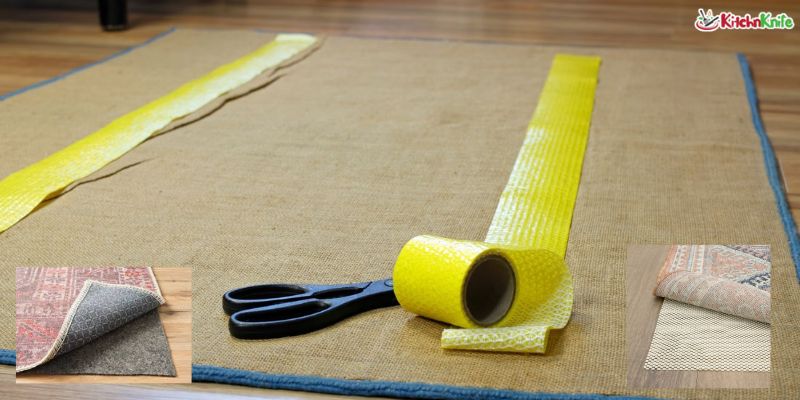
A non-slip rug pad is the most reliable solution. You place it under the mat. It grips both the floor and the mat at the same time.
Choose a pad that matches the size of your mat. Cut it slightly smaller so it does not show around the edges. Look for pads made from felt and rubber for the best grip.
Rug pads also protect your floor from scratches. They work well on hardwood, tile, and laminate floors.
Best for: All floor types, long-term use
2. Apply Double-Sided Carpet Tape
Double-sided carpet tape sticks to both the mat and the floor. It creates a strong bond that keeps the mat in place.
Clean your floor well before applying the tape. Press it along all four edges and across the center of the mat. Then press the mat firmly onto the floor.
This method works best on tile and vinyl floors. Be careful with hardwood floors as some tapes can leave residue or lift the finish when removed.
Best for: Tile and vinyl floors, budget solution
3. Choose Mats With Rubber or Silicone Backing
When buying a new mat, look for one with a thick rubber or silicone backing. These materials grip smooth floors naturally. You do not need any extra product.
Check that the backing is solid and even. Thin or patchy backing wears out fast and loses grip. High-quality rubber backing can last for years without slipping.
Brands often label these as non-slip or anti-slip kitchen mats. Read reviews before buying to make sure the grip works on your specific floor type.
Best for: Long-term prevention, ease of use
4. Use Rug Grippers or Corner Anchors
Rug grippers are small adhesive pads that stick to the corners or edges of a mat. They press the mat firmly against the floor.
They are easy to apply and remove. Most leave no sticky residue behind. You can move them from mat to mat if needed.
Corner anchors work in a similar way. They fold under the corner and grip the floor underneath. These are great for mats that curl at the edges as well as slide.
Best for: Quick fixes, rental-friendly solutions
5. Try Velcro Strips
Velcro strips are another simple option. One side sticks to the floor. The other side sticks to the mat. When pressed together, they lock the mat in place.
This method works especially well for mats that need to be removed and cleaned often. You can peel and reattach the mat easily without losing grip strength.
Use industrial-strength Velcro for heavier mats or high-traffic areas.
Best for: Mats that need frequent removal
Tips for Different Floor Types
Different floors need different approaches. Here is a quick guide:
| Floor Type | Best Solution |
|---|---|
| Hardwood | Felt and rubber rug pad |
| Tile | Double-sided tape or rug grippers |
| Laminate | Non-slip rug pad or rubber backing |
| Vinyl | Rubber backing or carpet tape |
| Concrete | Heavy rubber rug pad |
Always test any adhesive product on a small hidden area first. This protects your floor from damage.
How to Choose a Mat That Stays in Place
Buying the right mat from the start saves time and effort. Here is what to look for:
- Rubber or silicone backing: Provides natural grip on smooth floors
- Correct size: A mat that is too small shifts more easily
- Appropriate weight: Heavier mats stay put better than lightweight ones
- Washable material: Easy cleaning keeps the mat and backing in good shape
- Low pile height: Thicker mats can bunch up and shift under foot traffic
Anti-fatigue kitchen mats are a popular choice. They offer comfort during long cooking sessions and usually come with strong non-slip backing.
Final Thoughts
A sliding kitchen mat is easy to fix once you know the right method. Non-slip rug pads, double-sided tape, rubber-backed mats, rug grippers, and Velcro strips all work well depending on your floor type and budget.
Start with the simplest fix first. A quality non-slip pad under your mat solves most problems right away. If you are buying a new mat, choose one with built-in rubber or silicone backing.
A mat that stays in place keeps your kitchen safer and cleaner. Take five minutes to secure your mat today. It is a small step that makes a big difference.