
Last Updated on July 24, 2026 by Kathay Lee
Frying and sautéing look alike. Both use a hot pan. Both use oil. Both cook food fast. But they are not the same.
This guide breaks down the real difference. You will learn what each method does. You will learn which tools to use. You will learn when to pick one over the other.
What Is Frying?
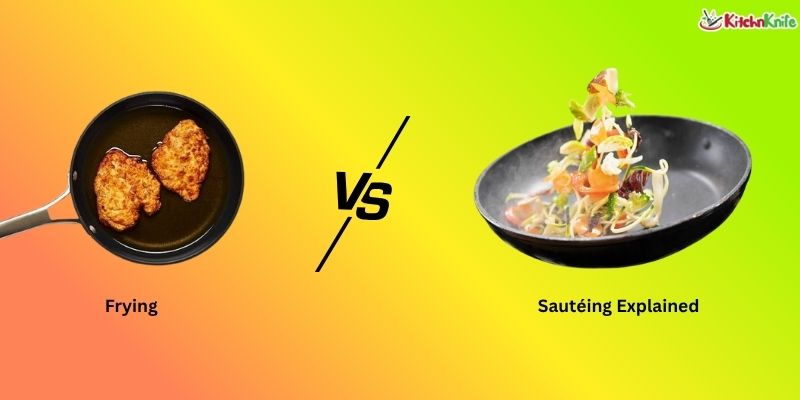
Frying means cooking food in hot oil. The oil covers part or all of the food. Heat moves from the oil into the food. This makes the outside crisp.
There are two main types of frying.
- Deep frying: The food sits in oil. The oil covers it fully.
- Shallow frying: The oil sits low in the pan. It covers only part of the food.
You flip the food once or twice. You do not stir it much. The goal is a crisp crust. Think of fried chicken or fried fish. Think of french fries too.
A fry pan works well for this job. It has low sides. It holds oil at a steady level. Heat spreads evenly across the base.
What Is Sautéing?
Sautéing means cooking food fast in a small amount of oil. The word comes from the French verb “sauter.” It means “to jump.” You move the food often. You toss it or stir it. The pan stays hot the whole time.
You use less oil than frying. You keep the food moving. This stops it from burning. It also cooks the food evenly.
Sautéing works best for small, cut-up pieces. Think of sautéed vegetables. Think of sliced onions or diced garlic. Think of thin strips of chicken or beef.
A skillet or a sauté pan works best here. A skillet is a flat pan with slanted sides. A sauté pan has straight sides and a wider base. Both let you stir with ease.
The Key Differences at a Glance
Here is a simple table to compare both methods.
| Feature | Frying | Sautéing |
|---|---|---|
| Oil amount | More oil | Less oil |
| Food movement | Little movement | Constant stir |
| Heat level | Medium to high | High |
| Best for | Whole cuts, breaded food | Small, chopped food |
| Common tool | Fry pan | Skillet or sauté pan |
| Texture goal | Crisp outside | Tender, even cook |
Oil, Heat, and Time
Oil plays a big role in both methods.
Frying needs enough oil to cover or half-cover the food. This oil gets very hot. It creates a seal around the food. That seal locks in juice. It also builds a crisp shell.
Sautéing needs just a thin layer of oil. The pan gets hot first. Then you add the oil. Then you add the food. You keep the heat high but not too high. Too much heat can burn small pieces fast.
Time differs too. Frying can take longer for thick cuts. A chicken thigh may fry for many minutes. Sautéing is quick. Thin slices of veggies may cook in under five minutes.
Tools You Need
The right tool makes each method easier.
For frying, use a deep fry pan or a pot with high sides. This holds oil without spills. A thermometer helps too. It checks if the oil is hot enough.
For sautéing, use a skillet or sauté pan. Pick one with a flat, wide base. This gives food more space. It also helps heat spread evenly. A wooden spoon or spatula helps you stir with ease.
Every kitchen should have both tools. They serve different jobs. A good chef knows when to grab each one.
Which Method Should You Use?
Ask yourself a few questions first.
- Is the food whole or cut into small pieces?
- Do you want a crisp crust or a tender bite?
- How much oil do you want to use?
- How much time do you have?
If you want a crisp crust on a whole cut, fry it. If you want fast, even cooking on small pieces, sauté it.
Many recipes use both. You might sauté onions and garlic first. Then you might fry a piece of fish in the same kitchen. Knowing both methods gives you more control over your meals.
Common Mistakes to Avoid
Even skilled cooks slip up. Here are common errors.
- Using too little oil when frying. This can burn the food.
- Using too much oil when sautéing. This turns the dish greasy.
- Not preheating the pan. Cold pans lead to uneven cooking.
- Overcrowding the pan. This traps steam and stops browning.
- Stirring fried food too much. This breaks the crust.
- Not stirring sautéed food enough. This causes burnt spots.
Avoid these, and both methods will give great results.
A Quick Word From the Kitchen
Great cooks build these skills over years. Frying and sautéing both need practice. Start slow. Watch your heat. Test small batches first. Soon, both methods will feel natural.
A stir-fry dish often blends both ideas. You sauté fast in a hot pan. Some cooks add a touch more oil, closer to shallow frying, for extra crisp edges. This shows how the two methods can work together.
Why This Matters in Real Cooking
Home cooks often mix up these terms. Recipe writers do too. This causes confusion in the kitchen. You might grab the wrong pan. You might use too much oil. You might overcook your food.
Knowing the difference helps you follow recipes with ease. It also helps you fix recipes on your own. You can swap methods when needed. You can save a dish that starts to go wrong.
Professional kitchens rely on this skill daily. A trained chef moves between frying and sautéing many times per shift. Speed matters. Technique matters more. Years of practice teach a chef how heat behaves in each pan.
You do not need years of training to get this right at home. You just need to know the basics. Watch your oil. Watch your heat. Watch your food. Small checks like these build big skill over time.
A Simple Way to Remember the Difference
Here is an easy trick. Frying means the oil does most of the work. Sautéing means your arm does most of the work.
In frying, you set the food in oil. Then you wait. The oil crisps the surface on its own.
In sautéing, you stir and toss the food by hand. Your motion cooks it evenly. The pan and your movement work as a team.
This trick helps you decide fast. Ask which one is doing more work: the oil or your hand? That answer often tells you the method.
Frequently Asked Questions
Is sautéing healthier than frying? Yes, in most cases. Sautéing uses less oil. This means fewer added calories and less fat per serving.
Can I use the same pan for both? Yes. A wide, flat skillet can handle light frying and sautéing. Deep frying needs higher sides, though.
Does sautéing mean stir-frying? Not exactly. Stir-frying uses very high heat and constant motion, often in a wok. Sautéing uses slightly lower heat and a flat pan.
What oils work best for each method? Frying needs oil with a high smoke point, like canola or peanut oil. Sautéing works well with olive oil, butter, or avocado oil.
Why does my sautéed food turn soggy? This often happens from overcrowding the pan or using too much oil. Give the food space and keep the heat steady.