
Last Updated on November 9, 2025 by Kathay Lee
Introduction
I still remember my first time trying to cut a butternut pumpkin. The knife slipped. My hands hurt. And I almost gave up on making my favorite squash recipes.
You are not alone if you find this task hard. Many home cooks avoid butternut squash because of its tough skin and odd shape. But it does not have to be this way.
This tutorial will show you how to cut butternut squash safely and quickly. You will learn the right tools to use. You will discover easy methods that work. And you will gain the confidence to cook butternut squash any way you like.
Whether you want to make roasted butternut or cube it for soups, this guide has you covered. Let me share what I learned from years of squash cooking.
What You Need Before You Start
The right tools make all the difference when you work with butternut squash.
Essential Tools:
You need a sharp chef’s knife. A dull knife is dangerous because it can slip on the hard skin. Get a sturdy cutting board that will not slide around. A vegetable peeler helps remove the skin easily. Some people like a small paring knife for detailed work.
Safety First:
Place a damp towel under your cutting board. This keeps it stable. Never cut toward your body. Always keep your fingers away from the blade. If the squash rolls, cut a small slice off one side to create a flat surface.
Choosing Your Squash:
Pick a butternut squash that feels heavy for its size. The skin should be tan and free of soft spots. Avoid any with bruises or mold. A medium squash weighs about two to three pounds. This size works well for most squash recipes.
Prep Your Space:
Clear your counter. Wash your hands. Make sure you have good lighting. These simple steps help prevent accidents.
The Complete Step-by-Step Process
Now let me walk you through each step of cutting your butternut pumpkin.
Step 1: Wash and Dry
Rinse the squash under cold water. Scrub the skin gently with your hands or a vegetable brush. Dirt and debris can dull your knife. Dry it completely with a clean towel. A wet surface makes cutting dangerous.
Step 2: Cut Off the Ends
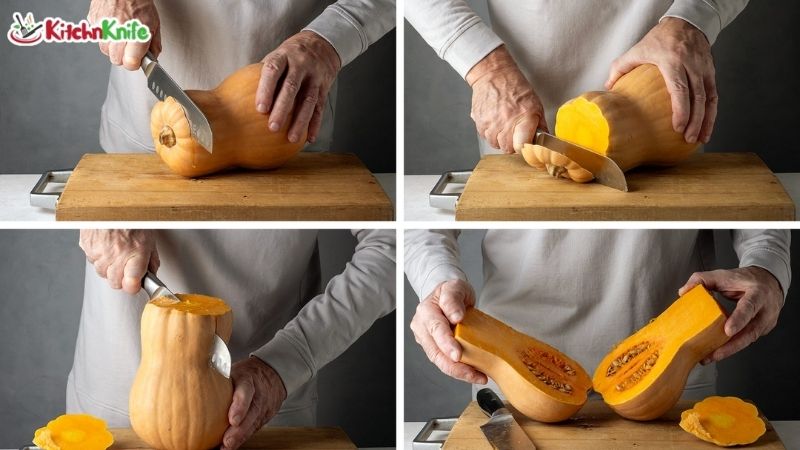
Place the squash on your cutting board. Hold it steady with one hand. Use your sharp knife to slice off about half an inch from the stem end. Then cut off the bottom end. These cuts create flat, stable surfaces for the next steps.
Step 3: Peel the Skin
Stand the squash on one flat end. This makes it stable. Use your vegetable peeler to remove the skin in downward strokes. Work your way around the entire squash. Some areas have thicker skin than others. Just keep peeling until you see the bright orange flesh.
If the skin is very tough, you have another option. Skip peeling now. Cut the squash first and scoop out the flesh after roasting. This works great for roasted butternut dishes.
Step 4: Slice Lengthwise
Here is the most important cut. Stand your peeled squash upright on the cutting board. Place your knife at the top center. Press down firmly and carefully. Cut straight down through the middle. This splits the squash into two long halves.
Take your time with this cut. The flesh is dense. You may need to rock your knife back and forth gently. Never force it.
Step 5: Remove the Seeds
Lay each half flat on the cutting board with the cut side up. You will see a hollow area filled with seeds and stringy bits. Use a large spoon to scoop out all of this. Scrape the sides until the cavity is clean and smooth.
Save those seeds if you want. You can roast them like pumpkin seeds. They make a tasty snack.
Step 6: Cut Into Cubes
Now you can create the shapes you need for your squash cooking.
For cubes, lay each half flat. Cut the rounded neck section away from the bulbous bottom. This makes two pieces that are easier to work with.
Slice each piece into strips about one inch wide. Then turn the strips and cut across them. This creates nice, even cubes. Try to keep them the same size. This helps them cook evenly.
Pro Tips:
- Microwave the whole squash for two to three minutes before cutting. This softens the skin slightly.
- Always cut on a stable surface that does not move.
- Take breaks if your hands get tired.
- Keep your knife sharp. A sharp blade is safer than a dull one.
- Cut away from your body whenever possible.
Different Cutting Methods for Various Recipes
The way you cut your butternut squash depends on what you plan to cook.
For Roasted Butternut:
Cut the squash into one-inch cubes as described above. Even sizes mean even cooking. Spread them on a baking sheet in a single layer. They should not touch too much. This helps them get crispy edges instead of steaming.
You can also cut thick slices for roasting. After you split the squash lengthwise, cut each half into half-moon shapes about half an inch thick. These look beautiful on a plate.
For Squash Recipes Like Soups:
Cube size matters less here since you will blend or mash the squash. Cut larger chunks if you want. They will cook faster if you make them smaller. Aim for pieces about one and a half inches across.
For Stir-Fries:
Cut thin strips or small cubes about half an inch across. These cook quickly over high heat. Make sure they are all similar in size.
For Salads:
Try cutting the squash into thin slices or small cubes. Roast them until they are tender. The smaller size makes them easier to eat in a salad.
Alternative Method:
Some cooks prefer to roast the squash first and then scoop out the flesh. Here is how to do this. Cut the squash in half lengthwise. Remove the seeds. Place both halves cut-side down on a baking sheet. Roast at 400 degrees until tender. Then scoop out the soft flesh with a spoon. This works perfectly when you need mashed squash.
Safety Tips and Common Mistakes
Let me share what I wish someone had told me when I started working with butternut pumpkin.
Safety Tips:
Never rush when you cut squash. Take your time with each cut. If the squash slips, stop and adjust your grip. Keep children and pets away from your work area. Clean up spills right away so no one slips.
Store your knife properly when you finish. Do not leave it in the sink under soapy water. Someone could reach in and get cut.
Common Mistakes to Avoid:
Do not use a dull knife. I cannot stress this enough. Dull blades require more pressure and are more likely to slip.
Do not try to cut the squash on a small cutting board. You need space to work safely. Get a board that is at least twelve inches wide.
Do not peel before you cut off the ends. Those flat surfaces make everything easier and safer.
Do not throw away the seeds without trying them roasted. They taste amazing with a little salt and oil.
Troubleshooting Tough Skin:
If your knife will not go through the skin, try this trick. Pierce the squash with a fork in several places. Microwave it for three to four minutes. Let it cool for a few minutes before cutting. The skin will be much softer.
You can also try a different squash. Very old squash or squash that was stored incorrectly can be extremely hard. Fresh squash from the farmers market is often easier to cut.
Frequently Asked Questions
Do I need to peel butternut squash before cooking?
Not always. The skin becomes soft when you roast the squash. You can eat it or scoop out the flesh after cooking. But for most squash recipes, peeling gives better texture.
Can I cut butternut squash ahead of time?
Yes. Store cut squash in an airtight container in the fridge. It stays fresh for three to four days. You can also freeze cubed squash for up to three months.
What is the easiest way to cut butternut squash?
The easiest way is to microwave it briefly first. Two to three minutes softens the skin. Then follow the steps in this tutorial. Always use a sharp knife and stable cutting board.
How do I know when butternut squash is ripe?
Ripe squash has a deep tan color. It feels hard and heavy. The skin should be dull, not shiny. Avoid squash with green patches or soft spots.
Why is my butternut squash so hard to cut?
Old squash or squash that dried out becomes very hard. The skin naturally toughens over time. Try the microwave trick or choose fresher squash next time.
Conclusion
Cutting butternut squash does not have to be scary or hard. With the right tools and these simple steps, you can prep squash for any recipe.
Start with a sharp knife and stable cutting board. Take your time with each cut. Remember that practice makes perfect. Your first attempt might feel awkward. But soon you will cut butternut pumpkin like a pro.
Now you are ready to enjoy all those delicious squash recipes. Happy cooking!