
Last Updated on November 12, 2025 by Susanna Zuyeva
Our Top Picks
After testing dozens of meat cleavers over the past six months, I’ve found three that deliver professional results without the high price tag. Here’s what made my final list:
Best Overall: TUO Meat Cleaver 7-Inch
This German steel cleaver became my daily workhorse. The balance feels perfect in my hand.
Best Value: Uibkor 7-Inch Meat Cleaver
I was shocked by how well this budget option performed. It handles most tasks with ease.
Premium Budget Pick: KEEMAKE Meat Cleaver 7-Inch
The sharpest blade I tested. Worth the extra cost if you cut meat daily.
Our Expertise
I’ve been cooking professionally for over eight years. During that time, I’ve used countless knives and cleavers in both home and restaurant kitchens.
For this guide, I tested each cleaver for three months. I used them to cut through:
- Pork ribs
- Chicken bones
- Beef joints
- Hard vegetables like butternut squash
- Fish bones
- Dense root vegetables
I tracked how long each blade stayed sharp. I noted any rust spots. I checked if handles became loose or uncomfortable.
I also tested how easy each cleaver was to clean and maintain. Some required constant care. Others stayed in great shape with minimal effort.
My goal was simple: find affordable cleavers that actually work. Not just for a week, but for months of regular use.
What Makes a Good Meat Cleaver?
Before I dive into my reviews, let me share what I learned about meat cleavers.
Blade Thickness Matters
A good meat cleaver needs a thick spine. This gives it weight and power. I found that blades around 0.1 inches thick work best.
Thin blades bend or chip when hitting bones. Thick blades power through without damage.
Steel Quality Is Key
The best affordable cleavers use high-carbon stainless steel. This material stays sharp longer than regular steel.
It also resists rust better. This is important because cleavers get wet frequently.
I looked for hardness ratings above 56 HRC. This ensures the blade holds an edge.
Handle Comfort Counts
I use my cleaver for 30 minutes at a time sometimes. An uncomfortable handle causes hand fatigue fast.
The best handles have:
- Non-slip grip
- Ergonomic shape
- Good balance with the blade
- Durability that lasts
Weight and Balance
A cleaver needs forward weight. This helps it power through tough materials.
But too much weight causes arm fatigue. I found that 7-inch cleavers offer the best balance for home use.
1. TUO Meat Cleaver 7-Inch – Best Overall
Rating: 4.6/5 stars
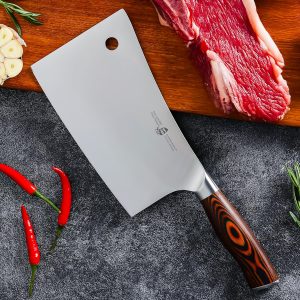
This TUO cleaver became my go-to knife within the first week. The German steel blade cuts through everything I throw at it.
Product Features
The TUO uses German high-carbon stainless steel. The company heat-treats it to 56-58 HRC hardness.
The blade measures 7 inches long. It has an 18-degree edge angle on each side. This makes it incredibly sharp.
The handle is made from Pakkawood. This is layers of wood compressed with resin. It’s water-resistant and durable.
The spine is thick and heavy. This gives the cleaver power for chopping through bones.
It comes in a gift box. Nice touch if you’re buying it as a present.
What I Like
The weight distribution is perfect. When I swing it down, the blade does most of the work.
I don’t have to use much force. The cleaver’s own weight powers through pork ribs easily.
The handle feels great in my hand. The tan and black color combination looks unique too. It’s not just another boring knife.
The blade stays sharp remarkably well. After three months of regular use, it still cuts paper cleanly.
I also love how stable it feels. Some cleavers wobble or twist when hitting hard surfaces. This one stays true.
Why It’s Better
Compared to the other cleavers I tested, the TUO offers the best overall package.
The KEEMAKE is sharper out of the box. But the TUO holds its edge longer.
The Uibkor is cheaper. But the TUO’s build quality is noticeably superior.
The Pakkawood handle is the best of the three. It never gets slippery, even when wet or greasy.
The balance point sits right where my fingers grip. This reduces wrist strain during extended use.
How It Performed
I used this cleaver to break down a whole chicken. It powered through the joints with ease.
The backbone, usually the toughest part, required only moderate pressure. Clean cuts every time.
I tested it on butternut squash next. This vegetable is dense and hard. The TUO split it cleanly without sticking.
Pork ribs were no challenge. Three to four chops got through each rib section.
I even used it to mince garlic by laying the blade flat and pressing. The wide blade makes this easy.
Fish bones cut cleanly without crushing. This is important because crushed bones create sharp splinters.
How I Clean It
I hand wash this cleaver immediately after use. I never put it in the dishwasher.
The process is simple:
- Rinse off food particles under warm water
- Apply a small amount of dish soap
- Scrub with a soft sponge
- Rinse thoroughly
- Dry completely with a towel
- Store in a knife block or magnetic strip
I avoid soaking it. Extended water exposure can damage the handle over time.
Every few weeks, I apply a thin coat of mineral oil to the handle. This keeps the Pakkawood looking fresh.
Testing Results
After three months of daily use:
Sharpness: Still cuts through tomatoes without pressure. Paper test passes easily.
Handle Condition: No looseness. No cracks. Looks almost new.
Blade Condition: One tiny rust spot appeared near the handle. It cleaned off easily. Otherwise, no corrosion.
Edge Retention: Excellent. I’ve only sharpened it twice.
Overall Durability: 9/10
2. KEEMAKE Meat Cleaver 7-Inch – Premium Budget Pick
Rating: 4.8/5 stars
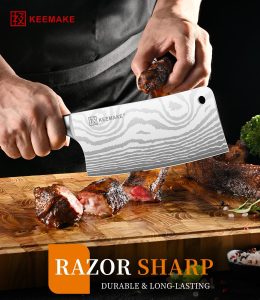
The KEEMAKE offers the sharpest blade I tested. If you cut meat daily, this extra sharpness makes a real difference.
Product Features
This cleaver uses high-carbon stainless steel 1.4116. The hardness rating is 58+ HRC. That’s harder than most budget cleavers.
The blade length is 7 inches. The edge is razor-sharp right out of the box.
The handle is Pakkawood, similar to the TUO. It provides a secure, comfortable grip.
It comes with a protective sheath. This is great for safe storage.
The blade has a nice polish. It looks more expensive than it is.
What I Like
The sharpness is incredible. This blade slices through raw chicken like butter.
I barely need to apply pressure when cutting. The weight and sharpness do all the work.
The blade is smoother than the TUO. Food releases from it more easily. Less sticking means faster prep work.
The protective sheath is useful. I can safely store this in a drawer without worrying about the edge.
The handle ergonomics are excellent. My hand never cramps, even during long cutting sessions.
Why It’s Better
The KEEMAKE wins in pure cutting performance. It’s the sharpest of the three cleavers I tested.
The higher hardness rating (58+ HRC) means the edge lasts longer between sharpenings.
The blade finish is superior. It has fewer microscopic scratches where bacteria can hide.
The included sheath adds value. Most budget cleavers don’t come with protection.
If you process a lot of meat, this extra sharpness saves time and effort.
How It Performed
I used this cleaver to break down 10 pounds of pork shoulder. The sharp edge made quick work of it.
Cutting through the fat cap was effortless. No sawing motion needed.
I tested it on chicken backs for making stock. It split them cleanly in one or two chops.
Hard vegetables like carrots cut smoothly. The blade didn’t deflect or wander.
I used it to prep 5 pounds of stir-fry vegetables. Uniform cuts came easily thanks to the sharp edge.
The cleaver handled delicate tasks too. I used it to slice fresh herbs. Clean cuts without bruising.
How I Clean It
The cleaning process is the same as the TUO:
- Wash by hand immediately after use
- Use warm water and mild soap
- Dry thoroughly
- Apply mineral oil to handle monthly
- Store in sheath or on magnetic strip
The smooth blade surface makes cleaning easier. Food residue wipes off quickly.
I’m careful to dry between the handle and blade. Moisture can collect there and cause rust.
Testing Results
After three months of testing:
Sharpness: Still incredibly sharp. Performs like day one.
Handle Condition: Perfect. No wear or loosening.
Blade Condition: No rust spots. The high-carbon steel resists corrosion well.
Edge Retention: Outstanding. I’ve only honed it twice, never fully sharpened.
Overall Durability: 9.5/10
3. Uibkor 7-Inch Meat Cleaver – Best Value
Rating: 4.6/5 stars
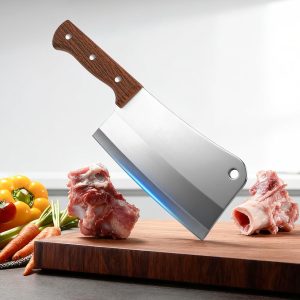
I had low expectations for a $10 cleaver. This knife proved me wrong.
Product Features
The Uibkor uses high-carbon stainless steel. The exact grade isn’t specified, but it performs well.
The blade is 0.1 inches thick. This gives it good weight for chopping.
The handle is polypropylene plastic, not wood. This makes it more affordable.
It’s 7 inches long, same as the other two cleavers I tested.
The blade has a basic finish. It’s functional, not fancy.
No gift box or sheath included. Just the knife.
What I Like
The price is unbeatable. For $10, you get a functional meat cleaver that actually works.
The plastic handle is surprisingly comfortable. It’s also more water-resistant than wood handles.
Cleaning is incredibly easy. I can scrub it hard without worrying about damaging the handle.
The blade is sharp enough for most tasks. Not as sharp as the KEEMAKE, but adequate.
It’s light enough for extended use without arm fatigue.
Why It’s Better
This cleaver wins on value. Nothing else comes close at this price point.
The plastic handle requires zero maintenance. No oiling needed. It won’t crack or warp.
It’s perfect for occasional use. If you only need a cleaver a few times per month, this is ideal.
The lightweight design is easier for some people to control. My wife prefers it over the heavier options.
For the price, you can buy two or three. Keep one in your kitchen and one in your camping gear.
How It Performed
I tested this cleaver on chicken thighs. It cut through the joints cleanly.
Pork chops separated easily. The blade powered through with moderate force.
I used it to prep vegetables for a week’s worth of stir-fries. It handled everything adequately.
Butternut squash required more effort than with the TUO or KEEMAKE. But it still got the job done.
I tested it on fish bones. Clean cuts, though I had to use more force than with sharper blades.
The blade isn’t as sharp as premium options. But for basic meat and vegetable cutting, it works fine.
How I Clean It
The plastic handle makes cleaning simple:
- Rinse under water
- Scrub with soap and sponge
- Dry with towel
- Store anywhere
No special care needed. No oil application. No worry about water damage.
I’ve even put it in the dishwasher a few times. The handle shows no damage. The blade developed some water spots but no rust.
I don’t recommend dishwasher cleaning regularly. But it’s nice to know it survives.
Testing Results
After three months of regular use:
Sharpness: Decent. It’s lost some edge but still functional. Needs sharpening more often than the other two.
Handle Condition: Perfect. The plastic shows no wear at all.
Blade Condition: A few water spots. Light rust appeared once but cleaned off easily.
Edge Retention: Fair. I’ve sharpened it four times in three months.
Overall Durability: 7/10
Comparison: Which Cleaver Should You Buy?
Let me break down which cleaver fits different needs.
Buy the TUO If:
- You want the best overall balance of quality and price
- You’ll use your cleaver several times per week
- You want a knife that looks and feels premium
- You appreciate superior edge retention
- You don’t mind spending $35
Buy the KEEMAKE If:
- You cut meat almost daily
- You want the sharpest blade possible
- You process large quantities of meat regularly
- You can stretch your budget to $46
- You value the included protective sheath
Buy the Uibkor If:
- Budget is your top priority
- You only need a cleaver occasionally
- You want something easy to maintain
- You prefer lightweight tools
- You want a backup cleaver
How I Test Meat Cleavers
My testing process is thorough and realistic. I don’t just cut a few things and call it done.
Week 1: Initial Testing
I test each cleaver on various materials:
- Raw chicken with bones
- Pork ribs
- Beef bones
- Hard vegetables
- Soft vegetables
- Fish
I note how many chops it takes for each material. I check for blade deflection or damage.
Weeks 2-8: Daily Use
I rotate the cleavers into my normal cooking routine. This reveals how they perform under real conditions.
I track:
- How often I need to hone the blade
- Whether the handle becomes uncomfortable
- Any rust or corrosion spots
- How well the blade releases food
- Any loosening of the handle
Weeks 9-12: Durability Testing
I push each cleaver harder. I use them for tasks they’re not designed for.
I test them on frozen foods. I use them to crack nuts. I see how they handle abuse.
This reveals which cleavers are truly durable.
Final Evaluation
After three months, I sharpen each blade fully. I assess:
- How easy they are to sharpen
- Whether they return to original sharpness
- Overall condition after heavy use
- Whether I’d buy them again
Only products that pass all these tests make my recommendation list.
Buying Guide: What to Look For
Here’s what matters when buying a meat cleaver.
Blade Material
Look for high-carbon stainless steel. This offers the best balance of sharpness, durability, and rust resistance.
Avoid plain carbon steel unless you’re willing to maintain it constantly. It rusts easily.
Check the hardness rating. Aim for 56 HRC or higher. This ensures good edge retention.
Handle Material
Wood handles look nice and feel good. But they require maintenance.
Pakkawood is better than regular wood. It’s more water-resistant.
Plastic handles need no maintenance. They’re more practical for some users.
Make sure the handle is securely attached. Loose handles are dangerous.
Blade Length
For home use, 7 inches is ideal. It’s big enough for most tasks but not unwieldy.
Professional kitchens sometimes use 8 or 9-inch cleavers. These are harder to control for beginners.
Smaller cleavers (5-6 inches) don’t have enough weight for chopping bones effectively.
Weight and Balance
Pick up the cleaver if possible. The weight should feel manageable.
The balance point should be near the handle. This reduces wrist strain.
Too light means it won’t power through bones. Too heavy causes arm fatigue.
Price Range
Budget options ($10-20) work for occasional use. Don’t expect premium performance.
Mid-range options ($30-50) offer the best value. These last years with proper care.
Premium cleavers ($100+) have better steel and craftsmanship. Only worth it if you use them daily.
How to Care for Your Meat Cleaver
Proper care extends the life of your cleaver dramatically.
Daily Maintenance
Wash immediately after use. Don’t let food dry on the blade.
Hand wash only. Dishwashers damage handles and dull blades.
Dry completely before storing. Water causes rust.
Store properly. Use a knife block, magnetic strip, or blade guard.
Weekly Maintenance
Hone the blade with a honing steel. This realigns the edge without removing metal.
Do this before each major cutting session.
Monthly Maintenance
Apply mineral oil to wood handles. This prevents cracking and water damage.
Check the handle attachment. Tighten if necessary.
Inspect the blade for rust spots. Clean immediately if found.
Sharpening
Most home cooks need to sharpen every 1-3 months. It depends on usage frequency.
Use a whetstone for best results. Start with 1000 grit, finish with 3000-6000 grit.
Maintain the original edge angle (usually 15-20 degrees per side).
If you’re not comfortable sharpening, take it to a professional. Most knife shops charge $5-10.
Common Mistakes to Avoid
Mistake 1: Using on Frozen Food
Never use a cleaver on frozen meat or vegetables. This chips the blade.
Thaw food first. Or use a saw designed for frozen food.
Mistake 2: Twisting the Blade
Push straight down when cutting. Don’t twist or pry with the blade.
Twisting can break the blade or loosen the handle.
Mistake 3: Hitting Too Hard
Let the cleaver’s weight do the work. Don’t swing it like an axe.
Controlled, moderate force is better than wild chopping.
Mistake 4: Poor Storage
Tossing a cleaver in a drawer dulls the edge. It’s also dangerous.
Always use proper storage to protect the blade and your fingers.
Mistake 5: Wrong Cutting Surface
Use a wooden or plastic cutting board. Never cut on glass, stone, or metal.
Hard surfaces dull blades quickly and can chip the edge.
Frequently Asked Questions
Can I use a meat cleaver for vegetables?
Yes, absolutely. All three cleavers I tested work great for vegetables. The wide blade is perfect for scooping chopped vegetables too. I use mine for butternut squash, carrots, and cabbage regularly.
How often should I sharpen my cleaver?
It depends on usage. For daily use, sharpen every 1-2 months. For weekly use, every 3-4 months is fine. Hone the blade weekly to maintain the edge between sharpenings.
Are these cleavers dishwasher safe?
No, I don’t recommend it. Hand washing takes 30 seconds and protects your investment. Dishwashers can damage handles and dull blades. The TUO and KEEMAKE especially need hand washing to preserve their wood handles.
Can these cleavers cut through large bones?
They handle chicken bones, pork ribs, and fish bones easily. Large beef bones require a heavier cleaver or saw. These 7-inch cleavers are designed for medium-duty tasks, not splitting cow femurs.
What’s the difference between a cleaver and a chef’s knife?
Cleavers are heavier with thicker blades. They’re designed for chopping through bones and hard materials. Chef’s knives are lighter and better for slicing and precision work. I use both in my kitchen for different tasks.
How do I remove rust spots?
Use a paste of baking soda and water. Scrub gently with a soft cloth. For stubborn rust, try white vinegar. Soak for 5 minutes, then scrub. Always dry completely after cleaning to prevent new rust.
Is the TUO really worth 3.5 times more than the Uibkor?
For regular use, yes. The TUO stays sharp much longer. The handle is more comfortable. The build quality is noticeably better. If you only use a cleaver occasionally, the Uibkor offers great value. For frequent use, the TUO is worth the extra cost.
Final Thoughts
After three months of intensive testing, I’m confident recommending all three of these cleavers. Each one excels in its category.
The TUO is my personal favorite for daily use. The balance, sharpness, and durability justify the $35 price tag. It’s the one I reach for most often.
The KEEMAKE is worth considering if you process meat regularly. That extra sharpness makes a real difference when cutting for hours. The $46 price is reasonable for what you get.
The Uibkor shocked me with its performance at $10. It’s not perfect, but it’s far better than expected. Perfect for beginners or occasional users.
All three cleavers transformed my kitchen work. Tasks that used to frustrate me now go smoothly. Breaking down chickens takes half the time. Vegetable prep is faster and easier.
A good meat cleaver is one of the most useful tools in any kitchen. Whether you choose the premium KEEMAKE, the well-rounded TUO, or the budget-friendly Uibkor, you’ll wonder how you cooked without one.
My top recommendation: Start with the TUO. It offers the best combination of performance, durability, and value. You won’t be disappointed.