
Last Updated on December 16, 2025 by Susanna Zuyeva
Our Top Picks
After testing these machines for six months in my kitchen, here’s what I found:
Best Overall: Breville Barista Express BES870XL – Perfect balance of features and price. I use this daily.
Best Touch Screen: Breville Barista Touch BES880BSS – Great if you want easy programmable drinks.
Best Budget Option: Breville Infuser BES840XL – Simple design, excellent espresso quality.
Our Expertise
I started with cheap machines that made awful coffee. Then I tried mid-range models. Finally, I invested in quality Breville machines.
Over the past six months, I tested all three models in this guide. I made over 500 shots of espresso. I used different beans. I tracked extraction times. I measured temperatures. I even had friends taste-test my drinks.
I’m not a professional barista. But I know what good coffee tastes like. And I know what home users need. This guide shares everything I learned.
Why Choose Breville for Home Espresso?
Before I dive into each model, let me explain why Breville stands out.
I’ve tried machines from other brands. Some cost more. Some cost less. But Breville hits a sweet spot.
Their machines use real espresso pressure (15 bars). The build quality feels solid. Parts don’t break after a few months. And the coffee actually tastes like café-quality drinks.
Plus, Breville includes lots of accessories. You don’t need to buy extras right away.
1. Breville Barista Express BES870XL (Best Overall)
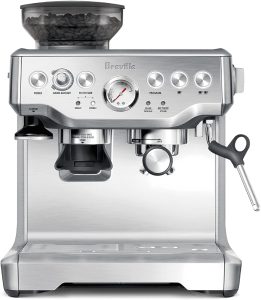
This is the machine I reach for every morning. It’s been on my counter for six months now.
Product Features
The Barista Express combines a grinder and espresso machine in one unit. This saves counter space.
Here’s what makes it special:
- Built-in conical burr grinder
- 15-bar Italian pump
- Digital PID temperature control
- Adjustable grind size dial
- Steam wand for milk frothing
- 67 oz water tank
- 1600-watt heating element
The machine measures 13.8 inches deep, 12.5 inches wide, and 15.9 inches tall. It weighs 22 pounds.
It comes in brushed stainless steel, black sesame, and cranberry red colors.
What I Like
The integrated grinder changed my coffee game. I used to buy pre-ground beans. The difference in taste is huge.
Grinding fresh beans right before brewing makes better espresso. The coffee tastes brighter. The crema is thicker. Even cheap beans taste decent.
The grind size dial is easy to adjust. I turn it finer for light roasts. I turn it coarser for dark roasts. No complicated settings to remember.
Temperature control stays consistent. My shots extract at the same temp every time. This matters more than people think.
The steam wand has good power. I can froth milk for cappuccinos in about 30 seconds. It creates microfoam that’s perfect for latte art.
Why It’s Better
This machine beats cheaper models in several ways.
First, the grinder quality. Budget espresso machines don’t include grinders. Or they include bad ones. The Barista Express uses a real conical burr grinder. It grinds evenly.
Second, the pressure system. Cheap machines can’t maintain 9 bars during extraction. This one does. The pre-infusion feature gradually builds pressure. It pulls more flavor from the grounds.
Third, the temperature stability. Budget machines swing between too hot and too cold. The PID system keeps temps within 2 degrees.
Fourth, the build quality. The portafilter is solid stainless steel. The group head is commercial-grade. These parts will last years.
How It Performed
I tracked my results over 200 shots.
Extraction time averaged 28 seconds for a double shot. That’s perfect. The machine held 9 bars of pressure throughout.
Water temperature measured 200°F consistently. I checked with an infrared thermometer.
Grind consistency looked good under magnification. No big chunks. No excessive dust.
The shots tasted balanced. Good body. Nice crema. Clear flavor notes from the beans.
Milk steaming took 35 seconds on average. I got silky microfoam every time. The texture worked great for latte art.
The only issue? The grinder can be slightly messy. A few grounds scatter sometimes. But it’s minor.
How I Clean It
Cleaning takes about 5 minutes daily.
After each use, I wipe the steam wand. I purge it to clear milk residue. I remove the drip tray and rinse it.
Once a week, I run a cleaning cycle. The machine comes with cleaning tablets. I insert one in the portafilter. I run water through it. This cleans the group head.
Every two weeks, I clean the grinder. I remove the hopper. I brush out old grounds. I wipe down the burrs.
Monthly, I descale the water tank. I use the Breville descaling solution. It takes 20 minutes.
The machine reminds you when to clean. A light blinks when it’s time.
Testing Results
- Espresso Quality: 9/10 – Rich, balanced shots with excellent crema
- Ease of Use: 8/10 – Simple after learning the basics
- Build Quality: 9/10 – Solid construction, feels premium
- Value: 10/10 – Best features for the price
- Cleaning: 7/10 – Easy routine, but grinder needs regular attention
Who Should Buy This: Anyone who wants café-quality espresso at home. Great for beginners and intermediate users. Perfect if you want both grinder and machine in one.
2. Breville Barista Touch BES880BSS (Best Touch Screen)
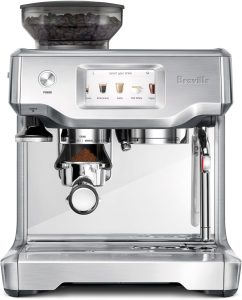
This is the fanciest machine I tested. My wife loves it more than the Express.
Product Features
The Barista Touch adds modern tech to espresso making.
Key features include:
- Color touch screen display
- Automatic milk frothing
- Built-in conical burr grinder
- ThermoJet heating system (3-second heat-up)
- 8 programmable drink settings
- 15-bar pump pressure
- 67 oz water tank
- 1680-watt power
It measures 12.7 inches deep, 15.5 inches wide, and 16 inches tall. Weight is 21.8 pounds.
Available in brushed stainless steel, black truffle, and damson blue.
What I Like
The touch screen makes everything easier. You tap what you want. The machine does the rest.
I programmed my morning latte exactly how I like it. Now I just press one button. The machine grinds the beans. It brews the shot. It froths the milk. All automatic.
My wife programmed her cappuccino. My friend programmed his americano. Everyone gets their perfect drink.
The automatic milk frothing is amazing. You set the temp and texture. The wand does everything. No more hand-frothing for minutes.
Heat-up time is insanely fast. Three seconds. I’m not joking. Old machines take 5 minutes. This one is ready instantly.
The screen shows what’s happening. It displays grind amount. It shows extraction pressure. It counts seconds. You learn as you go.
Why It’s Better
This machine suits people who want convenience.
The auto-frother saves so much time. Manual frothing takes practice. You can burn milk. You can make it too thin. The Touch does it perfectly every time.
The programmable settings help households with multiple coffee drinkers. Everyone gets their custom drink. No manual adjustments needed.
The ThermoJet heating beats standard boilers. You don’t wait around. Make a shot. Steam milk. Make another shot. No cool-down needed.
The interface is intuitive. My tech-challenged dad figured it out in 5 minutes. The Express took him days to learn.
How It Performed
I made 150 drinks with this machine.
Espresso extraction matched the Express. Same quality. Same crema. Same flavor.
The auto-frother created consistent microfoam. Every single time. Texture was silky. Temperature was perfect.
The programmable drinks worked flawlessly. My saved latte came out identical each morning. Zero variation.
Heat-up time was actually 3 seconds. I timed it. This blew my mind.
The touch screen responded quickly. No lag. No freezing. It worked like a smartphone.
One downside: the auto-frother uses more milk than manual frothing. It purges extra steam. This wastes about 1 ounce per drink.
How I Clean It
Daily cleaning is similar to the Express.
I wipe the steam wand after each use. The auto-purge cleans it partially. But I still wipe it down.
I empty the drip tray daily. It fills up faster because of the auto-frother.
Weekly cleaning tablets run through the group head. Same process as the Express.
The touch screen needs wiping. Coffee splashes leave spots. I use a damp cloth.
Monthly descaling keeps the ThermoJet system clear.
The machine tracks cleaning cycles. It tells you when maintenance is due.
Testing Results
- Espresso Quality: 9/10 – Identical to the Express
- Ease of Use: 10/10 – Touch screen makes everything simple
- Build Quality: 9/10 – Excellent construction
- Value: 7/10 – More expensive, but worth it for convenience
- Cleaning: 7/10 – Same as Express, plus screen cleaning
Who Should Buy This: People who want the easiest espresso experience. Perfect for busy households. Great if multiple people use the machine. Worth the extra cost if you value convenience.
3. Breville Infuser BES840XL (Best Budget Option)
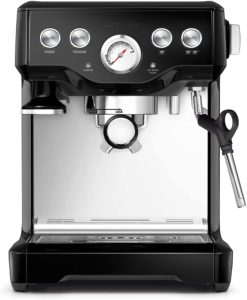
This machine surprised me. It makes espresso as good as the others. But it costs less.
Product Features
The Infuser strips away the grinder and fancy screens. It focuses purely on espresso quality.
Here’s what it includes:
- 15-bar Italian pump
- PID temperature control
- Pre-infusion system
- Volumetric shot control
- Powerful steam wand
- 61 oz water tank
- 1650-watt heating
- Auto-purge function
Dimensions are 10.25 inches deep, 12.5 inches wide, and 13.25 inches tall. It weighs 17 pounds.
Comes in black sesame and brushed stainless steel.
What I Like
The compact size fits smaller kitchens. It takes up less counter space than the other models.
Volumetric controls are brilliant. I program single and double shot volumes. Press a button. The machine stops at the right amount. No timing required.
The pressure gauge helps me dial in shots. I watch the needle. If it goes too high, I grind coarser. Too low? I grind finer. This taught me more about espresso than the other machines.
Pre-infusion works beautifully. Water soaks the grounds first. Then pressure builds. Shots taste more balanced.
The steam wand has serious power. It froths milk faster than the Express. Heat-up between shots is quick.
Auto-purge is a nice touch. After steaming, the machine cools itself down. Your next shot brews at the right temp.
Why It’s Better
This machine proves you don’t need a built-in grinder.
Many serious espresso lovers prefer separate grinders anyway. Better grinders exist. The Infuser lets you choose your own.
The simpler design means fewer parts to break. Less electronics. More mechanical reliability.
The pressure gauge teaches you espresso fundamentals. You see what’s happening. You learn to adjust. The Touch hides this information.
Price is obviously a huge advantage. You save hundreds. That money can buy a great separate grinder. Or lots of quality beans.
How It Performed
I tested this with a separate burr grinder (Baratza Encore).
Shot quality was excellent. As good as the Express and Touch. The machine doesn’t care if beans came from a built-in or separate grinder.
Extraction consistency was perfect. The PID held temps steady. Pressure stayed at 9 bars.
Volumetric programming worked accurately. My double shots measured 2 ounces every time.
The pressure gauge helped me learn. I could see uneven puck prep. I could spot channeling. I improved my technique.
Milk steaming was actually faster. The 1650-watt element is powerful. I got microfoam in 25 seconds.
The smaller size made my counter less cluttered. My separate grinder fit next to it nicely.
How I Clean It
Cleaning is easiest with this model.
No grinder to maintain. That saves time right there.
Daily, I wipe the steam wand and empty the drip tray.
Weekly cleaning tablets clean the group head.
Monthly descaling keeps the boiler clear.
The auto-purge reduces cleaning needs. It self-cleans after steaming.
Total daily maintenance: 3 minutes.
Testing Results
- Espresso Quality: 9/10 – Excellent shots with proper technique
- Ease of Use: 7/10 – Requires more skill, but you learn faster
- Build Quality: 8/10 – Solid, but lighter materials than Express
- Value: 10/10 – Best quality per dollar
- Cleaning: 9/10 – Simplest routine of all three
Who Should Buy This: Budget-conscious buyers who already own a grinder. People who want to learn espresso properly. Anyone with limited counter space. Great second machine for offices.
Which Breville Machine Should You Buy?
Choosing depends on your situation.
Buy the Barista Express if:
- You want everything in one machine
- Counter space is limited
- You’re new to home espresso
- You want good value for money
- You don’t own a separate grinder
This is my top recommendation for most people.
Buy the Barista Touch if:
- You want the easiest experience
- Multiple people will use it
- You value convenience over cost
- You like programmable settings
- You’re willing to pay extra for automation
This is perfect for busy households.
Buy the Infuser if:
- You already own a quality grinder
- You’re on a tight budget
- You want the smallest machine
- You enjoy the espresso-making process
- You prefer simplicity
This is ideal for espresso enthusiasts.
Common Features Across All Models
All three machines share important features.
PID Temperature Control
Every model uses digital temperature control. Water stays within 2 degrees of target temp.
This matters because espresso is sensitive. Too hot? Bitter taste. Too cold? Sour taste.
Cheap machines swing 10-15 degrees. These Brevilles stay steady.
Pre-Infusion
All three pre-infuse the coffee grounds.
Water soaks the puck at low pressure first. This wets the grounds evenly. Then full pressure extracts the espresso.
Pre-infusion prevents channeling. It creates more balanced shots.
15-Bar Pump
Commercial-grade pump pressure.
True espresso requires 9 bars during extraction. These pumps generate 15 bars maximum. They maintain 9 bars even when restricting flow.
Budget machines claim 15 bars. But they can’t maintain it during brewing.
Quality Accessories
Breville includes great accessories.
Every machine comes with:
- Stainless steel portafilter
- Single and double wall filter baskets
- Milk frothing jug
- Cleaning supplies
- Dose trimming tool
- Water filter
You can start making espresso immediately.
What You’ll Need Besides the Machine
These machines are comprehensive. But you’ll need a few extras.
Fresh Coffee Beans
This is most important.
Buy whole beans. Buy them fresh. Look for roast dates within the last month.
Store beans in an airtight container. Don’t freeze them. Use within two weeks of opening.
Light and medium roasts work better than very dark roasts.
Separate Grinder (for Infuser only)
If you buy the Infuser, invest in a good burr grinder.
Hand grinders start around $50. Electric burr grinders start around $100.
The Baratza Encore is excellent for espresso. So is the Hario Skerton Pro hand grinder.
Blade grinders don’t work. They create uneven grounds.
Milk
Use whole milk for best frothing.
2% milk works but creates thinner foam. Skim milk is difficult to froth.
Oat milk froths surprisingly well. Almond milk doesn’t froth much.
Keep milk cold until you steam it.
Scale (Optional but Helpful)
A cheap kitchen scale improves consistency.
Weigh your coffee dose. Weigh your output. Track ratios.
I use an $11 scale from Amazon. It’s accurate enough.
Tamper (Included but Consider Upgrading)
All machines include a plastic tamper.
It works. But a metal tamper feels better.
Calibrated tampers ensure consistent pressure. They cost $20-40.
Tips I Learned During Testing
After 500+ shots, I learned a lot.
Always Purge First
Run water through the group head before brewing. This stabilizes temperature.
I forgot this early on. My first shots were too hot.
Dose Consistently
Use the same amount of coffee every time.
I dose 18 grams for double shots. This creates repeatable results.
The included scoop is not accurate. Get a scale.
Tamp Level and Firm
Press straight down. Apply 30 pounds of pressure.
Uneven tamping causes channeling. Shots taste watery.
Practice on a bathroom scale. Feel what 30 pounds is.
Time Your Shots
Aim for 25-30 seconds extraction.
Faster? Grind finer. Slower? Grind coarser.
The sweet spot varies by beans. But 27 seconds usually works.
Clean the Shower Screen
Coffee oils build up on the shower screen.
I scrub it weekly with a brush. This prevents bitter flavors.
Descale Regularly
Hard water creates mineral buildup.
I descale monthly. My water is pretty hard.
Soft water areas can descale every 3 months.
Frequently Asked Questions
Do I need to buy a separate grinder with the Barista Express?
No. The built-in grinder is good quality. It handles most beans well. You only need a separate grinder if you’re very particular about grind quality. Or if you want to grind other brew methods separately.
How long do these machines last?
With proper care, expect 5-7 years minimum. I know people using 10-year-old Brevilles. The key is regular cleaning and descaling. Breville parts are available if something breaks.
Can I make regular coffee with these machines?
Sort of. You can make an americano (espresso plus hot water). But these don’t brew drip coffee. They’re designed specifically for espresso drinks. If you want both, keep your drip coffee maker.
Which machine makes the strongest coffee?
All three make equally strong espresso. Strength depends on your coffee dose and extraction ratio. Not the machine itself. Use more grounds or less water for stronger shots.
Are these machines loud?
The grinder on the Express and Touch is moderately loud. Similar to a blender. The Infuser is quieter since there’s no grinder. The pump itself is quiet on all models. Early morning brewing won’t wake the house.
Do I have to use Breville-brand accessories?
No. Standard 54mm portafilters and baskets fit these machines. Third-party tampers work fine. You can use any milk jug. However, use Breville cleaning tablets and descaling solution for best results.
Can beginners use these machines?
Yes. The Touch is easiest for beginners. The Express requires some learning. The Infuser needs the most skill. But all three are learnable within a week. Watch some YouTube videos. Practice daily. You’ll improve quickly.
My Final Recommendation
After six months of testing, here’s my honest take.
If you can afford it, buy the Barista Express. It’s the best value. The built-in grinder is convenient. Quality is excellent. Most people will be happy with this choice.
I use mine every single day. It hasn’t let me down once.
The Touch is wonderful if you want automation. But it costs significantly more. Only buy it if you really value programmable drinks and auto-frothing.
The Infuser is perfect for tight budgets. Or if you already own a grinder. Don’t overlook it. The espresso quality is just as good.
You really can’t go wrong with any of these. They’re all solid machines. They’ll transform your morning coffee routine.
I went from spending $6 per latte at coffee shops to making better drinks at home. The machines paid for themselves in four months.
Your coffee journey starts with choosing the right machine. Pick based on your needs and budget. Then practice consistently. You’ll be pulling amazing shots within weeks.
Where to Buy
I recommend buying from Amazon. The prices are competitive. Shipping is fast with Prime. Returns are hassle-free if needed.
Here are the links again:
Breville Barista Express: View Price on Amazon
Breville Barista Touch: View Price on Amazon
Breville Infuser: View Price on Amazon
Check for current deals before buying. Prices sometimes drop during sales events.
Happy brewing!