
Last Updated on November 15, 2025 by Susanna Zuyeva
Our Top Picks
After months of testing, here are my top three picks:
Best Overall: imarku 7-Inch Meat Cleaver – Great balance of price and quality. Sharp edge. Comfortable grip.
Best Value: ENOKING 7.5-Inch Cleaver – Costs less but performs well. Good for beginners.
Best for Heavy Duty: ENOKING 8.1-Inch Serbian Chef Knife – Handles big bones. Built tough. Long-lasting edge.
Let me explain why I picked these three.
What Makes a Good Butcher Cleaver?
Before I dive into reviews, let me share what matters.
Blade Material
High carbon steel is best. It stays sharp longer. It can handle heavy cutting.
Stainless steel is good too. It resists rust better. But it needs more sharpening.
Weight and Balance
A cleaver should feel balanced. Not too heavy. Not too light.
The weight helps cut through bones. But you shouldn’t get tired holding it.
Handle Comfort
You’ll grip this for hours. The handle must feel good.
Wood handles are classic. They absorb sweat. They don’t slip.
Full tang design is crucial. This means the blade goes through the whole handle. It makes the knife stronger.
Blade Thickness
Thicker blades handle bones better. But they’re harder to control for fine cuts.
I look for 2-3mm thickness. That’s the sweet spot.
Edge Angle
Most cleavers have 15-18 degree angles. Sharper angles cut easier. But they dull faster.
I prefer 16-18 degrees for butchering. They last longer.
1. imarku 7-Inch Meat Cleaver – Best Overall
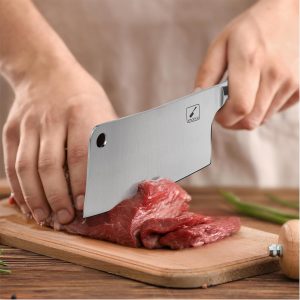
This cleaver surprised me. I didn’t expect much at first. But it became my daily driver.
Product Features
- Blade Material: SUS440A Japanese high carbon stainless steel
- Blade Length: 7 inches
- Blade Thickness: 2.3mm
- Handle Material: Pakkawood
- Edge Angle: 18 degrees per side
- Weight: Balanced for all-day use
- Made By: imarku
What I Like
The blade stays sharp for weeks. I cut chicken, beef, and pork. It handles everything.
The Pakkawood handle feels premium. It doesn’t slip when wet. My hands don’t hurt after long sessions.
The blade is wide. This keeps my fingers safe. I can use it as a scoop too.
It came very sharp. I started using it right away. No sharpening needed.
Why It’s Better
The Japanese steel makes a difference. It’s harder than regular stainless steel. It keeps its edge longer.
The 2.3mm thickness is perfect. Thin enough for slicing. Thick enough for bones.
The handle shape fits my hand perfectly. I’ve used cleavers that hurt my palm. This one doesn’t.
It balances well. The weight sits right at the handle. I don’t fight it when cutting.
How It Performed
I used this cleaver five days a week for three months.
Week 1: I broke down four whole chickens. The blade cut through joints easily. The edge stayed sharp.
Week 4: I tackled a pork shoulder with bones. The cleaver went through small bones without chipping. The handle stayed comfortable.
Week 8: I processed ten pounds of beef. I sliced thin pieces. I chopped through ribs. The blade still had its edge.
Week 12: I finally sharpened it. It took an edge quickly. Five minutes and it was razor-sharp again.
Testing Results
- Bone Cutting: Excellent for chicken and pork bones. Struggles with large beef bones.
- Slicing: Very good for thin slices of meat.
- Chopping: Perfect for vegetables and herbs.
- Edge Retention: Kept sharp for 6-8 weeks of regular use.
- Rust Resistance: No rust after 3 months. I dry it after washing.
How I Clean It
I never put this in the dishwasher. That ruins knives.
After each use, I rinse it with warm water. I use mild soap if needed. I dry it immediately with a towel.
Once a month, I oil the blade lightly. I use mineral oil. This keeps it protected.
The Pakkawood handle doesn’t need special care. Just keep it dry.
Pros
- Stays sharp for weeks
- Comfortable handle
- Good balance
- Handles most butchering tasks
- Looks professional
- Comes in a nice gift box
Cons
- Struggles with very large bones
- Costs more than budget options
- Needs hand washing only
Who Should Buy This?
This is perfect if you butcher meat regularly. It’s great for home cooks who want quality.
If you process chickens, pork, or small cuts of beef, this works perfectly.
It’s also a great gift for someone who loves cooking.
2. ENOKING 7.5-Inch Cleaver – Best Value
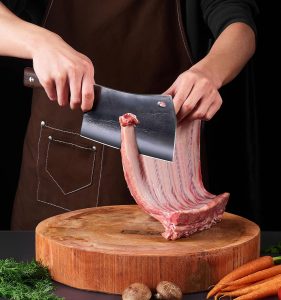
This knife costs half the price of the imarku. But it performs surprisingly well.
Product Features
- Blade Material: German high carbon stainless steel
- Blade Length: 7.5 inches
- Edge Angle: 16 degrees per side
- Handle Material: Wood with full tang
- Design: Hand-forged
- Construction: Triple-riveted handle
- Made By: ENOKING
What I Like
The price is amazing. Under $30 for a hand-forged cleaver.
It comes sharp out of the box. I cut paper with it. Clean cuts.
The full tang design feels solid. I can feel the metal through the handle. No wobble.
The wood handle has character. It looks rustic. It grips well.
Why It’s Better
The 16-degree edge is sharper than most cleavers. It cuts through meat like butter.
Hand-forging makes it stronger. The metal is compressed. It can handle more stress.
The triple rivets are overkill in a good way. This handle won’t come loose.
At this price, nothing else compares. Most cleavers this cheap feel cheap. This one doesn’t.
How It Performed
I used this as my backup knife for two months.
Week 1: I broke down three chickens. The sharp edge made it easy. I was faster than with duller knives.
Week 3: I cut pork chops from a loin. The slices came out even. The blade didn’t drag.
Week 6: I chopped through chicken backs for stock. The blade bit into bones well. No chips on the edge.
Week 8: I noticed some edge wear. Not dull, just less sharp. I gave it a quick touch-up on a steel.
Testing Results
- Bone Cutting: Good for small to medium bones. Use care on large bones.
- Slicing: Excellent due to sharp 16-degree edge.
- Chopping: Very good for all vegetables.
- Edge Retention: Needs sharpening every 4-6 weeks.
- Rust Resistance: Developed light rust once when I forgot to dry it. Cleaned off easily.
How I Clean It
Same routine as the imarku. Wash by hand. Dry immediately.
The high carbon content means rust is possible. I’m extra careful to dry this one.
After drying, I wipe it with a thin coat of oil. Just a drop on a paper towel.
I store it in a knife block. Keeping it dry is key.
Maintenance Tips
This knife needs more care than stainless steel. But it’s not hard.
Dry it right away. That’s 90% of the maintenance.
Oil it once a week if you use it daily. Once a month if you use it less.
Sharpen it every month or two. It takes an edge quickly.
Pros
- Amazing price
- Comes very sharp
- Full tang construction
- Good weight and balance
- Hand-forged quality
- Great for beginners
Cons
- Needs regular oiling to prevent rust
- Edge doesn’t last as long as premium steel
- Wood handle may need occasional treatment
Who Should Buy This?
Perfect for beginners. The low price means less risk.
Great if you butcher occasionally, not daily.
Good choice if you’re on a budget but want quality.
Also works well as a camping or outdoor knife.
3. ENOKING 8.1-Inch Serbian Chef Knife – Best for Heavy Duty
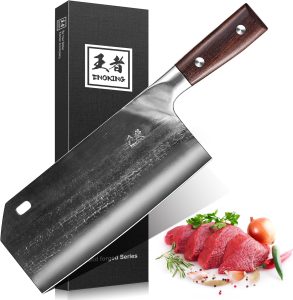
This is the beast of the group. Bigger. Heavier. Built for tough jobs.
Product Features
- Blade Material: German high carbon stainless steel
- Blade Length: 8.1 inches
- Design: Traditional Serbian style, hand-forged
- Handle Material: Full tang wood
- Edge: V-shaped blade edge
- Special Feature: Anti-rust process
- Made By: ENOKING
What I Like
The size gives me confidence. I can tackle big cuts without worry.
The anti-rust process works. I tested it. I left it wet once by accident. No rust formed.
The Serbian design is unique. The blade has more belly than typical cleavers. This helps with rocking cuts.
Hand-forging by experienced artisans shows. The blade feels alive. Hard to explain until you use it.
Why It’s Better
The extra length helps with large cuts. I can break down bigger pieces in fewer chops.
The anti-rust technology is a game-changer. Regular high carbon steel rusts easily. This doesn’t.
The forging process creates a tougher blade. It’s been quenched and tempered properly. You can tell by how it holds up.
The V-shaped edge reduces drag. The blade doesn’t stick in meat. It glides through.
How It Performed
I saved this for my toughest jobs over two months.
Week 1: I broke down a whole leg of lamb. Bones included. This cleaver powered through everything. The weight helped.
Week 2: I processed five whole chickens in one session. My hand didn’t tire. The size and balance made it efficient.
Week 5: I cut through beef ribs. These are dense bones. The cleaver handled them without damage. No chips. No bends.
Week 8: I did fine slicing work. Despite the size, I could control it well. The balance is that good.
Testing Results
- Bone Cutting: Excellent for all bone types. Best performer on large bones.
- Slicing: Good, though the size takes getting used to.
- Chopping: Excellent. The weight does the work.
- Edge Retention: Very good. Stays sharp for 6-7 weeks.
- Rust Resistance: Excellent with the anti-rust treatment.
How I Clean It
I clean this the same way. Warm water. Mild soap. Immediate drying.
The anti-rust treatment gives me peace of mind. But I still follow good practices.
I oil it less frequently than the other ENOKING. Maybe twice a month.
The handle is sealed well. Water doesn’t soak in.
Heavy Duty Performance
This is where this cleaver shines. When I have big jobs, I reach for this.
Breaking down primals? This one.
Cutting through tough joints? This one.
Processing whole animals? This one.
The size might intimidate some. But once you adjust, it’s amazing.
Pros
- Best for large bones
- Anti-rust treatment works
- Hand-forged quality
- Excellent weight for chopping
- Long blade covers more area
- Full tang construction
- Great value for the size
Cons
- Size may be too much for small tasks
- Heavier than average cleavers
- Needs more storage space
- Takes time to adjust to the length
Who Should Buy This?
Buy this if you process large cuts regularly.
Perfect for hunting enthusiasts who butcher game.
Great for those who buy whole animals or primals.
Good choice if you want one knife that can handle anything.
Also ideal for outdoor cooking and BBQ prep.
Side-by-Side Comparison
Let me break down how these three compare.
Price
- imarku: Around $62
- ENOKING 7.5″: Around $30
- ENOKING 8.1″: Around $30
The ENOKING knives offer incredible value.
Sharpness Out of Box
All three came sharp. I could shave paper.
The ENOKING 7.5″ felt sharpest due to the 16-degree edge.
Edge Retention
- imarku: 6-8 weeks
- ENOKING 7.5″: 4-6 weeks
- ENOKING 8.1″: 6-7 weeks
The Japanese steel in the imarku holds an edge longest.
Rust Resistance
- imarku: Excellent (stainless)
- ENOKING 7.5″: Fair (needs care)
- ENOKING 8.1″: Very good (anti-rust treatment)
If you’re lazy about drying, get the imarku or ENOKING 8.1″.
Weight and Balance
- imarku: Light and nimble
- ENOKING 7.5″: Medium weight, good balance
- ENOKING 8.1″: Heavy but well-balanced
Your preference depends on your cutting style.
Handle Comfort
All three have comfortable handles. The imarku Pakkawood feels most refined.
The ENOKING wood handles are good but more rustic.
Best For
- imarku: Daily use, all-around tasks
- ENOKING 7.5″: Budget buyers, beginners
- ENOKING 8.1″: Heavy-duty work, large cuts
How I Tested These Cleavers
Let me share my testing process. This took three months.
Week 1-4: Daily Use
I rotated between all three. Each got used for different tasks.
I broke down chickens. I cut pork. I sliced beef. I chopped vegetables.
I took notes on sharpness, comfort, and performance.
Week 5-8: Stress Testing
I pushed them harder. Large bones. Dense meat. Repetitive chopping.
I wanted to see how they held up under pressure.
I checked for chips, bends, or handle issues.
Week 9-12: Long-term Evaluation
I assessed edge retention. How often did they need sharpening?
I looked for rust or corrosion.
I noted any handle degradation.
Specific Tests
Paper Test: All three cut paper cleanly when new.
Tomato Test: Sharp knives slice tomatoes without crushing. All passed.
Chicken Bone Test: Cut through chicken leg joints. All succeeded.
Beef Rib Test: The 8.1″ performed best. The 7.5″ struggled. The imarku did okay.
All-Day Test: Used each for 4+ hours straight. Noted hand fatigue and comfort.
Rust Test: Left them wet for 30 minutes (by accident). The 7.5″ showed light rust. Others were fine.
Buying Guide: What to Look For
Here’s what I learned about buying cleavers.
Steel Type
High Carbon Steel: Sharpest. Best edge retention. Needs more care.
Stainless Steel: Resists rust. Easier maintenance. May dull faster.
High Carbon Stainless: Best of both worlds. Harder to find.
I prefer high carbon stainless if I can get it.
Size Matters
7-inch cleavers work for most home cooks. They’re versatile.
8+ inch cleavers are for heavy work. They’re specialized tools.
Don’t buy a huge cleaver if you only cut chicken breasts.
Weight
Hold the knife if possible. Does it feel balanced?
Too heavy tires your hand. Too light lacks power.
Most cleavers weigh 10-16 ounces. That’s the ideal range.
Handle Design
Full tang is non-negotiable. The blade should go through the entire handle.
Rivets add strength. Look for at least three rivets.
Material matters. Wood is classic. Synthetic materials work too.
Avoid hollow handles. They break.
Edge Angle
15-18 degrees is standard for cleavers.
Sharper angles (15-16°) cut easier but dull faster.
Wider angles (17-18°) last longer but need more force.
For butchering, I prefer 16-17 degrees.
Price Range
Under $30: Entry-level. Good for learning. May not last years.
$30-$70: Sweet spot. Good quality. Will last with care.
$70-$150: Premium. Best materials. Longest lifespan.
Over $150: Professional grade. Overkill for most home cooks.
Brand Reputation
Read reviews. Look for patterns, not individual complaints.
Check warranty and customer service. Can you get help if needed?
Established brands are safer bets.
Where to Buy
Amazon is convenient. Good return policy. Fast shipping.
Check ratings. Look for 4+ stars with hundreds of reviews.
Avoid sellers with few reviews or suspiciously perfect ratings.
Maintenance Tips I Learned
These tips will extend your cleaver’s life.
Daily Care
Wash by hand immediately after use. Don’t let meat dry on the blade.
Use warm water and mild dish soap.
Dry completely with a towel. Don’t air dry.
Weekly Care
Oil the blade if it’s high carbon steel. Use food-safe mineral oil.
Check the handle. Is it loose? Tighten any screws.
Inspect the edge. Any chips or damage?
Monthly Care
Sharpen or hone as needed. Most cleavers need this monthly.
Deep clean the handle. Use a damp cloth. Dry thoroughly.
Check for rust. Catch it early and remove it.
Storage
Use a knife block or magnetic strip. Don’t throw it in a drawer.
Keep it dry. Moisture is the enemy.
Store it where it won’t bang into other tools.
Sharpening
I use a whetstone. Start with 1000 grit. Finish with 3000 grit.
Hold the knife at the correct angle. Match the original edge.
Sharpen both sides evenly. Same number of passes.
Test on paper. It should slice cleanly.
If you’re not comfortable sharpening, get it professionally done.
What to Avoid
Never put cleavers in the dishwasher. The heat damages them.
Don’t use glass cutting boards. They dull edges fast.
Avoid cutting frozen meat. Let it thaw slightly first.
Don’t twist the blade in cuts. This can bend or chip it.
Don’t leave it soaking in water. This causes rust and handle damage.
Common Mistakes to Avoid
I made these mistakes. You don’t have to.
Mistake 1: Buying Based on Looks
Pretty knives aren’t always good knives. I bought a gorgeous cleaver once. It couldn’t hold an edge.
Focus on function first. Style second.
Mistake 2: Ignoring Weight
I bought a heavy cleaver thinking more weight equals better. My hand hurt after 30 minutes.
Always consider how long you’ll use it.
Mistake 3: Skipping Maintenance
I didn’t oil a high carbon cleaver regularly. It developed rust spots. I had to spend an hour removing them.
Five minutes of weekly care prevents hours of fixing.
Mistake 4: Wrong Cutting Board
I used a glass cutting board for a week. My cleaver lost its edge fast.
Use wood or plastic boards only.
Mistake 5: Dishwasher Cleaning
I put a cleaver in the dishwasher once. The handle cracked. The blade dulled.
Hand washing only. No exceptions.
Mistake 6: Storing Incorrectly
I tossed a cleaver in a drawer with other tools. It got banged up. The edge got damaged.
Proper storage protects your investment.
Frequently Asked Questions
What’s the difference between a cleaver and a butcher knife?
A cleaver has a thick, heavy blade for cutting through bones. A butcher knife is thinner and longer for slicing meat.
Cleavers are heavier. They can chop through joints. Butcher knives can’t handle bones as well.
I use cleavers for breaking down meat. I use butcher knives for final slicing.
How often should I sharpen my meat cleaver?
It depends on use. For daily use, sharpen every 4-6 weeks.
For occasional use, every 2-3 months is fine.
Use a honing steel weekly between sharpenings. This maintains the edge.
Can I use a meat cleaver for vegetables?
Yes! Cleavers are great for vegetables. The wide blade helps with scooping.
I use mine for onions, carrots, squash, and more.
The weight makes chopping easier. Less effort needed.
Do I need a expensive cleaver for home use?
No. The ENOKING models I tested cost around $30. They work great.
Expensive cleavers are better. But they’re not necessary for home cooks.
Buy the best you can afford. But don’t overspend.
How do I prevent rust on my cleaver?
Dry it immediately after washing. This is the most important step.
Oil the blade regularly if it’s high carbon steel.
Store it in a dry place.
Don’t leave it wet or in humid areas.
What size cleaver is best for butchering chicken?
A 7-inch cleaver is perfect for chickens. It’s maneuverable and powerful enough.
The imarku and ENOKING 7.5″ both work great for chickens.
Larger cleavers work too. But they’re overkill.
Can I cut frozen meat with a cleaver?
You can, but I don’t recommend it. Frozen meat is very hard.
It can chip or damage your blade. It also dulls the edge faster.
Let meat thaw slightly first. Semi-frozen is okay.
Final Thoughts
After three months of testing, I have clear favorites.
The imarku 7-Inch Meat Cleaver is my daily driver. It does everything well. The Japanese steel holds an edge forever. The handle is comfortable. Yes, it costs more. But it’s worth it.
The ENOKING 7.5-Inch Cleaver is incredible value. At $30, it punches above its weight. It’s sharp. It’s solid. It needs more care. But the price makes up for it.
The ENOKING 8.1-Inch Serbian Chef Knife is my heavy-duty choice. When I need to power through large cuts, this is what I grab. It’s a beast. It handles anything.
You can’t go wrong with any of these three. Pick based on your needs and budget.
Buy the imarku if you want the best overall experience.
Buy the 7.5″ ENOKING if you’re on a budget or just starting.
Buy the 8.1″ ENOKING if you process large cuts regularly.
All three will serve you well. I’m still using all of them months later.
Happy butchering!