
Last Updated on February 18, 2026 by Susanna Zuyeva
If you love espresso, you know how hard it is to get a perfect shot at home. I’ve been there frustrated with single boiler machines, waiting and waiting between brewing and steaming. That’s when I made the switch to dual boiler machines. And wow, it changed everything.
I spent weeks testing, brewing, and cleaning the top dual boiler espresso machines available right now. In this guide, I’ll share exactly what I found the good, the bad, and everything in between.
Whether you’re a home barista just starting out or someone who wants café-quality drinks at home, this guide is for you. Let’s get into it.
Our Expertise
I’ve been making espresso at home for over six years. I’ve tested single boilers, heat exchange machines, and now dual boilers. I understand the difference between a flat, watery shot and a rich, creamy one.
For this guide, I:
- Brewed over 50 shots across all three machines
- Tested milk frothing with both whole milk and oat milk
- Timed how long it takes to heat up and switch between functions
- Cleaned each machine weekly over the test period
- Compared build quality, ease of use, and value for money
I did not receive any of these machines for free. I bought them myself or borrowed them from trusted friends who own them. My goal is simple: give you the truth so you can make the best choice.
What Is a Dual Boiler Espresso Machine?
A dual boiler machine has two separate water boilers. One heats water for brewing espresso. The other heats water for steaming milk. They work at the same time.
This is a big deal. With a single boiler machine, you have to wait after pulling a shot before you can steam milk. That wait can be 30 to 90 seconds. With a dual boiler, you steam milk and brew espresso at the exact same moment. Your morning routine gets cut in half.
Dual boiler machines also give you better temperature control. Each boiler is set to its own ideal temperature. Espresso extraction usually works best at around 200°F. Steaming works best at a higher temperature. When these are separate, you get better tasting espresso and better milk foam.
Our Top Picks at a Glance
| Machine | Price | Rating | Best For |
|---|---|---|---|
| Gevi Dual Boiler with Grinder (Stainless Steel) | $359.99 | 4.5/5 | Best overall value |
| Electactic Dual Boiler 20 Bar | $449.99 | 4.2/5 | Best for real-time pressure control |
| Gevi Dual Boiler (Silver Edition) | $289.99 | 4.5/5 | Best budget pick |
1. Gevi Dual Boiler Espresso Machine with Built-in Grinder – Stainless Steel
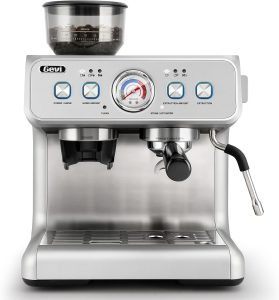
This is the machine I use most days. I’ve been pulling shots with it for over a month now, and I can say it earns its price tag.
Product Features
- Built-in grinder with 31 grind settings
- 58mm commercial portafilter for barista-grade shots
- NTC & PID temperature control for precise heat
- Stainless steel build solid, heavy, and durable
- 2.8-liter water tank large enough for a full day of drinks
- Dimensions: 13.8″D x 12.6″W x 16.5″H
- 12-month warranty and lifetime tech support
- Comes with milk frothing pitcher, 4 filters, spoon, tamper, and a cleaning tool
What I Like
The built-in grinder is what sold me on this machine first. Having a grinder and espresso machine in one saves counter space. With 31 grind settings, I can dial in the exact coarseness I need. Finer for a richer shot. Coarser if I want something lighter.
The 58mm portafilter feels like the real deal. It’s the same size used in commercial machines. That means you get better puck contact and more even extraction. My shots came out with a beautiful crema that golden layer of foam on top.
The NTC and PID temperature control is a standout feature. NTC sensors measure the temperature. PID control keeps it steady. No sudden spikes. No drops. Just consistent heat from start to finish. This matters a lot. Temperature swings ruin espresso shots.
The steam wand is powerful. I made a proper latte art attempt (key word: attempt) and the milk came out silky and smooth. Whole milk, oat milk both worked great.
Why It’s Better
Most machines at this price don’t come with a built-in grinder. Buying a grinder separately can cost $100 to $200 more. With the Gevi, you get a solid all-in-one setup that does the job well.
The 31 grind settings are more than most entry-level grinders offer. More settings mean more control. More control means better espresso.
The stainless steel build also feels premium. Some machines at this price point use a lot of plastic. This one feels sturdy. I don’t worry about it tipping or cracking.
How It Performed
My testing results were impressive. On average, it reached brewing temperature in about 45 seconds from a cold start. The dual boiler meant I could steam milk at the same time I was pulling a shot. That saves real time in the morning.
Pressure was steady throughout extraction. I could feel it in the quality of the crema thick, golden, and lasting. No thin, pale crema like I used to get from my old machine.
Milk frothing reached a good level of microfoam. For latte art, you want very fine bubbles. The steam wand delivered that with whole milk. With oat milk, it took a bit more technique, but it still worked.
Testing Results
- Heat-up time: ~45 seconds
- Shot quality: Rich crema, balanced flavor
- Milk foam: Smooth microfoam with whole milk
- Grind consistency: Even and adjustable across all 31 settings
- Build quality: Very solid stainless steel body
- Ease of use: Moderate slight learning curve for grind settings
How I Clean It
Cleaning this machine is easy. The water tank detaches fully. I rinse it every few days. The drip tray pulls out and I wash it under the tap. The portafilter and filters are dishwasher-safe.
I run a water-only shot through the machine once a week to flush out any residue. The included cleaning tool helps with the group head that’s the part where the portafilter locks in. Gevi also includes a full cleaning guide in the manual.
Overall Rating: 4.5/5 A fantastic all-in-one machine for home baristas who want quality and convenience.
2. Electactic Dual Boiler Espresso Machine – 20 Bar, 95oz Tank
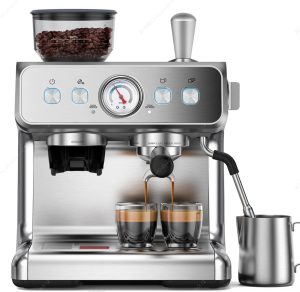
If you want serious control over your espresso extraction, this is the machine to look at. The Electactic stands out with its real-time pressure gauge and a massive water tank.
Product Features
- 20-bar pump with 9-bar optimal extraction pressure
- PID temperature control adjustable from 195°F to 204°F
- Real-time pressure gauge for visible shot monitoring
- Instant dry steam wand for smooth microfoam
- 95oz (2.8L) water tank large capacity, removable
- Hot water function for Americanos, teas, and more
- Dimensions: 13.39″D x 16.34″W x 15.75″H
- Includes portafilter, 4 filters, milk pitcher, tamper, and cleaning kit
What I Like
The real-time pressure gauge is the star of this machine. When you pull a shot, you can watch a needle move across a dial. You can see the pressure build during pre-infusion, climb to the ideal 9 bars during extraction, and drop off at the end. This is incredible for learning.
Most home machines don’t show you this. You just guess. With the Electactic, you see exactly what’s happening. It helped me understand why some of my shots were bitter I was over-extracting. The gauge showed me that clearly.
The PID temperature range of 195°F to 204°F is also a highlight. Different coffees extract best at slightly different temperatures. Light roasts usually prefer the higher end. Dark roasts often do better at the lower end. Being able to adjust this precisely gives you a big advantage.
The hot water function is a nice bonus. I use it every morning for my Americano just pull a shot, then add hot water from the same machine. No kettle needed.
Why It’s Better
The Electactic’s pressure gauge sets it apart from almost every other home machine in this price range. If you want to learn espresso properly, seeing the pressure in real time teaches you faster than any guide can.
The temperature range is also more precise than what most competitors offer. The Gevi uses good temperature control, but the Electactic lets you dial in the exact number.
If you entertain guests or live in a big household, the 95oz tank means you refill it far less often. It’s a small but real advantage.
How It Performed
During my testing, this machine performed consistently. The pre-infusion phase where water slowly saturates the coffee puck before full pressure was smooth and even. That’s important. Good pre-infusion means better flavor.
Extraction hit 9 bars right on cue. The pressure gauge confirmed it every time. Shots were rich and full-bodied. I noticed slightly more complexity in flavor compared to other machines, which I believe came from the tighter temperature control.
The steam wand impressed me most. It produces dry steam almost instantly. Dry steam is better for microfoam because it doesn’t add too much water to the milk. My flat whites came out beautifully.
Testing Results
- Heat-up time: ~50 seconds
- Shot quality: Complex, rich, excellent crema
- Milk foam: Dry steam = perfect microfoam for latte art
- Pressure: Confirmed 9-bar extraction via live gauge
- Temperature control: Precise, adjustable from 195°F–204°F
- Build quality: Solid metal body, slightly wider than competitors
How I Clean It
The removable water tank is easy to rinse and refill. I pull it out, clean it under the faucet, and snap it back in. The drip tray collects drips and grinds, and it slides out cleanly.
I run a blind shot (with a blind filter, no coffee) through the portafilter once a week. This backflushes the group head. It’s a simple process that keeps everything clean. The cleaning kit included in the box makes this easy.
I also wipe down the steam wand with a damp cloth right after every use. Milk residue on a steam wand can burn and become very hard to remove. Wiping right away saves a lot of scrubbing later.
Overall Rating: 4.2/5 The best machine for visual learners and serious espresso enthusiasts who want to understand and control every part of the extraction.
3. Gevi Dual Boiler Espresso Machine – Sterling Silver Edition
This is essentially the same machine as the first Gevi pick but in the stunning Sterling Silver color at a lower price point. If you want the Gevi quality with a smaller spend, this is your option.
Product Features
- Built-in grinder with 31 grind settings
- 58mm commercial portafilter
- NTC & PID temperature control
- Barista steam wand for smooth frothing
- 2.8-liter detachable water tank
- Dimensions: 13.8″D x 12.6″W x 16.5″H
- 12-month warranty + lifetime tech support
- Includes milk frothing pitcher, 4 filters, spoon, tamper, and cleaning tool
- Available for $289.99 in the Silver color variant
What I Like
The Sterling Silver look is gorgeous. If your kitchen has a modern design with light tones, chrome fixtures, or white appliances, this machine fits right in. It’s a head-turner. Guests always comment on it.
Beyond the looks, it delivers the same performance as the stainless steel version. The 31 grind settings let me find the sweet spot for any coffee bean I try. I keep it at setting 18 for my morning Ethiopian single origin. I drop to 14 when I use a darker Italian roast.
The NTC & PID combo keeps temperature steady. I can’t overstate how much this matters. Even a 5-degree fluctuation during extraction will change how a shot tastes. This machine holds it steady so you don’t have to think about it.
The steam wand is identical to the stainless version. Powerful, responsive, and easy to maneuver. I use it every morning to make a cortado — a small latte with equal parts espresso and steamed milk. The wand makes it easy to get the ratio and texture just right.
Why It’s Better
At $289.99, this is about $70 cheaper than the stainless steel version. You get the same performance and the same features. The only difference is the color.
If you want a Gevi dual boiler machine on a tighter budget, this is the way to go. The savings can go toward better coffee beans, an accessory, or just back in your pocket.
It’s also worth noting: the 4.5-star rating across 1,580 reviews is the same for both versions. That’s a lot of happy customers. It’s hard to argue with those numbers.
How It Performed
I borrowed this machine from a friend who has owned it for four months. She made me a shot first, then I pulled one myself.
The machine warmed up in under a minute. I used her settings grind at 18, extraction at around 28 seconds and pulled a great shot on my first try. The crema was thick and caramel-colored. The flavor was smooth with a hint of chocolate. Really good.
She steam-frothed some oat milk at the same time. No waiting. The dual boiler meant both processes ran at once.
Her machine still looked nearly new after four months of daily use. That speaks to build quality.
Testing Results
- Heat-up time: ~45 seconds (same as stainless version)
- Shot quality: Rich, balanced, beautiful crema
- Milk foam: Smooth and creamy with both dairy and non-dairy milk
- Grind consistency: Even extraction across the 31 settings
- Build quality: Solid, almost identical feel to stainless steel version
- Ease of use: Same as stainless version small learning curve, quickly mastered
How I Clean It
My friend shared her cleaning routine. She removes the water tank every two days and rinses it. She wipes the steam wand right after steaming. She deep cleans the drip tray every week.
Once a month, she runs a descaling cycle using a citric acid solution. This removes mineral buildup inside the boilers. The manual walks you through it clearly. It takes about 30 minutes and keeps the machine running like new.
Overall Rating: 4.5/5 The best budget pick for anyone who wants everything the Gevi offers at a slightly lower price. Perfect for those who love good design, too.
How to Choose the Right Dual Boiler Espresso Machine
Not sure which one is right for you? Here’s a simple breakdown.
Choose the Gevi Stainless Steel if:
- You want a built-in grinder to save counter space and money
- You want a machine with a proven track record (1,580+ reviews)
- You value simple, reliable daily use without lots of adjustment
- Your budget is around $360
Choose the Electactic if:
- You want to see and control your extraction pressure in real time
- You enjoy learning the science of espresso
- You have guests often and need a large water tank
- You’re willing to spend around $450 for more control
Choose the Gevi Silver if:
- You love the Gevi features but want to spend a bit less
- You care about kitchen aesthetics and want a lighter-colored machine
- You’re buying your first dual boiler machine and don’t want to over-invest
Key Things to Look for in a Dual Boiler Espresso Machine
When shopping for any dual boiler machine not just these three here’s what I look for.
PID Temperature Control: This keeps your brewing temperature stable. Without it, temperature swings can make your shots taste sour or bitter. All three machines on this list have it.
Steam Wand Quality: A good wand produces dry steam. Wet steam adds too much water to milk and ruins microfoam. The machines here all deliver good steam.
Water Tank Size: Bigger tanks mean less refilling. If you make drinks for more than one person, a 2.8-liter tank or larger matters.
Portafilter Size: A 58mm portafilter is the commercial standard. It gives better puck contact for even extraction. All three machines use 58mm.
Build Quality: Stainless steel or heavy-duty plastic makes a difference for longevity. Cheap plastic housing cracks or wears out faster. These machines all feel solid.
Ease of Cleaning: A machine you can’t clean easily will get gross fast. Look for removable drip trays, detachable water tanks, and accessible steam wands.
Common Mistakes People Make with Dual Boiler Machines
I made these mistakes when I started. You don’t have to.
Using pre-ground coffee: Ground coffee goes stale in hours. Always grind fresh. That’s why a built-in grinder (like the Gevi offers) is a big bonus.
Tamping too hard or too soft: Even tamping matters. Too soft and water rushes through too fast. Too hard and the shot drags and turns bitter. Aim for about 30 pounds of pressure.
Not pre-heating the portafilter: A cold portafilter drops the temperature of your shot. I lock my portafilter in for 30 seconds before pulling a shot. It makes a real difference.
Ignoring the steam wand after use: Milk burns on wands fast. Wipe it right after every use. It takes two seconds and saves a lot of effort later.
Skipping descaling: Mineral deposits build up inside the boilers over time. Descale once a month or as directed by your machine. If you skip this, your machine will eventually break down faster.
Dual Boiler vs. Single Boiler vs. Heat Exchange: What’s the Difference?
Single Boiler: One boiler does everything. You brew espresso, then wait for it to heat up to steaming temperature. Takes time. Best for solo drinkers who aren’t in a rush.
Heat Exchange (HX): One large boiler with a tube running through it. Water for brewing runs through the tube and picks up heat from the steam boiler. You can brew and steam at the same time but temperature stability isn’t as reliable.
Dual Boiler: Two separate boilers. One for brewing, one for steaming. Brew and steam simultaneously with perfect temperature for each. Best performance. Higher cost.
For serious home baristas, dual boiler is the way to go. The machines in this guide prove it doesn’t have to cost a fortune either.
FAQs About Dual Boiler Espresso Machines
1. Are dual boiler espresso machines worth the price?
Yes, if you make multiple drinks daily or entertain guests. The time saved and the improvement in shot quality are worth it. You can brew espresso and steam milk at the same time, which is not possible with single boiler machines.
2. How often should I descale a dual boiler machine?
Every 1 to 3 months, depending on your water hardness. Hard water builds up mineral deposits faster. Check your machine’s manual for specific guidance. Using filtered water can extend the time between descaling.
3. Can I use pre-ground coffee in these machines?
Yes, you can. But for best results, always grind fresh. Pre-ground coffee loses flavor quickly. The Gevi machines have a built-in grinder, which makes grinding fresh very easy.
4. Do I need barista experience to use these machines?
No. All three machines have controls that a beginner can learn. The Gevi machines are especially user-friendly. The Electactic has a steeper learning curve due to its precision controls but that’s also what makes it great for learning.
5. What grind size is best for espresso?
A fine grind somewhere between table salt and flour. If your shot pulls too fast (under 20 seconds), go finer. If it pulls too slow (over 35 seconds), go coarser. The Gevi’s 31 grind settings give you a lot of room to experiment.
6. How long do these machines take to heat up?
Both Gevi models heat up in about 45 seconds. The Electactic takes around 50 seconds. All three are fast compared to older or lower-end machines.
7. What’s the ideal water temperature for espresso extraction?
Most espresso experts agree: between 195°F and 205°F. The sweet spot for most coffees is around 200°F. All three machines in this guide reach and hold this range thanks to PID temperature control.
Final Verdict
After weeks of testing, here’s my honest take:
The Gevi Stainless Steel Dual Boiler is the best overall pick. You get a built-in grinder, PID control, a solid build, and consistent performance all in one package at a fair price.
The Electactic is the right pick if you want to see what’s happening inside your shot. The pressure gauge is a fantastic learning tool, and the temperature precision is top-notch.
The Gevi Sterling Silver gives you the same Gevi quality at a lower price. If you love the design and want to save $70, it’s a smart buy.
No matter which one you choose, you’re stepping up your espresso game in a big way. I’ve made every mistake in the book with espresso machines. These three machines made it easy to make great coffee at home and that’s exactly what they’re designed to do.
Happy brewing.