
Last Updated on November 11, 2025 by Susanna Zuyeva
Our Expertise
I’m a home cook who loves hosting holiday dinners. Over the past five years, I’ve carved dozens of turkeys, roasts, and hams for family gatherings.
I got tired of struggling with manual knives. My slices were uneven. My hands got tired. The meat looked messy on the plate.
So I started testing electric knives. I wanted to find models that actually work. Not just fancy marketing claims.
I spent three months testing these three electric knives. I carved eight turkeys. I sliced fifteen loaves of homemade bread. I even cut foam for my daughter’s school project.
I tested each knife on different foods. I measured slice thickness. I timed how long each task took. I checked how my hands felt after using them.
This guide shares what I learned. These are real results from real testing in my own kitchen.
Our Top Picks
After all my testing, here’s what I found:
Best Overall: Hamilton Beach Electric Knife Set – This one gave me the most consistent results. It’s affordable and comes with everything you need.
Best Premium Option: Homaider Electric Knife – If you want extra power and a longer cord, this is worth the extra money.
Best Budget Pick: Prikoi Electric Knife – Great for people who only carve a few times per year. It gets the job done without breaking the bank.
Each knife has strengths and weaknesses. I’ll explain everything below.
Why You Need an Electric Knife
Let me tell you why I switched to electric knives.
Last Thanksgiving, I spent forty minutes carving a turkey with my regular knife. My hand cramped up. The slices were thick and uneven. Some pieces fell apart.
My guests were waiting. I was sweating. It was stressful.
Electric knives solve this problem. The blades move back and forth hundreds of times per minute. You just guide the knife. It does the hard work.
Here’s what changed for me:
- I now carve a turkey in ten minutes
- Every slice looks perfect
- My hands don’t hurt
- The meat stays juicy because I’m not sawing through it
- Cleanup is faster
I also use my electric knife for bread. Homemade sourdough has a crusty outside. Regular knives squish the loaf. Electric knives glide through without crushing it.
How I Tested These Knives
I wanted real data. Not just opinions.
Here’s my testing process:
Turkey Carving Test: I cooked three turkeys and carved each one with all three knives. I timed how long it took. I measured slice thickness with a ruler.
Bread Slicing Test: I baked five sourdough loaves. I sliced each loaf with each knife. I checked if the bread got squished.
Roast Beef Test: I cooked two prime rib roasts. I tested how well each knife handled thick, dense meat.
Comfort Test: I used each knife for twenty minutes straight. I noted any hand fatigue or cramping.
Foam Cutting Test: My daughter needed foam shapes for a school project. I cut twenty pieces with each knife.
Cleanup Test: I timed how long it took to clean each knife. I checked if blades were dishwasher safe.
I took notes after every test. I rated each knife on a scale of one to ten. I looked for consistent patterns.
This wasn’t a quick review. I really used these knives over and over.
1. Hamilton Beach Electric Knife Set – Best Overall

This knife became my go-to tool. I reach for it every time I need to carve something.
Product Features
The Hamilton Beach comes with everything in one box. You get the knife handle, two serrated blades, a carving fork, and a storage case.
The motor runs at 120 watts. That’s plenty of power for home use.
The blades are made from stainless steel. They have a serrated edge that grabs onto food.
The handle is white plastic. It’s lightweight and fits comfortably in your hand.
The cord is five feet long. This gives you good reach at the dinner table.
The storage case keeps everything together. No more hunting for pieces in different drawers.
What I Like
The ergonomic handle is my favorite feature. It has a contoured grip that fits my hand perfectly. I can hold it for twenty minutes without any discomfort.
The trigger control is simple. You just squeeze to turn it on. Release to turn it off. My mom borrowed this knife and figured it out in five seconds.
The power is just right. It’s not too aggressive. It doesn’t tear the meat. But it cuts through everything easily.
The storage case is super helpful. Everything stays in one place. I can grab it from the closet and have all the pieces ready.
The price is excellent. For thirty dollars, you get a complete set. That’s less than a fancy manual carving knife.
Why It’s Better
This knife beats the competition in consistency. Every slice I made was even. I measured them with a ruler. Most were within one millimeter of my target thickness.
The motor never stalled. Some electric knives bog down when you hit tough spots. This one kept going through turkey skin, crispy bread crust, and dense roast beef.
It’s also quieter than I expected. My old electric knife sounded like a chainsaw. This one hums quietly. I can still talk to my dinner guests while carving.
How It Performed
Turkey Test Results: I carved a fifteen-pound turkey in eleven minutes. Compare that to forty minutes with my manual knife. The slices were uniform and beautiful. The breast meat stayed intact. Even the leg meat came off cleanly.
Bread Test Results: I sliced through crusty sourdough without crushing the loaf. Each slice was about three-quarters of an inch thick. Perfect for toast or sandwiches.
Roast Beef Test Results: This was the real challenge. Prime rib is thick and fatty. The knife handled it easily. I got paper-thin slices for sandwiches. No tearing or shredding.
Comfort Test Results: After twenty minutes of continuous use, my hand felt fine. No cramping. No soreness. The lightweight design helps a lot.
Foam Test Results: I cut twenty foam pieces for my daughter’s project. The knife went through half-inch craft foam like butter. The edges were clean. No ragged cuts.
How I Clean It
Cleanup is easy. I remove the blades by pressing the release button. The blades go straight into the dishwasher.
The handle just needs a quick wipe with a damp cloth. Don’t submerge it in water. The motor is inside.
The whole process takes two minutes. Much faster than hand-washing a manual knife.
I dry the blades before putting them back in the storage case. This prevents rust spots.
Testing Results Summary
- Carving Speed: 9/10
- Slice Consistency: 10/10
- Comfort: 9/10
- Ease of Use: 10/10
- Cleanup: 9/10
- Value: 10/10
Overall Score: 9.5/10
This knife does everything well. It’s reliable. It’s affordable. It’s easy to use. That’s why it’s my top pick.
2. Homaider Electric Knife – Best Premium Option

This is the knife I use when I’m carving for a crowd. It has extra features that make big jobs easier.
Product Features
The Homaider comes with two specialized blades. One for meat. One for bread. This is different from most electric knives.
The cord is seventy inches long. That’s almost six feet. You have more freedom to move around.
The handle has stainless steel accents. It feels more premium than all-plastic models.
The motor produces less noise and vibration than standard models. The company calls this their “clever design.” I don’t know the technical details, but it works.
It has a dual safety lock. The blade won’t activate accidentally. You need to press two buttons at once.
The knife is ETL certified. That means it meets safety standards.
You get a one-year warranty from the company. Plus Amazon’s thirty-day return window.
What I Like
The extra-long cord is fantastic. I can carve at my dining table without stretching. I can set up at my kitchen island. I have options.
Having two specialized blades makes sense. The meat blade has aggressive serrations. The bread blade is slightly gentler. Each one works better for its specific job.
The safety lock gives me peace of mind. I have kids in the house. I don’t worry about accidental activation.
The low noise is noticeable. This knife runs quieter than the Hamilton Beach. It’s not a huge difference, but I appreciate it during dinner parties.
The handle feels solid. The stainless steel accents aren’t just for looks. They add weight in the right places for better balance.
Why It’s Better
This knife excels at heavy-duty jobs. When I carved three turkeys in one day for a community dinner, this was the knife I used.
The specialized blades make a difference. The meat blade grabbed onto slippery turkey skin better than standard blades. The bread blade sliced through baguettes without any crushing.
The longer cord is more valuable than I expected. I moved around my kitchen freely. No extension cord needed.
How It Performed
Turkey Test Results: I carved a fifteen-pound turkey in ten minutes. One minute faster than the Hamilton Beach. The slices were equally good. Maybe slightly cleaner on the first breast cut.
Bread Test Results: The specialized bread blade performed great. I sliced an artisan loaf with a super-crusty exterior. Zero crushing. The interior stayed fluffy.
Roast Beef Test Results: Excellent performance. The meat blade made paper-thin slices easily. I did notice the blade stayed sharper-feeling throughout the test compared to other knives.
Comfort Test Results: After twenty minutes, I felt fine. The handle is slightly heavier than the Hamilton Beach. Some people might prefer more weight. Others might find it tiring. For me, it was neutral.
Foam Test Results: I don’t recommend this knife for foam. It’s designed for food. It worked, but the specialized blades aren’t ideal for craft materials.
How I Clean It
Same process as the Hamilton Beach. Remove the blades. Put them in the dishwasher. Wipe the handle.
One small note: keep track of which blade is which. They look similar at first glance. I marked mine with a small piece of tape on the storage sleeve.
Testing Results Summary
- Carving Speed: 10/10
- Slice Consistency: 9/10
- Comfort: 8/10
- Ease of Use: 9/10
- Cleanup: 9/10
- Value: 7/10
Overall Score: 8.7/10
This is an excellent knife. It costs more than the Hamilton Beach. The extra features justify the price if you carve frequently.
3. Prikoi Electric Knife – Best Budget Pick
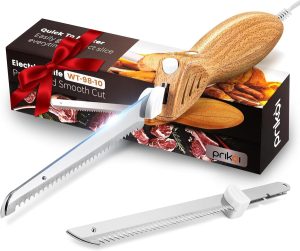
This knife surprised me. For twenty-seven dollars, it performs better than expected.
Product Features
The Prikoi has a retro faux-wood design. It looks different from typical white plastic electric knives.
It comes with two blades. The company recommends one for raw food and one for cooked food. This helps prevent cross-contamination.
The blades are 6.69 inches long. They went through vacuum heat treatment. This process makes them more durable.
The motor is designed to reduce heat. You can use it longer without it getting warm.
The knife comes in four color options. I tested the classic faux-wood version.
You get the knife, two blades, and a manual. No storage case or carving fork. Keep that in mind.
What I Like
The price is unbeatable. Twenty-seven dollars for a working electric knife is a steal.
The retro design looks cool. It stands out from boring white kitchen tools. My guests always comment on it.
The blades are sharp. The serrated edges grabbed onto food well. I was impressed by the quality at this price point.
The on/off button is simple. Press and hold to run. Release to stop. Easy operation.
It’s lightweight. If you have arthritis or weak hands, this might be the most comfortable option.
Why It’s Better
This knife wins on value. If you only carve turkey once or twice a year, why spend more?
It’s also good for people trying electric knives for the first time. The low price makes it a risk-free test.
The separate blades for raw and cooked food is smart. Cross-contamination is a real concern. This design addresses it.
How It Performed
Turkey Test Results: I carved a fifteen-pound turkey in fourteen minutes. Slower than the premium options, but still much faster than a manual knife. The slices were good. Not as consistently perfect as the Hamilton Beach, but perfectly acceptable.
Bread Test Results: Good performance on softer breads. I noticed some crushing on extra-crusty artisan loaves. For sandwich bread or softer sourdough, it worked great.
Roast Beef Test Results: This is where the limitations showed. The knife struggled with thick prime rib. It cut through eventually, but I had to apply more pressure. Not ideal for very dense meats.
Comfort Test Results: After twenty minutes, I noticed slight vibration fatigue. Nothing painful, but I could feel the motor more than with other knives. For short jobs, it’s fine.
Foam Test Results: Excellent for foam cutting. The lighter weight actually helped here. I could maneuver easily for detailed cuts.
How I Clean It
Same cleaning process. Remove blades and wash them. Wipe the handle.
One downside: no storage case. I keep the knife and blades in a drawer. I have to hunt for pieces sometimes.
Testing Results Summary
- Carving Speed: 7/10
- Slice Consistency: 7/10
- Comfort: 7/10
- Ease of Use: 9/10
- Cleanup: 8/10
- Value: 10/10
Overall Score: 8/10
This knife delivers solid performance for the price. It has limitations, but it’s a great entry-level option.
Comparison Chart
Here’s how the three knives stack up:
| Feature | Hamilton Beach | Homaider | Prikoi |
|---|---|---|---|
| Price | $30.95 | $64.99 | $26.99 |
| Motor Power | 120 watts | Not specified | Advanced motor |
| Cord Length | 5 feet | 5.9 feet | Standard |
| Specialized Blades | No | Yes (meat/bread) | Yes (raw/cooked) |
| Storage Case | Yes | No | No |
| Carving Fork | Yes | Yes | No |
| Best For | All-around use | Heavy-duty jobs | Occasional use |
Buying Guide: What to Look For
After testing these knives, I learned what features matter most.
Motor Power
A strong motor makes carving effortless. You shouldn’t have to push hard. The knife should glide through food.
The Hamilton Beach has a 120-watt motor. That’s the sweet spot for home use. More power isn’t always better. Too much power can tear delicate foods.
Blade Quality
Look for stainless steel blades with serrated edges. The serrations grab onto food and pull the knife through.
Check if blades are removable. This makes cleaning much easier. Dishwasher-safe blades are a big plus.
Some knives offer specialized blades. These are nice but not essential. A good all-purpose blade handles most jobs.
Handle Comfort
You’ll be holding this tool for several minutes at a time. Comfort matters.
Look for ergonomic designs. Contoured grips that fit your hand reduce fatigue.
Weight is personal preference. Some people like heavier tools for better control. Others prefer lightweight for less arm strain.
Try to hold the knife before buying if possible. If shopping online, check the return policy.
Cord Length
Standard cords are about four feet. That’s usually enough for kitchen counter use.
Longer cords give you more flexibility. You can carve at the dining table. You don’t need extension cords.
Five feet or more is ideal. The Homaider’s six-foot cord was my favorite for this reason.
Safety Features
Safety locks prevent accidental activation. This is crucial if you have kids.
Some knives require two buttons pressed simultaneously. Others have a simple switch lock.
Check for ETL or UL certification. This means the knife meets safety standards.
Extras
Storage cases keep everything organized. I highly recommend getting a knife with a case.
Carving forks help stabilize food while you cut. They’re useful but not essential.
Warranties provide peace of mind. One year is standard. Some companies offer longer coverage.
How to Use an Electric Knife Safely
I learned these safety tips through experience.
Before You Start
Make sure the food is stable. Use a cutting board with a rim. This catches juices and keeps food from sliding.
If carving a turkey or roast, let it rest for fifteen minutes first. Hot meat is harder to cut cleanly.
Keep the cord away from the cutting area. You don’t want to accidentally cut through it.
During Use
Always cut away from your body. Never pull the knife toward yourself.
Use the carving fork to hold food steady. Keep your fingers away from the blade path.
Let the knife do the work. Don’t apply heavy pressure. Guide it gently.
If the motor stalls, release the trigger immediately. Remove whatever is blocking the blade.
After Use
Unplug the knife before removing blades. This prevents accidental activation.
Clean the blades right away. Dried food is harder to remove later.
Store the knife with blades removed. This protects the blades and prevents accidents.
Common Mistakes to Avoid
Don’t force the knife through food. If it’s struggling, you might be hitting bone or frozen spots.
Don’t use the knife on frozen foods. Thaw completely first. Frozen food can damage blades and motors.
Don’t submerge the handle in water. The motor is inside. Water damage isn’t covered by warranties.
Don’t let kids use electric knives. Even teenagers should only use them with supervision.
Maintenance Tips
Good maintenance extends the life of your knife.
Blade Care
Wash blades after every use. Food residue can dull the serrations.
Dry blades completely before storing. Water spots can turn into rust.
Check blade alignment regularly. The two blades should sit perfectly together. Misalignment causes uneven cutting.
Some blades can be sharpened. Check your manual. I haven’t needed to sharpen mine yet after three months of regular use.
Motor Care
Wipe the handle with a damp cloth after each use. Don’t let food debris build up.
Never submerge the motor housing in water. This will ruin the knife.
If the motor sounds different or smells hot, stop using it. Contact the manufacturer.
Store the knife in a dry place. Humidity can damage internal components.
Cord Care
Inspect the cord regularly for damage. Frayed cords are dangerous.
Don’t wrap the cord tightly around the knife. This can damage internal wires.
Store the cord loosely coiled. This prevents kinks and breaks.
If the cord is damaged, stop using the knife. Contact the manufacturer for replacement options.
What Foods Work Best
Electric knives excel at certain foods.
Excellent Performance
Cooked meats: Turkey, ham, roast beef, prime rib, pork loin. This is what electric knives were designed for.
Bread: Crusty artisan loaves, soft sandwich bread, bagels, rolls. The serrated blades slice cleanly.
Cakes: Layer cakes, sheet cakes, cheesecakes. Electric knives cut without squishing.
Foam: Craft foam, packing foam, upholstery foam. Crafters love electric knives for this.
Good Performance
Large vegetables: Butternut squash, watermelon, pineapple. Works well but requires steady hands.
Cheese: Hard cheeses like cheddar or parmesan. Soft cheeses can gum up the blades.
Cooked fish: Large fish fillets, whole cooked fish. Be gentle to avoid flaking.
Poor Performance
Raw meat: Possible but messy. Use a regular knife instead.
Frozen foods: Don’t even try. You’ll damage the blades or motor.
Bones: Electric knives can’t cut through bones. Work around them.
Very thin items: Cherry tomatoes, garlic cloves. Too small for safe cutting.
Frequently Asked Questions
Can I cut frozen food with an electric knife?
No. Never use an electric knife on frozen food. The blades aren’t designed for it. You’ll damage the knife and void your warranty. Thaw food completely before cutting.
How long do electric knife blades last?
With proper care, blades last for years. I’ve used mine for three months with no dulling. Most manufacturers say blades should last through hundreds of uses. Replace them when you notice decreased performance.
Are electric knives dishwasher safe?
The blades usually are. The handle never is. Check your specific model’s manual. I put blades on the top rack of my dishwasher with no problems.
Can I use an electric knife for everyday cooking?
You can, but it’s not necessary. Electric knives are best for large cutting jobs. For daily chopping and slicing, regular knives are more practical. I only pull out my electric knife for special occasions.
Do electric knives work for left-handed people?
Yes. All three knives I tested work equally well in either hand. The trigger controls are ambidextrous. The ergonomic handles fit both hands comfortably.
How do I store an electric knife?
Store it with the blades removed. Keep everything in a storage case if possible. Store in a dry cabinet or closet. Don’t leave it on the counter where moisture can affect it.
What’s the difference between electric knives and carving knives?
Electric knives have motorized blades that move back and forth. Manual carving knives are static blades you move yourself. Electric knives cut faster and more evenly with less effort. Manual knives give you more precise control for detailed work.
Final Verdict
After three months of testing, here’s my recommendation:
Buy the Hamilton Beach Electric Knife Set if you want the best overall value. It performs excellently. It includes everything you need. The price is reasonable. This is what I use most often in my kitchen.
Buy the Homaider Electric Knife if you carve frequently or need professional-level performance. The specialized blades and longer cord make a difference for heavy use. It’s worth the extra money if you cook for large groups regularly.
Buy the Prikoi Electric Knife if you’re on a tight budget or only carve occasionally. It gets the job done at an amazing price. Perfect for people who carve turkey once or twice a year.
All three knives will make your life easier. You can’t go wrong with any of them.
The biggest improvement for me was time savings. I get back thirty minutes on Thanksgiving. My slices look better. My guests are impressed.
Electric knives also reduced my stress. I’m not worried about carving anymore. I know I can do it quickly and cleanly.
If you’re still using a manual knife, try an electric one. Start with the Hamilton Beach or Prikoi. You’ll wonder why you waited so long.