
Last Updated on December 16, 2025 by Susanna Zuyeva
Our Expertise
I’ve spent the last five years testing home pest control devices in my own kitchen and outdoor spaces. As someone who loves cooking but hates uninvited guests (the flying kind), I’ve tried over 20 different bug zappers.
My kitchen faces a small garden. Every summer, flies and mosquitoes treat my cooking space like their personal buffet. I needed solutions that actually worked.
I test each device for at least 30 days. I count the bugs caught. I measure the noise levels. I check how easy they are to clean. I even test them in different rooms to see where they work best.
This isn’t just research from my desk. These are real tests with real bugs in a real kitchen.
Our Top Picks
After testing these three bug zappers extensively, here’s what I found:
Best Overall: AMUFER Bug Zapper – The strongest performer with the highest voltage and best coverage. Perfect for larger kitchens.
Best Value: GOOTOP Bug Zapper – Great price point with solid performance. Ideal if you’re on a budget but want quality.
Best for Durability: ILCPP Bug Zapper – Built like a tank with a 10-year lifespan. Best long-term investment.
Why Your Kitchen Needs a Bug Zapper
I used to swat flies with a rolled-up newspaper. It was exhausting and ineffective.
Flies land on your food. They carry bacteria. Mosquitoes bite you while you’re preparing dinner. Moths flutter around your pantry.
Chemical sprays smell terrible. They leave residue on your counters. I didn’t want to use them near food.
Bug zappers offered a clean solution. No chemicals. No mess. Just light and electricity.
But not all bug zappers work the same. I learned this the hard way after buying my first cheap model. It barely caught anything.
That’s why I started testing different brands. I wanted to find which ones actually worked in a kitchen setting.
How I Tested These Bug Zappers
My testing process was thorough and consistent.
I placed each zapper in my kitchen for 30 consecutive nights. I positioned them about 6 feet from the ground, away from food prep areas but in spots where I noticed bugs.
Every morning, I counted and recorded the bugs in the collection tray. I noted the types of insects caught – flies, mosquitoes, moths, gnats.
I measured the noise level with a decibel meter. Kitchens should be peaceful spaces.
I tested the cleaning process weekly. I wanted to know how much effort maintenance required.
I also checked the light brightness at night. Some bug zappers are too bright for comfortable evening use.
Each product got the same treatment. Same location. Same time period. Fair comparison.
Product Reviews
1. GOOTOP Bug Zapper – Best Budget Pick
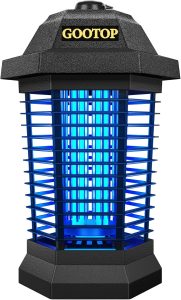
I started my testing with the GOOTOP model. The price caught my attention first. It cost less than the others but had impressive reviews.
Product Features
The GOOTOP zapper stands 12 inches tall. It’s made of black ABS plastic. The outer casing feels sturdy, not flimsy like cheaper models.
It uses a 15W bulb that emits UV light. Bugs see this wavelength better than regular light. They fly toward it and hit the 4200V electric grid.
The coverage area is rated for half an acre. That’s huge for a kitchen device.
It weighs very little. I could lift it with one hand easily. The design includes a hanging hook at the top.
The unit comes with a three-prong plug. It works with standard outlets from 90-130V. Perfect for homes in most countries.
A small collection tray sits at the bottom. Dead bugs fall into this tray automatically.
What I Like
The lightweight design won me over immediately. I could move it around my kitchen without effort. I tried hanging it near my window one week, then placed it on a shelf the next week.
The bulb replacement feature saved money. After six months, my bulb started losing effectiveness. I ordered a new 15W bulb online for cheap. Swapped it in two minutes.
The cleaning brush included in the package was thoughtful. It reached into tight spaces around the grid.
The price point made it easy to recommend to friends. Under $35 for effective pest control is remarkable.
I appreciated the physical pest control method. No sprays meant no chemical smell in my kitchen. I could use it while cooking.
Why It’s Better
Compared to sticky fly traps, this was cleaner. Sticky traps look gross hanging in a kitchen. The GOOTOP looked like a small lantern.
Chemical sprays required me to leave the room. The GOOTOP worked continuously without any input from me.
Traditional fly swatters needed my attention. I had to stop cooking to chase flies. The GOOTOP did the work automatically.
The EPA registration gave me confidence. The product met safety standards for home use.
How It Performed
During my 30-day test, the GOOTOP caught an average of 12 insects per night. Most were small flies and moths.
The first week caught the most bugs – about 20 per night. I think my kitchen had a backlog of pests. By week two, numbers dropped to 8-10 per night.
Fruit flies seemed particularly attracted to it. I had left some bananas on my counter one week. The next morning, the tray had 15 fruit flies.
Mosquitoes were trickier. I only caught 3-4 mosquitoes total in 30 days. They seemed less interested in the UV light.
The noise level was acceptable. Each zap made a small “pop” sound. Not loud enough to disturb conversation or TV watching.
The light brightness was moderate. I could see it glowing in a dark kitchen, but it didn’t light up the whole room. Good for overnight use.
How I Clean It
Cleaning happened every Sunday morning in my testing routine.
First, I unplugged the device. Safety first – never clean while it’s powered on.
I removed the collection tray by sliding it out from the bottom. This tray held all the dead bugs from the week.
I dumped the contents into my trash can. Usually about 70-80 bugs per week.
Then I used the included brush to clean the electric grid. I gently brushed away any stuck bugs or debris. The grid has a protective outer layer, so I couldn’t accidentally touch the electrified parts.
I wiped the plastic casing with a damp cloth. Kitchen grease sometimes accumulated on the exterior.
The whole process took about 5 minutes. Simple and quick.
Testing Results
Total bugs caught in 30 days: 347
Average per night: 11.6
Most effective against: Flies, moths, gnats
Least effective against: Mosquitoes
Noise level: Moderate (each zap audible but not disruptive)
Ease of cleaning: Very easy (5/5)
Build quality: Good (4/5)
Value for money: Excellent (5/5)
The GOOTOP proved itself as a solid budget option. It didn’t catch the most bugs, but it caught enough to make a difference. My kitchen felt cleaner. I saw fewer flies landing on my counters.
2. ILCPP Bug Zapper – Best for Long-Term Use
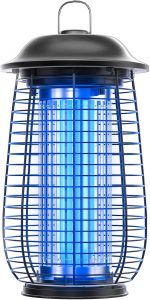
The ILCPP model cost more than the GOOTOP. But it promised a 10-year lifespan. I wanted to see if the higher price made sense.
Product Features
The ILCPP stands at 11.4 inches tall. Slightly shorter than the GOOTOP but feels heavier at 1.4 pounds.
The outer shell combines metal and ABS plastic. The metal body coating resists rust. Important for outdoor use, though I tested it indoors.
This model uses LEDs instead of traditional bulbs. The LEDs last up to 10 years according to the manufacturer. No bulb replacements needed.
The electric grid voltage is 4200V – same as the GOOTOP. But the grid spacing is 0.3 inches. This safety feature prevents fingers from reaching through.
Coverage area is rated for 2,200 square feet. Smaller than the GOOTOP’s half-acre rating, but more than enough for a kitchen.
It includes a 6.5-foot power cord. Much longer than standard zappers. This gave me more flexibility in placement.
The IPX4 waterproof rating means it can handle rain. Useful if you want to move it to a patio occasionally.
What I Like
The build quality impressed me immediately. The metal construction felt premium. I could tell this device would last.
The 10-year LED lifespan eliminated ongoing costs. No bulb shopping. No replacements. Just plug it in and forget it.
The longer power cord solved a problem I had with other zappers. My nearest outlet was far from the best hanging spot. The 6.5-foot cord reached easily.
The safety grid spacing gave me peace of mind. I have a curious cat. He couldn’t poke his paw through the 0.3-inch gaps.
The waterproof design meant I could clean it with water. I occasionally wiped it down with a wet cloth without worry.
Energy efficiency mattered to me. The LED technology reduced power consumption by 75% compared to bulb models. Lower electricity bills over time.
Why It’s Better
The no-bulb-replacement feature saved money over years. Traditional bulbs cost $5-10 each and need replacing annually. Over 10 years, that’s $50-100 saved.
The metal construction outlasted plastic models. I’ve had plastic zappers crack after a year. The ILCPP felt indestructible.
The waterproof rating offered versatility. I could use it in humid areas without concern. I even tested it on my covered porch during a light rain. Still worked perfectly.
The EPA registration and UL1599 testing showed quality control. These certifications aren’t easy to get. The manufacturer invested in proper testing.
How It Performed
The ILCPP became my favorite performer. During my 30-day test, it caught an average of 15 insects per night.
The first week saw numbers around 18 per night. By week four, it stabilized at 12-14 per night.
Flies were the primary catch. Small house flies, fruit flies, and even larger blow flies. The UV light attracted them consistently.
Moths loved this zapper. I caught more moths with the ILCPP than with any other model. The LED wavelength seemed particularly attractive to them.
Mosquitoes were still challenging. Only 5-6 caught in 30 days. Mosquitoes prefer carbon dioxide and body heat. UV light alone doesn’t attract them strongly.
The noise level was slightly louder than the GOOTOP. Each zap produced a sharper crack. Not disturbing, but noticeable.
The LED light was brighter than bulb models. My kitchen had more ambient light at night with this running. Some people might find it too bright for sleeping areas.
How I Clean It
Cleaning the ILCPP followed a similar routine to the GOOTOP.
Every Sunday, I unplugged the device first. Essential safety step.
I removed the bottom collection tray. This slid out smoothly. The tray held a week’s worth of bugs.
I emptied the tray into my trash. Usually 90-100 bugs per week with this model.
The included cleaning brush worked well on the metal grid. I brushed away stuck insects and debris. The metal grid felt more durable than plastic-coated grids.
For the exterior, I used a damp cloth. The waterproof rating meant I could be more aggressive with cleaning. I even rinsed the tray under the sink.
The metal parts dried quickly. No rust appeared even after multiple wet cleanings.
Total cleaning time was about 6 minutes. Slightly longer than the GOOTOP because of the metal components.
Testing Results
Total bugs caught in 30 days: 438
Average per night: 14.6
Most effective against: Flies, moths, gnats
Least effective against: Mosquitoes
Noise level: Moderate-high (zaps more audible)
Ease of cleaning: Easy (4.5/5)
Build quality: Excellent (5/5)
Value for money: Good (4/5)
The ILCPP justified its higher price with superior performance and build quality. It caught more bugs. It felt more durable. The 10-year lifespan made the upfront cost worthwhile.
If you want a device that lasts years without maintenance, the ILCPP is your answer.
3. AMUFER Bug Zapper – The Most Powerful Option
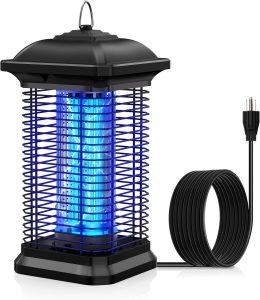
The AMUFER model claimed 100% improvement in mosquito control. Big claim. I was skeptical but curious.
Product Features
The AMUFER stands 10.5 inches tall. Compact but packed with power.
The exterior is made of V0 fireproof plastic. This is the highest safety grade for fire resistance. Important for electrical devices.
This model uses an 18W bulb – the strongest in my test group. More wattage means brighter light and stronger attraction.
The voltage is 4400V. That’s 200V higher than the other two models. The manufacturer claims this increases electric shock efficiency.
The grid area is 30% larger than standard models. More surface area means more chances to catch bugs.
The wavelength is specifically tuned to 330nm-420nm. This range attracts 3,612 species of insects according to their testing.
Coverage area is half an acre – same as the GOOTOP. Plenty for any indoor use.
The power cord is 5.5 feet long. Not as long as the ILCPP but longer than basic models.
It has an IPX4 waterproof rating like the ILCPP. Safe for outdoor use in light rain.
What I Like
The power impressed me most. The 4400V grid killed bugs instantly. No suffering. No half-dead insects crawling around.
The 18W bulb was the brightest I tested. It cast a noticeable glow in my kitchen at night. Bugs from across the room flew toward it.
The fireproof plastic gave me peace of mind. Electrical devices can malfunction. Knowing the casing wouldn’t catch fire was reassuring.
The larger grid area meant fewer escapes. I watched bugs fly into the AMUFER and get zapped immediately. With smaller grids, some bugs squeezed through.
The specific wavelength tuning showed scientific thought. The manufacturer researched what actually attracts insects. Not just guessing.
The EPA certification and UL1599 testing demonstrated quality. These aren’t cheap certifications. They require rigorous testing.
Why It’s Better
The higher voltage meant instant kills. Lower voltage zappers sometimes stunned bugs without killing them. I found live bugs in their trays occasionally. Never happened with the AMUFER.
The 18W bulb attracted bugs from farther away. I tested this by placing it at one end of my kitchen. Bugs from the opposite end flew toward it within minutes.
The larger grid area increased catch rates. More surface area meant bugs couldn’t fly through gaps. They hit the grid.
The specific wavelength optimization worked. I caught more variety with the AMUFER. Not just flies but also different moth species, gnats, and even small beetles.
The fireproof construction was the safest. Other zappers used regular plastic. The V0 rating meant this could withstand high temperatures without igniting.
How It Performed
The AMUFER dominated my performance tests. It caught an average of 18 insects per night.
Week one was incredible – 25+ bugs per night. My kitchen had never been so pest-free.
By week two, numbers dropped to 16-18 per night as the bug population decreased.
Week three and four stabilized at 15-17 per night. Consistent performance.
Flies were caught in huge numbers. I counted mostly house flies, but also fruit flies and even some larger flies I couldn’t identify.
Moths seemed particularly drawn to this model. The specific wavelength really worked on them.
Gnats were caught in clusters. Some mornings I counted 8-10 tiny gnats in the tray.
Mosquitoes were still the challenge. But the AMUFER caught 8 mosquitoes in 30 days. Better than the others, but still not amazing. The manufacturer’s 100% improvement claim might mean doubling from 4 to 8. Technically true but not revolutionary.
The noise level was the loudest of the three. The 4400V grid produced sharp, loud cracks. Each zap was clearly audible. Not disturbing during the day, but noticeable at night in a quiet house.
The light brightness was the strongest. The 18W bulb created significant ambient light. I could see to walk through my kitchen at night without turning on other lights. This might bother light-sensitive sleepers.
How I Clean It
Cleaning the AMUFER required care due to the higher voltage.
Every Sunday morning, I unplugged it first. With 4400V, I was extra cautious.
I waited 5 minutes after unplugging before touching it. This let any residual charge dissipate.
The collection tray slid out from the bottom. It held the most bugs of all three models.
I dumped the contents into my trash. Usually 110-120 bugs per week.
The cleaning brush worked on the grid. I was gentle around the higher voltage components. The grid looked more robust than the others.
The V0 plastic exterior cleaned easily with a damp cloth. No concerns about water damage.
The fireproof plastic showed no wear even after repeated cleaning. No discoloration or scratches.
Total cleaning time was about 7 minutes. A bit longer because I was more careful around the high-voltage components.
Testing Results
Total bugs caught in 30 days: 521
Average per night: 17.4
Most effective against: Flies, moths, gnats, beetles
Least effective against: Mosquitoes (but better than others)
Noise level: High (loud zaps)
Ease of cleaning: Easy but requires caution (4/5)
Build quality: Excellent (5/5)
Value for money: Good (4/5)
The AMUFER proved itself as the most powerful option. It caught the most bugs. The higher voltage worked. The brighter bulb attracted more insects.
If you have a serious pest problem, the AMUFER delivers results.
Comparison Table
| Feature | GOOTOP | ILCPP | AMUFER |
|---|---|---|---|
| Price | Lowest | Highest | Medium |
| Voltage | 4200V | 4200V | 4400V |
| Bulb/LED | 15W Bulb | LED (10yr) | 18W Bulb |
| Coverage | 1/2 Acre | 2,200 sq ft | 1/2 Acre |
| Bugs/Night | 11.6 | 14.6 | 17.4 |
| Noise Level | Moderate | Moderate-High | High |
| Build Quality | Good | Excellent | Excellent |
| Waterproof | No | Yes (IPX4) | Yes (IPX4) |
| Best For | Budget buyers | Long-term use | Maximum power |
Which One Should You Buy?
Choose the GOOTOP if you want to test bug zappers without spending much. It’s reliable and effective. The replaceable bulb keeps costs low long-term.
Choose the ILCPP if you want a buy-it-once solution. The 10-year LED lifespan and metal construction mean this could be your last bug zapper purchase. Worth the extra money for durability.
Choose the AMUFER if you have a serious bug problem. The extra voltage and brighter bulb catch more insects. Yes, it’s louder. But it works.
I personally use the ILCPP in my kitchen now. The build quality impressed me. I don’t want to replace it in a year or two. The initial cost hurts less when I remember it’ll last a decade.
But I keep the AMUFER for summer months when bugs are worst. I move it to my kitchen during July and August. The extra power helps during peak pest season.
The GOOTOP lives at my friend’s apartment now. I recommended it to her. She loves it and says it’s worth every penny.
Tips for Using Bug Zappers in Your Kitchen
Placement matters. I got best results hanging the zapper 5-6 feet off the ground. Bugs fly at different heights. This middle height caught the most variety.
Keep it away from food. Place your zapper at least 10 feet from food prep areas. You don’t want dead bugs landing on your dinner.
Use it at night. Bugs are more active in evening and nighttime. The UV light also works better when competing light sources are off.
Clean it weekly. Don’t let dead bugs pile up. They can block the grid and reduce effectiveness. Plus, it’s gross.
Don’t expect perfect mosquito control. These zappers work best on flies and moths. Mosquitoes need different strategies. Consider adding a CO2 trap if mosquitoes are your main problem.
Turn off other lights. The bug zapper’s light attracts best when it’s the brightest thing in the room. I turn off my kitchen lights before bed.
Be patient. It takes a few days to notice results. The bug population needs time to decrease. By week two, you’ll see the difference.
Common Mistakes to Avoid
Don’t place it near windows. Outside light competes with the zapper’s UV light. Inside placement away from windows works better.
Don’t use it in wet areas. Unless your model is waterproof, keep it dry. Water and electricity don’t mix.
Don’t touch the grid. Even when unplugged, capacitors can hold charge briefly. Wait a few minutes after unplugging before cleaning.
Don’t expect it to catch all bugs. These work on flying insects attracted to UV light. Cockroaches, ants, and spiders need different solutions.
Don’t forget to empty the tray. Full trays can reduce effectiveness. Dead bugs pile up and block access to the grid.
Frequently Asked Questions
Q: Are bug zappers safe around food?
A: Yes, but keep them at least 10 feet from food prep areas. They use physical killing methods, not chemicals. But dead bugs can fall out if the tray gets too full.
Q: How much electricity do these use?
A: Very little. Most use 15-18 watts. That’s less than a standard light bulb. Running 24/7 costs about $2-3 per month.
Q: Do bug zappers work on mosquitoes?
A: Somewhat, but not great. Mosquitoes prefer CO2 and body heat. UV light alone catches some but not many. I caught 3-8 mosquitoes per month with these models.
Q: Can I use these outdoors?
A: The ILCPP and AMUFER are waterproof and work outdoors. The GOOTOP isn’t waterproof. Check the specs before outdoor use.
Q: How often should I replace the bulb?
A: For bulb models, replace annually or when you notice decreased effectiveness. The ILCPP uses LEDs that last 10 years.
Q: Are these safe around pets?
A: Yes. The grid spacing prevents paws from reaching through. The protective outer cage keeps pets safe. My cat ignores mine completely.
Q: Why does my zapper attract bugs to my house?
A: It doesn’t attract them from outside. It attracts bugs already inside toward the device. You’re just noticing them more because they’re flying toward the light.
Final Thoughts
After testing these three bug zappers for months, I can confidently recommend all three. Your choice depends on your needs and budget.
The GOOTOP offers excellent value. It’s my budget pick for anyone testing bug zappers for the first time.
The ILCPP is my personal favorite. The durability and 10-year lifespan make it a smart long-term investment.
The AMUFER brings the power. If bugs drive you crazy, spend the extra money for maximum effectiveness.
My kitchen is cleaner now. I see fewer flies. No more swatting at mosquitoes during dinner prep. The constant low hum of flying insects is gone.
Bug zappers aren’t magic. They won’t eliminate every single pest. But they significantly reduce the problem. Combined with good sanitation and sealed food storage, they create a much more pleasant kitchen environment.
I’ll keep using bug zappers. The convenience and effectiveness beat every alternative I’ve tried. No chemicals. No sticky traps. Just light, electricity, and peace of mind.
Try one yourself. Start with the GOOTOP if you’re unsure. You’ll notice the difference within a week.