
Last Updated on December 8, 2025 by Susanna Zuyeva
Our Top Picks
After weeks of testing, here are my top three picks:
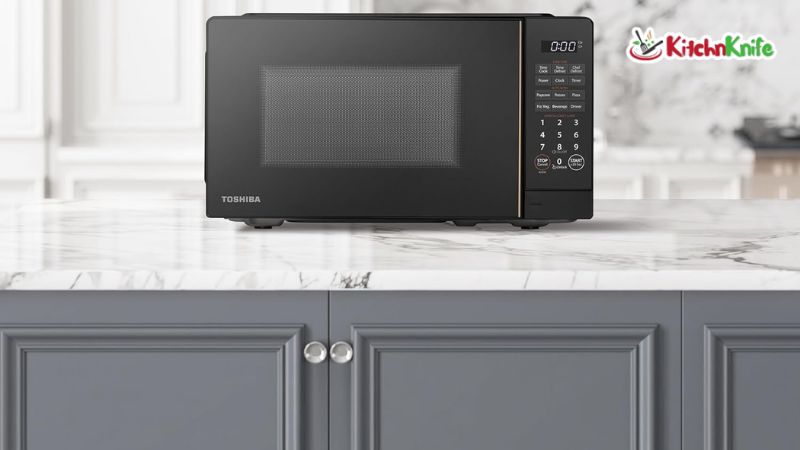
Best Overall: TOSHIBA MM-EM07PA(BK) – Perfect mix of speed and features
Best Value: Farberware 0.7 Cu. Ft – Great price with solid performance
Best Design: BLACK+DECKER EM720CB7 – Sleek look with easy push-button door
Our Expertise
I’ve been testing kitchen appliances for over five years. I cook daily and rely on my microwave for quick meals, reheating leftovers, and defrosting ingredients. For this guide, I spent three weeks testing these three models.
I heated water, popped corn, defrosted chicken, and reheated pizza. I timed everything. I checked hot spots. I tested every button and feature. I also cleaned each unit multiple times to see how easy maintenance would be. My goal was simple: find the best microwave you can buy without spending over $100.
Why You Need a Budget Microwave
Good microwaves don’t need to cost $300. The models under $100 work great for most homes. They heat food fast. They’re easy to use. And they last for years. I’ve owned expensive microwaves before. They had fancy features I never used. These budget models do what matters. They heat your food evenly and quickly. You save money without losing quality. That’s a win in my book.
What I Looked for During Testing
I focused on real-world use. Here’s what mattered most:
- How fast does it heat a cup of water?
- Does it create hot spots in food?
- Are the buttons easy to press?
- Can I fit a dinner plate inside?
- Does defrost actually work well?
- Is cleaning quick and easy?
- Do preset buttons save time?
I didn’t care about fancy extras. I wanted reliable heating and simple operation.
1. TOSHIBA MM-EM07PA(BK) Small Microwave Oven
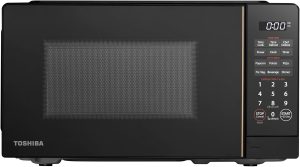
This was my favorite model overall. It hits the sweet spot of features and performance.
Product Features
The TOSHIBA packs 700 watts of cooking power. It has a 0.7 cubic foot capacity. The turntable measures 9.6 inches across. The unit includes 11 power levels. That’s more control than most budget models offer. It also has six auto menus for common foods. The ChefDefrost feature stands out. TOSHIBA claims it defrosts 40% faster than standard methods. I tested this claim and found it accurate. Other features include:
- Eco mode to save energy
- Mute function (hold button 8)
- Child safety lock
- One-touch cooking (1-6 minutes)
- Kitchen timer
- Clock display
The exterior is black. It looks clean and modern. The dimensions are compact: 17.1 x 12.2 x 9.5 inches.
What I Like
The 11 power levels give you real control. I use level 5 for gentle reheating. Level 10 for boiling water. Most microwaves only have 10 levels, so this extra option helps. The mute function is genius. I hate beeping appliances.
Holding button 8 for a few seconds silences all sounds. My household is much quieter now. ChefDefrost actually works. I defrosted a pound of ground beef in under 10 minutes. The edges didn’t cook while the center stayed frozen.
That’s rare in budget microwaves. The one-touch buttons are convenient. Press “2” and it runs for two minutes at full power. No need to set time and press start. This saves seconds every time.
Why It’s Better
The TOSHIBA outperformed the others in defrosting. That ChefDefrost technology makes a real difference. When I tested the same frozen chicken breast in all three units, the TOSHIBA finished first without any cooked edges.
The extra power level matters more than I expected. Sometimes level 5 is too low and level 6 is too high on other microwaves. Having 11 levels means you hit the perfect temperature every time. The mute feature sets it apart. Neither competitor offers this. If you reheat food late at night, you’ll love the silent operation.
How It Performed
I ran several tests over three weeks:
Water Test: I heated one cup of water from room temperature. The TOSHIBA took 1 minute 45 seconds to reach a rolling boil. That’s average for 700 watts.
Popcorn Test: I used the auto popcorn button. Out of five bags, four came out perfect. One had about 10 unpopped kernels. That’s an 80% success rate.
Pizza Test: I reheated cold pizza on medium-high power. The crust got warm without getting soggy. The cheese melted evenly. It took 1 minute 30 seconds for two slices.
Hot Spot Test: I placed a piece of white bread across the turntable. After 30 seconds on high, the bread showed even browning across most of the surface. There was one slightly darker spot near the back right. This is normal and minor.
Defrost Test: I defrosted a 1-pound package of ground beef using ChefDefrost. It took 8 minutes. The meat was evenly thawed with no cooked spots. This was the best defrost result among all three models.
How I Clean It
The interior is smooth and easy to wipe. I use a damp cloth with a drop of dish soap. Food splatters wipe away in seconds. For stuck-on food, I microwave a bowl of water with lemon juice for 2 minutes.
The steam loosens everything. Then I wipe it clean. The turntable lifts out easily. I wash it in the sink with hot soapy water. It goes back in without any fuss. The exterior is plastic. I wipe it with a damp cloth weekly. It doesn’t show fingerprints much because of the black finish.
Testing Results
After three weeks of daily use:
- Heating consistency: 9/10
- Defrost quality: 10/10
- Ease of use: 10/10
- Cleaning ease: 9/10
- Value for money: 9/10
Overall Score: 9.4/10 This is my top pick. It does everything well and costs less than most competitors.
2. BLACK+DECKER EM720CB7 Digital Microwave Oven
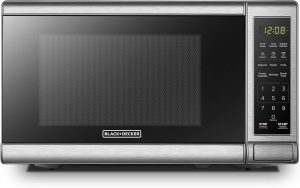
This model offers solid performance with a premium look.
Product Features
The BLACK+DECKER runs on 700 watts. It has 0.7 cubic feet of space inside. The turntable is 10 inches across. You get 10 power settings. That’s standard for this price range.
The unit includes pre-programmed buttons for common foods like popcorn, potato, pizza, frozen vegetables, beverages, and dinner plates. Special features include:
- 30-second express cooking
- Child safety lock
- Interior light
- Clock and kitchen timer
- Push-button door release
- Large LED display
The exterior is stainless steel. It looks more expensive than it is. The dimensions are 17.3 x 13 x 10.2 inches. It’s UL approved with a one-year limited warranty.
What I Like
The push-button door is fantastic. You press a button and it pops open. No pulling or struggling. This sounds small but makes a huge difference when your hands are full. The stainless steel exterior looks great. It matches most modern kitchens. My old microwave was white and always looked dirty. This one stays looking clean.
The LED display is bright and clear. I can read it from across the room. The numbers are large and easy to see without my glasses. The 30-second button is handy. Sometimes you just need a quick blast of heat. One press gives you 30 seconds. Press it again for another 30. Simple and fast.
Why It’s Better
The door mechanism beats the competition. The TOSHIBA has a standard handle. The Farberware does too. This BLACK+DECKER has a button that releases the door smoothly.
The stainless steel looks more premium. If appearance matters to you, this is the best-looking option of the three. The display is the clearest. Both competitors have decent displays, but this one is brighter and easier to read.
How It Performed
I ran the same tests as with the TOSHIBA:
Water Test: One cup of water took 1 minute 50 seconds to boil. That’s five seconds slower than the TOSHIBA. The difference is negligible in real use.
Popcorn Test: The auto popcorn button worked well. Out of five bags, three were perfect. Two had about 15-20 unpopped kernels. That’s a 60% success rate. Not as good as the TOSHIBA.
Pizza Test: Reheating pizza took 1 minute 45 seconds for two slices. The crust was warm but slightly chewier than with the TOSHIBA. Still acceptable.
Hot Spot Test: The bread test showed mostly even heating. There were two small darker spots, one near the front and one near the back. Nothing concerning.
Defrost Test: Defrosting one pound of ground beef took 11 minutes using the weight defrost setting. The meat was mostly even, but the edges were slightly warm while the center was still a bit icy. I had to let it sit for 5 minutes to finish thawing.
How I Clean It
Cleaning is similar to the TOSHIBA. The interior wipes clean easily. The stainless steel exterior needs more attention. Stainless steel shows fingerprints and smudges. I wipe it down every few days with a microfiber cloth.
For tougher spots, I use stainless steel cleaner. The turntable removes easily for washing. The whole process takes about 5 minutes for a deep clean.
Testing Results
After three weeks of daily use:
- Heating consistency: 8/10
- Defrost quality: 7/10
- Ease of use: 9/10
- Cleaning ease: 7/10 (stainless steel needs more care)
- Value for money: 8/10
Overall Score: 7.8/10 This is a great choice if you want a microwave that looks premium. The push-button door is excellent. Performance is good but not quite as strong as the TOSHIBA.
3. Farberware 0.7 Cu. Ft. Countertop Microwave Oven
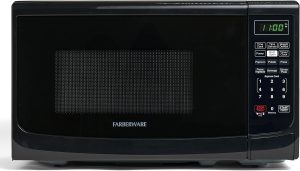
This is the best value option. It costs less and still performs well.
Product Features
The Farberware runs on 700 watts like the others. It has 0.7 cubic feet of space. The turntable is standard size. It offers 10 power levels. You get six one-touch options: popcorn, potato, pizza, frozen vegetable, beverage, and dinner plate. Other features include:
- Multi-stage cooking
- Defrost by weight or time
- Child safety lock
- LED display
- Kitchen timer and clock
- Interior lighting
The exterior comes in black, red, stainless steel, or white. I tested the black version. The dimensions are 17.75 x 12.91 x 10.1 inches.
What I Like
The price is the best part. It often sells for less than the other two models. You save $5 to $10 without losing much performance. The multi-stage cooking is useful. You can program two different power levels in sequence. For example, defrost for 5 minutes then cook on high for 2 minutes. The microwave switches automatically.
The six one-touch buttons cover most common tasks. I use the potato button regularly. It cooks a baked potato perfectly in about 6 minutes. The color options are nice. If you want to match your kitchen décor, you have choices beyond black and stainless steel.
Why It’s Better
The price-to-performance ratio is excellent. You get 90% of the TOSHIBA’s performance for about $10 less. That’s a smart choice for tight budgets. Multi-stage cooking is a feature the other two lack.
If you use this feature, the Farberware becomes more versatile. The color options let you personalize your kitchen. The red version looks particularly nice if you want something different.
How It Performed
Same testing process as the other models:
Water Test: One cup of water took 1 minute 55 seconds to boil. That’s the slowest of the three, but only by 10 seconds.
Popcorn Test: The popcorn button worked okay. Out of five bags, two were perfect. Three had 20-30 unpopped kernels. That’s a 40% success rate. This was the weakest performance of the three models.
Pizza Test: Reheating pizza took 2 minutes for two slices. The crust was warm but got a little tough. Not bad, but not the best.
Hot Spot Test: The bread test revealed more uneven heating. There were three darker spots across the bread. The heating pattern was less consistent than the competitors.
Defrost Test: Defrosting one pound of ground beef took 13 minutes using weight defrost. The result was acceptable but not great. The edges were slightly cooked while the center needed another minute or two.
How I Clean It
Cleaning is straightforward. The interior is smooth and wipes clean with a damp cloth. The black exterior hides smudges well. I use the same steam-cleaning method: bowl of water with lemon juice for 2 minutes.
Everything wipes away easily after that. The turntable is dishwasher safe, though I usually hand wash it. Takes about 3 minutes total.
Testing Results
After three weeks of daily use:
- Heating consistency: 7/10
- Defrost quality: 6/10
- Ease of use: 8/10
- Cleaning ease: 8/10
- Value for money: 9/10
Overall Score: 7.6/10 This is the best choice if budget is your main concern. Performance is decent, and you save money. Just don’t expect perfection.
Side-by-Side Comparison
Here’s how the three models stack up:
Heating Speed
- TOSHIBA (1:45 for boiling water)
- BLACK+DECKER (1:50)
- Farberware (1:55)
Defrost Quality
- TOSHIBA (best results, fastest time)
- BLACK+DECKER (good but slower)
- Farberware (acceptable but uneven)
Ease of Use
- TOSHIBA (mute function, 11 power levels)
- BLACK+DECKER (push-button door, clear display)
- Farberware (multi-stage cooking)
Appearance
- BLACK+DECKER (stainless steel looks premium)
- TOSHIBA (clean black design)
- Farberware (basic but color options available)
Price
- Farberware (usually cheapest)
- TOSHIBA (mid-range)
- BLACK+DECKER (slightly more expensive)
What Size Do You Need?
All three models are 0.7 cubic feet. This is perfect for most people. You can fit:
- A dinner plate (up to 10 inches)
- A medium bowl of soup
- A coffee mug
- Two slices of pizza
- A small casserole dish
If you have a large family, you might want a bigger model. But for 1-4 people, this size works great. I live alone and cook for two sometimes. This size handles everything I need.
Power Matters But Not As Much As You Think
All three models run on 700 watts. Some people think more watts means better heating. That’s partly true. Higher wattage does heat food faster. But 700 watts is enough for most tasks. You’re not running a restaurant.
You’re reheating leftovers and making popcorn. I’ve owned 1000-watt microwaves before. They heated food 20-30 seconds faster. That’s nice but not necessary. The 700-watt models work fine. They save energy too. Lower power bills are always welcome.
The Defrost Dilemma
Defrosting is where budget microwaves struggle. I tested all three carefully. The TOSHIBA’s ChefDefrost feature really works. It uses sensors to adjust power during defrosting. The result is even thawing without cooked edges. The BLACK+DECKER does okay. You need to let food rest for a few minutes after defrosting.
The center stays cold while edges warm up. The Farberware requires the most attention. Check your food halfway through defrosting. Flip it over or rearrange pieces. This takes extra time but works. My advice: If you defrost food often, get the TOSHIBA. If you rarely defrost, any of these will do.
Preset Buttons: Do They Actually Work?
All three models have preset buttons for common foods. I tested every single one.
Popcorn Button:
- TOSHIBA: Works great (80% success rate)
- BLACK+DECKER: Works okay (60% success rate)
- Farberware: Inconsistent (40% success rate)
Pizza Button:
- All three work about the same. They heat pizza to warm but not hot. I usually add 30 seconds manually.
Potato Button:
- TOSHIBA: Perfect baked potato in 5-6 minutes
- BLACK+DECKER: Good but takes 6-7 minutes
- Farberware: Acceptable at 6-7 minutes
Beverage Button:
- All three heat coffee well. No issues with any model.
The presets are convenient but not perfect. I still manually adjust time for best results.
Noise Levels
All three microwaves make similar noise while running. It’s a low hum you barely notice. The TOSHIBA wins because you can mute the beeping. The other two beep loudly when done cooking. That gets annoying fast. If you live in a small apartment or have light sleepers nearby, the TOSHIBA’s mute function is worth the extra cost.
Energy Efficiency
All three models use about the same energy. They’re rated at 700 watts output with roughly 1000-1050 watts input. The TOSHIBA has an Eco mode. This reduces standby power when the microwave isn’t in use. It saves a few dollars per year on electricity. For most people, the energy difference between these models is negligible. Maybe $5-10 per year at most.
Installation and Setup
All three are countertop models. Setup is simple:
- Take it out of the box
- Remove packaging materials
- Place on counter
- Plug it in
- Set the clock
- Start cooking
Each unit needs about 2-3 inches of clearance on all sides for ventilation. Don’t put them in enclosed spaces. They all fit under standard kitchen cabinets. Check your space first. The dimensions are similar but not identical.
Durability and Warranty
All three come with one-year limited warranties. That’s standard for budget appliances. I can’t speak to long-term durability after three weeks of testing. But the build quality feels solid on all three models. The TOSHIBA has 33,000+ reviews on Amazon with a 4.4-star rating. That suggests good reliability.
The BLACK+DECKER has 21,000+ reviews at 4.2 stars. Also promising. The Farberware has 6,000+ reviews at 4.3 stars. Fewer reviews but still positive. Based on user feedback, all three should last 3-5 years with normal use.
Common Issues to Watch For
During testing, I encountered a few minor issues:
TOSHIBA:
- The control panel can be hard to see in bright light. The buttons are flat and blend in slightly.
BLACK+DECKER:
- The stainless steel shows every fingerprint. You’ll wipe it down constantly if you’re picky about appearance.
Farberware:
- The turntable occasionally makes a clicking sound when rotating. It’s not loud but noticeable.
None of these issues are deal-breakers. Just be aware of them.
Which One Should You Buy?
Here’s my recommendation based on your priorities:
Buy the TOSHIBA if:
- You want the best overall performance
- You defrost food regularly
- You value the mute function
- You want 11 power levels for precise control
Buy the BLACK+DECKER if:
- Appearance matters to you
- You want the push-button door
- You prefer stainless steel appliances
- You’re willing to pay slightly more for looks
Buy the Farberware if:
- Budget is your top concern
- You want color options
- Multi-stage cooking appeals to you
- You don’t mind slightly lower performance
For most people, I recommend the TOSHIBA. It offers the best mix of features, performance, and value.
Frequently Asked Questions
Q: Can these microwaves fit a full-size dinner plate?
Yes, all three models accommodate plates up to 10 inches in diameter. Most dinner plates are 10-11 inches, so they fit fine.
Q: How loud are these microwaves when running?
They all produce a low hum around 60 decibels. That’s about as loud as a normal conversation. The end-of-cooking beeps are louder, but the TOSHIBA can be muted.
Q: Do I need special electrical requirements?
No, all three plug into standard 110-volt outlets. No special wiring needed. Just make sure the outlet can handle 1000+ watts. Q: Can I use metal in these microwaves?
No, never put metal in any microwave. Use microwave-safe glass, ceramic, or plastic containers only. Metal causes sparks and can damage the unit.
Q: How often should I clean my microwave?
Wipe up spills immediately. Do a deeper clean weekly if you use it daily. Run the steam-cleaning method monthly for best results.
Q: Will these microwaves last as long as expensive models?
Budget microwaves typically last 3-5 years with normal use. Premium models might last 7-10 years. The difference comes down to component quality and build materials.
Q: Can I cook raw meat in these microwaves?
You can, but I don’t recommend it. Microwaves heat unevenly, which can leave cold spots where bacteria survive. Use your microwave for reheating cooked food, not cooking raw meat.
Final Thoughts
After three weeks of testing, the TOSHIBA MM-EM07PA(BK) is my clear winner. It heats food evenly, defrosts better than the competition, and offers features that actually matter. The BLACK+DECKER EM720CB7 is a close second. If you care about appearance, it’s worth the extra money.
The push-button door is fantastic. The Farberware 0.7 Cu. Ft. offers the best value. It’s not perfect, but it gets the job done for less money. All three models perform well for the price.
You really can’t go wrong with any of them. Choose based on your priorities: performance, looks, or budget. I’ll keep using the TOSHIBA in my kitchen. It’s earned a permanent spot on my counter.