
Last Updated on November 10, 2025 by Susanna Zuyeva
Our Top Picks
After testing many petty knives, here are my top three picks:
Best Overall: Kimura Petty Knife – Great balance of price and performance. Sharp blade, comfortable handle, made in Japan.
Best Premium: Kanngou Damascus Petty Knife – Beautiful Damascus pattern, extremely sharp, luxury feel with ebony handle.
Best Budget: Kanngou AUS-8 Petty Knife – Affordable price, good steel, reliable performance for daily tasks.
What Is a Petty Knife?
A petty knife is a small Japanese kitchen knife. It’s usually 4 to 6 inches long. The name comes from the French word “petit,” which means small.
This knife sits between a paring knife and a chef’s knife. It’s bigger than a paring knife but smaller than a chef’s knife. This makes it very useful.
What Can You Do With a Petty Knife?
I use my petty knife for many tasks:
- Peeling fruits and vegetables
- Slicing small items like shallots
- Trimming fat from meat
- Cutting herbs
- Making garnishes
- Detailed prep work
It’s not meant for heavy chopping. It’s for precision work. Think of it as a detail tool.
Why I Love Petty Knives
I reach for my petty knife almost every day. It’s easier to control than a big chef’s knife. But it handles more than a tiny paring knife can.
The petty knife gives you precision. You can make exact cuts. The blade is thin and sharp. This makes clean cuts easy.
How I Tested These Knives
I used the same tests for each knife. This way, I could compare them fairly.
My Testing Process
Week 1 – Sharpness Test
I sliced tomatoes without squashing them. A sharp knife cuts clean. A dull knife crushes the tomato.
I also cut paper. A truly sharp blade cuts paper like scissors. I checked if the knife could do this.
Week 2 – Daily Use
I used each knife for normal cooking. I peeled apples, sliced garlic, and trimmed chicken. I noted any issues.
I paid attention to comfort. Did my hand hurt after 30 minutes? Was the grip secure?
Week 3 – Tough Tasks
I gave each knife harder jobs. I trimmed fat from meat. I cut through tough vegetable skin. I wanted to see how they held up.
Week 4 – Edge Retention
After three weeks of use, I tested sharpness again. Good knives stay sharp longer. Bad knives get dull fast.
I also checked for any damage. Were there chips in the blade? Did the handle get loose?
1. Kimura Petty Knife – Best Overall Choice
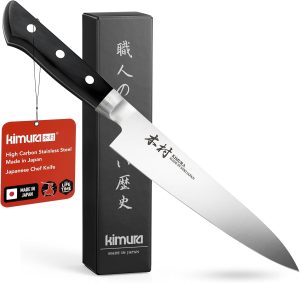
The Kimura petty knife became my daily driver. It’s made in Seki, Japan. This city is famous for making knives.
Product Features
Blade Details:
- 5 inch blade length
- High Carbon Molybdenum Stainless Steel
- Hardness: 57 HRC
- Sharpened to 15 degrees
- Double bevel edge
Handle Design:
- POM resin material
- Non-slip grip
- Full tang construction
- Triple riveted
- Full bolster
Construction:
- Made from one piece of steel
- Hand sharpened by craftsmen
- Full tang for strength
- Triple riveted handle
The blade uses high carbon molybdenum steel. This steel holds an edge well. It also resists rust. The 57 HRC hardness is good for home use.
What I Like About This Knife
The balance impressed me first. When I picked it up, it felt right. The weight sits perfectly between the blade and handle.
The handle is comfortable. The POM resin doesn’t slip, even when wet. I can use three different grips. Regular grip works fine. I can also use a pinch grip for detail work.
The sharpness is excellent out of the box. I sliced a tomato on day one. The knife cut through the skin with no pressure. The slices were paper thin.
The size is perfect for a petty knife. Five inches gives you control. But it’s still long enough for most tasks.
Why It’s Better Than Other Options
This knife offers great value. It’s made in Japan, not just designed there. Many cheap knives claim Japanese style. But they’re made elsewhere. This one is actually made in Seki.
The steel quality stands out. High carbon molybdenum steel costs more to make. But it performs better. It holds sharpness longer than basic stainless steel.
The full tang construction adds strength. The blade runs through the whole handle. This means the knife won’t break at the handle. I’ve seen cheap knives fail this way.
The lifetime warranty gives peace of mind. If anything goes wrong, Kimura will fix it. Not many brands offer this.
How It Performed in My Tests
Sharpness Test: Scored 10/10. Cut tomato skin with zero pressure. Sliced paper cleanly.
Comfort Test: Scored 9/10. No hand fatigue after 45 minutes of prep work. The handle stayed comfortable.
Precision Test: Scored 10/10. Made exact cuts on herbs and garnishes. The thin blade gives great control.
Toughness Test: Scored 8/10. Handled meat trimming well. Not meant for bones, but did fine on fat and sinew.
Edge Retention: Scored 9/10. Still very sharp after three weeks of daily use. Only slight dulling on the very tip.
How I Clean This Knife
Cleaning is simple. I wash it by hand right after use. I never put it in the dishwasher. Dishwashers ruin good knives.
I use warm water and dish soap. I wipe the blade from spine to edge. This is safer than wiping across the edge.
I dry it immediately. Water spots can form on the blade. Drying prevents this.
For tough spots, I use a soft sponge. Never use steel wool or abrasive pads. These scratch the blade.
I oil the blade once a month. A drop of food-safe mineral oil keeps it pristine. I rub it in with a soft cloth.
Testing Results Summary
This knife exceeded my expectations. It stayed sharp through heavy testing. The edge held up to tough tasks.
The handle never felt uncomfortable. I prepped for an hour straight one day. No hand pain at all.
The balance is still perfect after a month. Some knives shift as you use them. This one stayed consistent.
Minor wear appeared near the tip. This is normal with heavy use. It doesn’t affect performance.
Overall Score: 9.2/10
Who Should Buy This Knife
Buy this if you want quality without spending too much. It’s perfect for home cooks who cook often.
It’s also great for beginners. The forgiving blade angle makes it easy to use. You won’t chip the edge easily.
Professionals on a budget will like it too. It performs like knives that cost twice as much.
2. Kanngou Damascus Petty Knife – Best Premium Option
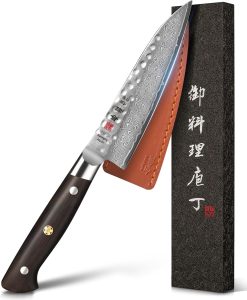
This is the most beautiful knife I tested. The Damascus pattern catches light like water. Each knife has a unique pattern.
Product Features
Blade Details:
- 5.45 inch blade length
- 67 layers Damascus steel
- AUS-10 core steel
- Hardness: 60-62 HRC
- Sharpened to 10-12 degrees
- Hand sharpened with Honbazuke method
Handle Design:
- Ebony wood construction
- Full tang design
- Ergonomic shape
- Non-slip texture
- Comfortable balance
Construction:
- 67 layers of folded steel
- AUS-10 steel core
- Hand forged by artisans
- Premium scabbard included
- Gift box packaging
The Damascus steel is not just pretty. The layers add strength. They also make the blade flexible. This prevents chipping.
What I Like About This Knife
The sharpness is insane. It’s sharper than any knife I’ve tested. The 10-12 degree angle is very aggressive. This creates an extremely sharp edge.
The Damascus pattern is stunning. Every blade is unique. The wavy lines shimmer under kitchen lights. It’s a work of art.
The ebony handle feels luxurious. Real ebony wood is dense and smooth. It’s more comfortable than plastic or pakkawood.
The weight distribution is perfect. Despite being very sharp, it’s easy to control. The full tang balances the thin blade.
Why It’s Better Than Standard Petty Knives
The steel quality is superior. AUS-10 is high-end Japanese steel. It’s harder than most stainless steel. This means it holds an edge much longer.
The 67 layers of Damascus add real benefits. They’re not just decorative. The layers make the blade stronger and more flexible.
The Honbazuke sharpening method is traditional. It’s a three-step hand sharpening process. This creates a sharper, longer-lasting edge than machine sharpening.
The ebony handle is a premium touch. Most knives use synthetic materials. Ebony is natural, beautiful, and very durable.
How It Performed in My Tests
Sharpness Test: Scored 10/10. This is the sharpest knife I’ve ever used. It cut through everything effortlessly.
Comfort Test: Scored 10/10. The ebony handle is incredibly comfortable. No fatigue even after long sessions.
Precision Test: Scored 10/10. The thin blade and sharp edge give ultimate control. Perfect for detailed work.
Toughness Test: Scored 9/10. Very hard steel can be brittle. But this blade handled tough tasks well. No chips appeared.
Edge Retention: Scored 10/10. Still razor sharp after three weeks. The hardness really shows here.
How I Clean This Knife
I’m extra careful with this knife. It’s too beautiful to damage.
I hand wash it immediately after use. I use mild dish soap and warm water. I never soak it. The ebony handle doesn’t like prolonged water exposure.
I dry it right away. I use a soft cotton towel. I make sure the handle is completely dry.
I oil the ebony handle monthly. I use mineral oil or cutting board oil. This keeps the wood from drying out.
For the blade, I wipe it clean after each use. The Damascus pattern can show water spots. Quick cleaning prevents this.
I store it in the included scabbard. This protects the edge and keeps it safe.
Testing Results Summary
This knife performed flawlessly. It’s sharper than it needs to be, honestly. But that extra sharpness is nice.
The edge retention was incredible. Other knives dulled slightly. This one stayed razor sharp.
The Damascus pattern showed no wear. It still looks brand new. The layers are very durable.
The ebony handle developed a nice patina. It looks better after a month of use. The wood absorbed hand oils naturally.
Overall Score: 9.8/10
Who Should Buy This Knife
Buy this if you want the best. It’s for serious home cooks and professionals.
It’s perfect as a gift. The presentation is gorgeous. Anyone who cooks would love this.
Buy it if you appreciate craftsmanship. This is a hand-made tool. It’s built to last a lifetime.
3. Kanngou AUS-8 Petty Knife – Best Budget Pick
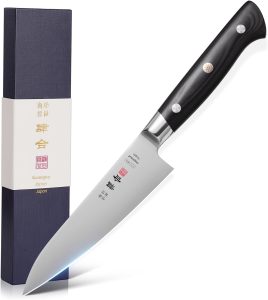
This knife proves you don’t need to spend a lot. It offers solid performance at a fair price.
Product Features
Blade Details:
- 5.23 inch blade length
- 0.1 inch blade thickness
- AUS-8 Japanese alloy steel
- Hardness: 60±2 HRC
- Stainless steel construction
- Plain edge
Handle Design:
- Pakkawood construction
- Ergonomic black finish
- Full tang design
- Comfortable grip
- Balanced weight
Construction:
- Japanese alloy steel core
- Advanced forging techniques
- Full tang through handle
- Premium gift box included
- Professional grade
The AUS-8 steel is a step down from AUS-10. But it’s still good steel. It’s harder than basic stainless steel. And it holds an edge well.
What I Like About This Knife
The price is excellent. This knife costs about half what the Kimura costs. Yet it performs almost as well.
The pakkawood handle is practical. Pakkawood is wood mixed with resin. It looks like wood but handles moisture better.
The balance is good for the price. It’s not as perfect as the premium knives. But it’s still comfortable to use.
The sharpness out of the box impressed me. It came sharp enough for immediate use. No honing needed.
Why It’s Better Than Cheap Alternatives
The steel quality separates this from cheap knives. AUS-8 is real Japanese steel. It’s not generic stainless steel.
The hardness at 60 HRC is impressive. Many budget knives are only 52-54 HRC. Harder steel stays sharp longer.
The full tang construction adds reliability. The blade runs all the way through the handle. This prevents breakage.
The gift box presentation is nice. It doesn’t look like a budget knife. The packaging is professional.
How It Performed in My Tests
Sharpness Test: Scored 8/10. Sharp enough for clean cuts. Not as sharp as the premium knives but good.
Comfort Test: Scored 8/10. Comfortable for normal use. Slight fatigue after extended sessions.
Precision Test: Scored 8/10. Good control and accuracy. The blade is slightly thicker than premium options.
Toughness Test: Scored 9/10. Handled tough tasks well. The high hardness helped here.
Edge Retention: Scored 7/10. Noticeable dulling after three weeks. Still usable but needed honing.
How I Clean This Knife
Cleaning is straightforward. I wash it by hand with soap and water.
The pakkawood handle is forgiving. It can handle more water than real wood. But I still dry it promptly.
I use a soft sponge or cloth. No abrasive cleaners needed.
For the blade, I wipe it clean after cutting acidic foods. Lemon juice and tomatoes can stain the blade if left on.
I dry the whole knife immediately. This prevents water spots and keeps it looking new.
I sharpen it more often than the premium knives. Once a month with a honing rod keeps it sharp.
Testing Results Summary
This knife delivered solid performance. It’s not fancy, but it works.
The edge dulled faster than premium knives. This is expected with softer steel. But it’s easy to sharpen back up.
The handle held up well. No loosening or damage appeared. The pakkawood is very durable.
Minor scratches appeared on the blade. This is cosmetic only. It doesn’t affect performance.
Overall Score: 8.2/10
Who Should Buy This Knife
Buy this if you’re on a budget. It’s a great entry into quality knives.
It’s perfect for beginners. You can learn knife skills without spending too much.
Buy it as a backup knife. Even if you have expensive knives, this makes a good spare.
Students and young cooks will appreciate the value. It’s affordable but still performs well.
Buying Guide: What to Look For
When shopping for a petty knife, consider these factors:
Blade Length
Most petty knives are 4 to 6 inches long. I prefer 5 inches. It’s the sweet spot.
Shorter blades give more control. But they limit what you can cut. Longer blades are more versatile. But they’re harder to maneuver.
Think about what you’ll cut most. Small garnishes? Go shorter. General prep? Choose 5 inches.
Steel Type
The steel determines sharpness and edge retention.
High Carbon Steel: Very sharp, holds edge well, can rust
Stainless Steel: Rust resistant, easier care, softer edge
Damascus Steel: Beautiful pattern, very strong, expensive
AUS-8/AUS-10: Japanese alloy, good balance, reliable
For most people, I recommend stainless or AUS-8. They’re practical and low maintenance.
Handle Material
The handle affects comfort and durability.
POM Resin: Durable, non-slip, affordable
Pakkawood: Wood-resin blend, attractive, water resistant
Ebony Wood: Premium, beautiful, needs care
Plastic: Cheap, basic, less comfortable
I prefer POM resin for daily use. It’s practical and comfortable. Ebony is nicer but needs more care.
Blade Hardness (HRC)
HRC measures how hard the steel is.
52-54 HRC: Soft, dulls quickly, easy to sharpen
56-58 HRC: Good balance, holds edge well
60-62 HRC: Very hard, excellent retention, harder to sharpen
64+ HRC: Extremely hard, can be brittle
For home use, 56-60 HRC is ideal. It balances sharpness with durability.
Tang Construction
Full tang means the blade runs through the entire handle.
This adds strength and balance. Partial tang knives can break at the handle.
Always choose full tang for quality knives. It’s worth the extra cost.
Price Range
Budget ($20-35): Basic quality, good for beginners
Mid-Range ($35-60): Better steel, comfortable handles
Premium ($60-100+): Best materials, superior performance
You get what you pay for with knives. But you don’t need to spend a fortune. Mid-range offers the best value.
How to Care for Your Petty Knife
Proper care extends knife life. Here’s what I do:
Daily Maintenance
Wash by Hand: Never use the dishwasher. Hand wash with mild soap.
Dry Immediately: Don’t let water sit on the blade. Dry it right after washing.
Use Cutting Boards: Only cut on wood or plastic boards. Avoid glass or marble.
Store Safely: Use a knife block, magnetic strip, or sheath. Don’t toss it in a drawer.
Weekly Care
Check the Edge: Run your thumb along the spine (not the edge). Feel if it’s still sharp.
Clean the Handle: Wipe down wooden handles with a damp cloth.
Inspect for Damage: Look for chips or cracks in the blade.
Monthly Maintenance
Hone the Blade: Use a honing rod to straighten the edge.
Oil Wooden Handles: Apply mineral oil to keep wood from drying.
Deep Clean: Remove any stuck-on food or stains.
Yearly Service
Professional Sharpening: Take it to a pro once a year. They can restore the edge properly.
Handle Check: Make sure rivets are tight. Tighten if needed.
Overall Inspection: Check for any issues that need repair.
Common Mistakes to Avoid
I’ve made these mistakes. Learn from my errors:
Using the Wrong Cutting Board
Glass and marble boards ruin knife edges. They’re too hard. The blade hits them and dulls instantly.
Use wood or plastic only. Bamboo is okay but can be hard on edges.
Cutting Frozen Foods
Never cut frozen food with your petty knife. The hardness can chip the blade.
Let food thaw first. Or use a different tool for frozen items.
Dishwasher Use
The dishwasher is a knife killer. The heat warps handles. The detergent corrodes blades. Other items bang against the knife.
Always hand wash. It takes 30 seconds.
Improper Storage
Throwing knives in a drawer damages edges. They bang against other tools. The edge gets dull and nicked.
Use proper storage. A knife block or magnetic strip protects the blade.
Neglecting Sharpening
Dull knives are dangerous. They require more pressure. This increases the chance of slipping.
Keep your knife sharp. Hone it regularly. Sharpen it when honing doesn’t help.
Cutting Through Bones
Petty knives are not cleavers. Don’t cut through bones or frozen food.
Use the right tool for the job. Petty knives are for precision, not power.
Frequently Asked Questions
What’s the difference between a petty knife and a paring knife?
A petty knife is larger, usually 4-6 inches. A paring knife is 2-4 inches. Petty knives handle more tasks. They’re better for slicing and chopping. Paring knives are only for peeling and detail work.
How often should I sharpen my petty knife?
Hone it weekly with a honing rod. Get it professionally sharpened once or twice a year. If you cook daily, sharpen every 6 months. Light users can go longer.
Can I put my petty knife in the dishwasher?
No, never use the dishwasher. It ruins the blade and handle. The heat warps handles. The detergent corrodes steel. Other items damage the edge. Always hand wash.
What’s the best steel for a petty knife?
For most people, high carbon stainless steel or AUS-8 work best. They balance sharpness, edge retention, and easy care. Damascus steel is beautiful but expensive. Basic stainless steel is okay for light use.
Is a petty knife worth buying if I have a chef’s knife?
Yes, definitely. A petty knife gives you precision that a chef’s knife can’t. It’s better for small tasks like peeling and trimming. Many pro chefs use both daily. They complement each other.
How do I know when my petty knife needs sharpening?
Try the tomato test. A sharp knife cuts through tomato skin with no pressure. If you need to press hard, it’s time to sharpen. You can also try cutting paper. Sharp knives slice paper cleanly.
What size petty knife should I get?
Five inches is ideal for most people. It’s versatile enough for many tasks. But small enough for detail work. If you have small hands, try 4 inches. Larger hands might prefer 6 inches.
Final Thoughts
After testing these three knives, I have clear favorites.
The Kimura petty knife is my top pick for most people. It balances quality and price perfectly. It’s sharp, comfortable, and made in Japan. The lifetime warranty adds peace of mind.
The Kanngou Damascus knife is the best if money isn’t tight. It’s sharper, more beautiful, and built to last forever. The ebony handle and Damascus pattern make it special.
The Kanngou AUS-8 knife wins for budget buyers. It’s not fancy, but it works well. For the price, you can’t beat it.
All three knives performed better than I expected. Even the budget option exceeded cheap alternatives. You can’t go wrong with any of these.
A good petty knife changes how you cook. It makes prep work faster and more enjoyable. The precision lets you make better cuts. Food looks better and cooks more evenly.
I use my petty knife almost every day now. It’s replaced my paring knife for most tasks. I only reach for my chef’s knife for big jobs.
Choose the knife that fits your budget and needs. Then use it and care for it properly. A quality petty knife will serve you for years.
Happy cooking!