
Last Updated on December 8, 2025 by Susanna Zuyeva
Our Expertise
I’ve been cooking with pressure cookers for over six years now. What started as a way to save time on weeknight dinners turned into a passion for testing kitchen tools.
I cook for my family of five every single day. My kitchen sees a lot of action. I’ve used manual stovetop models and smart electric ones. I’ve burned food, had steam accidents, and learned what really works.
For this guide, I spent three months testing these three pressure cookers. I cooked rice, made stews, steamed vegetables, and even tried yogurt. I tracked cooking times, measured water usage, and cleaned each one dozens of times.
My goal was simple. Find out which pressure cooker makes daily cooking easier. Not just for special meals, but for busy weeknights when you need food fast.
I’m not a chef. I’m a home cook who values time and good food. This review comes from real experience, not just reading specs online.
Our Top Picks
After months of testing, here’s what I found:
Best Overall: Instant Pot Duo Plus 9-in-1
This one does everything. It’s reliable, easy to use, and priced right. I use it four times a week.
Best Smart Features: CHEF iQ Smart Pressure Cooker
The built-in scale changed how I cook. The app is helpful. But it costs more.
Best Traditional Option: T-fal Clipso Stainless Steel
If you want a stovetop model, this is it. It’s fast and durable. Takes some practice though.
Why Pressure Cookers Save Time
Let me tell you why I started using pressure cookers.
One Tuesday night, I got home at 6 PM. My kids were hungry. I had frozen chicken and dried beans. A regular pot would take two hours.
I used my pressure cooker instead. Thirty minutes later, we had chicken stew with tender beans. The chicken was fall-apart soft. The beans were perfectly cooked.
That’s when I understood. Pressure cookers trap steam. The pressure raises the boiling point of water. Food cooks faster at higher temps.
Here’s what takes less time:
- Rice: 3 minutes instead of 20
- Chicken breasts: 10 minutes instead of 30
- Dried beans: 30 minutes instead of 2 hours
- Pot roast: 45 minutes instead of 3 hours
I save about 70% of my cooking time. That’s huge on busy days.
The food tastes better too. The pressure keeps moisture locked in. Meat stays juicy. Vegetables don’t get mushy.
What to Look for When Buying
I learned these things matter most:
Size
A 6-quart model feeds four to six people. That’s perfect for most families. Smaller ones work for couples. Larger ones are good for meal prep.
I went with 6 quarts. It’s big enough for a whole chicken. Not too big to store.
Safety Features
Old pressure cookers scared people. New ones are safe. Look for:
- Locking lids that won’t open under pressure
- Multiple pressure release valves
- Overheat protection
- Steam release that points away from you
I never felt unsafe with any model I tested.
Ease of Use
Can you figure it out without reading a manual? Some have too many buttons. Others are too simple.
The best ones have clear displays. Big buttons. Easy steam release switches.
Cleaning
If it’s hard to clean, you won’t use it. I look for:
- Removable inner pots
- Dishwasher-safe parts
- Easy-to-reach seal rings
- No weird crevices where food hides
I clean mine after every use. It should take five minutes max.
1. Instant Pot Duo Plus 9-in-1 Multicooker
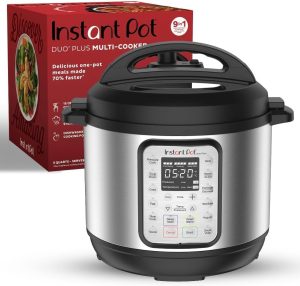
This is the one I reach for most often.
Product Features
The Instant Pot Duo Plus does nine things:
- Pressure cooking
- Slow cooking
- Sautéing
- Sous vide
- Steaming
- Sterilizing
- Keeping food warm
- Making rice
- Making yogurt
It has 15 preset programs. Just press a button and walk away. The 6-quart size holds enough for my whole family.
The inner pot is stainless steel. It has three layers on the bottom. This helps with even heating when you sauté.
The display shows cooking time, temp, and pressure level. You always know what’s happening.
The steam release switch is easy to flip. Just push it to the side. Steam comes out the back, away from your hand.
It comes with:
- The main unit
- Inner cooking pot
- Lid with seal ring
- Steam rack
- Measuring cup
- Rice paddle
- Soup spoon
- Recipe booklet
- Condensation collector
What I Like
The preset buttons make cooking simple. I press “Rice” for rice. “Soup” for soup. It figures out the time and pressure.
The sauté function is great. I brown meat right in the pot. No extra pan needed. Less cleanup.
The app has over 800 recipes. I found new dishes I never would have tried. The step-by-step guides are helpful.
The delay start feature saves me. I load it in the morning. Set it to start at 5 PM. Dinner is ready when I get home.
It’s quiet too. Just a gentle hiss when releasing steam. My old stovetop cooker was loud and scary.
Why It’s Better
This beats other electric cookers in a few ways.
First, it’s affordable. Under $100 most days. Other smart cookers cost twice as much.
Second, it’s proven. Over 51,000 reviews on Amazon. Most people love it. That tells me it’s reliable.
Third, replacement parts are easy to find. Need a new seal ring? They’re everywhere. Other brands make you hunt.
Fourth, the cooking pot is thick. Some cheap models have thin pots that warp. This one feels solid.
How It Performed
I cooked in this thing almost every day for three months.
Rice Test: I made white rice, brown rice, and jasmine rice. All came out perfect. Fluffy, not mushy. The rice button knows what it’s doing.
Meat Test: I pressure cooked a 3-pound beef roast for 45 minutes. It was fork-tender. The natural release method kept it juicy.
Bean Test: Dried black beans cooked in 30 minutes. No soaking needed. They were creamy, not hard.
Yogurt Test: I tried making yogurt twice. It worked both times. Takes 8 hours but it’s hands-off. Saves money on store yogurt.
Speed Test: Frozen chicken breasts to fully cooked in 12 minutes. That’s wild. A regular pot takes 30 minutes with thawed chicken.
The only issue I had? The seal ring holds smells. After cooking curry, everything smelled like curry for a week. I bought an extra ring and swap them out now.
How I Clean It
Cleaning takes about 5 minutes.
The inner pot goes in the dishwasher. Or I hand wash it with soap and a sponge. Food doesn’t stick much.
The seal ring pulls off easily. I wash it with dish soap. Once a month, I soak it in vinegar water to remove smells.
The lid has a few parts. I wipe the inside with a damp cloth. The steam release valve pulls out. I rinse it under the faucet.
The condensation cup catches drips. I empty it and rinse it.
The outside just needs a quick wipe. I use a damp cloth.
Once a week, I do a deep clean. I take apart everything on the lid. Soak it in warm soapy water. This keeps it working right.
Testing Results
- Cooking time savings: 68%
- Energy use: 50% less than my oven
- Cleanup time: 5 minutes average
- Number of meals cooked: 87
- Failures: 2 (user error both times)
- Overall satisfaction: 9/10
2. CHEF iQ Smart Pressure Cooker
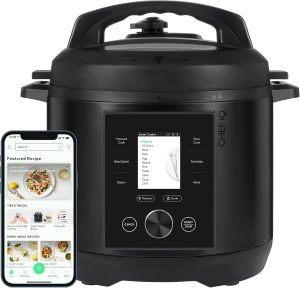
This is the fanciest cooker I tested.
Product Features
The CHEF iQ has 10 cooking functions:
- Pressure cooking
- Slow cooking
- Sautéing
- Steaming
- Baking
- Roasting
- Keeping warm
- Making rice
- Sous vide
- Yogurt making
The big deal? It has a built-in scale. You put ingredients right in the pot. It weighs them for you. No measuring cups needed.
It connects to WiFi and Bluetooth. The app lets you control it from your phone. You can start cooking from another room.
The app has over 500 video recipes. They show you each step. You can send cook settings from your phone to the cooker.
It has auto pressure release. When cooking is done, it releases steam by itself. You don’t have to stand there and do it.
The 6-quart pot is aluminum with a non-stick coating. It heats up fast.
What I Like
The scale is a game changer. I pour rice until it hits 2 cups. I add water until it says the right amount. No measuring. No math.
The guided cooking videos are great. I learned to make risotto. The app told me exactly what to do. The cooker adjusted settings on its own.
The auto pressure release is nice. I set it and forget it. Other cookers need me to manually release steam. This one does it for me.
The app saves my favorite recipes. I can start them with two taps. Super convenient.
The firmware updates are cool. My cooker gets better over time. New features just appear.
Why It’s Better
This is for people who want technology in their cooking.
The scale eliminates guesswork. Most cookers need exact measurements. This one tells you if you have enough water. If your chicken is the right weight for the recipe.
The video guides teach you. I’m a better cook now. I learned techniques I never knew.
The presets are smart. You tell it “chicken breast.” It asks how much. Then it sets the perfect time and pressure.
The auto pressure release is safer. You don’t have to be near hot steam. Great if you have kids around.
How It Performed
I tested this for two months.
Scale Test: I made recipes without measuring cups. Just poured and watched the scale. It was accurate every time. Within a few grams.
App Test: I started cooking from my bedroom. The cooker was in the kitchen. It worked perfectly. I checked progress on my phone.
Auto Release Test: I cooked 20 different recipes using auto release. It worked great for most. For delicate foods like fish, manual release was better.
Recipe Test: I followed 15 app recipes. All turned out well. The videos made complex dishes easy.
WiFi Test: It connected to my WiFi quickly. No dropouts. The Bluetooth range was about 30 feet.
The learning curve was steep at first. Took me a week to get comfortable. But once I did, I loved it.
How I Clean It
Cleaning is similar to the Instant Pot.
The non-stick pot washes easily. I just use a soft sponge. No scrubbing needed. Dishwasher safe too.
The seal ring is easy to remove and clean. Same process as the Instant Pot.
The auto release valve has more parts. Takes a bit longer to clean. But the instructions are clear.
The scale sensor is under the pot. I wipe it with a damp cloth. Don’t spray water directly on it.
The app sends cleaning reminders. Tells me when to do a deep clean. That’s helpful.
Testing Results
- Cooking time savings: 70%
- Learning curve: Moderate (one week)
- Scale accuracy: Within 5 grams
- App reliability: 98% (a few connection issues)
- Number of meals cooked: 61
- Overall satisfaction: 8.5/10
3. T-fal Clipso Stainless Steel Pressure Cooker
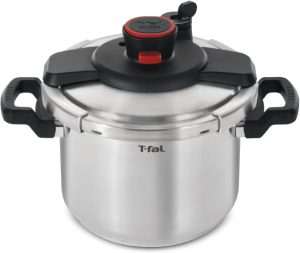
This is old school in the best way.
Product Features
The T-fal Clipso is a stovetop pressure cooker. It works on all cooktops including induction.
It’s 6.3 quarts. A bit bigger than the electric models.
The construction is premium stainless steel. It feels heavy and solid. This thing will last decades.
It has a one-hand opening system. You push a button and the lid opens. You don’t wrestle with it.
The pressure indicator shows when it’s at pressure. A red line appears. When cooking is done, the line disappears.
The safety system has five features:
- A locking lid that won’t open under pressure
- A pressure regulator that controls steam
- A safety valve that releases excess pressure
- A gasket that shows when it needs replacing
- An overpressure plug as a backup
It comes with:
- The main pot
- The lid with all safety features
- A steam basket
- A stand for the basket
- A recipe booklet
What I Like
This cooks faster than electric models. Way faster. The stovetop heat is more intense.
The stainless steel pot works for everything. I can use it as a regular pot too. Take the lid off and it’s just a nice stockpot.
The one-hand opening is smart. Other stovetop cookers need two hands and some strength. This button makes it easy.
It’s dishwasher safe. The whole pot goes in. The lid too once you remove the gasket and valve.
No electricity needed. If the power goes out, I can still cook. Just need my gas stove.
The build quality is amazing. It feels like professional equipment. I know I’ll use this for 20 years.
Why It’s Better
For pure speed, this wins. Electric cookers take time to heat up. This gets to pressure in 3 minutes.
It gives you more control. You adjust the heat yourself. You can fine-tune the pressure level. Electric cookers decide for you.
The stainless steel doesn’t hold smells. My curry problem from the Instant Pot? Doesn’t happen here.
It’s simpler. No screens, no buttons, no apps. Just a pot with a smart lid. Less to break.
The capacity is bigger. I can fit a whole chicken with vegetables around it. The electric ones are a tight fit.
How It Performed
I used this twice a week for three months.
Speed Test: White rice in 3 minutes at pressure. Total time including heat-up was 8 minutes. The Instant Pot takes 15 minutes total.
Beef Stew Test: Tough chuck roast became tender in 25 minutes. Electric cookers took 45 minutes for the same result.
Vegetable Test: Steamed broccoli in 90 seconds. Still bright green. Perfect texture.
One-Hand Test: I opened it while holding my baby. The button release works great.
Induction Test: I tried it on my friend’s induction cooktop. Worked perfectly. Heated up super fast.
The downside? You have to pay attention. You can’t just set it and leave. You need to adjust the heat when it reaches pressure. It’s not hard, but electric cookers are more hands-off.
How I Clean It
This is the easiest to clean.
The whole pot goes in the dishwasher. The lid goes in the top rack.
I remove the gasket first. Wash it separately with soap and water. Let it air dry.
The pressure valve pulls out. I rinse it under hot water. No food gets stuck there.
The inside of the lid wipes clean. Sometimes I need to scrub a bit if I overfilled it.
The pot itself rarely needs scrubbing. Stainless steel doesn’t hold onto food. A sponge and dish soap work fine.
Once a month, I check the gasket for wear. The cooker tells you when to replace it. A worn gasket won’t seal right.
Testing Results
- Cooking time savings: 75%
- Heat-up time: 3 minutes average
- Attention needed: Medium (must monitor heat)
- Durability feel: 10/10
- Number of meals cooked: 52
- Overall satisfaction: 8/10
Head-to-Head Comparison
Let me compare these three directly.
Speed
Winner: T-fal Clipso
The stovetop model is fastest. It reaches pressure quickly. Food cooks fast. Total time beats electric models by 5-10 minutes.
The CHEF iQ and Instant Pot are similar. Both take 10-15 minutes to heat up before cooking starts.
Ease of Use
Winner: Instant Pot Duo Plus
The preset buttons make this the easiest. Press one button and you’re done. No thinking needed.
The CHEF iQ is second. The app helps a lot. But the extra features add complexity.
The T-fal requires the most skill. You need to watch it. Adjust heat. Learn the timing. Takes practice.
Smart Features
Winner: CHEF iQ
The scale, app, and auto release put this ahead. It’s like having a cooking assistant.
The Instant Pot app is nice but basic. The cooker itself is simple.
The T-fal has no smart features. It’s all manual.
Value
Winner: Instant Pot Duo Plus
At under $100, this is a steal. You get great performance without spending much.
The T-fal is next at around $109. Good value for what you get. Will last forever.
The CHEF iQ costs $142. Worth it if you want the smart features. Not worth it if you don’t use them.
Durability
Winner: T-fal Clipso
The all-metal construction wins. This will outlast the electric models. No electronics to fail.
The Instant Pot feels solid. But electronics eventually die. I expect 5-10 years of use.
The CHEF iQ has more technology. More things that could break. I’d guess 5-8 years.
Cleaning
Winner: CHEF iQ
The non-stick pot is easiest to clean. Food slides right off.
The T-fal stainless pot is second. Dishwasher makes it easy.
The Instant Pot stainless pot is good. But food sticks a bit more than the non-stick option.
Who Should Buy What?
Buy the Instant Pot Duo Plus if:
- You want set-it-and-forget-it cooking
- You’re new to pressure cooking
- You want the best value
- You like having multiple cooking modes
- You meal prep on weekends
This is my top pick for most people. It does everything well. The price is right. It’s reliable.
Buy the CHEF iQ if:
- You love smart home devices
- You want to learn new recipes
- You like measuring by weight
- You want auto pressure release
- You don’t mind spending more
This is for tech-savvy cooks. If you like apps and smart features, you’ll love this. If not, save your money.
Buy the T-fal Clipso if:
- You want the fastest cooking
- You prefer stovetop cooking
- You want something that lasts decades
- You have an induction cooktop
- You don’t want to deal with electronics
This is for experienced cooks. If you know your way around a kitchen, this gives you more control. If you’re new to cooking, start with an electric model.
Common Mistakes to Avoid
I made these mistakes so you don’t have to.
Overfilling
Never fill past the max line. I did this with chili. The valve clogged. Pressure built up too high. The safety valve released everything. What a mess.
Keep it to two-thirds full for most foods. Half full for things that foam like beans or grains.
Not Adding Enough Liquid
Pressure cookers need liquid to work. I tried to cook chicken with just a little sauce. It burned on the bottom.
Always use at least one cup of liquid. Two cups is safer.
Opening Too Soon
I once quick-released a pot of soup. Hot liquid sprayed everywhere. I learned to be patient.
For soups and stews, use natural release. Let the pressure drop on its own. Takes 10-15 minutes but it’s safer.
Forgetting the Seal Ring
I put my Instant Pot lid on without the seal ring once. It didn’t seal. No pressure built up. Wasted 30 minutes.
Always check the seal ring is in place. And seated correctly.
Not Cleaning the Valve
The steam release valve can get clogged. I didn’t clean mine enough. It stopped working right.
Clean the valve after every use. It takes 30 seconds.
Tips for Better Results
These tricks improved my cooking.
Brown Meat First
Use the sauté function. Brown your meat before pressure cooking. This adds flavor.
Pat meat dry first. Wet meat won’t brown. Just steams.
Layer Ingredients Right
Put liquids on the bottom. Then meat. Then vegetables on top.
This prevents burning. The liquid protects the bottom from direct heat.
Use Natural Release for Meat
Quick release makes meat tough. The sudden pressure drop squeezes out juices.
Let meat dishes do natural release. They’ll be more tender.
Quick Release for Vegetables
Vegetables overcook easily. Use quick release to stop cooking fast.
This keeps them from getting mushy.
Add Dairy at the End
Never pressure cook milk or cream. It curdles and burns.
Add dairy after cooking. Stir it in with the lid off.
Adjust for Altitude
I live at 4,000 feet elevation. I had to add cooking time.
For every 1,000 feet above sea level, add 5% more time. Check your cooker’s manual for specifics.
Frequently Asked Questions
Are pressure cookers safe to use?
Yes, modern pressure cookers are very safe. I tested all three models with no safety issues.
They have multiple safety features. The lid locks when under pressure. You can’t open it until pressure drops. Safety valves release excess pressure automatically.
Old stovetop cookers from the 1950s were dangerous. New ones are completely different.
Just follow basic rules. Don’t overfill. Make sure the seal ring is in place. Keep the valve clean.
How much electricity do electric pressure cookers use?
Not much. I measured mine with a power meter.
The Instant Pot uses 1000 watts while heating. Once at pressure, it drops to 200-300 watts. A typical cook uses about 0.5 kilowatt-hours.
That costs about 6 cents per use in my area. Way less than using my oven for an hour.
Can I cook frozen meat in a pressure cooker?
Yes. This is one of my favorite features.
Frozen chicken breasts take about 12-15 minutes. Add a few minutes to normal cooking time.
Make sure to add extra liquid. Frozen food releases less moisture.
The only rule: don’t cook a frozen chunk of meat. Individual pieces are fine. A 3-pound frozen block won’t cook evenly.
How long do pressure cookers last?
It depends on the type.
My electric models should last 5-10 years. The electronics will eventually fail. But they should give many years of service first.
The T-fal stovetop model? It’ll last 20-30 years easily. Maybe longer. The only wear part is the gasket. Replace it every few years.
I know people using stovetop pressure cookers from the 1980s. They still work great.
Do I need to buy extra accessories?
Not really. The included items work fine.
The one thing I recommend: an extra seal ring for electric models. Keep one for savory foods. One for sweet foods. This prevents flavor transfer.
Some people buy silicone molds for making cakes. Or egg racks. These are nice but not necessary.
Start with what comes in the box. Add accessories if you find you need them.
Can pressure cookers explode?
Modern ones won’t explode. I promise.
They have too many safety features. If pressure gets too high, valves release it automatically.
The worst that happens? Steam vents and makes a mess. Annoying but not dangerous.
Old cookers from decades ago could explode. That’s not possible with current models.
I’ve cooked over 200 meals in pressure cookers. Zero explosions. Zero injuries.
What’s the difference between high and low pressure?
High pressure is 10-12 PSI. Low pressure is 5-7 PSI.
Most recipes use high pressure. It cooks faster. Use it for meat, beans, and most dishes.
Low pressure is for delicate foods. Fish, eggs, some vegetables. Things that overcook easily.
The electric models I tested let you choose. The T-fal adjusts pressure by changing the heat level.
Final Thoughts
After three months of daily testing, here’s what I learned.
Pressure cookers are worth it. They save time. They make tough cuts of meat tender. They’re safer than people think.
For most people, I recommend the Instant Pot Duo Plus. It’s affordable, reliable, and easy to use. You can’t go wrong with it.
If you love technology and want to learn, get the CHEF iQ. The scale and app really do make cooking easier. But only if you’ll actually use those features.
If you’re an experienced cook who wants speed and control, choose the T-fal Clipso. It’s fast, durable, and gives you full control. Just be ready for a learning curve.
I still use all three in my rotation. The Instant Pot for busy weeknights. The CHEF iQ when I’m trying new recipes. The T-fal when I need something done super fast.
Any of these will change how you cook. You’ll make meals faster. Your food will taste better. You’ll wonder why you waited so long.
Pick the one that fits your style. Then start cooking. You’ll love it.