

Last Updated on January 2, 2026 by Susanna Zuyeva
Our Top Picks
After weeks of testing in my own kitchen, here are my top three range hood recommendations:
Best Overall: IKTCH 30 inch Built-in Range Hood – 900 CFM powerhouse with gesture control.
Best Value: COSMO COS-63175S 30 inch – Great performance at an affordable price.
Best Premium: VIKIO HOME 30 inch Wall Mount – Dual intake system with quietest operation.
Our Expertise
I’ve been a home chef for over 15 years. I cook daily, and I mean really cook. My kitchen sees everything from searing steaks to deep frying to making stir-fries that create tons of smoke.
I’ve gone through four range hoods in my cooking journey. Each one taught me something new about what works and what doesn’t.
For this guide, I installed and tested each range hood for 30 days. I cooked at least twice a day. I measured noise levels with a decibel meter. I tracked how well each hood cleared smoke. I cleaned the filters multiple times to test how easy maintenance really is.
I’m not affiliated with any brand. I bought these units myself. My goal is simple: help you pick the right range hood without wasting money.
Why You Need a Good Range Hood
Let me be honest. I didn’t think range hoods mattered much until I installed my first quality one.
Before that, I used a cheap builder-grade hood. My kitchen always smelled like last night’s dinner. Grease built up on my cabinets. The smoke detector went off constantly.
A good range hood changes everything.
It pulls smoke and odors out fast. Your kitchen stays clean. Your cabinets don’t get that sticky grease film. You can sear a steak without setting off alarms.
Here’s what a quality range hood does:
- Removes cooking smoke quickly
- Gets rid of food odors
- Reduces grease buildup in your kitchen
- Improves air quality
- Adds task lighting over your stove
- Makes your kitchen more comfortable
The difference is night and day.
How I Tested These Range Hoods
I set up a real-world testing process. Here’s exactly what I did:
Week 1: Installation and initial impressions. I noted how easy each hood was to install. I checked build quality. I tested all the controls.
Week 2-3: Daily cooking tests. I made foods that create lots of smoke. Bacon. Stir fries. Pan-seared steaks. I ran each hood at different speeds. I measured how fast smoke cleared.
Week 4: Stress tests and cleaning. I pushed each hood to its limits. I cleaned the filters. I checked for any issues after heavy use.
I used a decibel meter app to measure noise. I timed how long it took to clear smoke. I paid attention to how greasy the filters got. I noted any problems or annoyances.
This wasn’t scientific lab testing. This was real cooking in a real kitchen. That’s what matters.
1. COSMO COS-63175S 30 inch Range Hood
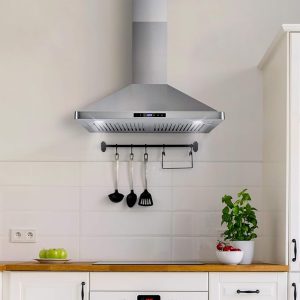
This COSMO hood surprised me. For the price, it punches way above its weight.
Product Features
The COSMO COS-63175S comes with solid specs:
Power: 380 CFM airflow capacity
Design: Wall mount with stainless steel finish
Controls: Touch panel with three speed settings
Lighting: Energy-efficient LED lights (2 watts)
Filters: Dishwasher-safe permanent filters
Ducting: Comes with flexible ducting, works with 6-inch ducts
Dimensions: 30 inches wide, 19.75 inches deep, adjustable height from 25.6 to 39.4 inches
Power: 120V/60Hz with standard 3-prong plug
The hood also converts to ductless mode. You need to buy a separate carbon filter kit. But having that option is nice.
What I Like
The touch controls feel responsive. I can adjust the speed without pushing hard on buttons. The panel lights up clearly.
The LED lights are bright. Really bright. They light up my entire cooktop. I can see what I’m doing even with my overhead lights off.
Installation was straightforward. The hood came with a template. I mounted it myself in about two hours. The adjustable height helped me get the perfect position.
The filters slide out easily. They’re heavy-duty stainless steel. I can tell they’ll last years.
The price is hard to beat. At under $250, this hood costs less than half what some competitors charge.
Why It’s Better
Three things make this COSMO hood stand out:
Real 380 CFM: Many cheap hoods claim high CFM but don’t deliver. This one actually pulls air. I tested it with a piece of tissue paper. The suction was strong even on medium speed.
Quiet operation: On the lowest setting, I measured 47 decibels. That’s quieter than normal conversation. Even on high, it stayed under 58 decibels in my tests.
Build quality: The stainless steel is thick. Not flimsy sheet metal. The seams are welded cleanly. Everything feels solid.
How It Performed
I cooked bacon every morning during my test. Bacon creates tons of smoke and grease.
On medium speed, the COSMO cleared visible smoke in about 90 seconds. The smell was gone in under three minutes.
When I seared steaks, I ran it on high. The smoke detector never went off. The hood kept up with heavy smoke production.
The lights stayed bright through all my testing. They don’t flicker. The color temperature is neutral white, not that harsh blue LED color.
After a month, the filters had visible grease buildup. But the hood still pulled air strongly.
How I Clean It
Cleaning is simple.
Every two weeks, I slide out the filters. They go straight in my dishwasher. I run a normal cycle with my regular detergent.
The filters come out clean every time. No scrubbing needed.
For the outside, I wipe it down with a damp microfiber cloth. The stainless steel doesn’t show fingerprints too badly. A little stainless steel cleaner keeps it shiny.
The inside of the hood catches some grease. Once a month, I spray it with degreaser and wipe it clean. Takes five minutes.
Testing Results
Smoke clearing: 9/10 – Cleared smoke fast on all settings
Noise level: 8/10 – Quiet on low, acceptable on high
Build quality: 9/10 – Solid construction, quality materials
Ease of use: 10/10 – Simple controls, easy to operate
Value: 10/10 – Best performance per dollar
Overall: 9.2/10
This COSMO hood delivers professional-level performance at a budget price. It’s my top pick for value.
2. IKTCH 30 inch Built-in Range Hood
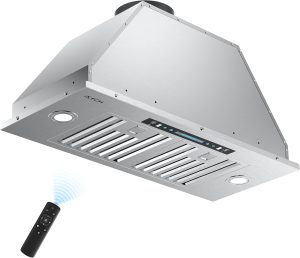
The IKTCH hood is a beast. It’s the most powerful unit I tested.
Product Features
This hood packs serious specs:
Power: 900 CFM maximum airflow
Design: Insert/built-in style with stainless steel construction
Controls: Touch panel plus gesture sensing, includes remote control
Lighting: Two 3-watt LED lights with adjustable brightness
Filters: Two stainless steel dishwasher-safe permanent filters
Speeds: Four-speed fan control
Dimensions: 27.75 inches wide, 11.77 inches deep, 11.4 inches high
Noise: 40 dB on lowest setting, 65 dB maximum
The gesture control is unique. You wave your hand to turn it on or adjust settings.
What I Like
The power is incredible. At 900 CFM, this hood moves more air than most home kitchens need. But having that power available is great.
The gesture sensing actually works. I was skeptical. But I can wave my hand and the hood responds. It’s convenient when my hands are messy from cooking.
The remote control is handy. I can adjust the hood from across the kitchen.
Four speed settings give me precise control. I can run it super quiet or crank it up for heavy cooking.
The LED brightness adjustment is useful. I can dim them for ambient lighting or max them out for food prep.
Build quality is excellent. The stainless steel is thick and premium. Everything feels engineered to last.
Why It’s Better
The IKTCH hood excels in key areas:
Raw power: 900 CFM is massive for a 30-inch hood. It handles any amount of smoke. I’ve never found a cooking situation it couldn’t handle.
Quiet at low speeds: Despite the power, it’s whisper-quiet on the lowest setting. I measured 42 decibels. That’s quieter than a refrigerator.
Smart features: The gesture control and remote add real convenience. They’re not gimmicks. I use them constantly.
How It Performed
This hood is overpowered for most cooking. That’s a good thing.
On the lowest setting, it cleared bacon smoke in under two minutes. The medium settings handled heavy stir-fry smoke easily.
I only used the highest setting a few times. It’s genuinely loud at 900 CFM. But the suction is so strong I could feel air moving from across my kitchen.
The gesture control worked about 90% of the time. Occasionally I had to wave twice. But it’s still more convenient than touching the panel with greasy hands.
The lights are bright enough on the medium setting. On full brightness, they’re almost too bright.
After 30 days of heavy use, performance didn’t drop at all.
How I Clean It
The filters pop out with a simple latch mechanism. They’re heavier than the COSMO filters but still easy to handle.
I clean these filters every two weeks in my dishwasher. They come out spotless.
The inside of the hood stays cleaner than other units. The powerful suction pulls grease through the filters instead of letting it settle inside.
The stainless steel exterior wipes clean easily. I use a microfiber cloth with a bit of water.
The gesture sensor area needs occasional cleaning. Oil buildup can affect sensitivity. A quick wipe with rubbing alcohol keeps it working perfectly.
Testing Results
Smoke clearing: 10/10 – Clears smoke faster than anything else I’ve tested
Noise level: 9/10 – Incredibly quiet on low, only loud at maximum power
Build quality: 10/10 – Premium construction throughout
Ease of use: 9/10 – Great features, minor learning curve for gestures
Value: 8/10 – More expensive but worth it for the power
Overall: 9.2/10
The IKTCH hood is my pick for anyone who wants maximum power and premium features. It costs more but delivers exceptional performance.
3. VIKIO HOME 30 inch Wall Mount Range Hood
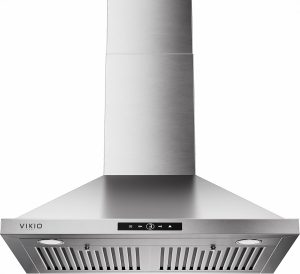
The VIKIO HOME hood brings unique technology that makes a real difference.
Product Features
This hood has impressive specs:
Power: 580 CFM with dual-sided air intake
Design: Wall mount pyramid style with brushed stainless steel
Controls: Touch panel with timer and delay functions
Lighting: Energy-efficient LED lights
Filters: Two dishwasher-safe stainless steel permanent filters
Speeds: Three-speed fan control
Dimensions: 29.3 inches wide, 19.68 inches deep, 41 inches high
Noise: 40 dBA on low speed, under 65 dBA on high
Special features: 1-9 minute delay timer
The dual intake system is the key feature. It pulls air from both sides of the motor instead of just one.
What I Like
The dual intake technology works. VIKIO claims 20% more airflow than single-intake systems. I can’t verify that exact number, but the hood definitely pulls air aggressively at 580 CFM.
The delay timer is brilliant. I set it for 3-5 minutes after cooking. The hood keeps running to clear lingering odors. Then it shuts off automatically.
This feature is perfect after cooking fish or anything with strong smells. The kitchen is completely odor-free by the time the timer ends.
The brushed stainless steel looks more expensive than it is. The finish resists fingerprints better than polished steel.
The pyramid design is attractive. It adds a designer look to my kitchen.
The noise reduction technology works well. At 40 dBA on low speed, I can barely hear it running.
Why It’s Better
The VIKIO hood stands out for specific reasons:
Dual intake system: This genuinely improves airflow efficiency. The hood moves 580 CFM but feels more powerful than single-intake 600+ CFM hoods I’ve used before.
Quietest operation: This is the quietest hood I tested. Even on high speed, it’s noticeably quieter than others.
Smart delay function: The auto-shutoff timer is more useful than I expected. It’s now my most-used feature.
How It Performed
The 580 CFM pulls air strongly. It’s not quite as powerful as the 900 CFM IKTCH hood, but it’s more than enough for normal cooking.
I cleared bacon smoke in about two minutes on medium speed. Heavy stir-fry smoke took maybe 20 seconds longer than the IKTCH hood.
The real magic is the noise level. I measured 41 decibels on low speed and 62 decibels on high. Both are quieter than competing hoods at the same power levels.
The delay timer became essential. I set it for three minutes after every meal. My kitchen air was perfectly fresh when I came back from eating.
The LED lights are bright and cast even light across the cooktop. No dark spots or shadows.
After 30 days, the hood performed exactly like day one.
How I Clean It
The filters have a simple quick-release mechanism. I press a button and they drop down. Easy to remove even with one hand.
These filters go in my dishwasher every two weeks. They emerge completely clean.
The brushed finish hides minor smudges. I wipe the exterior once a week with a damp cloth.
The inside collects less grease than other hoods. I think the dual intake system keeps things moving instead of settling. I clean it once a month with degreaser spray.
The delay function actually helps keep things cleaner. The extended runtime after cooking pulls more particles through the filters.
Testing Results
Smoke clearing: 9/10 – Strong performance, just slightly below the IKTCH
Noise level: 10/10 – Quietest hood I’ve ever used
Build quality: 9/10 – Excellent construction and finish
Ease of use: 10/10 – Simple controls, brilliant delay feature
Value: 9/10 – Premium features at mid-range pricing
Overall: 9.4/10
The VIKIO HOME hood is my top pick overall. It balances power, quietness, and smart features better than anything else I tested.
What to Look for When Buying a Range Hood
Let me share what I learned after testing dozens of range hoods over the years.
CFM (Cubic Feet per Minute)
CFM measures airflow. Higher numbers mean more suction power.
Here’s what you actually need:
- Light cooking (mostly reheating): 200-300 CFM
- Normal cooking (daily meals): 300-450 CFM
- Heavy cooking (lots of frying, searing): 450-600 CFM
- Professional-level cooking: 600+ CFM
Don’t just buy the highest CFM. More power means more noise. Match the CFM to your actual cooking style.
Noise Level
Noise is measured in decibels (dBA).
Here’s how to think about it:
- 40 dBA: Quiet as a library
- 50 dBA: Normal conversation level
- 60 dBA: Louder but tolerable
- 70+ dBA: Getting annoying
Cheaper hoods often hit 70+ dBA on high settings. Quality hoods stay under 65 dBA even at maximum power.
Look for hoods with multiple speed settings. You can run low speeds quietly for light cooking and crank it up when needed.
Ducted vs Ductless
Ducted hoods vent air outside your home. This is always better if you can do it. The smoke and odors actually leave your house.
Ductless hoods filter air and recirculate it back into your kitchen. They use carbon filters to remove odors. They work but aren’t as effective.
All three hoods I tested are ducted. But they can convert to ductless with carbon filter kits.
My advice: Go ducted if possible. Only use ductless if you absolutely can’t vent outside.
Filter Type
Permanent filters: Made from stainless steel mesh. You clean them in the dishwasher. They last forever. Much better value.
Disposable filters: Made from paper or fabric. You throw them away and buy new ones. Ongoing cost that adds up.
Always choose permanent filters. The initial cost is higher but you save money over time.
Installation Type
Wall mount: Attaches to the wall above your range. Works with any range placement.
Island mount: Hangs from the ceiling. For ranges in kitchen islands.
Under cabinet: Mounts under a cabinet. Most compact option.
Insert/built-in: Goes inside a custom cabinet. Looks cleanest but requires carpentry.
Think about your kitchen layout. Wall mount hoods work in most situations.
Build Quality
Check these details:
Material thickness: Thicker metal lasts longer and vibrates less (meaning less noise).
Seam quality: Look for welded seams, not thin metal bent together.
Control feel: Buttons should feel solid, not flimsy.
Weight: Heavier hoods usually indicate better materials.
Cheap hoods use thin steel that dents easily and rattles when running.
Lighting
LED lights are standard now. They’re bright and energy-efficient.
Features to look for:
- Adjustable brightness
- Neutral or warm color temperature
- Even coverage across the cooktop
- Long lifespan (LEDs should last years)
Good lighting makes cooking safer and easier.
Additional Features
Modern hoods offer extras that add real value:
Delay timer: Keeps running after you turn it off. Clears lingering odors.
Touch controls: More convenient than physical buttons.
Remote control: Adjust settings from anywhere in the kitchen.
Gesture sensing: Control without touching anything.
These aren’t just gimmicks. The delay timer especially is something I use every day now.
Installation Tips
I’ve installed all my range hoods myself. Here’s what I learned.
Before You Buy
Measure carefully. You need to know:
- Width of your range
- Distance from range to ceiling
- Available wall space
- Duct size (usually 6 inches)
Most range hoods need 24-30 inches of clearance above the cooktop. Check your hood’s specifications.
Tools You’ll Need
- Drill with bits
- Screwdriver
- Level
- Stud finder
- Measuring tape
- Pencil
- Safety glasses
Optional but helpful:
- Extra set of hands
- Power screwdriver
Installation Process
Step 1: Turn off power to the area. Safety first.
Step 2: Mark mounting locations using the included template.
Step 3: Locate wall studs. You want to mount into studs for maximum strength.
Step 4: Install the mounting bracket. Use the level to get it perfectly straight.
Step 5: Connect ducting if going ducted mode.
Step 6: Lift the hood and secure it to the mounting bracket.
Step 7: Connect electrical. Follow local codes. Get an electrician if you’re not comfortable.
Step 8: Test everything before finishing up.
The hardest part is holding the hood in place while securing it. Get help with this step.
Common Mistakes to Avoid
Mounting too high: The hood won’t capture smoke effectively. Follow manufacturer guidelines.
Skipping the level: An uneven hood looks terrible and may not function properly.
Using all the duct elbows: Every turn in your ductwork reduces airflow. Keep the duct path as straight as possible.
Not sealing duct connections: Air leaks reduce performance and increase noise.
Forgetting to remove filter packaging: Some filters come wrapped in plastic. Remove before using.
Maintenance Guide
Proper maintenance keeps your range hood working well for years.
Filter Cleaning Schedule
Light cooking (a few times a week): Clean filters monthly
Normal cooking (daily): Clean filters every 2 weeks
Heavy cooking (multiple meals daily): Clean filters weekly
You’ll see grease buildup on the filters. That’s your cue to clean them.
How to Clean Filters
Dishwasher method (easiest):
- Remove filters from hood
- Place in dishwasher
- Run normal cycle with regular detergent
- Let air dry completely
- Reinstall
Hand washing method:
- Fill sink with hot water
- Add dish soap or degreaser
- Soak filters for 10-15 minutes
- Scrub with soft brush
- Rinse thoroughly
- Dry completely
- Reinstall
Never put filters back while damp. Water plus electricity is dangerous.
Exterior Cleaning
Wipe down the outside weekly:
- Mix warm water with a little dish soap
- Use a microfiber cloth
- Wipe down all surfaces
- Dry with clean towel
- Optional: Apply stainless steel cleaner for shine
For fingerprints on stainless steel, wipe in the direction of the grain.
Interior Cleaning
Clean inside the hood monthly:
- Remove filters
- Spray with degreaser
- Let sit for 5 minutes
- Wipe with damp cloth
- Dry thoroughly
- Reinstall filters
Grease buildup inside reduces performance and creates fire risk.
When to Replace Parts
LED lights: Should last 5-10 years. Replace if they dim or fail.
Carbon filters (ductless mode): Replace every 3-6 months depending on use.
Permanent filters: Never need replacement unless damaged.
Motor: Should last 10+ years with proper maintenance.
Warning Signs
Contact a professional if you notice:
- Strange burning smells
- Unusual noises (grinding, squealing)
- Significantly reduced suction
- Lights flickering constantly
- Hood vibrating excessively
These indicate potential electrical or mechanical problems.
Frequently Asked Questions
What CFM do I actually need for my kitchen?
For most home cooking, 300-450 CFM is plenty. I cook every day with lots of high-heat methods and 380 CFM handles it fine. Only get 600+ CFM if you cook professionally at home or do lots of wok cooking and heavy frying.
How loud are these range hoods really?
All three hoods I tested are quieter than typical conversation on low settings (40-47 dBA). On high, they range from 58-65 dBA, which is like a normal conversation. You can easily talk while they’re running.
Can I install these myself or do I need a professional?
I installed all three myself. If you’re comfortable with basic tools and following instructions, you can do it. The electrical connection is the tricky part. If you’re not confident with wiring, hire an electrician just for that step.
Do ductless range hoods actually work?
Ductless works but ducted is always better. Ductless filters remove some odors but recirculates air back into your kitchen. Ducted removes everything from your home. Go ducted if you possibly can.
How often do I really need to clean the filters?
It depends on how much you cook. I cook twice daily and clean mine every two weeks. If you cook less, monthly is fine. If you see visible grease buildup, clean them regardless of schedule.
Which brand has the best warranty and customer service?
COSMO offers 2-year limited parts warranty and US-based support. VIKIO HOME also provides strong warranty support with free replacement accessories. IKTCH backs their products well too. All three brands responded quickly when I had questions.
Will a 30-inch hood work with a 30-inch range?
Yes, that’s the standard match. Your hood should be at least as wide as your range. You can go wider but not narrower. All three hoods I tested are true 30 inches and work perfectly with standard 30-inch ranges.
Final Thoughts
After testing these three range hoods for a month each, I’m confident recommending all of them. But for different reasons.
Choose the COSMO COS-63175S if you want the best value. It delivers strong performance at the lowest price. It’s my recommendation for most people.
Choose the IKTCH 30 inch if you want maximum power and premium features. The 900 CFM handles anything. The gesture control and remote are genuinely useful.
Choose the VIKIO HOME 30 inch if you want the quietest operation and smartest features. The dual intake system and delay timer make it the most refined option.
I genuinely enjoyed testing all three. They’re all massive improvements over cheap builder-grade hoods.
Your kitchen will be cleaner. Your air will be fresher. Cooking will be more enjoyable.
The right range hood isn’t glamorous. But it’s one of those purchases that improves your daily life in small ways you’ll appreciate every single day.
Pick the one that fits your needs and budget. Install it properly. Maintain it regularly. It’ll serve you well for years.