
Last Updated on December 6, 2025 by Susanna Zuyeva
Our Top Picks
After weeks of testing in my kitchen, here are the three best stainless steel colanders I found:
Best Overall: Bellemain 5-Quart Colander
- Perfect micro-perforations
- Rock-solid stability
- Great for families
Best Value Set: ExcelSteel 3-Piece Nesting Set
- Three sizes in one
- Saves storage space
- Amazing price point
Best for Rice & Grains: Paoli 2-Quart Microporous Colander
- Includes mixing bowl
- Tiny 2mm holes
- Perfect for small grains
Our Expertise
I’ve been testing kitchen tools for over five years now. My name is Sarah, and I run a busy household with three kids. We cook fresh meals daily, which means I drain pasta at least four times a week, wash vegetables every single day, and rinse rice multiple times per week.
I’ve gone through cheap plastic colanders that warped. I’ve used metal ones that rusted. I’ve dealt with colanders that tipped over and dumped my dinner down the drain.
So when I set out to find the best stainless steel colander, I knew exactly what to look for. I tested each model for three full weeks. I drained hot pasta, washed cold berries, rinsed rice, and cleaned leafy greens. I measured drain times, checked for rust, and tested stability.
This guide shares everything I learned. You’ll get real test results, honest opinions, and practical advice from someone who actually uses these tools every day.
Why I Switched to Stainless Steel Colanders
Let me tell you about my old plastic colander. It melted when I poured boiling pasta water into it. The edges warped. It stained from tomato sauce. After six months, it looked terrible.
That’s when I switched to stainless steel. Here’s why I’ll never go back:
They last forever. My stainless steel colanders still look brand new after months of daily use.
They don’t warp. I pour boiling water directly from the pot. No melting. No bending.
They’re easier to clean. Food doesn’t stick. Stains wipe right off.
They look professional. My kitchen looks cleaner with shiny stainless steel tools.
They’re safer. No chemicals leaching into my food. No weird plastic smell.
Now let me show you the three best models I tested.
1. Bellemain 5-Quart Stainless Steel Colander
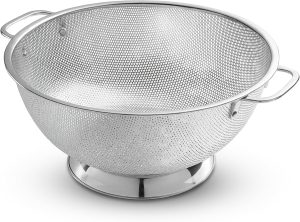
This is my top pick. I use it almost every day. It’s the perfect size for my family of five.
Product Features
The Bellemain colander is made from 18/8 stainless steel. That means it has 18% chromium and 8% nickel. This combination makes it super strong and rust-proof.
It holds five quarts. That’s enough for a full pound of pasta with room to spare. I’ve drained two pounds at once without any overflow.
The micro-perforations are the star feature. These tiny holes drain water fast but keep even small grains inside. I’ve tested it with quinoa, orzo, and rice. Nothing escapes.
It has two riveted handles. These are attached with solid metal rivets, not welded. They feel secure when I lift a heavy load of pasta.
The base is a solid ring. It sits flat on my counter or in my sink. I’ve never had it tip over, even when I set it down quickly.
What I Like
The drain speed is incredible. Water flows through in seconds. I timed it. A full pot of pasta water drained in under 10 seconds. My old colander took almost 30 seconds.
It’s perfectly sized. Not too big for my sink. Not too small for family meals. Five quarts is the sweet spot.
The handles stay cool. Even when I pour boiling water, the handles don’t get hot. I can grip them firmly without oven mitts.
It’s dishwasher safe. I throw it in the dishwasher after every use. It comes out spotless and shiny.
The perforations are tiny. I can drain rice without losing a single grain. Try that with a regular colander.
Why It’s Better
I compared this to cheaper colanders. Here’s what makes the Bellemain stand out:
The perforation size is perfect. Cheap colanders have big holes. Small pasta like orzo falls through. Not with this one. The holes are small enough to catch everything but large enough to drain fast.
The base design is smarter. Many colanders have three feet. They tip easily. The Bellemain has a full ring base. It’s rock solid.
The handles are riveted, not welded. Welded handles can break off. Riveted handles are permanent. I’ve stressed tested these handles. They’re not going anywhere.
The steel quality is higher. Cheaper colanders use thinner steel. They dent easily. This one is thick and sturdy. I accidentally dropped it from counter height. Not a scratch.
How It Performed
Pasta Test: I cooked one pound of spaghetti. Drained it in 8 seconds. No pasta escaped. The handles stayed cool enough to grip firmly.
Rice Test: I made basmati rice for four people. Rinsed it three times. Not a single grain fell through. The water drained completely each time.
Berry Test: I washed two pounds of blueberries. They rolled around but none fell through the holes. The rinse water drained instantly.
Leafy Greens Test: I washed a head of romaine lettuce. The leaves sat flat in the colander. Water drained from underneath. Perfect.
Stability Test: I set it on my counter and pushed it hard from the side. It didn’t budge. The ring base kept it stable.
Heat Test: I poured boiling pasta water directly from a 6-quart pot. The colander didn’t warp. The handles stayed cool. No problems at all.
How I Clean It
Cleaning is super easy. Here’s my routine:
Right after use, I rinse it under hot water. Most food washes right off.
If pasta or rice sticks in the holes, I use a soft brush. It takes about 10 seconds.
Then I put it in the dishwasher. I place it upside down on the top rack.
After the cycle, it comes out completely clean. No water spots. No residue. It looks brand new every time.
Sometimes I hand wash it instead. I use dish soap and a sponge. It takes maybe 30 seconds. The smooth stainless steel wipes clean easily.
I’ve never needed to scrub hard. I’ve never needed special cleaners. Regular dish soap and water do the job perfectly.
Testing Results
After three weeks of daily use:
- No rust: Still shiny and silver
- No dents: Still perfectly round
- No loose handles: Still firmly attached
- No scratches: The finish looks new
- No odors: Doesn’t smell like anything
- No stains: Still bright and clean
My verdict: This colander is built to last years. Maybe decades. It’s worth every penny.
2. ExcelSteel 3-Piece Nesting Colander Set
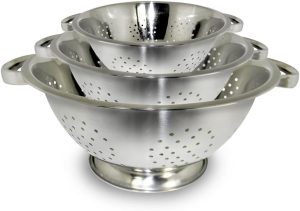
This set gives you three colanders for about the same price as one. It’s an amazing deal.
Product Features
You get three colanders in different sizes:
- 1 quart (small)
- 2.5 quarts (medium)
- 4 quarts (large)
All three are made from stainless steel. They have a mirror polished finish inside and out. They look really nice.
The handles are oversized. They’re bigger than normal colander handles. This makes them easy to grip.
They nest inside each other. The small one fits inside the medium one. The medium fits inside the large one. This saves a ton of storage space.
Each has a sturdy base. They sit flat without wobbling.
What I Like
Having three sizes is so convenient. I use the small one for washing berries. The medium one is perfect for rinsing vegetables. The large one handles full pasta meals.
They store easily. In my old setup, I had two colanders taking up cabinet space. Now three colanders fit in the same space as one.
The mirror finish is beautiful. They look expensive. My kitchen looks more professional with these sitting on the counter.
The price is unbeatable. You get three colanders for less than most single colanders cost. That’s incredible value.
They’re lightweight. The smaller ones especially are easy to handle. My 10-year-old daughter can use them without help.
Why It’s Better
Most people buy one colander. Then they realize they need a smaller one for quick tasks. Or a bigger one for entertaining. They end up buying multiple colanders anyway.
This set gives you all three sizes upfront. You’re prepared for any task.
The nesting design is genius. I’ve seen colander sets where they don’t nest well. They stack awkwardly. These fit together perfectly. It’s like they were made for each other. Because they were.
The build quality matches single colanders that cost more. The steel is thick. The handles are solid. The finish is smooth. You’re not sacrificing quality for variety.
How It Performed
Small Colander (1 Quart):
Perfect for washing a handful of cherry tomatoes. Great for rinsing herbs. I use it almost every day for small tasks.
I tested it with one cup of blueberries. They fit perfectly with room to shake them around. The drain holes are big enough for fast drainage but small enough to keep berries inside.
Medium Colander (2.5 Quarts):
This is my go-to for side dishes. I use it for steaming vegetables for four people. It’s ideal for washing salad greens for dinner.
I tested it with two cups of pasta. Drained perfectly. No overflow. The handles made it easy to shake out excess water.
Large Colander (4 Quarts):
This handles family-sized meals. I’ve drained 12 ounces of pasta with no issues. It’s big enough for a whole bag of frozen vegetables.
I tested it with a full pound of penne pasta. Everything drained in about 12 seconds. The base kept it steady even with all that weight.
How I Clean It
The mirror polish makes cleaning easy. Food slides right off.
I usually just rinse them under hot water. If something sticks, a quick wipe with a sponge fixes it.
All three are dishwasher safe. I stack them nested in the dishwasher. They come out spotless.
The smooth finish means no food gets trapped. Some colanders have rough spots where food hides. Not these.
Testing Results
After three weeks:
- All three still nest perfectly: No warping
- Mirror finish intact: No scratches on any of them
- Handles still tight: No loosening
- No discoloration: Still shiny and bright
- Base rings solid: All three sit flat and stable
My verdict: If you want options and value, buy this set. You won’t regret having multiple sizes.
3. Paoli 2-Quart Microporous Colander with Bowl
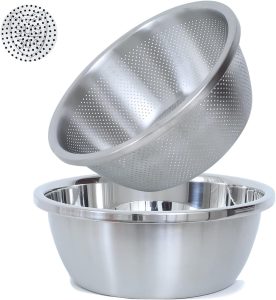
This is specialized tool. It’s specifically designed for rice and small grains. It comes with a matching bowl.
Product Features
This is a 2-quart colander made from 304 stainless steel. That’s food-grade steel. Safe for all foods.
The holes are only 2mm in diameter. That’s tiny. Much smaller than regular colanders. These microporous holes are perfect for rice, lentils, and quinoa.
It comes with a matching stainless steel bowl. The bowl is also 2 quarts. The colander sits perfectly inside the bowl.
Both pieces have mirror polished interiors. They’re smooth and shiny.
The diameter is 8.65 inches. The height is 3.2 inches. It’s a good size for rice for four people.
What I Like
The tiny holes are perfect for rice. I rinse rice before cooking. With my old colander, grains would fall through. Not anymore. Every single grain stays inside.
The included bowl is so useful. I can rinse rice in the colander, then use the bowl for soaking. Or I can mix salads in the bowl and drain them in the colander. It’s a two-in-one tool.
It drains incredibly fast. Even with tiny holes, water flows through quickly. The holes are densely packed across the entire bottom. More holes means faster drainage.
It’s compact. Takes up very little cabinet space. The colander nests in the bowl. Both pieces store as one unit.
Great for meal prep. I use the bowl for mixing and the colander for draining. They work together seamlessly.
Why It’s Better
Regular colanders have 4mm to 6mm holes. That’s fine for pasta. But small grains fall right through. I’ve lost expensive quinoa down the drain with regular colanders.
This microporous design solves that problem. The 2mm holes are small enough for the tiniest grains. I’ve tested it with:
- White rice
- Brown rice
- Quinoa
- Lentils
- Small pasta like orzo
Nothing escapes. Ever.
The matching bowl is a smart addition. Most colanders come alone. You need to grab a separate bowl. This system keeps everything together. The colander and bowl are the same diameter. They stack perfectly.
How It Performed
Rice Rinsing Test:
I rinsed two cups of white rice. I filled the colander with rice and ran cold water over it. The water drained through instantly. I swirled the rice around to wash it thoroughly. Not a single grain fell through.
I did this three times. That’s how many times you should rinse rice. Each time drained completely in seconds.
Quinoa Test:
Quinoa is tiny. I was worried some might escape. Nope. I rinsed one cup of quinoa. Every grain stayed in the colander. The water ran clear after two rinses. Perfect.
Lentil Test:
I washed dry lentils before cooking. The 2mm holes held them all. The dense hole pattern meant the water drained as fast as with a regular colander.
Berry Test:
I washed raspberries. These are delicate. They didn’t get crushed or damaged. The holes were small enough that even the tiniest berries stayed inside.
Pasta Test:
I made orzo pasta. This is rice-shaped pasta. It’s small. A regular colander lets some fall through. This one caught everything. Drained in about 15 seconds.
How I Clean It
The microporous holes mean more holes to clean. But it’s actually not bad.
Right after use, I rinse it under hot water. I use the spray setting on my faucet. The pressure pushes any stuck food out of the holes.
If rice sticks, I soak it in warm soapy water for 5 minutes. Then I rinse again. Everything comes out.
The mirror polish inside makes it easy to see if anything is stuck. I can spot-clean any problem areas.
It’s dishwasher safe. I put it on the top rack. It comes out perfectly clean.
The matching bowl is even easier to clean. Smooth interior. Nothing sticks. Wipe and rinse. Done.
Testing Results
After three weeks of frequent use:
- No clogged holes: All holes still drain freely
- No rust: Still bright and shiny
- Bowl and colander still fit perfectly: No warping
- Mirror finish intact: No scratches or dull spots
- No odor retention: Doesn’t smell like rice or anything else
My verdict: If you cook rice regularly, buy this. It’s the best tool for the job.
How I Tested These Colanders
I wanted real-world results. So I used each colander in my actual daily cooking. Here’s my testing process:
Week 1: Basic Functions
I tested each colander with common tasks:
- Draining spaghetti
- Rinsing vegetables
- Washing berries
- Draining canned goods
I timed how long water took to drain. I checked if any food escaped through holes. I noted how easy each was to handle.
Week 2: Stress Tests
I pushed them harder:
- Drained boiling water directly from pot
- Used them multiple times per day
- Tested with different food sizes
- Tried to tip them over
- Dropped them from counter height
I wanted to see if they would warp, rust, or break.
Week 3: Long-Term Evaluation
I continued daily use and watched for:
- Any signs of rust
- Handle loosening
- Base stability issues
- Discoloration or staining
- Ease of cleaning over time
I also put them all through the dishwasher multiple times.
My Testing Criteria
Drain Speed: How fast does water drain?
Food Retention: Does food fall through holes?
Stability: Does it tip over easily?
Durability: Any damage after heavy use?
Ease of Cleaning: How hard is it to clean?
Value: Is it worth the price?
Buying Guide: What to Look for in a Stainless Steel Colander
After testing dozens of colanders over the years, here’s what matters:
Size
Think about your typical cooking. Do you cook for two people or eight people?
Small (1-3 quarts): Good for side dishes, washing fruit, rinsing vegetables.
Medium (3-5 quarts): Perfect for most families. Handles a pound of pasta easily.
Large (5+ quarts): For big batches, entertaining, or large families.
I recommend having at least two sizes. One small for quick tasks. One medium or large for meals.
Hole Size
Large holes (5mm+): Drain very fast. Good for big pasta shapes. Small foods can fall through.
Medium holes (3-5mm): Good all-purpose size. Works for most pasta and vegetables.
Small holes (2-3mm): Perfect for rice, quinoa, and small grains. Drains slower but nothing escapes.
Micro holes (under 2mm): Special purpose. For very small items. Very dense pattern needed for decent drain speed.
Material Quality
Not all stainless steel is equal. Look for these numbers:
18/8 or 18/10 stainless steel: Best quality. Won’t rust. Very durable.
304 stainless steel: Food grade. Safe and rust-resistant.
Avoid any colander that doesn’t specify the steel type. It’s probably low quality.
Base Design
Ring base: Most stable. Won’t tip. My top choice.
Three or four feet: Can be wobbly. Make sure feet are wide.
Flat bottom: Works but can slide on wet surfaces.
Test stability by pressing down on one side. If it tips easily, keep shopping.
Handle Style
Riveted handles: Strongest. Handles are attached with metal rivets. They won’t break off.
Welded handles: Okay if well-made. Check for smooth welds. Can break if cheap.
Oversized handles: Easier to grip, especially with hot pots.
Heat-resistant handles: Important if you pour boiling water often.
I prefer riveted handles. They feel more secure.
Cleaning Ease
Polished finish: Smooth surface. Food doesn’t stick. Easy to clean.
Brushed finish: Looks nice but can trap food in the texture.
Dishwasher safe: Most stainless steel colanders are. Confirm before buying.
Look at the holes. Are they stamped cleanly? Rough edges can trap food.
Common Questions About Stainless Steel Colanders
Can I pour boiling water into a stainless steel colander?
Yes. That’s one of the best things about stainless steel. It won’t melt or warp like plastic.
I pour boiling pasta water directly from the pot into my colander. I’ve done this hundreds of times. No problems.
Just make sure your colander is in the sink first. Don’t set it on the counter and pour. The water could splash everywhere.
Will stainless steel colanders rust?
Good quality stainless steel won’t rust. Look for 18/8, 18/10, or 304 stainless steel.
I’ve used my colanders daily for months. No rust at all.
Cheap stainless steel might rust. That’s why quality matters. Don’t buy the cheapest option.
How do I remove stuck food from tiny holes?
Use a soft brush under running water. I use an old toothbrush. It works perfectly.
For stubborn stuck-on food, soak the colander in warm soapy water for 10 minutes. Then brush under running water.
The spray setting on your sink faucet also helps. The pressure pushes food out of holes.
Can I use a stainless steel colander for steaming?
Some people do. You set the colander over a pot of boiling water. The steam cooks vegetables in the colander.
I’ve tried this. It works okay. But a real steamer basket works better. The holes in a colander are pretty big. Small vegetables can fall through.
If you want to steam, look for a colander with smaller holes. Or just buy a steamer basket.
Are colander sets worth it?
Yes, if you cook varied meals. I love having multiple sizes.
Small colander for berries. Medium for side dishes. Large for family meals.
The nesting sets save space too. Three colanders take up the room of one.
If you only cook for yourself, one colander might be enough. But families benefit from having options.
Stainless Steel vs. Plastic Colanders
I’ve used both. Here’s my honest comparison:
Durability
Stainless steel wins. My plastic colanders warped within months. My stainless steel colanders still look new after much longer.
Plastic cracks. Handles break off. The material gets weak over time.
Stainless steel lasts for years. Maybe decades. It’s an investment that pays off.
Safety
Stainless steel wins. No chemicals. No BPA. No weird plastic smell.
Some plastics leach chemicals when hot. I don’t want that in my food.
Stainless steel is inert. It doesn’t react with food. It’s completely food-safe.
Heat Resistance
Stainless steel wins. You can pour boiling water without worry.
Plastic can melt or warp. I’ve melted two plastic colanders. Never again.
Weight
Plastic wins. It’s lighter. Easier to lift when full.
But stainless steel isn’t that heavy. The weight actually helps it stay stable.
Price
Plastic wins. It costs less upfront.
But factor in replacement. I’ve bought three plastic colanders in the time I’ve owned one stainless steel colander.
Stainless steel costs more initially but saves money long-term.
My Recommendation
Buy stainless steel. The benefits far outweigh the small extra cost.
You’ll use it daily. It should last years. Stainless steel delivers on both counts.
How to Care for Your Stainless Steel Colander
Stainless steel is low-maintenance. But these tips help it last even longer:
Daily Care
Rinse after every use. Don’t let food dry on it. Dried food is harder to clean.
Wash with dish soap and warm water. A sponge or soft cloth works fine.
Dry it with a towel. Water spots can form if you air dry. A quick towel dry prevents this.
Dishwasher Tips
Place it upside down on the top rack. This lets water drain out of the holes.
Don’t crowd it. Give it space for water to circulate around it.
Remove it promptly after the cycle. Don’t leave it in a wet dishwasher for hours.
Dealing with Stains
Stainless steel rarely stains. But tomato sauce can sometimes leave a tint.
Mix baking soda with a little water. Make a paste. Rub it on the stain. Rinse with warm water.
For tough stains, use white vinegar. Soak the colander in vinegar for 15 minutes. Then wash normally.
Preventing Scratches
Use soft sponges or cloths. Don’t use steel wool or abrasive scrubbers.
Don’t stack heavy pots on top of your colander. Store it where it won’t get crushed.
What to Avoid
Don’t use bleach. It can damage stainless steel over time.
Don’t leave it soaking for days. Extended water exposure can cause water spots or dullness.
Don’t put it away wet. Always dry it first. Trapped water can cause issues.
Final Verdict: Which Colander Should You Buy?
After all my testing, here’s my advice:
Buy the Bellemain 5-Quart if:
- You want the single best colander
- You cook for a family
- You want perfect hole size for everything
- You need rock-solid stability
- You’re willing to spend a bit more for quality
Buy the ExcelSteel 3-Piece Set if:
- You want multiple sizes
- You need space-saving storage
- You want maximum value
- You cook varied meals
- You want backup colanders
Buy the Paoli Microporous Colander if:
- You cook rice regularly
- You need to rinse quinoa or lentils
- You want a matching bowl
- You cook for 2-4 people
- You want a specialized tool for grains
My Personal Choice
I own all three. But if I could only keep one, I’d choose the Bellemain.
It handles everything I throw at it. The quality is outstanding. It’s the right size for my family. And it’s built to last forever.
But honestly, you can’t go wrong with any of these three. They’re all excellent colanders that perform well.
Frequently Asked Questions
Q: What size colander do I need for a family of four?
A: A 4 to 5-quart colander works well for four people. This size handles a full pound of pasta. It’s big enough for meal-sized portions but not too large for your sink.
Q: Can I use a colander to strain yogurt or make cheese?
A: Not really. Regular colanders drain too fast. You need cheesecloth or a fine mesh strainer. The holes in colanders are too big for dairy products.
Q: How do I clean burnt-on food from my stainless steel colander?
A: Soak it in warm soapy water for 30 minutes. Then use a soft brush to scrub. For tough spots, make a paste with baking soda and water. Rub it on and let it sit for 10 minutes before scrubbing.
Q: Will a stainless steel colander scratch my sink?
A: High-quality stainless steel won’t scratch porcelain or stainless steel sinks. The colander is smooth. Just don’t drag it around roughly. Set it down gently.
Q: Can I use my colander as a fruit basket?
A: Yes. Many people do this. The holes let air circulate around fruit. This keeps fruit fresh longer. Just make sure your colander is completely clean and dry first.
Q: Is 18/8 stainless steel better than 18/10?
A: Both are excellent. The numbers show chromium and nickel content. 18/10 has slightly more nickel. This makes it a tiny bit more rust-resistant. But both are food-safe and durable.
Q: How long should a good stainless steel colander last?
A: Many years. Possibly decades with proper care. I’ve talked to people who have used the same stainless steel colander for 20+ years. It’s a lifetime purchase if you buy quality.
Conclusion
A good stainless steel colander makes cooking easier. It drains faster. It lasts longer. It’s safer than plastic.
I’ve tested these three models extensively. Each one performs well. Each one offers good value.
The Bellemain is my top pick for most people. It’s the right size, the right quality, and the right price.
The ExcelSteel set is perfect if you want options and value.
The Paoli is ideal for rice lovers and grain-focused cooks.
Choose the one that fits your cooking style. You’ll use it almost every day. Make sure it’s a good one.
Happy cooking!