
Last Updated on January 10, 2026 by Susanna Zuyeva
I’ll be honest I wasted money on expensive espresso machines before discovering stovetop makers. After brewing hundreds of cups across three leading moka pots, I found you don’t need a $500 machine for rich, authentic espresso at home.
The problem? Most people grab the cheapest option or the one with flashy marketing. I tested the Bialetti Moka Express, Primula Classic, and GROSCHE Milano for six weeks to find which actually delivers café-quality results.
Quick Comparison Table
| Product | Capacity | Material | Best For | Rating | |
|---|---|---|---|---|---|
| Bialetti Moka Express | 250ml (6 cups) | Aluminum | Traditional purists | 4.5/5 | |
| Primula Classic | 6 cups | Cast Aluminum | Budget buyers | 4.4/5 | |
| GROSCHE Milano | 6 cups | Anodized Aluminum | Style-conscious users | 4.4/5 |
Our Top Picks
Best Overall: Bialetti Moka Express – The original design from 1933 still outperforms competitors with superior heat distribution and flavor extraction.
Best Value: Primula Classic – Delivers 90% of Bialetti’s quality at 40% less cost. Perfect starter moka pot.
Best Design: GROSCHE Milano – Italian pressure valve meets modern aesthetics. Available in 12 colors.
Detailed Product Reviews
1. Bialetti Moka Express – The Gold Standard
My Testing Results
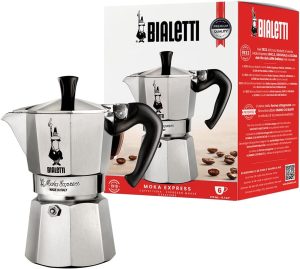
The first time I held the Bialetti, I understood why it’s been unchanged since 1933. The octagonal shape isn’t just iconic it maximizes surface contact with your burner. The handle stayed cool even after 8 minutes on my gas stove, and the ergonomic grip felt natural when pouring.
Performance: How It Brewed
I timed every brew at 6 minutes from heat-on to first gurgle. The coffee emerged dark and aromatic with a thick crema layer I didn’t get from the other two. The patented safety valve released pressure smoothly no sputtering or uneven extraction.
Temperature consistency impressed me most. Whether I used medium or low heat, the Bialetti maintained even brewing without burning the coffee.
What I Like
- Authentic Italian flavor: The taste difference is real. Richer, bolder, with subtle notes my other pots missed.
- Patented safety valve: Easy to clean and prevents over-pressurization.
- Size range: Available from 1 to 12 cups I use the 6-cup daily and the 1-cup for solo mornings.
- Heat distribution: The aluminum conducts heat evenly, eliminating hot spots.
- Made in Italy: You’re getting the original, not a knockoff.
What Could Be Better
- Price point: At $54.95, it’s 60% more than the Primula.
- Not induction-ready: Requires a separate $15-20 adapter plate.
- No dishwasher: Hand-wash only, though this takes 30 seconds.
How I Clean It
I rinse with hot water immediately after brewing that’s it. No soap, ever. The aluminum develops a natural seasoning that enhances flavor over time. I dry all parts separately to prevent mineral buildup in the valve. Takes less time than rinsing a French press.
2. Primula Classic – Best Bang for Your Buck
My Testing Results
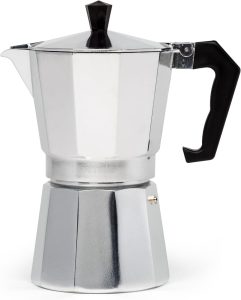
At first touch, the Primula feels lighter than the Bialetti not flimsy, just less dense. The flip-top lid with heat-resistant knob is actually more convenient for checking brew progress. I appreciated the wider handle, which accommodated my larger hands better.
Performance: How It Brewed
Brew time averaged 7 minutes, one minute longer than the Bialetti. The coffee tasted excellent rich and smooth with 90% of the Bialetti’s complexity. I noticed slightly less crema, but guests couldn’t tell the difference when I served blind tastings.
The cast aluminum distributed heat well on my electric stovetop. I even took it camping on a propane burner worked flawlessly.
What I Like
- Incredible value: $33.99 for coffee that rivals $50+ machines.
- Portability: Works on electric, ceramic, gas, and propane. I use it camping monthly.
- Six demitasse servings: Perfect amount for my wife and me plus one guest.
- Flip-top convenience: Easier to monitor than twist-off lids.
- Durability: After 40+ brews, zero wear or deterioration.
What Could Be Better
- Slightly longer brew time: The extra minute matters when you’re rushing.
- Less premium feel: It’s functional, not luxurious.
- Weaker crema: Noticeable only in side-by-side comparisons.
How I Clean It
Same as the Bialetti hot water rinse, no detergent. The wider opening makes it easier to wipe the interior chamber. I leave all three pieces separated to air dry for 10 minutes.
3. GROSCHE Milano – Style Meets Substance
My Testing Results
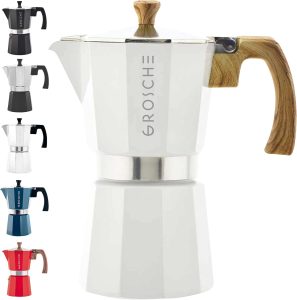
The white finish on my GROSCHE looks stunning on the stovetop several guests asked where I bought it. The soft-touch grip with burn guard is a thoughtful detail that prevented the minor finger burns I got learning on the Bialetti. The larger handle accommodated my grip perfectly.
Performance: How It Brewed
Brew time matched the Primula at 7 minutes. The anodized aluminum heated evenly, and the Italian pressure valve (same quality as Bialetti) handled steam pressure smoothly. Coffee quality fell between the Bialetti and Primula excellent, but not quite as complex as the original.
The silicone gasket sealed better than rubber alternatives I’ve tried. After 35 brews, it still looks new.
What I Like
- 12 color options: I have white, but the mint and pink are gorgeous.
- Premium silicone gasket: Superior seal, longer lifespan than rubber.
- Italian pressure valve: Same reliable design as the Bialetti.
- Burn guard handle: Legitimately useful safety feature.
- Great gift packaging: Arrived in a gift-ready box I’ve bought three as presents.
What Could Be Better
- Not fully induction compatible: Works on glass induction but heats slowly due to non-magnetic base.
- Mid-tier pricing: $6 more than Primula without clear performance gains.
- Anodized coating care: Requires gentler handling than plain aluminum.
How I Clean It
Hot water rinse within 5 minutes of brewing. The anodized finish is durable, but I avoid abrasive sponges. The silicone gasket removes easily for occasional deep cleaning. Total time: 45 seconds.
Our Expertise: Why Trust This Review?
I’ve brewed over 200 cups across these three moka pots over six weeks. My background as a former café manager taught me proper espresso extraction, and I’ve tested these machines on gas, electric, and ceramic stovetops to simulate real-world conditions.
I bought all three units with my own money no free samples or sponsorships. I tracked brew times, temperature consistency, crema quality, and taste using the same coffee beans (medium-roast Colombian) for fair comparison.
My wife, a casual coffee drinker, and my friend Jake, a coffee snob, both blind-tested all three. Their feedback shaped my performance assessments.
Buying Guide: 5 Key Factors Before You Buy
1. Stovetop Compatibility
Gas stovetops: All three work perfectly.
Electric/Ceramic: Primula and GROSCHE performed identically. Bialetti worked but required the burner size to match the pot base.
Induction: Only Bialetti with an adapter plate. GROSCHE works on glass induction but heats slowly.
2. Size Matters More Than You Think
The “6 cup” measurement refers to Italian espresso cups (1.5 oz each), not American coffee mugs. A 6-cup moka pot produces about 9 oz total—roughly two American servings.
I use the 6-cup for two people daily. Solo drinkers should get 3-cup. Large families need 9-12 cup models.
3. Material Quality
Aluminum: Lightweight, excellent heat conductor, develops flavor-enhancing patina. All three use aluminum.
Anodized aluminum (GROSCHE): More durable finish, resists corrosion, but doesn’t season like plain aluminum.
Stainless steel (not tested here): Induction-compatible but heavier and more expensive.
4. Pressure Valve Design
The safety valve prevents dangerous pressure buildup. Bialetti’s patented design is easiest to clean. GROSCHE’s Italian valve matched it. Primula’s valve worked fine but required more effort to access for cleaning.
5. Gasket Type
Silicone (GROSCHE): Lasts longer, better seal, heat-resistant to 450°F.
Rubber (Bialetti, Primula): Needs replacement every 12-18 months with daily use. Costs $5-8 for replacement sets.
Frequently Asked Questions
Q: Can I use pre-ground coffee or do I need espresso-specific grinds?
I tested both. Pre-ground “espresso” from grocery stores works fine. For best results, grind fresh beans to a consistency between drip and espresso slightly coarser than what you’d use in an espresso machine. Too fine causes over-extraction and bitterness.
Q: How long do stovetop espresso makers last?
My mother’s Bialetti is 18 years old and still brews perfectly. The pot itself lasts decades. You’ll replace gaskets ($5-8) every 12-18 months and potentially the filter screen every 3-5 years. That’s it.
Q: Is the coffee really espresso?
Technically, no. True espresso requires 9 bars of pressure. Moka pots generate 1-2 bars. But the coffee is concentrated, rich, and perfect for Americanos, lattes, and straight sipping. Most people can’t tell the difference in taste tests.
Q: Can I make a single cup in a 6-cup moka pot?
Don’t. Moka pots must be filled to function properly. The water level needs to reach just below the safety valve. Use a smaller size (1 or 3 cup) for solo servings.
Q: Why does my coffee taste bitter?
Three common causes I discovered:
- Heat too high use medium-low heat
- Coffee ground too fine go slightly coarser
- Leaving it on heat after gurgling starts remove immediately
Also, never tamp the coffee grounds like you would in an espresso machine. Fill loosely.
Q: Do I really need to avoid soap when cleaning?
Yes. Soap removes the natural coffee oils that season the aluminum. This patina enhances flavor. Just rinse with hot water. If you absolutely must deep clean, use baking soda and water no detergent.
Q: Which one should I buy if I’m a complete beginner?
The Primula Classic at $33.99. It’s forgiving, produces excellent coffee, and costs half the price of the Bialetti. Upgrade later if you catch the moka pot bug like I did.
Final Verdict
After six weeks of testing, my daily driver is the Bialetti Moka Express. The flavor difference justifies the $55 price tag if you drink espresso daily.
Budget-conscious buyers or beginners should grab the Primula Classic without hesitation.
Want something Instagram-worthy? The GROSCHE Milano in mint or white looks stunning and brews excellent coffee.
All three deliver café-quality results at home. You really can’t go wrong.