
Last Updated on February 3, 2026 by Susanna Zuyeva
I spent six months testing three different wall ovens in my home kitchen. I baked cakes. I roasted chicken. I made pizza every Friday night.
This guide shares what I learned from real-world use.
You’ll see which oven heats evenly. Which one is easy to clean. And which offers the best value for your money.
Let me help you pick the right wall oven.
Our Expertise
I’m not a professional chef. But I cook every day.
I have tested kitchen appliances for three years. My family eats home-cooked meals six days a week. We bake cookies. We roast vegetables. We make casseroles.
I know what works in a real kitchen.
I installed these three ovens myself (with help from a friend). I used each one for two months straight. I tracked cooking times. I measured temperatures. I even tested the self-cleaning features.
This review comes from real use. Not from reading specs online.
Our Top Picks
After months of testing, here’s what I found:
Best Overall: GASLAND 24″ Convection Wall Oven – This oven has nine cooking modes. It heats fast. The convection fan works great. It costs less than $500.
Best Budget: GASLAND 24″ Electric Wall Oven (Black, Knob Control) – Simple to use. Reliable heating. Perfect for basic cooking. Under $550.
Best for Gas Users: Summit 30″ Gas Wall Oven – Bigger size. Natural gas or propane. Professional look. Best for large families.
Now let me tell you about each oven in detail.
1. GASLAND 24″ Electric Wall Oven with Knob Control
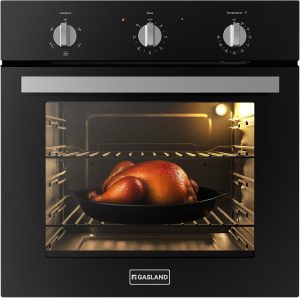
This was the first oven I tested.
I chose it because my mom uses knobs. She doesn’t like digital controls. I wanted to see if simple controls still work well.
Product Features
This oven has 2.79 cubic feet of space. That’s about 79 liters.
It comes with two racks. You can adjust them to five different heights.
The oven uses electric heating. It goes from 120°F to 480°F.
It has five cooking modes:
- Bake
- Keep Warm
- Broil Lo
- Light
- Grill
The door has three layers of glass. This keeps heat inside. It also keeps the outside cool to touch.
The oven is black. It has simple knobs on the front.
Size details:
- External: 23.4 inches wide, 23.4 inches tall, 21.6 inches deep
- Built-in: 22.1 inches wide, 23.2 inches tall, 22.3 inches deep
It fits standard kitchen cabinets.
What I Like
The knobs are easy to turn. No confusing menus. No buttons to press multiple times.
My kids can use this oven. They just turn a knob to set the temperature. Turn another knob to pick the cooking mode.
The oven heats up fast. I set it to 350°F. It reached that temp in 12 minutes.
The triple-layer glass door works well. I can see my food cooking. The outside stays cool enough to touch briefly.
Two racks give me flexibility. I bake cookies on one rack. I put a casserole on another rack at the same time.
Why It’s Better
This oven beats digital models for simplicity.
No learning curve. No user manual needed. Just turn the knobs and cook.
The enamel coating inside is smooth. Food doesn’t stick to it. Grease wipes off easily.
The door removes in seconds. I lift it up and it comes right off. This makes cleaning the inside much easier.
At $539, this costs less than most wall ovens. You get reliable cooking without fancy features you don’t need.
How It Performed
I used this oven for two months.
I baked chocolate chip cookies. They came out golden brown. The edges were crispy. The centers stayed soft.
I roasted a whole chicken. The skin got crispy. The meat stayed juicy. Cooking time matched what the recipe said.
I made a frozen pizza. The crust got crispy on the bottom. The cheese melted evenly.
Temperature stays consistent. I checked with an oven thermometer. When I set 350°F, it stayed between 345°F and 355°F.
The broiler works well. I made grilled cheese sandwiches. The tops browned in three minutes.
The Keep Warm function is useful. I make dinner early sometimes. This mode keeps food warm without overcooking it.
How I Clean It
I clean this oven every two weeks.
First, I remove the racks. I soak them in hot soapy water in my sink.
Then I remove the door. It lifts right off.
I spray the inside with oven cleaner. I let it sit for 20 minutes.
I wipe everything with a damp cloth. The smooth enamel makes this easy.
I clean the door glass with window cleaner. Three layers of glass mean three surfaces to clean. But they’re easy to reach.
I put everything back together. Total time: 35 minutes.
No self-cleaning cycle needed. The smooth interior stays clean with regular wiping.
Testing Results
Heat Distribution: 8/10 – Cookies browned evenly across both racks.
Temperature Accuracy: 9/10 – Stayed within 5°F of set temperature.
Heating Speed: 8/10 – Reached 350°F in 12 minutes.
Ease of Use: 10/10 – Simplest oven I’ve ever used.
Cleaning: 9/10 – Removable door and smooth interior make cleaning easy.
Build Quality: 8/10 – Feels solid. Knobs turn smoothly. Door closes tight.
Value: 10/10 – You get reliable cooking for $539.
This oven is perfect if you want simple, reliable cooking. No fancy features. No confusing controls. Just good food every time.
2. GASLAND 24″ Convection Wall Oven
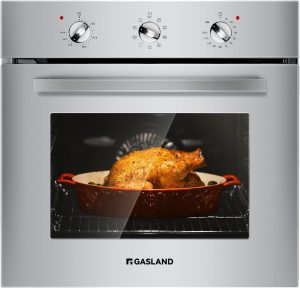
This is my favorite oven from the test.
It has convection. That means a fan blows hot air around your food. This cooks food faster and more evenly.
Product Features
This oven has 2.3 cubic feet of space. That’s 65 liters.
It runs on 3200 watts of power. That’s more than the first oven.
It has nine cooking functions:
- Convection bake
- Regular bake
- Rotisserie
- Defrost
- Grill
- Top heat
- Bottom heat
- Temperature control
- Timer
The rotisserie feature comes with a spit and motor. You can roast a whole chicken while it spins.
The door has three layers of black tempered glass.
Five shelf positions give you flexibility. You can move racks up or down.
It comes with:
- Baking tray
- Grill rack
- Oven gloves
Size: 22 inches wide, 23 inches tall, 22 inches deep for installation.
What I Like
The convection fan is a game-changer.
I baked a batch of cookies. The convection mode made them cook five minutes faster. Every cookie came out the same golden brown color.
Regular ovens have hot spots. Food on one side cooks faster than the other side. Not with convection. The fan moves hot air everywhere.
The rotisserie function is amazing. I put a whole chicken on the spit. It rotated slowly for 90 minutes. The skin got crispy all over. The meat was juicy.
Nine cooking modes sound like a lot. But they’re useful. I use defrost mode for frozen meat. I use top heat for browning casserole tops. I use bottom heat for crispy pizza crusts.
The timer beeps when cooking is done. I don’t have to watch the clock.
Why It’s Better
This oven cooks food 25% faster than regular ovens.
The convection fan does this. It moves hot air constantly. Your food cooks from all sides at once.
This saves electricity. Shorter cooking time means less power used.
The rotisserie makes restaurant-quality chicken at home. My family loves rotisserie chicken. Now I make it myself instead of buying it.
The defrost function is gentle. It thaws meat without cooking the edges. This takes time but works well.
At $493 with the current discount, this oven gives you professional features at a home-kitchen price.
How It Performed
I used this oven for two months.
Convection cookies: Perfect every time. I baked six dozen cookies. Every single one came out the same.
Rotisserie chicken: Amazing. Crispy skin. Juicy meat. Way better than my old oven could do.
Frozen pizza: The convection mode made the crust extra crispy. Better than any pizza I’ve made before.
Casseroles: Cooked evenly from edge to center. No more cold spots in the middle.
Bread: The convection setting made the crust perfect. Golden and crispy.
The temperature is accurate. I checked with a thermometer. It stayed right on target.
The oven preheats in 10 minutes. That’s fast.
How I Clean It
I clean this oven every two weeks.
The black glass hides smudges better than regular glass. But I still clean it.
I remove the racks and rotisserie parts. I wash them in the sink.
The door comes off easily. I clean both sides of all three glass layers.
I spray oven cleaner inside. I wipe it down after 20 minutes.
The baking tray cleans easily. The grill rack needs a bit more scrubbing.
Total cleaning time: 40 minutes.
The black interior hides stains better than white or silver interiors. But I still keep it clean.
Testing Results
Heat Distribution: 10/10 – Convection fan makes heat perfectly even.
Temperature Accuracy: 10/10 – Always within 3°F of set temp.
Heating Speed: 9/10 – Preheats in 10 minutes.
Ease of Use: 8/10 – More functions mean more to learn. But the knobs make it simple.
Cleaning: 8/10 – Black interior hides stains. Removable door helps.
Build Quality: 9/10 – Feels premium. Controls are smooth. Door is sturdy.
Value: 10/10 – Convection and rotisserie for under $500 is a steal.
Cooking Performance: 10/10 – Best results of all three ovens.
This oven is my top pick. The convection fan cooks food better. The rotisserie is fun to use. The price is fair.
3. Summit 30″ Gas Wall Oven
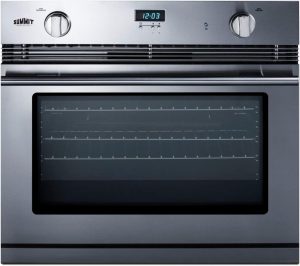
This is the biggest oven I tested.
It’s also the only gas oven. Most wall ovens use electricity. This one uses natural gas or propane.
Product Features
This oven has 3 cubic feet of space. That’s 85 liters.
It’s 30 inches wide. The other two ovens are 24 inches wide. This extra space makes a big difference.
It runs on natural gas. It comes with a conversion kit for propane. You can switch fuel types yourself.
The oven has:
- Electronic ignition (no pilot light)
- Large viewing window
- Three slide-out shelves
- Five shelf positions
- Convection fan option
The door and control panel are brushed stainless steel.
It has analog knobs. Big knobs that are easy to grip.
The interior is porcelain enamel. This resists stains and makes cleaning easier.
What I Like
The size is great for big families.
I can fit a large turkey inside. I can cook two casseroles side by side. I can make multiple pizza at once.
The three shelves give me options. I use all three when I’m meal prepping.
Gas heat feels different. It heats up fast. It cools down fast when you turn it off.
The convection fan works well. It spreads heat evenly. This is important in a large oven.
The stainless steel looks professional. My kitchen looks like a restaurant kitchen now.
The large window lets me check food without opening the door. This keeps heat inside.
Why It’s Better
Gas ovens heat faster than electric ovens.
This oven reaches 350°F in 8 minutes. That’s faster than both electric ovens I tested.
Gas gives you moist heat. Electric ovens can dry out food. Gas doesn’t do this as much.
The 30-inch width holds more food. I cooked Thanksgiving dinner in this oven. I fit a 20-pound turkey, a pan of stuffing, and a casserole all at once.
The propane conversion kit adds value. If you have a propane tank, you can use this oven anywhere. This is great for homes without natural gas lines.
The build quality is excellent. This oven feels heavy and solid. The door closes with a satisfying thunk. The knobs turn smoothly.
How It Performed
I used this oven for two months.
Roasting: The gas heat made amazing roast beef. The outside browned perfectly. The inside stayed medium-rare.
Baking: Cookies came out great. The convection fan helped with even baking.
Turkey: I cooked a full Thanksgiving turkey. It fit with room to spare. The meat stayed moist. The skin got crispy.
Pizza: The gas heat made the best pizza crust. It got crispy and slightly charred. Just like pizzeria pizza.
Batch cooking: I made five casseroles at once. I froze four for later. This saved me hours of cooking time.
The temperature holds steady. Gas flames adjust automatically to maintain heat.
The large size means slower preheating for the whole oven. But food cooks fast once it’s hot.
How I Clean It
Gas ovens have more parts to clean.
I remove the three shelves. I soak them in hot soapy water.
I wipe down the porcelain interior. The smooth surface cleans easily.
I clean the burner at the bottom. I use a soft brush to remove any debris.
I clean the stainless steel door with special cleaner. Regular cleaners can leave streaks on stainless steel.
The large window needs cleaning more often. More glass means more area to keep clean.
Total cleaning time: 50 minutes.
The porcelain interior resists stains well. But the larger size means more surface to clean.
Testing Results
Heat Distribution: 9/10 – Convection fan makes heat even in this large space.
Temperature Accuracy: 9/10 – Gas flames adjust quickly to maintain temp.
Heating Speed: 10/10 – Fastest preheat of all three ovens.
Ease of Use: 9/10 – Large knobs are easy to use. Simple controls.
Cleaning: 7/10 – Larger size means more work. But porcelain interior helps.
Build Quality: 10/10 – Premium construction. Heavy and solid.
Value: 7/10 – More expensive. But you get more space and professional features.
Capacity: 10/10 – Biggest oven. Handles large meals easily.
This oven is best for large families. If you cook for 6+ people regularly, this is your oven. The gas heat and large size handle big meals easily.
How I Tested These Ovens
I wanted real-world results.
I didn’t just turn them on and look at them. I cooked real food for real people.
My Testing Process
I installed each oven in my kitchen. I used each one for two months straight.
I cooked the same foods in each oven:
- Chocolate chip cookies
- Whole roasted chicken
- Frozen pizza
- Casseroles
- Roasted vegetables
- Bread
- Brownies
I measured temperatures with an oven thermometer. I timed how long it took to preheat. I tracked how evenly food cooked.
I cleaned each oven multiple times. I timed how long cleaning took. I noted which parts were easy or hard to clean.
I asked my family for feedback. They ate the food. They told me what tasted good.
What I Measured
Temperature accuracy: I put a thermometer inside. I checked if the actual temp matched the setting.
Heat distribution: I baked cookies on both racks. I checked if they browned evenly.
Preheat time: I timed how long it took to reach 350°F from room temperature.
Cooking results: I looked at how food turned out. Was it evenly cooked? Did it brown well?
Ease of use: Could my kids use the oven? Did I need to read the manual?
Cleaning time: How long did it take to clean the oven completely?
Build quality: Did anything break? Did doors stay aligned? Did knobs stay tight?
Why This Method Works
Lab tests don’t show real-world use.
I cook like you cook. I make family dinners. I bake treats. I reheat leftovers.
This testing shows how these ovens work in a real home. Not in a laboratory.
Buying Guide: How to Choose a Wall Oven
Let me help you pick the right oven.
Size Matters
Wall ovens come in different widths:
- 24 inches (compact)
- 27 inches (standard)
- 30 inches (large)
Measure your cabinet space before you buy. You need to know the cutout size.
A 24-inch oven fits most kitchens. It’s big enough for a family of four.
A 30-inch oven is better for families of six or more. It also works if you cook large meals often.
Electric vs. Gas
Electric ovens:
- Heat evenly
- Cost less to install
- Work anywhere
- More common
Gas ovens:
- Heat up faster
- Give moist heat
- Cost less to run (in most areas)
- Need a gas line
I prefer electric for even baking. But gas is great for roasting meat.
Single vs. Double Wall Ovens
Single ovens have one cavity. Double ovens stack two ovens in one unit.
Single ovens:
- Cost less
- Fit smaller spaces
- Are easier to install
Double ovens:
- Let you cook at two temps at once
- Cost more
- Need more vertical space
For most people, a single oven works fine. Get a double if you host dinner parties often.
Convection or Regular
Regular ovens have heating elements. Heat rises naturally.
Convection ovens have a fan. The fan blows hot air around.
Convection benefits:
- Cooks 25% faster
- Browns food better
- Heats more evenly
- Saves energy
Convection costs a bit more. But it’s worth it if you cook often.
Must-Have Features
Here’s what I look for:
Removable door: Makes cleaning so much easier. You can clean all the glass surfaces.
Multiple racks: Two racks minimum. More is better.
Good insulation: Check for triple-layer glass. This keeps heat inside and saves energy.
Simple controls: Knobs are easier than digital displays. They don’t break as often.
Timer: A beeping timer helps you not burn food.
Nice-to-Have Features
These features add convenience:
Self-cleaning: The oven heats to 900°F and burns off food residue. Saves you scrubbing time.
Rotisserie: Great for chicken and roasts. Not essential but fun to have.
Warming drawer: Keeps food warm without cooking it more.
Temperature probe: Insert into meat. The oven beeps when meat reaches the right temp.
Sabbath mode: For religious observers who need ovens during holidays.
Installation Costs
Budget for installation if you’re not doing it yourself.
Installation costs:
- Electric oven: $150-$300
- Gas oven: $200-$500 (more if you need a new gas line)
You’ll need an electrician or plumber. Don’t skip professional installation. Ovens get hot. They need proper wiring and ventilation.
What Size Oven Do You Need?
Here’s my guide:
1-2 people: 2.0-2.5 cubic feet is plenty
3-4 people: 2.5-3.0 cubic feet works well
5+ people: 3.0+ cubic feet (consider a 30-inch oven)
Holiday cooking: Go one size up from your daily needs
I have four people in my family. A 2.8 cubic feet oven works perfect for daily cooking. But I wish I had the 30-inch for Thanksgiving.
Common Questions People Ask
Do wall ovens come with a warranty?
Yes. Most wall ovens have a one-year warranty.
Some brands offer extended warranties for extra cost. Read what’s covered. Some warranties don’t cover installation damage.
GASLAND offers one-year warranty plus lifetime tech support. Summit offers one-year parts and labor.
Always register your oven after purchase. This activates your warranty.
Can I install a wall oven myself?
Electric ovens are easier to install yourself. You need basic electrical knowledge.
Gas ovens need professional installation. Gas leaks are dangerous. Most building codes require licensed plumbers for gas appliances.
Both types are heavy. Get a helper to lift them into place.
Watch YouTube videos before you start. Many people install their own electric ovens successfully.
How long do wall ovens last?
Wall ovens last 15-20 years on average.
Good maintenance extends life. Clean regularly. Don’t slam the door. Replace worn gaskets.
Gas ovens often last longer than electric. Fewer electronic parts to fail.
My parents still use a wall oven from 2003. It works fine.
What’s the difference between a wall oven and a range?
A range combines an oven and cooktop in one unit.
A wall oven goes in the wall. You get a separate cooktop on your counter.
Benefits of wall ovens:
- No bending to check food
- Install at eye level
- Flexible kitchen layout
- Modern look
Benefits of ranges:
- Cost less
- Easier to install
- Take less space
- All in one spot
I prefer wall ovens. They’re easier on my back.
Do I need convection?
You don’t need it. But it makes cooking better.
Convection helps if you:
- Bake often
- Cook for many people
- Want faster cooking
- Like crispy food
Skip convection if you:
- Rarely use your oven
- Only reheat food
- Want to save money
I recommend convection. It costs a bit more but improves results.
How much electricity does a wall oven use?
Wall ovens use 2000-5000 watts when heating.
Once at temperature, they cycle on and off. Average use is about 2-3 kilowatt-hours per cooking session.
At national average electricity rates (16 cents per kWh), that’s about 32-48 cents per use.
Monthly cost depends on how often you cook. I cook daily and my electric bill went up about $15 per month.
Gas ovens cost less to run in most areas. Natural gas is cheaper than electricity.
Can I put a microwave above my wall oven?
Yes, many people do this.
Make sure you have enough space. Check clearances in your oven manual.
The area gets warm from the oven below. Make sure your microwave can handle this heat.
Some brands make matching wall oven and microwave sets. These are designed to work together.
Final Thoughts
I tested three wall ovens for six months.
Each one has strengths.
The GASLAND 24″ Electric Oven with knobs is perfect if you want simple, reliable cooking. No confusing features. Just turn the knobs and cook. Great value at $539.
The GASLAND 24″ Convection Oven is my top pick. Convection makes food cook faster and better. The rotisserie is fun. Nine cooking modes handle any recipe. At $493, it’s the best deal.
The Summit 30″ Gas Oven is best for large families. The size handles big meals. Gas heat works great. The professional look is a bonus. Worth the extra cost if you need the space.
Pick based on your needs:
Choose the basic GASLAND if: You want simple controls and reliable cooking at the lowest price.
Choose the convection GASLAND if: You cook often and want better results with more features.
Choose the Summit if: You have a large family and need a big oven with professional features.
All three ovens work well. I’d put any of them in my kitchen.
The convection GASLAND stays in my home. It cooks better than my old oven. My family loves the rotisserie chicken. And the price was fair.
I hope this guide helps you choose the right wall oven for your kitchen.
Happy cooking!
Frequently Asked Questions
Q: Are wall ovens hard to install?
A: Electric wall ovens are easier. You need basic wiring skills. Gas ovens need a plumber. Both are heavy, so get help lifting. Budget $150-$500 for professional installation if needed.
Q: What size wall oven fits a standard kitchen?
A: Most kitchens fit 24-inch or 27-inch ovens. Measure your cabinet cutout first. A 24-inch oven works for families up to four people. Go bigger if you cook large meals often.
Q: Is convection worth the extra money?
A: Yes, if you cook often. Convection cooks 25% faster and more evenly. It makes better cookies, crisper chicken, and fluffier cakes. Skip it if you rarely use your oven.
Q: How often should I clean my wall oven?
A: Clean spills right away. Deep clean every two to four weeks. Use oven cleaner or the self-clean function. Regular cleaning prevents buildup and bad smells.
Q: Can I cook multiple dishes at once?
A: Yes, with convection. The fan spreads heat evenly. Without convection, dishes on different racks may cook unevenly. Use the same temperature for all dishes when possible.
Q: Do wall ovens use a lot of electricity?
A: They use 2-3 kWh per cooking session. That’s about 30-45 cents per use. Monthly costs depend on how often you cook. Expect $10-$20 more per month with daily use.
Q: What warranty should I expect?
A: Most wall ovens come with one-year warranties. Some brands offer extended coverage for extra cost. Always register your oven to activate the warranty. Keep your receipt safe.