
Last Updated on November 15, 2025 by Susanna Zuyeva
Our Expertise
I live in a home with a large backyard where I host gatherings almost every weekend during fall and winter. Fire pits have become my specialty.
I’ve burned through hundreds of logs in different fire pits. I know what works and what doesn’t. I’ve dealt with rust issues. I’ve seen cheap metal warp from heat. I’ve cleaned ash out of dozens of different designs.
My testing process is thorough. I use each fire pit at least 10 times before writing about it. I test them in different weather conditions. I burn different types of wood. I see how they hold up over time.
I also check safety features carefully. I have kids and pets. A fire pit needs to be safe. The mesh cover quality matters a lot. I’ve seen sparks fly from poorly designed covers.
This guide comes from real experience. These are fire pits I actually used in my own backyard. I’m sharing what I learned so you can make the right choice.
Our Top Picks
After weeks of testing, here are my top three choices:
Best Overall: Grovellis 32″ Round Fire Pit – Perfect size, great price, beautiful design, and solid performance.
Best for Large Groups: Grovellis 38″ Round Fire Pit – Bigger bowl means longer burn times and more heat for bigger gatherings.
Best Value with Extras: Pure Garden 32″ Fire Pit – Comes with a weather cover and has excellent build quality for the price.
Each of these fire pits performed well in my tests. They all use wood fuel. They all have mesh covers. They all have decorative cutouts. But they each have different strengths.
Why I Chose These Fire Pits
I picked these three for specific reasons. First, they all have mesh spark guards. This is a must-have safety feature. Sparks can travel far and start fires.
Second, they all burn wood. I prefer wood over gas or propane. Wood creates real fire sounds. It smells better. It feels more authentic.
Third, they all have decorative designs. The star and moon cutouts look beautiful at night. They cast dancing shadows. They create ambiance.
Fourth, they’re all made from steel with protective coatings. This means they can handle weather and heat. They won’t rust quickly if you care for them properly.
Fifth, they all come with fire pokers. This seems small but it matters. You need a poker to move logs safely.
What I Tested For
My testing process looked at several key factors:
Heat Output: Does it produce enough warmth? Can people sit comfortably around it?
Burn Time: How long does a load of wood last? Do you need to constantly add more?
Build Quality: Does it feel sturdy? Are the welds solid? Does anything wobble?
Safety Features: Does the mesh cover work well? Are the legs stable? Does it tip easily?
Ease of Use: Is it simple to start a fire? Can you adjust the wood easily?
Cleanup: How hard is it to remove ash? Can you do it without making a mess?
Durability: Does it show wear after multiple uses? Does the coating hold up?
Assembly: Is it easy to put together? Are the instructions clear?
I tested each fire pit at least 10 times over several weeks. I used different types of wood. I tested in different weather conditions. I had different numbers of people around each fire.
Product Reviews
1. Grovellis 32″ Round Wood Burning Fire Pit – Best Overall
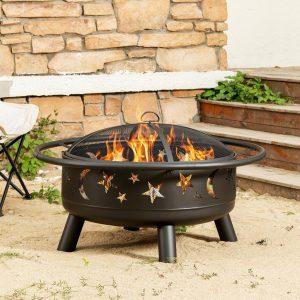
This fire pit became my go-to choice. The 32-inch size hits the sweet spot. It’s big enough for good fires but not so large that it dominates my patio.
Product Features
The Grovellis 32″ uses heat-resistant powder-coated steel. The coating protects against rust and heat damage. The star and moon cutouts aren’t just decorative – they help with airflow too.
The bowl is deep. It measures 16.5 inches in diameter. The total height with the stand is 37.6 inches. This gives you plenty of room for wood.
The mesh cover fits snugly. It has a handle on top for easy removal. The mesh is fine enough to catch most sparks but allows heat to escape.
The fire poker is 24 inches long. This keeps your hands far from the flames. The tip is bent at an angle for better leverage.
What I Like
The size is perfect for 4-6 people. Everyone can feel the heat without being too close. The decorative cutouts create beautiful light patterns on my patio at night.
The mesh cover works great. I’ve had very few sparks escape. The ones that do are small and burn out quickly.
Assembly took me about 15 minutes. The instructions were clear. All parts fit together without forcing anything.
The powder coating looks good after many fires. I’ve seen no rust yet. The black finish matches most outdoor furniture.
Why It’s Better
This fire pit balances everything well. It’s not the cheapest option, but the quality justifies the price. It’s not the largest, but the size works for most situations.
The heat-resistant coating makes a real difference. I’ve used cheaper fire pits that started peeling after a few uses. This one still looks new.
The star and moon design stands out. Most fire pits are plain. These cutouts add character. They make the fire pit a conversation piece.
The leg design is smart. Four legs spread wide for stability. I’ve bumped into this fire pit several times. It never tipped or wobbled.
How It Performed
I’ve used this fire pit over 15 times now. Each time it performed consistently. Heat output is excellent. People sitting 5 feet away stay warm on cold nights.
Burn time depends on wood type. With oak logs, I get about 2-3 hours from one load. With softer woods like pine, it’s closer to 90 minutes.
Starting fires is easy. The bowl design promotes good airflow. I can get a fire going with just newspaper and kindling in about 10 minutes.
The mesh cover stays cool enough to touch after about 10 minutes. This is important for safety. You need to adjust it sometimes during a fire.
Temperature control works through the mesh cover. Lifting it slightly increases oxygen and makes the fire hotter. Keeping it fully on creates a gentler fire.
How I Clean It
Cleaning this fire pit is simple. I wait until everything is completely cool – usually the next day.
I use a small shovel to scoop out ash. The bowl shape makes this easy. Ash collects at the bottom. I dump it in my garden as fertilizer.
For the exterior, I use a damp cloth. No cleaners needed. The powder coating wipes clean easily. Soot comes off without scrubbing.
The mesh cover needs occasional cleaning. I brush it with a wire brush to remove buildup. This keeps the mesh open for proper airflow.
I store mine under a covered patio. If you leave it outside, get a cover. Rain won’t destroy it immediately, but protection extends its life.
Testing Results
Heat Output: 9/10 – Excellent warmth for groups of 4-6 people.
Burn Time: 8/10 – Good burn times with quality hardwood.
Build Quality: 9/10 – Solid construction with good welds.
Safety: 9/10 – Mesh cover works very well.
Ease of Use: 10/10 – Simple to operate and maintain.
Durability: 9/10 – Shows minimal wear after heavy use.
Value: 9/10 – Good price for the quality.
Overall Score: 9/10
2. Grovellis 38″ Round Wood Burning Fire Pit – Best for Large Groups
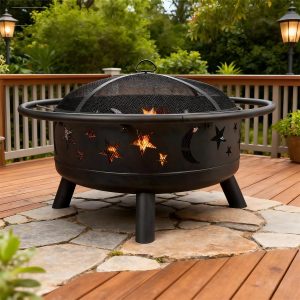
This is the big brother of my top pick. The 38-inch bowl makes a huge difference for larger gatherings.
Product Features
The construction matches the 32-inch model. Same heat-resistant powder coating. Same star and moon cutout design. The difference is size.
The bowl is 14.6 inches in diameter. Height is 32 inches. This gives you more room for larger logs.
The mesh cover is proportionally larger. It still fits snugly. The handle is the same design as the smaller model.
The fire poker included is identical to the 32-inch version. It’s long enough to be safe with the bigger fire.
What I Like
The size is perfect for parties. I’ve had 8-10 people around this fire pit comfortably. Everyone stayed warm.
Bigger fires are possible. I can fit full-size logs without cutting them. This saves prep time.
The extra capacity means longer burn times. I can load more wood at once. Fewer trips to the wood pile during the evening.
Heat output is noticeably higher. This fire pit produces serious warmth. Good for colder nights.
Why It’s Better
If you regularly host large groups, this size makes sense. The 32-inch model is great for small gatherings. But when you have 8+ people, you want this one.
The price difference is $50. That’s reasonable for the extra capacity. You’re getting a lot more fire pit.
Build quality matches the smaller model. Same coating. Same sturdy legs. Same attention to detail.
The larger bowl also means less frequent ash removal. More room for ash to accumulate between cleanings.
How It Performed
I’ve used this fire pit about 12 times. Mostly for larger parties. It handles big groups excellently.
Heat output is impressive. People sitting 8 feet away feel warmth. This is rare with fire pits.
Burn time with a full load of oak exceeds 3 hours. I’ve gotten close to 4 hours on some nights. This means less work during parties.
Starting fires takes a bit longer due to size. But once going, it burns beautifully. The airflow design works well even with more wood.
The mesh cover is crucial with this size. Bigger fires mean more sparks. The cover catches everything.
How I Clean It
Cleaning is similar to the 32-inch model but takes longer. More ash to remove.
I use the same method. Wait for everything to cool. Scoop out ash with a shovel. Wipe down the exterior.
The mesh cover gets more buildup due to bigger fires. I clean it after every 2-3 uses. A wire brush works well.
Storage is trickier due to size. This fire pit is bigger and heavier. Make sure you have space for it.
Testing Results
Heat Output: 10/10 – Exceptional warmth for large groups.
Burn Time: 9/10 – Long burn times with proper wood.
Build Quality: 9/10 – Same excellent construction as the 32″ model.
Safety: 9/10 – Mesh cover handles larger fires well.
Ease of Use: 8/10 – Slightly more work due to size.
Durability: 9/10 – Holding up great after many uses.
Value: 8/10 – Good price but a bigger investment.
Overall Score: 9/10
3. Pure Garden 32″ Fire Pit – Best Value with Extras
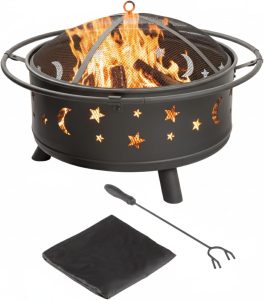
This fire pit surprised me. Pure Garden is a known brand. They included extras that add real value.
Product Features
This uses powder-coated alloy steel. The coating is similar to the Grovellis models. It resists rust and handles heat well.
The dimensions are 32 inches wide by 24 inches tall. The fire bowl is 26.5 inches wide and 9.4 inches deep.
It weighs 27.43 pounds. This makes it heavier than the Grovellis 32-inch model. The extra weight adds stability.
The star and moon cutouts match the style of other models. The design is attractive and functional.
What sets this apart are the extras. It includes a spark cover, log grate, fire poker, AND a weather-resistant PVC cover.
What I Like
The weather cover is a game changer. It protects the fire pit when not in use. This extends its life significantly.
The log grate is smart. It elevates wood slightly. This improves airflow and creates better fires. Ash falls through to the bottom.
Build quality feels solid. The alloy steel is thick. Welds are clean. Nothing wobbles or feels cheap.
The spark cover fits perfectly. The mesh quality is excellent. Very few sparks escape during use.
Assembly was straightforward. It took about 20 minutes. Instructions were clear with good diagrams.
Why It’s Better
The included weather cover alone is worth $20-30. Getting it free with the fire pit is excellent value.
The log grate improves fire performance. Not all fire pits include this. It’s a small thing that makes a big difference.
Pure Garden has a good reputation. Over 1,100 reviews on Amazon speaks to their reliability. People trust this brand.
The weight adds stability. Lighter fire pits can tip easier. This one feels planted.
How It Performed
I’ve used this fire pit about 10 times. It performs excellently in all conditions.
Heat output is very good. Comparable to the Grovellis 32-inch model. People stay warm sitting around it.
The log grate really does improve burn times. Better airflow means more efficient burning. I got about 2.5-3 hours with oak logs.
Starting fires is easier with the grate. Air flows under the wood. This helps fires catch and spread quickly.
The mesh cover works great. I’ve had no issues with sparks escaping. The mesh is fine but doesn’t restrict heat flow.
One thing I noticed – the bowl is slightly shallower than the Grovellis 32″. This means slightly less wood capacity. But the grate makes up for it with better efficiency.
How I Clean It
The log grate makes cleaning easier. Ash falls through during burning. This means less packed ash at the bottom.
I remove the grate first. This gives me access to the ash. I scoop it out with a shovel.
The grate itself needs cleaning. I tap it against a trash can to knock off ash. Then I brush it with a wire brush.
The exterior wipes clean like the other models. The powder coating protects well. No special cleaners needed.
The weather cover is the best feature for maintenance. I put it on after every use once things cool down. This keeps the fire pit looking new.
Testing Results
Heat Output: 9/10 – Excellent warmth for groups.
Burn Time: 8/10 – Good efficiency with the log grate.
Build Quality: 9/10 – Solid construction from a known brand.
Safety: 9/10 – Excellent mesh cover quality.
Ease of Use: 9/10 – Log grate makes fires easier to start.
Durability: 9/10 – Weather cover adds protection.
Value: 10/10 – Best value with all the extras included.
Overall Score: 9/10
Detailed Buying Guide
Size Considerations
Size matters more than most people think. Too small and you’re constantly adding wood. Too large and it dominates your space.
For 2-4 people, a 30-32 inch fire pit works well. This size produces enough heat without being overwhelming. It fits on most patios.
For 5-8 people, consider a 32-36 inch model. This gives everyone access to warmth. The fire is big enough to be the focal point.
For 8+ people, go with 36-40 inches. Anything smaller will have people fighting for warmth. Large groups need large fires.
Also consider your space. Measure your patio or yard area. You need at least 10 feet of clearance around a fire pit. This is for safety.
Material Quality
Steel is the most common material. But not all steel is equal. Look for these things:
Powder coating protects against rust. This coating should be heat-resistant. Regular paint will peel and flake.
Thickness matters. Thicker steel lasts longer. It also provides better heat retention. Cheap fire pits use thin steel that warps.
Alloy steel is better than regular steel. It handles heat better. It’s more resistant to warping.
Check the welds. Good welds are smooth and consistent. Bad welds have gaps or uneven beads.
Legs should be thick and well-attached. They support the entire weight. Weak legs mean an unstable fire pit.
Mesh Cover Importance
Never buy a fire pit without a mesh cover. This is a critical safety feature.
The mesh should be fine enough to catch sparks. But not so fine that it restricts heat flow. There’s a balance.
The cover should fit snugly. Gaps let sparks escape. A loose cover is dangerous.
Look for a handle on top. You’ll need to lift the cover during fires. A handle keeps your hands away from heat.
Some covers lift completely off. Others hinge open. I prefer lift-off styles. They’re easier to clean.
Decorative Features
Cutout designs serve two purposes. They look good and they help with airflow.
Star and moon patterns are popular. They cast beautiful shadows at night. They add ambiance to your space.
But cutouts also let oxygen in. Fire needs oxygen. More airflow means better fires.
Too many cutouts can be a problem. Your fire pit will lose heat through the sides. Find a balance.
Some people prefer plain fire pits. They’re cheaper usually. But I think the decorative ones are worth the extra cost.
Accessory Importance
A fire poker is essential. You need to move logs safely. Don’t buy a fire pit that doesn’t include one.
Log grates improve performance. They’re not essential but they help. Better airflow means better fires.
Weather covers protect your investment. Fire pits can handle weather. But protection extends their life.
Ash tools make cleanup easier. Some fire pits include them. Others don’t. You’ll need something for ash removal.
Price vs. Quality
Cheap fire pits are tempting. But they often cost more in the long run. Here’s why:
Thin steel warps from heat. You’ll need to replace it sooner. The initial savings disappear.
Poor coatings rust quickly. Rust weakens steel. Your fire pit falls apart faster.
Cheap mesh covers fail. Holes develop from heat. Now you have a safety issue.
But expensive doesn’t always mean better. Some brands charge more for the name. Look for quality at reasonable prices.
The $100-150 range is the sweet spot. You get good quality without overpaying. The fire pits I tested fall in this range.
Safety Considerations
Safety should be your top priority. Here’s what to look for:
Stable legs that spread wide. The fire pit shouldn’t tip easily. Test this if you can.
A good mesh cover that catches sparks. This protects your property and guests.
Heat-resistant construction. The exterior shouldn’t get dangerously hot. Some heat is normal. But you shouldn’t burn yourself on touch.
Proper height. The fire should be high enough that kids and pets can’t reach in easily.
Clear instructions about placement. Keep fire pits away from structures, trees, and flammable materials.
Wood Selection Tips
The wood you burn matters as much as the fire pit itself. I’ve learned this through experience.
Best Woods to Burn
Oak: This is my favorite. It burns hot and long. One load lasts 2-3 hours. Oak produces minimal smoke.
Maple: Another excellent choice. Burns almost as long as oak. Slightly easier to start.
Ash: Burns hot with very little smoke. Doesn’t need as much seasoning time as other hardwoods.
Birch: Burns hot but faster than oak. Great for getting fires started. The bark makes excellent kindling.
Woods to Avoid
Pine: Burns too fast. Lots of smoke. The sap causes creosote buildup. Use only as kindling.
Cedar: Smells nice but pops aggressively. Sparks fly everywhere. Too dangerous for open fire pits.
Green Wood: Any unseasoned wood is bad. It smokes heavily. Burns poorly. Wastes your time.
Treated Wood: Never burn this. The chemicals are toxic. Fumes are dangerous. Only use natural wood.
Wood Preparation
Wood should be seasoned for at least 6 months. A year is better. Seasoned wood has less than 20% moisture content.
Cut logs to fit your fire pit. For 32-inch models, I use 18-20 inch logs. This leaves room to move them around.
Split logs burn better than rounds. More surface area means easier ignition. I split most of my wood.
Store wood off the ground. Use a rack or pallets. This keeps it dry and prevents rot.
Cover the top but leave sides open. Wood needs airflow to stay dry. A tarp over just the top works well.
Fire Starting Tips
Starting fires seemed hard at first. But I’ve learned some tricks.
The Basic Method
Start with crumpled newspaper at the bottom. Use about 5-6 pages. Make loose balls, not tight ones.
Add kindling next. Use small, dry twigs. Build a loose teepee shape. Air needs to flow through.
Light the newspaper from multiple spots. This helps it catch better. Use long matches or a lighter with a long nose.
Once kindling catches, add small logs. Start with pieces about wrist-thick. Don’t smother the fire with too much wood at once.
Wait for small logs to catch fully. Then add larger logs. Build up gradually. Patience is important.
Advanced Tips
The log cabin method works great. Make a square with two logs. Add another square perpendicular on top. Build up several layers. Put kindling in the middle.
Use a fire starter if newspaper is hard to light. Commercial fire starters work well. Or make your own with dryer lint and cardboard tubes.
Airflow is crucial. Don’t pack wood too tight. Fire needs oxygen. Leave gaps between logs.
Add logs perpendicular to existing ones. This creates pockets for air. It also prevents logs from rolling.
What Not to Do
Don’t use gasoline or other accelerants. This is dangerous. It causes flash fires. People get hurt this way.
Don’t use too much paper. Excess paper creates floating embers. These are dangerous.
Don’t add too much wood at once. You’ll smother the fire. It will go out and you’ll start over.
Don’t put the mesh cover on too early. Wait until the fire is established. Early covering can suffocate young fires.
Maintenance and Care
Proper care extends your fire pit’s life significantly. I’ve learned this the hard way.
After Each Use
Let everything cool completely. This takes several hours. I usually wait until the next day.
Remove the mesh cover and brush off buildup. A wire brush works great. This keeps the mesh open.
Scoop out ash once cool. Don’t let it accumulate too much. Thick ash can trap moisture.
Wipe down the exterior with a damp cloth. Remove soot and debris. This prevents buildup.
Check for any damage. Look for cracks, warps, or rust spots. Early detection prevents bigger problems.
Regular Maintenance
Deep clean monthly during heavy use. Take everything apart. Clean each piece thoroughly.
Check all connections and welds. Make sure nothing is loose or damaged. Tighten any bolts if needed.
Touch up the coating if needed. Small chips can be covered with high-heat paint. This prevents rust.
Oil any moving parts. Some fire pit stands have adjustable features. A little oil keeps them working smoothly.
Seasonal Storage
If you don’t use your fire pit in winter, store it properly. Clean it thoroughly first.
Make sure everything is completely dry. Moisture causes rust over winter.
Store in a covered area if possible. A garage or shed is ideal. If you must store outside, use a good cover.
Check on it periodically. Make sure the cover is still secure. Remove any water that accumulates.
Weather Protection
Even if you use your fire pit year-round, protect it from weather. Rain won’t destroy these fire pits immediately. But protection helps.
Use the weather cover when not in use. This simple step makes a huge difference.
Keep the fire pit on a covered patio if possible. This shields it from direct rain and snow.
If you can’t cover it, at least remove the mesh cover during rain. Water collects in covered bowls. This promotes rust.
Common Problems and Solutions
I’ve encountered several issues with fire pits. Here’s how to fix them.
Problem: Too Much Smoke
Cause: Usually wet wood or poor airflow.
Solution: Use only seasoned wood. Make sure your wood pile is about 20% moisture or less. Improve airflow by not packing logs too tight. Remove some logs if needed.
Problem: Fire Won’t Start
Cause: Damp kindling or not enough oxygen.
Solution: Use completely dry kindling. Build your fire structure loosely. Don’t put the mesh cover on until the fire is established.
Problem: Fire Dies Too Quickly
Cause: Wood is burning too fast or you’re not using enough.
Solution: Switch to hardwoods like oak or maple. Add more wood at once. Build a bigger base fire before settling down.
Problem: Too Many Sparks
Cause: Wood is popping or mesh cover is damaged.
Solution: Avoid woods that pop like cedar. Check your mesh cover for holes. Replace if damaged. Use the fire poker to rearrange logs away from cutouts.
Problem: Rust Developing
Cause: Moisture trapped in the fire pit or coating damage.
Solution: Remove rust with a wire brush. Apply high-heat paint to protect bare metal. Always empty ash promptly. Use a weather cover.
Problem: Unstable or Wobbly
Cause: Uneven ground or loose connections.
Solution: Place fire pit on level ground. Check all bolts and connections. Tighten as needed. Make sure legs are fully extended.
Frequently Asked Questions
How long does a wood-burning fire pit last?
A quality fire pit lasts 5-10 years with proper care. The powder coating protects against rust. Empty ash regularly and use a weather cover. I’ve had mine for two years with no issues. Store it properly in winter if you don’t use it.
Can I use a fire pit on a wood deck?
No, never place a fire pit directly on wood. The heat will damage or ignite the deck. Use a fire pit pad or move it to concrete or stone. Even with protection, check your local fire codes. Some areas prohibit fire pits on decks entirely.
How much wood do I need for one evening?
Plan for about 20-30 pounds of wood for 2-3 hours. This is roughly 4-6 logs depending on size. Hardwoods last longer than softwoods. I keep extra wood nearby just in case. Better to have too much than too little.
Is the mesh cover really necessary?
Yes, absolutely. The mesh cover catches sparks and prevents them from spreading. I’ve seen sparks travel 10-15 feet from uncovered fires. This is a serious fire hazard. Never use a fire pit without the mesh cover in place.
Can I leave my fire pit outside year-round?
Yes, but use a weather cover when not in use. These fire pits can handle weather, but protection extends their life. I leave mine on my covered patio year-round. The powder coating resists rust, but moisture will eventually cause damage.
How do I know when wood is seasoned enough?
Seasoned wood sounds hollow when two pieces knock together. It has cracks in the ends. The bark falls off easily. Moisture content should be below 20%. You can buy a moisture meter for about $20. Or season wood for at least 6-12 months.
What’s the safest distance from my house?
Keep fire pits at least 10-15 feet from structures. Check your local fire codes for specific requirements. Also stay away from overhanging branches and flammable materials. I keep mine 20 feet from my house for extra safety.
Final Thoughts
After testing these three fire pits extensively, I can recommend each one for different situations.
The Grovellis 32″ model is my top overall pick. It balances size, price, and performance perfectly. Great for regular use with small to medium groups.
The Grovellis 38″ model excels for large gatherings. If you frequently host parties, the extra capacity is worth it. The price increase is justified by performance.
The Pure Garden 32″ model offers the best value. The included weather cover and log grate add significant value. Build quality matches more expensive options.
All three fire pits use quality materials. They all have excellent mesh covers. They all feature attractive decorative cutouts. You can’t go wrong with any of them.
Choose based on your specific needs. Think about group size, budget, and how often you’ll use it. Consider your space and storage options.
Fire pits create memories. They bring people together. They extend your outdoor season. Investing in a quality fire pit pays dividends in enjoyment.
I use my fire pits multiple times per week during fall and winter. They’ve become essential to my outdoor entertaining. The warmth, the ambiance, the conversations around the fire – it’s all worth it.
Take care of your fire pit properly. Use good wood. Follow safety guidelines. Your fire pit will provide years of service.
Remember that any fire pit requires responsibility. Always monitor fires. Keep water or a fire extinguisher nearby. Never leave fires unattended. Follow local regulations.
These fire pits have enhanced my outdoor living significantly. I’m confident they’ll do the same for you. Choose the one that fits your needs and enjoy countless evenings by the fire.