
Last Updated on November 17, 2025 by Kathay Lee
How to Break Down Whole Ducks Like a Pro
Why You Should Learn to Butcher Your Own Duck
Buying a whole duck costs less than buying parts. You save money. You also get better quality. When you cut your own duck, you control every step. You can remove extra fat. You can cut pieces to your exact needs.
This skill takes 15 minutes once you learn it. You’ll get fresh duck breast, tender duck leg portions, and a carcass for rich stock. No special training needed. Just a sharp knife and this guide.
Many cooks feel scared to butcher at home. Don’t be. Ducks are easier than you think. The bones are simple to find. The meat cuts cleanly. By the end, you’ll handle any duck with confidence.
What You Need Before You Start
Essential Tools
You need very few tools. A sharp chef’s knife works best. Get one that’s 8 inches long. You also need kitchen shears for tough joints. A cutting board is essential. Pick one that won’t slip.
Keep a bowl nearby for scraps. Have paper towels ready. Clean hands matter most.
Choosing Your Duck
Different ducks work for different meals. Peking duck weighs about 5 pounds. It has lots of fat. The meat is rich. This duck makes the best roast duck.
Mallard duck comes from hunting. It’s a wild duck with lean meat. The flavor is stronger. Wild duck carcass bones make excellent stock.
Store-bought ducks are usually Pekin breed. They’re farm-raised. The meat is consistent. These are perfect for beginners.
Fresh duck is best. Look for pink skin. The meat should smell clean. Avoid any with dark spots.
Safety First
Wash your hands before you start. Clean them again after. Raw duck can carry bacteria. Keep your workspace clean.
Use separate cutting boards for raw meat. Never use the same board for vegetables without washing it first. Hot soapy water kills germs.
Understanding Duck Anatomy
A duck has simple anatomy. The breast sits on top. It’s the largest meat section. Duck breast is dark red. It looks like steak.
The legs attach at the thighs. They have two parts: the thigh and the drumstick. Duck leg meat is darker than the breast. It has more connective tissue.
The wings are small. They don’t have much meat. But they add flavor to stock.
The duck neck is long. Some cooks use it for stock. Others stuff and roast it.
The carcass is the frame. After you remove all meat, bones remain. This carcass makes the richest stock you’ll ever taste.
Duck differs from chicken in key ways. Duck meat is all dark. It has more fat. The fat sits between the skin and meat. This fat is liquid gold for cooking.
The bones are harder than chicken bones. They don’t break as easily when you cut.
Step-by-Step Breakdown Process
Set Up Your Workspace
Place your cutting board on a damp towel. This stops it from sliding. Put your duck breast-side up. Pat it dry with paper towels.
Have your knife and shears within reach. Clear space around you. You need room to work.
Remove the Wings
Find where the wing meets the body. Move the wing back and forth. You’ll feel the joint. Cut through this joint with your knife. Don’t fight bone. If you hit bone, you’re in the wrong spot.
Wiggle the wing more. Find the soft spot. That’s the joint. Cut there. The wing comes off easily.
Repeat on the other side. Save wings for stock.
Separate the Legs
Lay the duck on its back. Pull one leg away from the body. Cut the skin between the leg and breast. Keep cutting until you see the hip joint.
Pop the joint out. Push the leg down and away. The ball pops from the socket. Now cut through the joint. It’s easy once it’s popped.
For duck confit, leave the leg whole. For faster cooking, separate the thigh from the drumstick. Find the joint between them. To cut cleanly, bend the pieces. The joint appears. Slice through it.
Do the same with the other leg.
Extract the Breast Meat
This is the prize. The duck breast is thick and meaty. Find the breastbone running down the center. It’s a ridge you can feel.
Place your knife along one side of this bone. Cut down, following the curve of the ribcage. Use long strokes. Keep your knife against the bone. The breast meat lifts away.
Work slowly. You want all the meat. Keep cutting until the breast is free. Flip the duck and repeat on the other side.
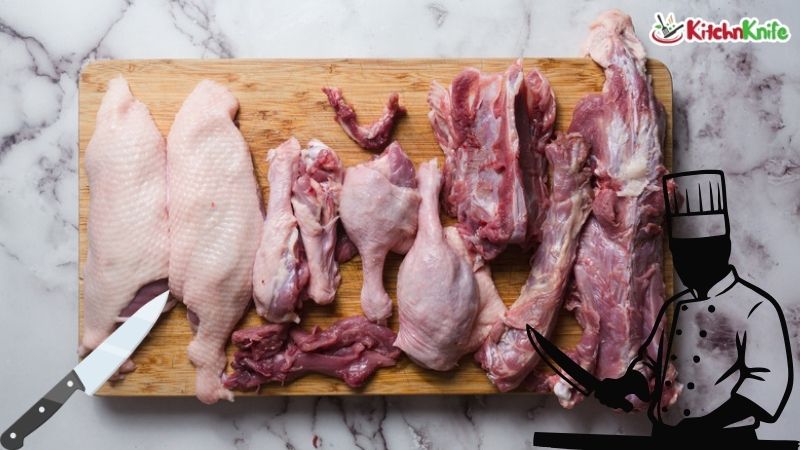
You now have two beautiful pieces of raw duck breast.
Deal With the Carcass
You’re left with the duck carcass. It still has the neck attached. Cut the neck off where it meets the body. Save it.
The carcass seems empty. But it has flavor. Break it into pieces with your shears or hands. These pieces make incredible stock. Freeze them if you won’t use them now.
Some fat may still cling to the carcass. Scrape it off. Render this fat for cooking later.
What to Do With Each Part
Duck Breast Magic
Duck breast cooks like steak. Score the skin in a crosshatch pattern. Don’t cut into the meat. Season with salt.
Place it skin-down in a cold pan. Turn heat to medium. The fat renders slowly. The skin gets crispy. Flip after 6 minutes. Cook 2 more minutes. Let it rest.
Slice and serve. It should be pink inside.
Duck Leg for Confit
Duck leg has tough connective tissue. Slow cooking breaks it down. Duck confit is the classic method.
Salt the legs heavily. Add herbs. Let them sit overnight. The next day, cover them in duck fat. Cook low and slow for 3 hours at 250°F.
The meat becomes tender. It falls off the bone. The skin crisps when you sear it.
Carcass to Stock
Roast duck bones before making stock. This adds deep flavor. Roast at 400°F for 30 minutes.
Put roasted bones in a pot. Add water, onion, and carrot. Simmer for 4 hours. Strain.
This stock is brown and rich. Use it for soup or sauce.
Roast Duck Perfection
Want to roast your duck pieces instead? Season all parts. Place on a rack. Roast at 375°F.
Breast takes 20 minutes. Legs take 45 minutes. The skin gets golden and crisp.
Pro Tips and Common Mistakes
Always use a sharp knife. Dull knives slip. They’re dangerous. They also tear meat instead of cutting it clean.
Don’t throw away the fat. Duck fat is precious. Render it in a pan over low heat. Strain and save it. Use it to fry potatoes. They’ll be the best you’ve ever had.
Work with cold duck. It’s firmer. The meat cuts cleaner. If your duck gets warm, put it back in the fridge for 10 minutes.
Feel for joints before you cut. Never hack through bone. Find the soft spots. That’s where nature wants you to butcher.
Save every scrap. Even small pieces of duck meat add flavor to fried rice or pasta.
To cut successfully, let the knife do the work. Don’t press hard. Long, smooth strokes work best.
Store breast and legs separately. Wrap them tight. They keep for 3 days in the fridge. Freeze for up to 3 months.
Frequently Asked Questions
How long does it take to break down a whole duck? About 15 minutes once you practice. Your first time may take 30 minutes.
Can I use this method on wild duck? Yes. Wild duck carcass is smaller but breaks down the same way. The meat is leaner.
Should I remove the skin? No. The skin gets crispy and delicious. It also protects the meat during cooking.
What’s the hardest part? Removing the breast cleanly. Take your time. Follow the bone closely.
Can I break down a frozen duck? Thaw it completely first. A frozen duck is impossible to butcher safely.