
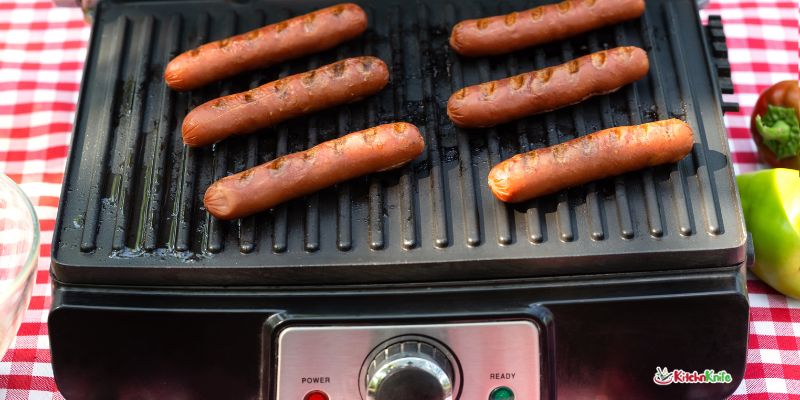
This is one of the most common questions people ask before buying an electric grill.
You want to cook indoors. You live in an apartment. You do not want smoke filling your kitchen or setting off the alarm. So you need an honest answer.
Here it is.
Electric grills do produce some smoke. But far less than charcoal grills, gas grills, or any combustion-based outdoor grill. And with the right grill and the right technique, you can reduce that smoke to almost nothing.
I have cooked on electric grills indoors for years. I have used smokeless grills, indoor grill models, and outdoor electric barbeque grill setups. I know exactly when smoke appears, why it happens, and how to prevent it.
This guide gives you the full picture.
Why Electric Grills Produce Less Smoke Than Other Grills
To understand smoke from electric grills, start with why other grills produce so much of it.
Charcoal grills burn charcoal as fuel. The combustion process produces constant smoke throughout the entire cooking session. Fat dripping from meat hits burning coals and vaporizes immediately, creating thick smoke that coats the food and fills the air around the grill. Charcoal grills are outdoor-only appliances precisely because of this smoke production.
Gas grills burn propane or natural gas. The flame produces some combustion byproducts. Fat dripping onto burners vaporizes and adds grease smoke to the cooking environment. Gas grills produce less smoke than charcoal grills but still require outdoor use.
Electric grills use a heating element. There is no combustion. No burning fuel. No flame. The heating element heats the grate through electrical resistance. There is nothing burning other than any fat and food residue that contacts the hot surface.
This is why electric grills produce so much less smoke than any combustion-based alternative. The source of most smoke in grilling is burning fuel and vaporizing fat hitting flames. Electric grills eliminate the flame entirely.
When Electric Grills Do Produce Smoke
Electric grills are not completely smoke-free. Here is exactly when and why smoke appears.
Fat Dripping Onto the Heating Element
This is the primary cause of smoke on any electric grill.
When fat renders out of meat during cooking, it drips downward. On a well-designed electric grill, that fat falls into a drip tray below the heating element and is collected safely. On a poorly designed model, or when the drip tray is full or improperly positioned, fat can drip onto the heating element itself.
When fat contacts a hot heating element, it burns. Burning fat produces white or gray smoke. The more fat that hits the element, the more smoke you get.
This is why fatty cuts of meat like sausages, ribeye steak, and chicken thighs produce more smoke on an electric grill than leaner cuts like chicken breast, fish, and vegetables.
Residue From Previous Cooking Sessions
Old grease and food residue left on the grate from previous cooking sessions burn when the grill heats up. This is often the first smoke you see when turning on a dirty electric grill.
The residue is not enough to produce heavy smoke. But it creates a burst of thin smoke at the start of every cooking session until it burns off. Regular cleaning eliminates this completely.
High Fat Content Foods
Even on a well-designed electric grill with a clean drip tray, very fatty foods produce more cooking vapor than lean ones.
Fat rendering out of meat does not always fall cleanly into the drip tray. Some of it vaporizes at the hot grate surface before it can fall. This vapor is not dense smoke. But in an enclosed kitchen it is enough to be noticeable and can occasionally trigger sensitive smoke alarms.
Exceeding the Drip Tray Capacity
If you are cooking large quantities of fatty food and the drip tray fills up, excess fat can overflow onto the heating element. This creates a significant increase in smoke output.
Always check and empty the drip tray between batches when cooking large amounts of food.
Smokeless Grills: Are They Actually Smokeless?
The term smokeless is slightly misleading. Let me be honest about this.
No grill is completely smoke-free when cooking real food at high temperatures. Fat vaporizes. Proteins emit steam. Cooking vapor is a normal byproduct of grilling anything.
What smokeless grills do is dramatically reduce smoke compared to standard electric grills and nearly eliminate it compared to charcoal grills and gas grills.
Smokeless grills achieve this through a few specific design features.
Water tray systems. Many smokeless grill models use a shallow water tray positioned below the grate and above or around the heating element. Fat drips into the water rather than onto the hot element. The water absorbs and cools the fat before it can burn. This is highly effective at smoke reduction.
Efficient drip tray design. A well-angled drip tray positioned close to the grate catches fat quickly before it reaches the heating element. The faster fat is removed from the hot zone, the less chance it has to produce smoke.
Controlled heating temperatures. Some smokeless indoor models are designed to heat to high enough temperatures for proper cooking but not so high that minimal fat contact with the element produces significant smoke.
Brands that make effective smokeless indoor grill models include Ninja, Cuisinart, Hamilton Beach, and Elite Gourmet. The Ninja Woodfire is particularly interesting because it is an outdoor electric grill that uses wood pellets to add intentional smoke flavor while still managing unwanted grease smoke effectively.
For apartment cooking and indoor kitchen use, a quality smokeless grill reduces smoke to a level that is comfortable and manageable with basic ventilation.
Electric Smokers: A Different Category Entirely
It is worth clarifying the difference between electric grills and electric smokers. These are completely different appliances.
An electric smoker is a cooking device specifically designed to produce smoke for flavoring food. It uses an electric heating element to heat wood chips or wood chunks. The smoldering wood produces smoke that fills a sealed cooking chamber. Food sits in this smoky environment for hours.
A BBQ smoker produces dense, intentional smoke as its primary cooking mechanism. This is the opposite of what an electric grill is designed to do.
Electric smokers and bbq smokers are outdoor appliances. They require open-air ventilation. They are not suitable for indoor use.
If you have seen an electric smoker described as an electric grill, that is a marketing confusion. They serve completely different purposes. An electric grill cooks food quickly at high heat with minimal smoke. An electric smoker cooks food slowly at low heat with maximum smoke flavor.
The Ninja Woodfire bridges both worlds to some extent. It is an outdoor electric grill that includes a small pellet compartment for adding wood smoke flavor. It is not a full electric smoker but it adds smoke to the cooking environment intentionally. This makes it an outdoor-only appliance despite being electric.
How Much Smoke to Expect by Food Type
Here is a practical guide based on my own cooking experience.
Very little smoke:
- Chicken breast (boneless, skinless)
- Fish fillets
- Shrimp and seafood
- Most vegetables
- Halloumi
Moderate smoke:
- Burgers (lean ground beef)
- Pork chops
- Boneless chicken thighs
More smoke:
- Sausages
- Ribeye and fatty steak cuts
- Bone-in chicken thighs with skin
- Lamb chops
The difference is almost entirely fat content. Leaner foods produce very little smoke. Fattier foods produce more. Adjust your cooking and ventilation habits accordingly.
How to Reduce Smoke on an Electric Grill
These techniques work on any electric indoor grill or outdoor electric barbeque grill model.
Keep the drip tray clean and in place. This is the single most effective action. The drip tray is what separates fat from the heating element. Clean it after every session. Always confirm it is properly positioned before you start cooking. Never cook without it.
Pat food dry before grilling. Wet food surfaces produce more steam and vapor. A dry surface sears more cleanly with less vapor production. Pat all proteins dry with paper towels before placing them on the grill.
Trim excess visible fat from meat. Thick fat caps and visible fat chunks produce the most dripping. Trim them before cooking. This reduces fat volume in the drip tray and reduces smoke production significantly.
Use leaner cuts when cooking indoors. Save your fatty sausages and ribeye cuts for outdoor cooking sessions. When cooking indoors, choose leaner cuts that produce minimal dripping.
Ventilate before you start cooking. Open a window or turn on your kitchen extractor fan before you turn on the grill. Having airflow established before you start cooking means any vapor that does form is immediately carried away rather than building up in the kitchen.
Do not overfill the grill surface. Too much food at once overwhelms the drip tray’s capacity and traps steam between closely packed pieces of food. Cook in batches. Leave space between food for proper heat circulation.
Clean the grates after every session. Old residue burns when the grill heats up. Five minutes of cleaning after every cook eliminates the burst of smoke at the start of your next session.
Smoke Comparison: Electric vs Other Grill Types
Here is a direct comparison of smoke output across grill types.
Charcoal grills: Very high smoke output. Continuous smoke from burning charcoal and vaporizing fat throughout the entire cooking session. Outdoor use required. Not suitable for any indoor or balcony cooking where smoke is a concern.
Gas grill: Moderate smoke output. Combustion byproducts plus grease smoke from fat hitting burners. Noticeably less than charcoal. Still requires outdoor use for ventilation.
Standard electric barbeque grill: Low smoke output under normal conditions. Some smoke when fat hits the heating element. Suitable for outdoor use and some indoor use with ventilation.
Smokeless indoor grill: Very low smoke output. Water tray and efficient drip systems catch fat before it reaches the heating element. Designed specifically for indoor cooking. Suitable for most kitchens with basic ventilation.
Electric smoker and BBQ smoker: Maximum intentional smoke output. Designed specifically to produce smoke. Outdoor use only.
My Personal Experience With Indoor Electric Grill Smoke
I cook indoors on a smokeless grill multiple times per week. Here is what I actually experience.
When cooking chicken breast, fish, or vegetables, I notice almost no smoke at all. A thin cooking vapor rises from the food but it is barely visible and dissipates immediately.
When cooking burgers or sausages, I see light wisps of smoke. Not enough to fill the kitchen. Not enough to trigger the smoke alarm in my kitchen as long as I have the extractor fan running.
The one time I created noticeable smoke was when I forgot to empty the drip tray between two large batches of fatty sausages. The tray overflowed and fat hit the heating element. The smoke was immediate and significant.
I emptied the tray, cleaned the element area, and continued cooking. Lesson learned.
With a clean grill, a properly positioned drip tray, and basic ventilation, indoor electric grilling is a genuinely comfortable cooking experience. The smoke concern that many people have before they try it is much smaller in practice than it sounds in theory.