
Last Updated on December 7, 2025 by Kathay Lee
How to Chop Capers and Olives: A Simple Kitchen Guide
Introduction
Do you love pasta puttanesca or olive tapenade? Then you need to know how to chop capers and olives. These small ingredients pack big flavor. But cutting them can be tricky. They roll around on your cutting board. They squish under your knife. Don’t worry. I’ll show you the easy way.
I’ve been cooking for over 15 years. I use capers and olives almost every week. They go in my spaghetti puttanesca, on my pork chops, and in my salads. Today, I’m sharing my best tips with you.
Why Chop Capers and Olives?
You might wonder why you need to chop these ingredients at all. Here’s why it matters:
Better Flavor Distribution Chopped capers and olives spread their flavor evenly. Every bite of your dish tastes amazing. Whole olives create pockets of intense flavor. Chopped ones blend better.
Improved Texture Small pieces are easier to eat. They don’t overpower your dish. Your pasta puttanesca feels balanced. Your olive tapenade spreads smoothly.
Professional Results Restaurant chefs always chop their ingredients properly. You can do the same at home. Your dishes will look and taste professional.
Tools You Need
Before we start, gather these simple tools:
- A sharp chef’s knife (8-inch works best)
- A stable cutting board
- A small bowl for collecting pieces
- Paper towels for drying
That’s it. No fancy equipment needed.
How to Chop Capers: Step-by-Step
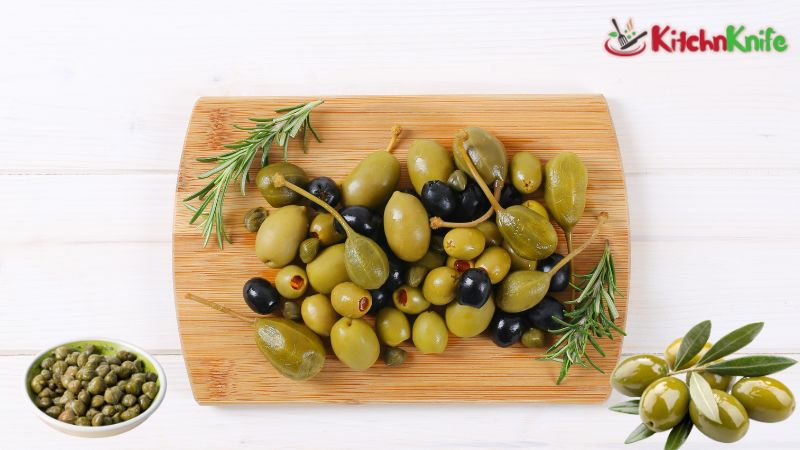
Capers are small flower buds. They come packed in brine or salt. Here’s how to chop capers perfectly:
Step 1: Drain and Rinse
Take your capers out of the jar. Pour them into a small strainer. Rinse them under cold water for 10 seconds. This removes excess salt.
Step 2: Pat Them Dry
Spread the capers on paper towels. Pat them gently. Dry capers don’t slip on your cutting board.
Step 3: Gather Them Together
Place the capers in a small pile on your cutting board. Keep them close together. This makes chopping easier.
Step 4: Chop with a Rocking Motion
Hold your knife at a slight angle. Rock the blade back and forth over the capers. Use your other hand to guide the knife. Keep chopping until the pieces are small.
Step 5: Scrape and Repeat
Scrape the capers back into a pile. Chop again if needed. For puttanesca recipe, aim for pieces about the size of rice grains.
Pro Tip: Caper berries are larger than regular capers. Cut them in half first. Then chop them like regular capers.
How to Chop Olives: Easy Method
Olives have pits. Some are pitted already. Here’s how to chop olives without frustration:
Step 1: Choose Your Olives
Any olive works. Green olives, black olives, or Kalamata olives. For marinated olives, drain them first.
Step 2: Remove Pits (If Needed)
If your olives have pits, remove them first. Press each olive with the flat side of your knife. The pit pops out easily. Or buy pitted olives to save time.
Step 3: Dry the Olives
Marinated olives are oily. Pat them dry with paper towels. This prevents slipping.
Step 4: Slice Then Chop
Cut each olive lengthwise into 3-4 slices. Then gather the slices. Chop them crosswise into small pieces. This method is faster than random chopping.
Step 5: Check Your Size
For olive tapenade recipe, chop them fine. For pasta or salads, slightly larger pieces work well.
Kitchen Hack: Use a food processor for large batches. Pulse 3-4 times. Don’t over-process or you’ll make paste.
Common Mistakes to Avoid
I’ve made these mistakes. Learn from my errors:
Using a Dull Knife Dull knives squish capers and olives. They don’t cut cleanly. Sharpen your knife before you start.
Chopping While Wet Wet ingredients slide everywhere. Always dry them first.
Chopping Too Fine Tiny pieces turn mushy in cooking. Keep some texture. Rice-sized pieces are perfect.
Forgetting to Rinse Capers Capers are very salty. Always rinse them first. Your dish won’t be too salty.
Best Recipes Using Chopped Capers and Olives
Now that you know how to chop capers and olives, try these recipes:
Classic Spaghetti Puttanesca
This pasta dish is bold and quick. It uses chopped anchovies, capers, olives, and tomato. Cook your pasta. Make the sauce with garlic, olive oil, and these chopped ingredients. Mix everything together. Dinner is ready in 20 minutes.
Homemade Olive Tapenade
Blend chopped olives with garlic and olive oil. Add lemon juice and herbs. Spread it on bread or crackers. It’s perfect for parties.
Mediterranean Pork Chops
Top your pork chops with chopped olives and capers. Add fresh herbs. Bake until golden. The salty ingredients balance the rich meat.
Quick Pasta Salad
Toss cooked pasta with chopped olives, capers, tomato, and fresh basil. Add olive oil and lemon. This salad tastes better the next day.
Storage Tips
Fresh Chopped Capers Store in an airtight container. Keep them in the fridge. Use within 3-4 days.
Fresh Chopped Olives Same as capers. Refrigerate in a sealed container. Use within one week.
Freezing Option Freeze chopped capers and olives in ice cube trays. Pop them into soups or sauces later.
Expert Tips for Perfect Results
After years of cooking, here’s what I’ve learned:
Tip 1: Prep in Batches Chop extra when you have time. Store them for busy weeknights. You’ll thank yourself later.
Tip 2: Match Your Chop to Your Dish Fine chop for sauces and dips. Rough chop for toppings and salads.
Tip 3: Taste As You Go Capers and olives vary in saltiness. Taste your dish before adding salt.
Tip 4: Combine with Other Ingredients Chopped anchovies work great with capers. They both appear in traditional puttanesca recipe. The flavors complement each other.
Frequently Asked Questions
Can I use a food processor to chop capers and olives?
Yes, but be careful. Pulse just 2-3 times. Over-processing creates paste. For small amounts, a knife works better.
Do I need to rinse capers every time?
Yes, always rinse capers. They’re preserved in heavy brine. Rinsing removes excess salt and improves taste.
What’s the difference between capers and caper berries?
Caper berries are larger and include the stem. They’re the fruit of the caper plant. Regular capers are the unopened flower buds. Both taste similar but caper berries are milder.
Can I substitute olives for capers in recipes?
Not exactly. Capers are more tart and briny. Olives are milder and meatier. Both add saltiness but the flavor is different. In pasta puttanesca, you need both for authentic taste.
How fine should I chop olives for tapenade?
For olive tapenade recipe, chop them medium-fine. You want some texture. Not paste, not chunky. About the size of lentils works perfectly.
Should I chop marinated olives differently?
Marinated olives need extra drying. The oil makes them slippery. Pat them very dry before chopping. The method stays the same.
Can I chop capers and olives ahead of time for meal prep?
Yes. Chop them on Sunday. Store in small containers. They stay fresh for 5-7 days. This saves time on busy nights.
What knife works best for chopping capers?
An 8-inch chef’s knife is ideal. A paring knife works for small amounts. The key is sharpness, not size.
Conclusion
Learning how to chop capers and olives is a basic skill every home cook needs. It takes practice, but you’ll get faster. Remember to rinse, dry, and use a sharp knife. Your spaghetti puttanesca will taste restaurant-quality. Your olive tapenade will be smooth and delicious.
Start with small batches. Practice the technique. Soon, you’ll chop like a professional chef. Your pasta dishes, pork chops, and appetizers will all improve.
Now grab your cutting board and try it yourself. You’ve got this!