
Last Updated on November 7, 2025 by Kathay Lee
I’ve owned my wooden knife block for eight years. Last spring, I turned it upside down and watched crumbs, dust, and mystery particles rain onto my counter. That moment changed everything.
Your knife block sits on your counter every day. It holds your chef knife, kitchen knives, and other sharp tools. But inside those slots? That’s where trouble hides.
This guide shows you how to clean your knife block the right way. No fancy products needed. Just simple steps that work.
Why Your Knife Block Needs Regular Cleaning
Think about what happens each time you slide a knife into your block.
Tiny food bits fall inside. Moisture from washed blades drips down. Dust settles into the slots. Over months, this builds up.
The result? Bacteria grows. Mold can form. Your clean kitchen knives touch this mess every time you grab them.
A dirty knife block can make you sick. The wood traps moisture and creates a home for germs. Regular cleaning stops this problem before it starts.
What You Need to Clean Your Knife Block
Good news: you already own most of these items.
Basic supplies:
- Warm water
- Dish soap (mild kind)
- Clean towels
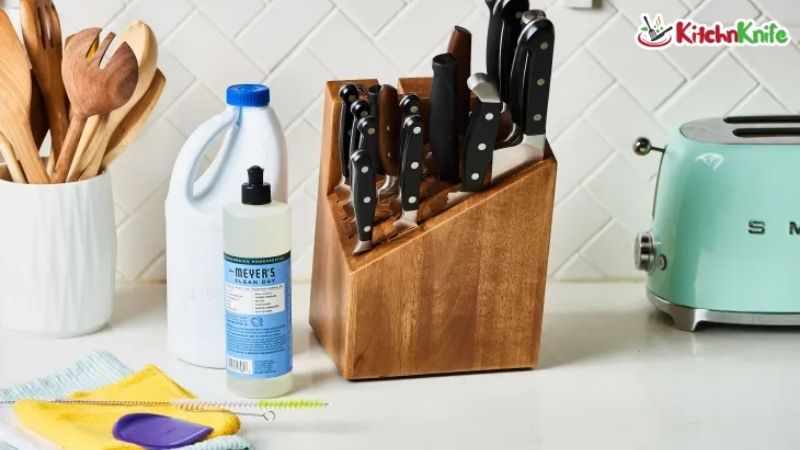
- Pipe cleaner or small bottle brush
- Compressed air (optional)
- White vinegar
- Toothpicks
For deep cleaning:
- Hydrogen peroxide (3%)
- Mineral oil or food-grade wood oil
- Cotton swabs
- Soft bristle brush
Skip the harsh chemicals. Bleach and strong cleaners damage wood. They also leave residue that touches your knives.
Quick Weekly Cleaning (5 Minutes)
Do this once a week to prevent buildup.
Step 1: Remove all your kitchen knives from the block. Set them aside safely.
Step 2: Turn the block upside down over your sink or trash can. Shake it gently. Watch the debris fall out.
Step 3: Tap the bottom with your palm. More particles will come loose.
Step 4: Use compressed air to blast out remaining dust. Point the nozzle into each slot. Or skip this if you don’t have compressed air.
Step 5: Wipe the outside with a damp cloth. Dry it right away.
This takes five minutes. It keeps most problems away.
Monthly Deep Cleaning (Complete Guide)
Once a month, give your block a thorough cleaning.
Step 1: Empty and Inspect
Remove every knife. Check inside the slots with a flashlight. Look for mold (black or green spots), food debris, or sticky residue.
If you see mold, don’t panic. We’ll fix that.
Step 2: Remove Loose Debris
Turn the block upside down. Shake hard. Tap all sides. Get everything loose out first.
Use a pipe cleaner for each slot. Push it all the way through. Twist as you pull it out. The fuzzy texture grabs stuck particles.
No pipe cleaner? Try a long bottle brush. Even a rolled paper towel works in a pinch.
Step 3: Clean the Slots
Mix warm water with a few drops of dish soap. Dip a pipe cleaner in this mix. Clean each slot again.
Don’t pour water directly into the slots. This saturates the wood and causes problems.
For a universal knife block (one with random angle slots), clean every opening. These catch more debris because knives can go in at different angles.
Step 4: Sanitize
Mix equal parts water and white vinegar. Dip a clean pipe cleaner in this solution. Wipe down each slot.
Vinegar kills bacteria and mold naturally. It’s safe for wood and your knives.
Step 5: Dry Completely
This step matters most.
Stand the block upside down on a clean towel. Let it air dry for 24 hours. Put it near a window or fan. Air needs to flow through the slots.
Never put knives back in a damp block. Moisture trapped inside leads to mold growth.
How to Remove Mold From Your Knife Block
Found mold? Act fast, but stay calm.
For light mold:
Mix one part hydrogen peroxide with two parts water. Dip a cotton swab in this mix. Scrub the moldy spots. The peroxide kills mold spores on contact.
Wipe with a damp cloth. Then use a dry cloth. Let it air dry completely (24-48 hours).
For heavy mold:
You might need to replace the block. Deep mold in wood is hard to remove fully. Your health isn’t worth the risk.
Before tossing it, try this: Use straight hydrogen peroxide on the affected areas. Let it sit for 10 minutes. Scrub with a brush. Rinse with minimal water. Dry for two full days.
If the mold smell stays, get a new block.
Cleaning Butcher Block Style Knife Storage
Some knife storage looks like a small butcher block with slots on top. These need special care.
The wood is often thicker and unsealed. This means it absorbs more moisture. Clean these every two weeks instead of monthly.
After cleaning, apply a thin coat of food-grade mineral oil. Rub it into the wood surface (not the slots). This protects the wood and prevents cracking.
Alternative Knife Storage Options
If your wooden block keeps getting dirty, consider these options:
Magnetic knife strips: These mount on your wall. Your kitchen knives hang in the open. Nothing traps debris. Easy to clean with a quick wipe.
In-drawer knife organizers: These lay flat in a drawer. Each knife has a slot. Less exposed to dust. Easier to keep clean.
Universal knife blocks (modern style): Some newer universal knife holders use plastic rods instead of slots. Debris falls straight through. Much easier to maintain.
Knife racks: Open racks let air circulate. Your chef knife and other blades stay visible and dry.
Each option has benefits. Choose what works for your kitchen setup.
How to Keep Your Knife Block Clean Longer
Prevention beats cleaning every time.
Dry your knives before storing them: This is the biggest tip. After washing your kitchen knives, dry them completely. Use a clean towel. Water left on blades drips into the block.
Wipe knife handles: Handles carry food residue and grease. A quick wipe prevents this from transferring into the slots.
Keep the block away from the stove: Heat and cooking splatter make blocks dirty faster. Place yours away from high-traffic cooking areas.
Don’t force knives in: If a knife doesn’t slide in smoothly, debris might be blocking the slot. Remove it before forcing the blade in.
Tap out crumbs weekly: This five-second habit prevents big cleaning sessions. Just turn it upside down and shake.
Special Care for Different Knife Brands
Some knife sets need specific attention.
Cutco knives: These often have textured handles. More texture means more spots for grime to hide. Wipe handles extra carefully before storing.
Chef knives with bolsters: The thick part where blade meets handle can catch debris. Clean this area well before putting the knife away.
Serrated kitchen knives: Bread knives and steak knives drop more crumbs. These create more mess in your block. Use them with care.
The cleaning process stays the same regardless of knife brand. Just pay attention to what your specific knives track into the block.
When to Replace Your Knife Block
Even with great care, wooden blocks don’t last forever.
Replace yours if you notice:
- Cracks in the wood
- Persistent mold that returns after cleaning
- Loose or wobbly construction
- Slots that no longer hold knives securely
- Strong odors that won’t go away
- Stains that penetrate deep into the wood
A quality wooden block lasts 5-10 years with proper care. Cheaper ones might need replacing sooner.
Troubleshooting Common Problems
Problem: Strong odor coming from the block
Solution: The wood absorbed food smells or moisture. Clean thoroughly with vinegar solution. Dry for 48 hours. Sprinkle baking soda in slots. Let sit overnight. Shake out in the morning.
Problem: Sticky residue in slots
Solution: This happens when knives go in with food residue. Use a pipe cleaner dipped in warm soapy water. Scrub each slot well. Follow with a vinegar wipe. Dry completely.
Problem: White spots on the wood
Solution: Water damage or mineral deposits. Lightly sand the affected area with fine sandpaper. Apply mineral oil to restore the wood.
Problem: Knife slots too tight
Solution: Debris buildup or wood swelling from moisture. Clean slots thoroughly. Make sure block dries completely between uses. If still tight, the wood may have warped from too much water exposure.
Problem: Can’t reach the bottom of slots
Solution: Use a longer pipe cleaner. Or tie a small piece of sponge to a chopstick. Some universal knife blocks have removable bottoms for easier cleaning. Check your model.
My Personal Cleaning Routine
Here’s what I do to keep my block clean:
Every Sunday morning, I empty my knife block. I shake it out over the sink. I wipe the outside. Takes three minutes.
Once a month, I do the deep clean described above. I set a reminder on my phone. It happens on the first Saturday of each month.
I always dry my kitchen knives after washing. This habit alone cut my cleaning time in half.
My block is eight years old and still looks great. Regular care makes the difference.
The Science Behind Clean Knife Storage
Wood is porous. It has tiny holes throughout its structure. These holes trap moisture, food particles, and bacteria.
When you slide a wet knife into a wooden block, water soaks into the wood. If the block doesn’t dry out, bacteria multiply. Some harmful bacteria double every 20 minutes in the right conditions.
The slots create a dark, damp environment. This is perfect for mold growth. Mold spores are everywhere in the air. They just need moisture and food to grow.
Regular cleaning removes the food source. Complete drying removes the moisture. Together, these steps prevent bacterial and mold growth.
This isn’t just theory. Studies show that knife blocks can harbor more bacteria than cutting boards if not cleaned regularly.
Frequently Asked Questions
How often should I clean my wooden knife block?
Quick cleaning weekly. Deep cleaning monthly. If you cook daily or have a large family, clean it twice a month. Less active kitchens can stretch to every six weeks.
Can I put my wooden knife block in the dishwasher?
Never. The hot water and harsh detergents will ruin the wood. It will crack, warp, and split. Always hand clean wooden knife blocks.
What’s the best way to dry knife slots?
Stand the block upside down in a well-ventilated area. Point a fan at it if possible. Let it air dry for 24 hours minimum. Don’t use direct heat like a hair dryer. This cracks the wood.
Is mold in my knife block dangerous?
Yes. Mold can cause allergic reactions and respiratory problems. Some molds produce toxins. If you find mold, clean it immediately. Heavy mold growth means you should replace the block.