
Last Updated on December 7, 2025 by Kathay Lee
How to Cut a Mango: The Complete Guide That Actually Works
I still remember my first attempt at cutting a mango. Juice everywhere. Slippery hands. A mangled mess on my cutting board. The beautiful mango fruit had defeated me.
But here’s the good news: cutting a mango doesn’t have to be hard. After years of practice and countless mangoes later, I’ve mastered every technique. Today, I’ll share exactly how to cut a mango the right way.
You’ll learn four proven methods. Each one works perfectly for different situations. By the end, you’ll cut mangoes like a pro.
Understanding Your Mango Before You Cut
Before we start cutting, let’s talk about what’s inside your mango.
Every mango has a large, flat seed in the middle. This seed runs lengthwise through the center. It’s thin but wide. This is why you can’t just cut through the middle like an apple.
The mango tree produces different varieties. The Ataulfo mango is small and golden. The honey mango is sweet and yellow. Each type has slightly different sizes. But all have that flat seed in the center.
A ripe mango feels slightly soft when you press it gently. The color changes from green to yellow or red, depending on the variety. The yellow mango often has a sweet smell near the stem.
Method 1: How to Cut a Mango into Cubes (The Hedgehog Method)
This is my favorite method. It’s clean, easy, and gives you perfect cubes every time.
Here’s how to cut a mango into cubes:
Stand your mango on your cutting board. The narrow end should point up.
Place your knife about half an inch from the center. You’re aiming to miss the seed.
Slice down firmly. You’ll feel the knife glide past the flat seed.
Repeat on the other side. You now have two mango halves.
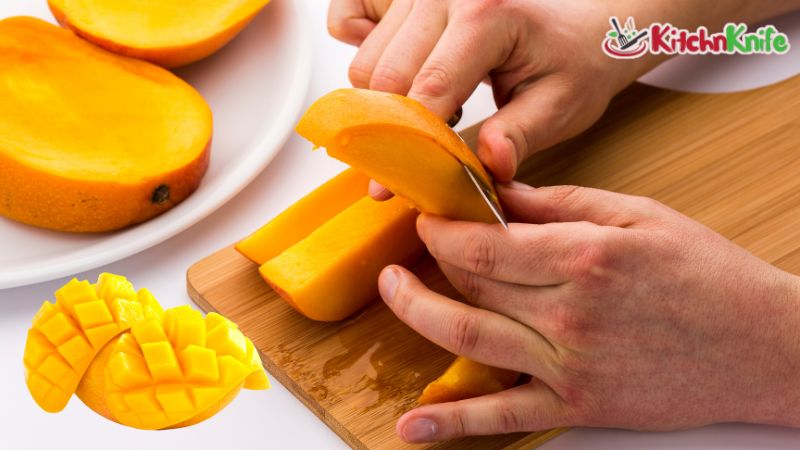
Take one half in your palm. Score the flesh in a grid pattern. Cut down to the skin, but don’t cut through it.
Push the skin from underneath. The cubes pop up like a hedgehog.
Use a spoon to scoop the cubes into a bowl.
This method works beautifully for snacking. The cubes are perfect for fruit salads too. Kids love the hedgehog look.
Method 2: Cutting Mango into Wedges
Wedges are great when you want big pieces. They’re perfect for grilling or serving fresh.
Follow these steps:
Peel your mango first. Use a vegetable peeler or a small knife.
Stand the peeled mango upright.
Cut vertical slices about half an inch thick. Work around the seed.
You’ll get several thick wedges from each side.
Cut smaller pieces from around the seed area. Don’t waste any fruit.
Wedges are ideal for garnishing plates. They look elegant and are easy to eat. This is my go-to method for parties.
Method 3: How to Cut Diced Mango
Need diced mango for recipes? This method gives you small, uniform pieces.
Here’s the process:
Cut off both cheeks like in Method 1.
Remove the peel from each half. A spoon works great for this.
Place the peeled half flat on your board.
Slice it into strips. Make them as big or small as you need.
Turn the strips and cut across. You now have diced pieces.
Repeat with the other half.
Diced mango works perfectly in salsas. It’s also great for smoothies and baking. I use this method when I need small, even pieces.
Method 4: The Mango Flower Presentation
This technique is purely for beauty. But it impresses everyone.
Create a mango flower:
Cut your mango into cubes using Method 1.
After scoring the flesh in a grid, push gently from the bottom.
The cubes fan out like flower petals.
Place it on a plate as a stunning centerpiece.
This presentation makes any meal special. I use it for brunch gatherings. Guests always ask how I did it.
Choosing the Perfect Mango
The best cutting technique means nothing with a bad mango. Here’s how to pick a winner.
A ripe mango yields slightly to gentle pressure. It should feel like a ripe avocado. Too hard means it’s not ready. Too soft means it’s overripe.
Color can be tricky. Some mangoes stay green when ripe. The Ataulfo mango turns golden yellow. The honey mango develops a rich yellow color. Don’t rely only on color.
Smell the stem end. A sweet, fruity aroma means it’s ready. No smell means wait a few days. A sour or alcoholic smell means it’s too far gone.
Small mangoes often have a higher flesh-to-seed ratio. Big mangoes give you more fruit overall. Both are delicious.
Essential Tips for Perfect Mango Cutting
Use a sharp knife. Dull knives slip on the smooth skin. This is dangerous. A sharp knife cuts cleanly and safely.
Wash your mango first. Even though you’ll peel it, bacteria on the skin can transfer to the flesh.
Work over a bowl or plate. Mangoes are juicy. This catches the drips and makes cleanup easy.
Don’t throw away the seed area. Cut off any remaining flesh. Or just eat it over the sink. It’s delicious.
Cut on a stable surface. A damp towel under your cutting board prevents slipping.
Keep paper towels handy. Mango juice makes everything slippery. Wipe your hands and knife often.
Common Mistakes to Avoid
Many people cut straight through the middle. This hits the hard seed. Your knife gets stuck. Always cut to the side of center.
Don’t use a serrated knife. It tears the delicate flesh. A smooth blade works best.
Never cut toward yourself. Always cut away from your body. Safety first.
Some people try to twist the mango like an avocado. This doesn’t work. The seed doesn’t come out cleanly. Stick to the methods above.
Don’t peel before cutting (except for wedges). It makes the mango slippery and hard to hold.
Storing Your Cut Mango
Cut mango lasts three to four days in the fridge. Store it in an airtight container.
You can freeze mango cubes for smoothies. Spread them on a baking sheet first. Freeze until solid. Then transfer to a freezer bag.
Frozen mango keeps for up to six months. It’s perfect for year-round mango enjoyment.
Frequently Asked Questions
How do I know which side the seed is on?
The seed runs lengthwise through the middle. It’s flat and thin. Cut about half an inch from the center line on each side. You’ll miss it completely.
Can I eat the mango skin?
The skin is technically edible but often has a bitter taste. It can also cause mouth irritation in some people. I recommend peeling it off.
What’s the easiest way for beginners?
The cube method (Method 1) is easiest. You don’t need to peel anything. The hedgehog technique makes scooping simple. Start here.
How do I cut a green mango?
Use the same techniques. Green mangoes are firmer. This actually makes them easier to cut. They’re less slippery than ripe ones.
Can I cut mango ahead of time?
Yes. Cut mango stores well for three to four days. Add a squeeze of lime juice to prevent browning. Keep it refrigerated in a sealed container.
What do I do with the seed piece?
Cut off any remaining flesh around the edges. Then eat the seed piece over the sink. Just bite and scrape off the remaining fruit. It’s the cook’s reward.
Why is my mango so slippery?
Ripe mangoes are naturally juicy and slippery. This is normal. Keep paper towels nearby. Wipe your hands between cuts.
How do I cut a small Ataulfo mango?
Use the same cube method. Ataulfo mangoes have a smaller seed. You can cut closer to the center. These mangoes are less fibrous and easier to work with.
Your Mango-Cutting Journey Starts Now
Cutting a mango perfectly is a skill anyone can learn. Start with the cube method. It’s foolproof and gives great results every time.
Remember the key points: cut around the flat seed, use a sharp knife, and don’t be afraid of the juice. With practice, you’ll cut mangoes in under a minute.
The mango fruit is one of nature’s most delicious gifts. Don’t let cutting technique stop you from enjoying it. Try these methods today. Your taste buds will thank you.
Now you know how to cut a mango like an expert. Which method will you try first? Grab a mango and start practicing. You’ll be amazed at how easy it becomes.