
Last Updated on December 4, 2025 by Kathay Lee
The Secret to Restaurant-Quality Stir Fry
Have you ever wondered why your beef stir fry turns out tough while restaurant versions are so tender? The answer lies in how you cut the meat. This guide will show you exactly how to cut beef for stir fries to get those perfect, tender strips every single time.
Cutting beef properly is the most important step in making great Chinese food at home. When you slice beef the right way, even cheaper cuts become incredibly tender. Your wok will sizzle with perfectly cooked strips that melt in your mouth.
I’ve spent years perfecting my stir fry technique. Today, I’ll share everything I know about cutting beef for stir frys.
Understanding Meat Grain: The Foundation of Tender Beef
Before you pick up your knife, you need to understand meat grain. The grain refers to the direction that muscle fibers run through the meat. Look closely at your beef. You’ll see parallel lines running in one direction. Those lines are the grain.
Why does this matter? When you bite into meat, your teeth need to break through those muscle fibers. If the fibers are long, your meat will be chewy and tough. If the fibers are short, your meat will be tender.
The solution is simple: always cut against the grain. This means slicing perpendicular to those parallel lines. Each slice cuts through the muscle fibers, making them short. Short fibers equal tender beef.
Here’s how to spot the grain:
- Place your beef on a cutting board
- Look for parallel lines across the surface
- Note which direction they run
- Plan your cuts to go across those lines
Best Beef Cuts for Stir Fry Success
Not all beef cuts work equally well for stir fry. Some cuts are naturally more tender and flavorful. Let me walk you through the best options.
Flank Steak: The Classic Choice
Flank steak is my top pick for stir frys. This cut comes from the cow’s lower chest area. It has a strong, beefy flavor and costs less than premium cuts. The grain runs clearly in one direction, making it easy to slice correctly. Flank steak stays tender when cut against the grain and cooks quickly in a hot wok.
Skirt Steak: The Flavorful Alternative
Skirt steak offers incredible flavor for your Chinese style dishes. It’s similar to flank steak but even more flavorful. This cut is thinner and cooks very fast. The grain is very obvious, so you can’t go wrong when slicing. Skirt steak works beautifully in any Chinese beef recipe.
Sirloin: The Tender Option
Sirloin steak brings tenderness to your stir fry without breaking the bank. It’s more tender than flank or skirt steak right from the start. The grain can be harder to see, so look carefully. Sirloin works great when you want guaranteed tender beef with minimal effort.
Ribeye: For Special Occasions
Ribeye delivers restaurant-quality results at home. It’s marbled with fat, which means maximum flavor and tenderness. This is my choice for a special dinner. The marbling keeps the meat juicy even with high heat wok cooking.
Budget-Friendly Choices
You can also use round steak or chuck for beef stew style dishes. These tougher cuts need more care when slicing. Cut very thin strips against the grain. Consider using a tenderizing marinade for best results.
Tools You Need for Perfect Cuts
The right tools make cutting beef much easier. You don’t need fancy equipment, but these basics are essential.
Sharp Knife
A sharp knife is non-negotiable. Dull knives tear meat instead of slicing cleanly. This creates ragged edges that don’t cook evenly. I use a sharp chef’s knife or slicing knife. Test your knife on a tomato. If it cuts cleanly without pressure, it’s sharp enough.
Stable Cutting Board
Use a large, stable cutting board. Place a damp towel underneath to prevent slipping. Wood or plastic boards both work fine. Make sure it’s big enough to hold your whole steak safely.
Optional Tools
A meat mallet can help if you need to tenderize tougher cuts. Some cooks like using kitchen scissors for trimming fat. These aren’t required but can be helpful.
Step-by-Step: How to Cut Beef for Stir Fries
Now let’s get to the actual cutting technique. Follow these steps for perfect strips every time.
Step 1: Freeze the Beef (20-30 Minutes)
This is my secret weapon. Place your beef in the freezer for 20 to 30 minutes before cutting. The meat will firm up but not freeze solid. Firm meat is much easier to slice thin. You’ll get even, uniform strips instead of uneven chunks.
Check the beef after 20 minutes. It should feel firm but your knife should still cut through easily. If it’s too hard, let it sit for 5 minutes.
Step 2: Identify the Grain Direction
Take your beef out of the freezer. Look at the surface and find those parallel lines. The grain usually runs lengthwise on flank steak and skirt steak. Mark the direction in your mind or with a small cut.
Step 3: Trim Excess Fat
Remove any large pieces of fat from the surface. A little fat adds flavor, but too much makes your stir fry greasy. Use your knife to slice away thick fat areas. Leave thin marbling intact.
Step 4: Position for Cutting
Place your beef so the grain runs left to right in front of you. You’ll be cutting from top to bottom. This setup helps you cut against the grain naturally.
Step 5: Make Your First Slice
Hold your knife at a slight angle (about 45 degrees). This creates longer strips with more surface area. Start at one end and slice across the grain. Apply steady, even pressure.
Step 6: Cut Thin Strips
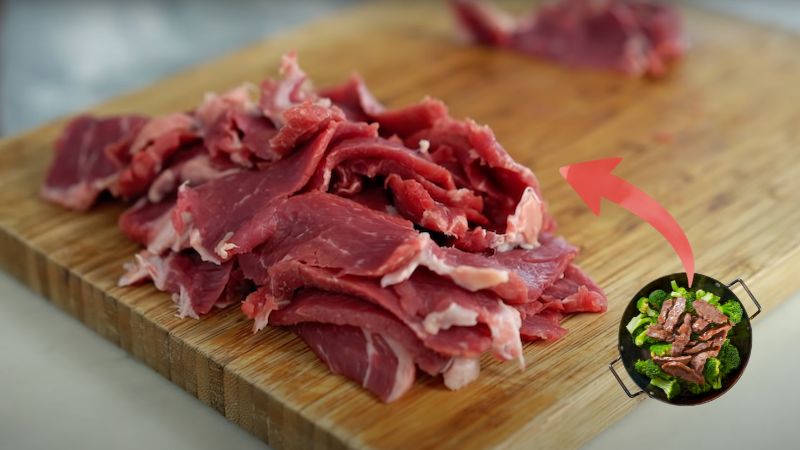
Aim for strips about 1/4 inch thick. This is the ideal thickness for quick wok cooking. Thin strips cook in just 2 to 3 minutes. They develop a nice sear while staying tender inside.
Keep your strips uniform in size. This ensures even cooking. All pieces will be done at the same time.
Step 7: Create Even Lengths
After slicing, check your strip lengths. Cut longer pieces to match shorter ones. I aim for strips about 2 to 3 inches long. This size is perfect for eating with chopsticks and fits well in a recipe.
Step 8: Final Inspection
Look at your finished strips. They should all be similar in size. The grain should run the short way through each strip. If you see long grain fibers, you cut with the grain by mistake. Those pieces will be tough.
Pro Tips for Maximum Tenderness
These expert tricks will take your beef from good to amazing.
The Partial Freeze Method
I mentioned freezing for 20 to 30 minutes. Some cuts benefit from longer freezing. Tougher cuts can go 45 minutes to 1 hour. Just don’t freeze solid. The goal is firm, not frozen.
Marinade After Cutting
Always cut first, then marinade. Cut strips absorb marinade much better than whole pieces. The marinade penetrates every surface. Your beef will have flavor throughout.
A basic marinade includes soy sauce, rice wine, and cornstarch. Marinate for 15 to 30 minutes before cooking.
The Velveting Technique
Velveting is a Chinese restaurant secret. After cutting, toss your strips in cornstarch and egg white. Let sit for 20 minutes. This creates a protective coating. The coating keeps juices inside during high-heat cooking.
Some recipes skip the egg and use just cornstarch and oil. Both methods work great for tender beef.
Common Mistakes to Avoid
Don’t cut room temperature beef. It’s too soft and will tear.
Don’t cut thick strips. They won’t cook through properly in a wok.
Don’t cut with the grain. Your beef will be chewy no matter what.
Don’t rush. Take your time to get uniform pieces.
Adapting Your Cuts for Different Dishes
Different Chinese style dishes need different cutting approaches.
Quick Stir Fries
For fast wok cooking, cut very thin strips (1/8 to 1/4 inch). These cook in under 2 minutes. They’re perfect for recipes with lots of vegetables.
Beef Stew Recipes
For beef stew, cut larger chunks (1 to 2 inches). These hold up during longer cooking times. Still cut against the grain for the best texture.
Noodle Dishes
For dishes with noodles, cut medium strips (1/4 inch thick, 3 inches long). These match the noodle size and mix well.
Frequently Asked Questions
How thin should I cut beef for stir fry?
Cut your beef about 1/4 inch thick. This thickness cooks quickly and stays tender. Thinner is okay, but thicker takes too long to cook.
Can I cut beef for stir fry ahead of time?
Yes. Cut your beef up to 24 hours ahead. Store the strips in an airtight container in the fridge. Add marinade just before cooking for best results.
What if I accidentally cut with the grain?
If you realize you cut with the grain, you have two options. Cut those pieces again, perpendicular to your first cuts. Or use a meat mallet to pound them thinner. Both methods help tenderize the meat.
Do I need to remove all the fat?
No. Remove large chunks of fat, but leave some. A little fat adds flavor and keeps meat juicy. Too much fat makes your dish greasy.
Can I use frozen beef?
Don’t cut fully frozen beef. Let it thaw until just firm. The partial freeze method works best when starting with fresh or fully thawed meat.
Start Cooking Amazing Stir Fries Today
Now you know exactly how to cut beef for stir fries. The technique is simple: freeze briefly, identify the grain, and slice thin strips against the grain. This one skill will transform your Chinese food at home.
Practice with a flank steak or skirt steak this week. You’ll be amazed at how tender your beef turns out. Your wok will produce restaurant-quality results every time.