
Last Updated on November 17, 2025 by Kathay Lee
How to Cut Celery: A Complete Guide for Every Recipe
Introduction
Celery is one of the most common vegetables in kitchens worldwide. Yet many people struggle to cut it properly. This guide will teach you everything you need to know.
I’ve been a home cook for fifteen years. I’ve chopped countless celery stalks in that time. At first, I made many mistakes. Now I can prep celery in minutes. You’ll learn these skills too.
Whether you need celery for soup, salad, or a quick snack, this guide has you covered. Let’s start cutting.
Why Learning to Cut Celery Matters
Kitchen Efficiency
Knowing how to cut celery saves time. You’ll prep ingredients faster. This makes cooking less stressful.
Proper cuts also improve your dishes. Even cuts cook evenly. This matters especially in soup and stir-fries.
Food Safety
Good cutting technique keeps you safe. Sharp knives and stable boards prevent accidents. I’ll show you the right way.
Reducing Waste
When you know what parts to use, you waste less. Celery leaves are edible. The base has uses too. Nothing needs to go in the trash.
Understanding Celery
Parts of the Celery
A bunch of celery has several parts. Each one serves a purpose.
The stalks are what most people eat. They’re crisp and crunchy. The outer stalks are darker and stringier. Inner stalks are tender and lighter in color.
The leaves sit at the top of each stalk. Many people throw these away. But they’re perfectly edible. Leaves add flavor to dishes.
The base connects all the stalks. It’s white and firm. Some recipes call for this part. It’s also called the root end or heart.
The strings run along the outside of stalks. These are fibrous. They can be tough to chew. You may want to remove them from old or thick stalks.
Nutritional Benefits
Celery is very healthy. One cup has only 14 calories. It’s mostly water, which makes it hydrating.
This vegetable contains vitamin K, vitamin A, and folate. It also has antioxidants that protect your body. The fiber helps digestion.
Many people eat celery for weight loss. It’s low in calories but filling. The crunch satisfies the need to munch.
What You Need
Essential Tools
You don’t need many tools to cut celery:
A sharp knife is crucial. I prefer a chef’s knife. It should be at least 8 inches long. A sharp blade cuts cleanly through the stalks.
A cutting board provides your work surface. Choose one that doesn’t slip. I use a large wooden board. Plastic works well too.
A vegetable peeler helps remove strings. This is optional. Many people skip this step.
That’s all you need. Simple tools work best.
How to Choose Fresh Celery
Shopping Tips
Fresh celery makes better dishes. Look for these signs at the store:
The stalks should be firm. Press gently. They should feel crisp, not soft. Avoid bunches that bend easily.
Check the color. Good celery is bright green. Pale or yellow stalks are old. They’ll taste bitter.
Look at the leaves. They should be green and perky. Brown or wilted leaves mean the celery isn’t fresh.
Smell it. Fresh celery has a mild, pleasant smell. Strong or unpleasant odors are bad signs.
Examine the base. It should be clean and white. Dark spots or slime indicate spoilage.
Organic celery often tastes better. It also has fewer pesticides. But regular celery works fine too.
Preparing Celery Before Cutting
Step 1: Wash the Celery
Always wash celery before cutting. Dirt hides between the stalks.
Run the whole bunch under cold water. Rub each stalk with your fingers. This removes dirt and pesticides.
Shake off excess water. Pat the stalks dry with a clean towel. Wet celery is slippery and harder to cut.
Step 2: Separate the Stalks
Pull the stalks apart from the base. They should come away easily.
Some recipes use whole stalks. Others need just a few. Take what you need and store the rest.
Step 3: Trim the Ends
Place a stalk on your cutting board. Cut off the bottom end. Remove about half an inch. This part is usually tough or dirty.
Cut off the leafy top if you don’t want it. Or save the leaves for later use.
Step 4: Remove Strings (Optional)
Old celery has tough strings. These run along the outside of the stalk.
To remove them, make a small cut at the top of the stalk. Pull the strings down toward the bottom. They should peel away easily.
You can also use a vegetable peeler. Run it along the outside of the stalk. This removes the strings quickly.
Young, tender celery doesn’t need this step. The strings are soft enough to eat.
How to Cut Celery: Different Methods
Making Celery Sticks
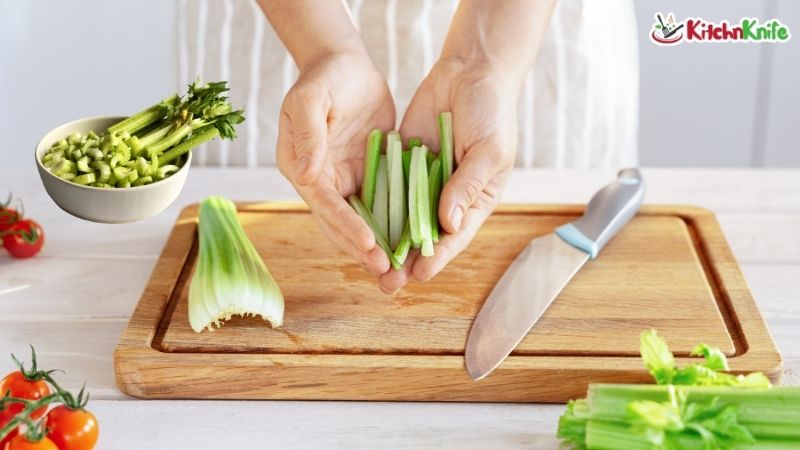
Celery sticks are perfect for snacking. Kids love them with dip. They’re also great for party platters.
Here’s how to prepare celery sticks:
Cut the stalk into sections about 3 to 4 inches long. These are easy to hold and eat.
For thinner sticks, cut each section in half lengthwise. Very thick stalks can be cut into thirds or quarters.
The sticks should be uniform in size. This makes them look nice. It also ensures even texture.
Store celery sticks in water in the fridge. This keeps them crisp. They’ll stay fresh for up to five days.
Slicing Celery
Sliced celery works well in salad, coleslaw, and stir-fries.
Place the stalk flat on your cutting board. Hold it steady with one hand.
Cut crosswise into pieces. Make them about 1/4 inch thick. Keep your cuts even.
Sliced celery cooks quickly. It adds crunch to many dishes. I use it in chicken soup and beef stews.
For very thin slices, cut at a slight angle. This creates oval shapes. These look prettier in salads.
How to Dice Celery Stalks
Diced celery is essential for many recipes. It’s one part of mirepoix, the classic French base. You’ll need it for stuffing, soup, and casseroles.
Here’s my method to dice celery stalks:
Cut the stalk into 3-inch sections. This makes them easier to handle.
Cut each section in half lengthwise. Then cut each half into 2 or 3 strips. The strips should be about 1/4 inch wide.
Line up the strips. Cut across them to make small cubes. These are your diced pieces.
Keep the pieces uniform in size. This helps them cook evenly.
Chopping Celery Finely
Some recipes need very small pieces. Finely chopped celery almost disappears into dishes. It adds flavor without noticeable texture.
Start by dicing the celery as described above. Then go over the pieces again with your knife. Rock the blade back and forth. This breaks them down further.
Keep chopping until the pieces are tiny. They should be about 1/8 inch or smaller.
Finely chopped celery works great in tuna salad and chicken salad. It also fits well in smoothie bowls.
Julienning Celery
Julienne cuts are thin matchsticks. This cut looks elegant and professional.
Cut the stalk into 2 to 3 inch sections. Cut each section lengthwise into very thin slices. Stack these slices and cut them into thin strips.
Julienned celery adds crunch to salads and slaws. It also makes a nice garnish for Asian dishes.
This cut takes practice. Don’t worry if your first attempts aren’t perfect.
Using Every Part of the Celery
The Stalks
Stalks are the most versatile part. You can eat celery raw or cooked.
Raw celery adds crunch to salads and slaws. It’s perfect with dip or peanut butter. Many people include it in their lunchbox.
Cooked celery becomes tender and mild. It’s delicious in soup and stews. I add it to my beef stew every time. Sautéed celery pairs well with onions and carrots.
Celery also works in smoothies. It adds nutrients without strong flavor. Blend it with fruit for a healthy drink.
The Leaves
Don’t throw away celery leaves. They’re packed with flavor and nutrients.
Chop the leaves and use them as garnish. They taste like parsley but with a celery hint. Add them to soup, salad, or pasta.
You can also blend leaves into pesto. Or add them to vegetable stock. They give depth to the flavor.
Leaves wilt quickly. Use them within a day or two of cutting the celery.
The Base
The white base or heart is tender and mild. It’s less stringy than the outer stalks.
Chop it finely for salads. Or dice it for cooking. Some people eat it raw as a snack.
The very bottom of the base should be discarded. It’s usually dirty and tough.
Making Stock
Save your celery scraps for vegetable stock. This includes the base, leaves, and any old stalks.
Put the scraps in a pot with other vegetable trimmings. Cover with water. Simmer for an hour.
Strain the stock and use it in recipes. This reduces waste and adds flavor to your cooking.
Storage Tips
Keeping Celery Fresh
Proper storage extends celery’s life. Fresh celery lasts up to two weeks.
Whole bunches should stay in the refrigerator. Wrap them loosely in aluminum foil. This allows air circulation while retaining moisture.
Some people store celery in plastic bags. This works but can trap too much moisture. The celery may get slimy.
Cut celery needs different storage. Put it in an airtight container. Add a little water to keep it crisp. Change the water every few days.
Celery sticks stay fresh in water for up to five days. This trick works great for meal prep.
Can You Freeze Celery?
Yes, but the texture changes. Frozen celery becomes soft. It won’t be crunchy anymore.
Only freeze celery if you plan to cook with it. Don’t freeze it for raw use.
To freeze, wash and cut the celery. Spread pieces on a baking sheet. Freeze for an hour. Then transfer to freezer bags.
Frozen celery lasts up to six months. Add it directly to soup or stews. No need to thaw first.
Reviving Limp Celery
Old celery sometimes goes limp. You can bring it back to life.
Cut off the ends. Place the stalks in a glass of cold water. Refrigerate for a few hours.
The celery will absorb water and become crisp again. This trick works surprisingly well.
Common Mistakes to Avoid
Using a Dull Knife
Dull knives crush the celery instead of cutting it. This makes a mess. It also wastes the vegetable’s juice.
Keep your knife sharp. Use a honing steel regularly. This takes just a few seconds.
Cutting Pieces Too Large
Big chunks of celery don’t work in most dishes. They’re hard to eat. They also take longer to cook.
Match your cut size to your recipe. Soup needs smaller pieces. Snacks can have larger sticks.
Forgetting to Wash
Celery grows in sandy soil. Dirt gets trapped between the stalks. Always wash celery before cutting.
Skipping this step makes dishes gritty. It’s also less healthy.
Throwing Away Good Parts
Many people waste the leaves and base. These parts are perfectly good. Use them to reduce waste and add flavor.
Recipe Ideas Using Cut Celery
Classic Chicken Soup
Dice celery stalks and add to chicken soup. Combine with carrots and onions. This creates a flavorful base.
Simmer until the vegetables are tender. The celery adds depth and nutrition.
Celery and Peanut Butter
This simple snack is a childhood favorite. Prepare celery sticks and spread peanut butter in the groove. Top with raisins for “ants on a log.”
It’s crunchy, creamy, and satisfying.
Fresh Garden Salad
Slice celery thinly and toss into green salad. It adds crunch and freshness. Combine with lettuce, tomatoes, and cucumber.
Celery works especially well in coleslaw. Mix with shredded cabbage and dressing.
Beef Stew
Dice celery and add to beef stew. It’s part of the traditional vegetable trio with carrots and onions.
The celery softens during cooking. It releases flavor into the broth.
Smoothie Boost
Chop celery finely and blend into your smoothie. It adds nutrients without changing the taste much.
Pair it with fruits like apple, pineapple, or mango. The fruit masks any celery flavor.
Frequently Asked Questions
Do I need to peel celery stalks?
No, you don’t need to peel them. But you might want to remove strings from old or thick stalks. Young celery has very soft strings that are fine to eat.
Can I eat celery leaves?
Yes, celery leaves are completely edible. They taste similar to parsley. Use them as garnish or in cooking. They’re too good to waste.
How do I know if celery has gone bad?
Bad celery feels soft and limp. It may have dark spots or slime. The smell turns unpleasant. Fresh celery is firm and has a clean, mild scent.
What’s the difference between celery and celery root?
Celery root is a different vegetable. It’s a knobby, round root. You need to peel celery root before using it. Regular celery stalks don’t need peeling.
Can I use celery in place of water chestnuts?
Celery can substitute for water chestnuts in some dishes. Both provide crunch. But water chestnuts are sweeter and stay crunchier when cooked.
How long does cut celery last?
Cut celery lasts 3 to 5 days in the refrigerator. Store it in water in an airtight container. Change the water every day or two for best results.
Pro Tips for Cutting Celery
Keep Your Workspace Clean
Wipe down your cutting board between tasks. This prevents cross-contamination. It also gives you a clean surface to work on.
Cut in Batches
If you use celery often, prep several stalks at once. Store them in water. This saves time during the week.
Use the Right Size Board
A small cutting board makes celery cutting harder. The stalks are long. They’ll hang off a tiny board.
Use a board at least 12 inches long. This gives you plenty of room.
Mind Your Fingers
Always curl your fingers when holding food. Your knuckles should guide the knife. This technique prevents cuts.
Take your time. Speed comes with practice.
Conclusion
You now know how to cut celery like a pro. You’ve learned multiple cutting methods. Each one serves different recipes.
Remember to choose fresh celery. Wash it thoroughly. Use a sharp knife on a stable board. These basics make all the difference.
Don’t waste any part of the celery. The leaves add flavor. The base is tender and mild. Even scraps can make stock.
Practice these techniques. Soon cutting celery will feel natural. You’ll prep it quickly and confidently.
This humble vegetable deserves respect. It adds crunch, flavor, and nutrition to countless dishes. Now you have the skills to use it well.
Start with simple cuts. Make celery sticks for snacking. Then try dicing for soup. Before long, you’ll tackle any recipe with ease.
Happy cooking!