
Last Updated on December 11, 2025 by Kathay Lee
How to Cut Herbs: Your Complete Guide to Harvesting Fresh Herbs
Fresh herbs add flavor to any meal. But many people worry about cutting them wrong. Will the plant die? Will it stop growing? This guide shows you exactly how to cut herbs the right way.
Why Proper Cutting Matters
When you cut herbs correctly, good things happen. Your herb plants grow stronger. They produce more leaves. The flavor stays fresh and bright.
Bad cuts can hurt your herb garden. The plant might stop growing. It could get sick. Or it might die completely.
Learning the right way takes just a few minutes. Then you will enjoy fresh herbs all season long.
Tools You Need
You do not need fancy equipment. Here are the basics:
- Clean scissors or garden shears
- A sharp kitchen knife
- A clean cutting board
- A bowl or basket for collecting
Always use clean tools. Dirty blades can spread disease between herb plants.
How to Cut Herbs Without Killing the Plant
This is the most important part. Follow these simple rules to keep your herbs healthy.
The One-Third Rule
Never cut more than one-third of the plant at once. This rule protects your herb plants. It gives them enough leaves to keep growing.
For example, if your basil plant is 12 inches tall, only cut 4 inches worth of stems. The plant needs the remaining leaves to make food through sunlight.
Where to Make Your Cuts
Look for a leaf node. This is where leaves grow from the stem. Cut just above this spot. Use clean scissors or shears.
Make your cut at a 45-degree angle. This helps water run off. It prevents rot and disease.
New growth will sprout from below your cut. This makes the plant bushier and fuller.
Best Time to Harvest
Morning is ideal for cutting herbs. The plant is full of moisture and oils. This means maximum flavor.
Wait until dew dries from the leaves. But cut before the hot afternoon sun. Heat can reduce the essential oils that give herbs their taste.
Avoid cutting herbs right before rain. Wet cuts can lead to fungal problems.
Cutting Different Types of Herbs
Different herbs need different approaches. Here is how to handle each type.
Soft Herbs
These include basil, cilantro, parsley, mint, and dill. They have tender stems and leaves.
Cut whole stems, not just leaves. Start at the top and work down. Pinch or cut right above a set of leaves.
For basil, always cut above a leaf pair. Two new stems will grow from that spot. This keeps your plant producing more leaves.
Cilantro grows from the center. Cut outer stems first. Leave the center to keep growing.
Woody Herbs
Rosemary, thyme, sage, and oregano have tougher stems. These herb plants grow slower than soft herbs.
Cut only the new, green growth. Avoid cutting into old, brown woody stems. These parts do not grow back well.
Take small sprigs from different areas. This encourages even growth across the whole plant.
For rosemary, cut 2 to 3-inch pieces from branch tips. The plant will send out new shoots below your cuts.
How to Cut Herbs for Cooking
Fresh herbs need different prep than dried ones. Here is what you need to know.
Removing Stems
Most recipes call for leaves only. Hold the stem at the top. Run your fingers down to strip off leaves. This works great for thyme, rosemary, and oregano.
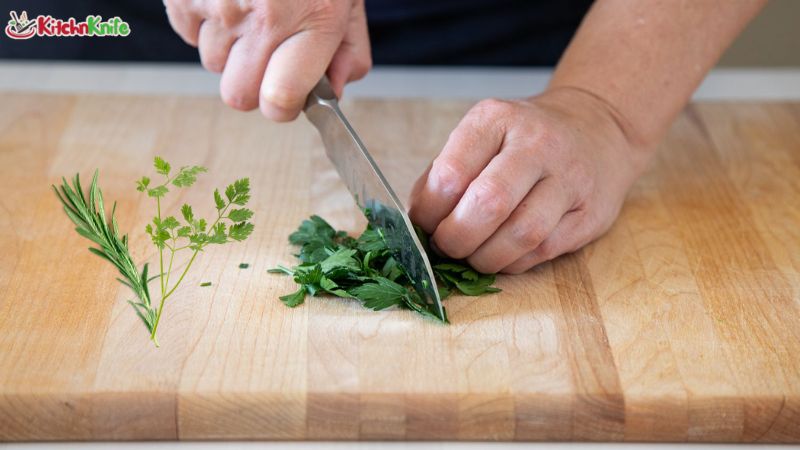
For herbs like parsley and cilantro, cut the leaves from stems with a knife.
Chopping Techniques
Gather leaves in a pile on your cutting board. Rock a sharp knife back and forth. Keep one hand on top of the knife for control.
Do not over-chop. Too much cutting releases oils and moisture. The herbs will turn dark and lose flavor.
For delicate herbs like basil, try the chiffonade method. Stack leaves, roll them tight, then slice into thin ribbons.
Fresh vs. Dried Amounts
Fresh herbs have more water and less concentrated flavor. Use three times more fresh herbs than dried in recipes.
For example, if a recipe needs 1 teaspoon dried thyme, use 3 teaspoons (or 1 tablespoon) fresh thyme.
Taking Stem Cuttings to Propagate Herbs
You can grow new plants from cuttings. This process is called propagation. It saves money and gives you more herbs to grow.
Step-by-Step Process
- Choose a healthy stem that is 4 to 6 inches long
- Cut just below a leaf node
- Remove leaves from the bottom 2 inches
- Place the stem in a glass of water
- Put the glass in a bright spot (not direct sun)
- Change water every few days
- Wait for roots to grow (usually 1 to 3 weeks)
- Plant in soil when roots are 1 to 2 inches long
Best Herbs for Stem Cuttings
These herbs root easily in water:
- Basil
- Mint
- Oregano
- Sage
- Thyme
- Rosemary (takes longer)
Stem cuttings let you expand your herb garden for free. You can also share plants with friends and family.
How to Prune Herbs for Better Growth
Pruning is different from harvesting. You prune herbs to shape the plant and encourage bushier growth.
Creating Bushy Plants
Pinch off the top growing tips regularly. This forces the plant to branch out sideways. You get more stems and more leaves to harvest later.
Start when plants are 6 inches tall. Pinch every 2 to 3 weeks during the growing season.
Removing Flowers
Most herb plants will flower eventually. Flowers are pretty but they change the plant.
When herbs flower, they focus energy on making seeds. Leaf production slows down. The flavor often becomes bitter.
Cut off flower buds as soon as you see them. This keeps the plant producing tasty leaves. Gardeners call this “pinching back.”
Some herbs like lavender and chamomile are grown for flowers. For these, let the flowers bloom.
How to Preserve Herbs After Cutting
You harvested more herbs than you can use fresh. Here is how to preserve them.
How to Dry Herbs
Drying concentrates flavors. Dried herbs last for months in your pantry.
Method 1 – Air Drying:
- Tie stems in small bunches
- Hang upside down in a warm, dry place
- Keep out of direct sunlight
- Wait 1 to 2 weeks until crispy
- Remove leaves and store in jars
Method 2 – Oven Drying:
- Spread herbs on a baking sheet
- Set oven to lowest temperature (below 180°F)
- Leave door slightly open
- Check every 30 minutes
- Done when leaves crumble easily
Freezing Fresh Herbs
Freezing works better for herbs like basil, cilantro, and parsley. These lose flavor when dried.
Simple freeze method:
- Chop herbs roughly
- Place in ice cube trays
- Cover with water or olive oil
- Freeze solid
- Pop out cubes and store in freezer bags
Use frozen herb cubes directly in soups, stews, and sauces.
Storage Tips
Dried herbs stay fresh for 6 to 12 months. Store in airtight jars away from light and heat.
Label each jar with the herb name and date. This helps you use older herbs first.
Frozen herbs last 3 to 6 months. They work best in cooked dishes, not as garnishes.
Common Mistakes to Avoid
Mistake 1: Cutting Too Much at Once
Taking more than one-third weakens the plant. It may never recover. Always leave plenty of leaves behind.
Mistake 2: Cutting with Dull Tools
Dull blades crush stems instead of cutting cleanly. This damages plant tissue and invites disease. Keep your tools sharp.
Mistake 3: Harvesting During Hot Weather
Afternoon heat stresses plants. Morning cuts are gentler and give you better flavor.
Mistake 4: Not Cutting Regularly
Herbs need regular pruning to stay productive. If you do not cut them, they get tall and leggy. Then they flower and stop making good leaves.
Cut something every week during the growing season. Even if you do not need herbs for cooking, cut some anyway. This keeps plants in top shape.
Growing Strong Herb Plants
Healthy plants recover faster from cutting. Here are quick tips to grow herbs successfully:
- Plant herbs in well-draining soil
- Give them at least 6 hours of sunlight daily
- Water when the top inch of soil feels dry
- Feed with a balanced fertilizer every 4 to 6 weeks
- Watch for pests and treat problems early
A thriving herb garden gives you fresh flavors all season. Good care means more harvests and stronger plants.
Frequently Asked Questions
How often can I cut herbs from my plant?
You can cut herbs every 1 to 2 weeks during the growing season. Always follow the one-third rule. Let the plant recover between big harvests. Small snips for cooking can happen anytime.
Should I cut herbs before or after they flower?
Cut herbs before they flower for the best flavor. Once flowering starts, leaf production slows and taste changes. Remove flower buds as soon as you spot them to keep plants producing leaves.
Can I cut herbs in winter?
Growth slows in winter, especially for outdoor herb plants. Cut very lightly or not at all. Let plants rest. Indoor herbs under grow lights can be cut year-round but will grow slower in winter months.
What herbs should not be cut?
Annual herbs like cilantro and dill are harder to cut repeatedly. They focus on flowering and seeding. For these, sow new seeds every few weeks for continuous harvests instead of heavy cutting.
How do I know if I cut my herb plant too much?
Warning signs include yellowing leaves, wilting, very slow new growth, or stems dying back. If this happens, stop cutting. Give the plant time, water, and fertilizer to recover. It may take several weeks.
Final Thoughts
Learning how to cut herbs properly changes your cooking and your garden. You get fresh flavors whenever you need them. Your herb plants stay healthy and keep producing.
Remember the key points:
- Never take more than one-third at once
- Cut above leaf nodes at 45-degree angles
- Harvest in the morning for best flavor
- Prune herbs regularly to encourage bushy growth
- Preserve extra herbs by drying or freezing
Start with easy herbs like basil and mint. Practice your cutting technique. Soon you will have the confidence to grow herbs and harvest them like an expert.
Fresh herbs from your own garden beat store-bought every time. The flavor is brighter. The cost is lower. And you know exactly where your food comes from.
Get out there and start cutting. Your herb plants are waiting to share their bounty with you.