
Last Updated on December 14, 2025 by Kathay Lee
Why Kitchen Safety Matters with Your Mandoline
A kitchen mandoline is one of the most useful tools in cooking. This French kitchen innovation helps you slice vegetables with precision. But it can also be dangerous if you don’t use it right.
Every year, thousands of people cut themselves with this sharp kitchen tool. The good news? Most accidents are easy to prevent. You just need to know the right way to use a mandoline slicer.
This guide will teach you everything about safe mandoline use. You’ll learn proper techniques, common mistakes, and expert tips. By the end, you’ll slice like a pro without risking your fingers.
What Is a Mandoline Slicer?
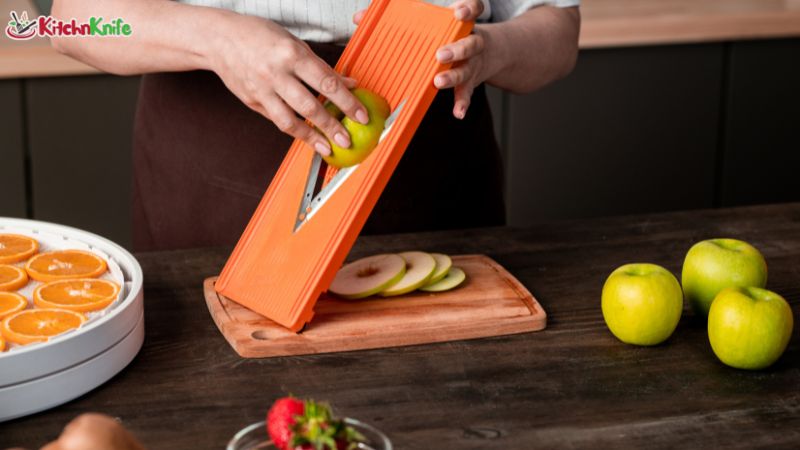
A mandoline is a flat kitchen tool with a very sharp blade. It helps you cut vegetables into thin, even slices. Chefs love this vegetable slicer because it saves time and creates uniform cuts.
There are several types available:
Handheld mandoline – Small and portable. Good for quick jobs. Easy to store in small spaces.
Professional mandoline – Larger and more stable. Used in restaurants. Has multiple blade options.
Dash safe slice mandoline – Comes with extra safety features. Great for beginners. Includes a good hand guard.
Chef’s mandoline – Premium quality. Very sharp blades. Offers precise thickness control.
Each type works the same basic way. Food slides across a blade. The blade cuts the food into slices. The thickness depends on your settings.
Understanding the Blade Mandoline System
Your vegetable cutter has different blade options. The main blade creates straight cuts. Some models include a julienne blade for thin strips.
Julienne cuts are popular in French cooking. They create matchstick-shaped pieces. Perfect for salads and stir-fries.
Most mandoline slicers let you adjust thickness. You might see settings from paper-thin to about half an inch. Always start with a thicker setting when learning.
Safety Equipment You Must Have
Never use a mandoline without proper safety gear. Here’s what you need:
Hand Guard – This is the most important tool. It holds your food while you slice. Your fingers stay far from the blade. Every vegetable slicer should include one.
Cut-Resistant Gloves – These gloves protect your hands. They’re made from special fibers. Even if you slip, you won’t get cut badly.
Stable Surface – Use a cutting board or damp towel. Your mandoline needs to stay still. A moving slicer causes accidents.
Proper Clothing – Wear short sleeves or roll them up. Loose fabric can catch on the blade.
Many people skip the hand guard. This is the biggest mistake you can make. Always use it, even for the last small piece of food.
Step-by-Step Guide to Safe Mandoline Use
Follow these steps every single time you use your potato slicer or vegetable chopper:
Step 1: Inspect Your Tool
Check your blade mandoline before starting. Look for loose parts. Make sure the blade is sharp. A dull blade requires more pressure and increases danger.
Step 2: Set Up Properly
Place your kitchen mandoline on a stable surface. Put a damp towel underneath to prevent slipping. A bowl goes at the end to catch slices.
Step 3: Adjust the Thickness
Start with a thicker setting. You can always go thinner later. Lock the setting in place. Double-check it’s secure.
Step 4: Prepare Your Food
Cut vegetables to fit the hand guard. Make one flat side if the food is round. This flat side goes down first.
Step 5: Load the Hand Guard
Push your vegetable firmly into the hand guard. Make sure it’s secure. Your food should not wobble.
Step 6: Start Slicing
Hold the hand guard firmly. Use smooth, even strokes. Push away from your body. Apply gentle, consistent pressure. Let the blade do the work.
Step 7: Keep Your Rhythm
Don’t rush. Use the same speed for each stroke. This creates even slices. Fast movements cause accidents.
Step 8: Know When to Stop
Stop when the piece gets too small for the hand guard. Don’t try to slice that last bit. Just chop it with a knife instead.
Slicing Different Foods Safely
Your vegetable slicer works on many foods. But each type needs a different approach.
Potatoes – Great for chips or gratins. The potato slicer technique requires firm pressure. Potatoes are hard and dense. Use both hands on the guard.
Soft Vegetables – Tomatoes and cucumbers are tricky. They’re soft and can slip. Use very light pressure. Go slowly to maintain control.
Hard Vegetables – Carrots and beets work well. They’re firm and stable. Perfect for practicing your technique.
Leafy Vegetables – Cabbage slices beautifully. Make sure it’s dry first. Wet vegetables slip easily.
Fruits – Apples and pears work fine. Remove seeds first. Use the same technique as hard vegetables.
Never use your mandoline for:
- Frozen foods
- Foods with pits or large seeds
- Very small items
- Anything softer than a tomato
Common Mistakes That Cause Injuries
Most mandoline accidents happen for the same reasons. Avoid these errors:
Mistake 1: Skipping the Guard
People think they’ll be careful. They believe they can hold food with their fingers. This is how most cuts happen. Always use the guard.
Mistake 2: Going Too Fast
Speed causes loss of control. Your hand can slip. The blade catches skin instead of food. Slow and steady wins this race.
Mistake 3: Wrong Angle
Hold the guard parallel to the blade. Tilting creates uneven slices. It also increases the chance of slipping.
Mistake 4: Too Much Pressure
You don’t need to push hard. The blade is very sharp. Let it do the cutting. Extra force makes you lose control.
Mistake 5: Slicing the Last Piece
That tiny end piece isn’t worth a trip to the emergency room. When it gets small, stop using the mandoline. Finish with a knife.
Mistake 6: Distraction
Focus completely on your task. Don’t talk or look away. One second of distraction can cause injury.
Keeping Your Kitchen Tool Clean and Sharp
A clean, sharp blade mandoline is safer than a dirty, dull one.
Cleaning Your Mandoline
Disassemble it after each use. Most parts are dishwasher safe. But hand washing is gentler on blades. Use a brush to clean around the blade. Never wipe the blade with your hand or sponge.
Blade Maintenance
Sharp blades are actually safer. They cut cleanly with less pressure. Dull blades require force and can slip. Have your professional mandoline sharpened regularly by an expert.
Storage Tips
Store your vegetable cutter with the blade covered. Keep it in a drawer or cabinet. Make sure children cannot reach it. The hand guard should stay with the mandoline.
Real Kitchen Experience and Expert Tips
I’ve used mandoline slicers for over fifteen years in both home and professional kitchens. Here are insights you won’t find in instruction manuals:
The Two-Second Rule – If you feel any hesitation, stop. Your instincts are protecting you. Reset and start again.
Practice with Potatoes – They’re cheap and firm. Perfect for building confidence. Slice a whole bag when learning.
The Sound Tells a Story – A smooth cutting sound means good technique. Scraping or grinding means something’s wrong. Stop and check your setup.
End Pieces Have Value – Save those pieces you can’t slice. Use them in soups or stock. Nothing needs to be wasted.
Frequently Asked Questions
Can I use a mandoline slicer without the guard?
No. The guard is essential for safety. Professional chefs always use it. Your fingers are worth more than the convenience of skipping this step.
How thin can I slice safely?
Start at 3mm for learning. Once comfortable, you can go thinner. Paper-thin slices (1mm) require excellent technique and full attention.
What if I don’t have cut-resistant gloves?
The hand guard is more important than gloves. But gloves add extra protection. You can buy them cheaply online or at kitchen stores.
How often should I replace the blade?
With proper care, blades last years. Replace when sharpening no longer helps. Signs include tearing instead of cutting and requiring excessive pressure.
Is a mandoline better than a knife?
Each tool has its place. Mandolines create uniform slices faster. Knives offer more control and versatility. Use both in your cooking.
Final Thoughts on Mandoline Safety
A mandoline slicer is a powerful kitchen tool. It makes vegetable prep faster and easier. But it demands respect and proper technique.
Always use your hand guard. Take your time with each cut. Stop when pieces get small. These simple rules prevent most injuries.
With practice, using a mandoline becomes second nature. You’ll create beautiful, even slices for all your dishes. Your cooking will improve. And you’ll keep all your fingers intact.
Remember: the best chefs are safe chefs. Master the basics first. Speed and fancy techniques come later. Start slow, stay focused, and slice safely.
Your kitchen mandoline can serve you for many years. Treat it with care. Follow these guidelines. And enjoy the precision and efficiency this amazing tool brings to your cooking.