
Last Updated on December 17, 2025 by Kathay Lee
What Is a Mezzaluna and Why Should You Use One?
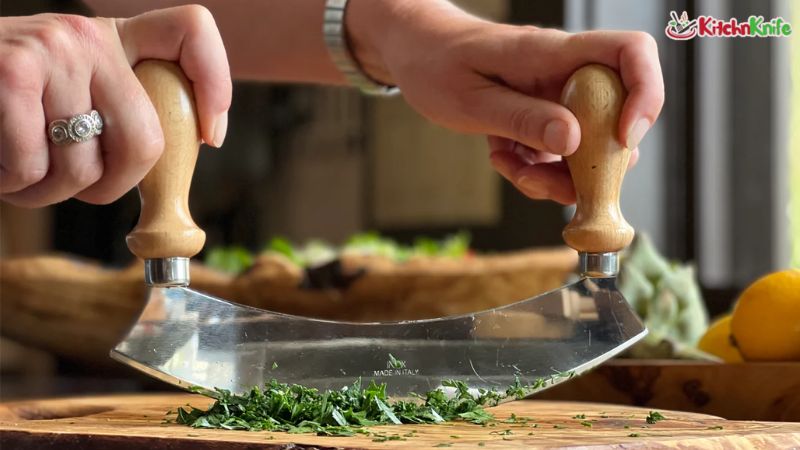
A mezzaluna is a curved knife with one or two handles. The name means “half moon” in Italian. This tool has been used in kitchens for hundreds of years.
I’ve used many chopping tools over the years. The mezzaluna herb chopper is my favorite for quick work. It cuts herbs in seconds. Your hands stay clean. The rocking motion feels natural.
This Italian mezzaluna design is simple but brilliant. The curved blade rocks back and forth. You can chop faster than with a regular knife. Less effort gives you better results.
Many cooks keep this chopping knife in their knife set. Once you try it, you’ll understand why. It makes kitchen prep much easier.
Understanding Your Mezzaluna Knife
Parts of the Tool
A basic mezzaluna has three parts. The curved blade does the cutting. The handles let you control the motion. Some models have a single handle in the center.
The double handled knife is most common. You grip both sides. This gives you more control and power.
Single Blade or Double Mezzaluna?
A single blade works great for most jobs. It’s easy to clean and store. The cutting action is smooth.
A double mezzaluna has two parallel blades. It chops twice as fast. I use this for big batches of herbs. However, it’s harder to clean between the blades.
Most home cooks do fine with a single blade. Start there if you’re new to this tool.
What Makes It Different
Unlike a pizza cutter, this mincing knife has a sharp edge. The curve lets you rock it back and forth. A regular herb knife requires more wrist movement.
The design reduces hand strain. You use your body weight instead of just arm strength. This matters when you chop large amounts.
Getting Your Workspace Ready
Pick the Right Cutting Board
Use a large wooden or plastic board. Make sure it doesn’t slip. A wet towel underneath helps keep it stable.
The board should be bigger than your rocking motion. Give yourself plenty of room. This prevents accidents.
I prefer wooden boards for herb chopping. The surface is gentler on the blade. Your mezzaluna chopper stays sharp longer.
Safety First
This curved knife is very sharp. Keep your fingers away from the blade path. Never lift the knife while it’s moving.
Work on a stable surface at a comfortable height. Good lighting helps you see what you’re cutting. Take your time at first.
Always cut away from your body. Store the blade safely when not in use. A blade guard or knife block works well.
Basic Technique: The Rocking Motion
How to Hold Your Mezzaluna
Grip both handles firmly. Your palms rest on top. Fingers wrap around the sides. Keep your wrists straight and relaxed.
For a single-handle model, use one hand on the handle. Place your other hand on top of the blade (away from the edge). Apply gentle downward pressure.
Your stance matters too. Stand with feet shoulder-width apart. This gives you stability and control.
The Rocking Action
Start with the blade at one end of your pile. Rock it forward using a smooth motion. The curve naturally lifts one end while the other cuts.
Push down gently as you rock. Let the blade’s weight do the work. Don’t press too hard.
Rock back and forth in a steady rhythm. Move across the pile as you work. Gather the ingredients and chop again if needed.
Finding Your Speed
Begin slowly. Speed comes with practice. Focus on smooth, controlled movements first.
As you get comfortable, you can speed up. But never rush. Rushing leads to uneven cuts or accidents.
I’ve been using a mezzaluna herb tool for years. Even now, I prioritize control over speed. Consistent chopping beats fast but messy work.
What You Can Chop
Fresh Herbs
This is where your herb knife truly shines. Basil, parsley, cilantro, mint – they all chop beautifully.
Wash and dry herbs first. Wet herbs clump together. Remove thick stems for tender herbs like basil.
Pile the herbs loosely on your board. Rock your mezzaluna chopper back and forth. Turn the pile 90 degrees. Chop again for finer texture.
The result is evenly minced herbs. No bruising or tearing like you get with a dull knife.
Garlic and Onions
Peel garlic cloves first. Place them under your mincing knife. Rock until finely chopped.
For onions, rough chop them with a regular knife first. Then use the mezzaluna for fine mincing. This chopping knife handles it easily.
Nuts and Chocolate
Your double handled knife works great for nuts. Almonds, walnuts, and pecans chop quickly. The rocking motion prevents them from flying off the board.
Chocolate bars chop into chunks for cookies or garnish. Freeze the chocolate first for cleaner cuts.
Vegetables
Soft vegetables mince well. Try tomatoes for salsa. Peppers for garnish. Mushrooms for pasta sauce.
The curved knife gives you a fine, even texture. This matters for dishes where ingredient size affects taste.
Step-by-Step Mincing Guide
Step 1: Prepare Your Ingredients
Wash everything first. Pat dry with paper towels. Remove stems, seeds, or tough parts. Cut large items into smaller chunks.
Step 2: Pile on the Board
Create a loose mound on your cutting board. Don’t stack too high. A flat, spread-out pile works better.
Step 3: Start Chopping
Position your best mezzaluna at one edge. Begin your rocking motion. Work from one side to the other.
Step 4: Gather and Repeat
Use the blade to scrape everything back into a pile. Rotate the board if needed. Chop again for finer texture.
Step 5: Check Your Progress
Stop when you reach your desired size. For herbs, this takes 30 to 60 seconds. Harder items need more time.
Step 6: Transfer and Use
Scoop your minced ingredients with the blade. Or use a bench scraper. Add them to your recipe right away for best flavor.
Caring for Your Mezzaluna
Cleaning After Each Use
Wash by hand with warm soapy water. The curved blade traps food particles. Use a brush to clean thoroughly.
Dry immediately with a towel. Water spots can form on the metal. This is especially true for carbon steel blades.
Never put your Italian mezzaluna in the dishwasher. The harsh detergent dulls the edge. High heat can damage handles.
Storage Solutions
Store your mincing knife safely. A knife block with slots works well. Or use a magnetic strip on the wall.
Blade guards are cheap and effective. They slip over the edge. This protects both the blade and your fingers.
Keep it separate from other tools in your knife set. The curved shape needs its own space.
Keeping It Sharp
A sharp blade is safer and more effective. Dull blades require more pressure. This increases accident risk.
Use a honing steel before each use. This realigns the edge. A few quick strokes on each side help.
Professional sharpening once or twice a year keeps your chopping knife in top shape. Some kitchen stores offer this service.
You can also use a whetstone at home. Follow the curve of the blade. Maintain the original angle.
Choosing the Best Mezzaluna for Your Kitchen
Handle Comfort
Try before you buy if possible. Grip the handles. They should feel natural in your hands.
Wooden handles look classic. They’re warm to the touch. But they need more care.
Plastic handles are durable and easy to clean. Many modern designs use them.
Some premium models have ergonomic grips. These reduce hand fatigue during long prep sessions.
Blade Quality
Stainless steel resists rust and stains. It’s low maintenance. Most home cooks prefer this.
Carbon steel holds a sharper edge. But it needs more care. It can rust if not dried properly.
The blade should feel substantial. Too thin and it might bend. Too thick and it won’t cut smoothly.
Size Matters
Blades typically range from 6 to 12 inches wide. A 7 to 9 inch blade suits most kitchens.
Smaller blades offer more control. Larger ones cover more area per rock. Consider your typical batch sizes.
I use an 8-inch double mezzaluna for daily cooking. It’s the sweet spot between control and efficiency.
Price Points
Basic models start around $15 to $20. These work fine for occasional use.
Mid-range options ($30 to $50) offer better materials and comfort. Most serious home cooks shop in this range.
Professional-grade tools can cost $80 or more. The best mezzaluna in this category will last decades.
Don’t overspend if you’re just starting. You can always upgrade later.
Mezzaluna vs Other Chopping Tools
Regular Chef’s Knife
A chef’s knife is more versatile overall. It handles more cutting tasks. But for mincing herbs, the mezzaluna herb chopper wins.
The rocking motion is faster and easier. Your wrist doesn’t tire as quickly. The curved blade keeps ingredients contained.
Most cooks need both tools. They serve different purposes in your knife set.
Food Processor
Food processors chop quickly. But they can turn herbs to mush. The blades spin too fast.
Your mincing knife gives you control. You see and feel the texture. It’s easier to clean too.
Use a food processor for large volumes of hard items. Use your mezzaluna chopper for herbs and small batches.
Pizza Cutter
People sometimes confuse these tools. A pizza cutter has a rolling blade. It’s not sharp enough for most chopping.
The mezzaluna has a razor-sharp edge. The curved knife rocks rather than rolls. These are completely different tools.
Herb Scissors
Herb scissors have multiple blades. They cut herbs over a bowl. This keeps your board clean.
But they don’t mince as finely. The texture is less consistent. And they’re harder to clean.
I keep both tools. Scissors for quick garnish. My herb knife for serious prep work.
Expert Tips You Should Know
Use Gentle Pressure
Let the blade do the work. Heavy pressure dulls the edge faster. It also tires your arms.
Light, consistent pressure gives better results. The sharp blade cuts with minimal force.
Keep Ingredients Contained
Herbs and small items can scatter. Use your free hand to corral them. Keep everything in the center of your board.
Some cooks use a bowl inverted over the board. Cut through the ingredients inside this barrier. This keeps everything contained.
The Scraping Technique
Your curved knife makes a great scraper. Use the flat side to move chopped items. Slide them into a bowl or pan.
This saves time. You don’t need a separate tool. Just be careful not to drag the sharp edge across hard surfaces.
Freeze for Cleaner Cuts
Soft items like cheese or chocolate cut better when cold. Freeze them for 10 to 15 minutes first.
This firms them up. You get cleaner, more uniform pieces. The blade doesn’t drag or stick.
Batch Prep and Storage
Chop herbs in large batches. Store them in oil or freeze them in ice cube trays.
Your mezzaluna herb chopper makes this quick. You can prep a week’s worth in minutes.
Frozen herb cubes drop right into cooking pots. This saves time on busy weeknights.
Practice Makes Perfect
Your first attempts might feel awkward. That’s normal. The motion becomes natural with practice.
Start with easy items like parsley or basil. Work up to harder items like nuts or garlic.
After a few sessions, you’ll find your rhythm. The double handled knife will feel like an extension of your hands.
Common Mistakes to Avoid
Don’t chop on glass or stone. These surfaces dull your blade quickly. They can also damage the edge permanently.
Don’t use a rocking motion that’s too wide. Keep the movement compact and controlled. Big swings waste energy and reduce precision.
Don’t neglect to gather ingredients between passes. They spread out as you chop. Scrape them back together regularly.
Don’t press down on the top of the blade with your palm. This is dangerous. Use the handles as designed.
Don’t try to chop large, hard items in one go. Cut them smaller first with a regular knife.
Real-World Uses in Your Kitchen
Quick Weeknight Meals
Your Italian mezzaluna speeds up dinner prep. Mince garlic for pasta sauce in seconds. Chop herbs for garnish while your main dish finishes.
I keep mine within easy reach. It’s one of my most-used tools.
Entertaining Guests
Fresh chopped herbs elevate any dish. Your chopping knife makes it easy to add this touch.
Prepare chimichurri sauce. Make fresh pico de gallo. Chop nuts for cheese boards. All these tasks become simple.
Meal Prep Sessions
Dedicate an hour on Sunday. Chop everything you need for the week. Your mezzaluna chopper makes this efficient.
Store prepped ingredients properly. You’ll thank yourself during busy weekdays.
Baking Projects
Chop chocolate for cookies. Mince candied fruit for fruitcake. Cut nuts for brownies.
The mincing knife gives you uniform pieces. This ensures even distribution in your baked goods.
Frequently Asked Questions
Q: How often should I sharpen my mezzaluna?
A: Hone it before each use with a steel. Get professional sharpening every 6 to 12 months. Heavy users may need it more often.
Q: Can I use a mezzaluna on meat?
A: It’s not ideal. The rocking motion works best on softer items. Use a proper knife for raw meat to avoid safety issues.
Q: Why does my mezzaluna stick to herbs?
A: Make sure herbs are completely dry. A dull blade also causes sticking. Sharpen your knife and dry ingredients thoroughly.
Q: Is a double mezzaluna worth the extra cost?
A: Only if you chop large quantities regularly. The double blade chops faster but is harder to clean. Most home cooks do fine with a single blade.
Q: How do I prevent my cutting board from slipping?
A: Place a damp towel underneath. Or use a board with rubber feet. A stable surface is essential for safety.
Q: Can left-handed people use a mezzaluna?
A: Yes, easily. The double handled knife design works for both hands equally. Single-handle versions may favor one side, but you can adjust your grip.
Your Path to Better Chopping
Learning how to use a mezzaluna knife transforms your kitchen work. The tool is simple but powerful. It saves time and effort on daily tasks.
Start with basic herbs. Practice the rocking motion. Build your confidence gradually.
Soon you’ll reach for your mezzaluna herb chopper without thinking. It becomes second nature. Your prep work gets faster and more enjoyable.
Quality tools make cooking more pleasant. This curved knife is an investment in easier, better cooking. Your knife set isn’t complete without one.
Try it for one week. Use it every day. You’ll wonder how you cooked without it before.
The Italian mezzaluna has stood the test of time for good reason. Add this chopping knife to your kitchen. Your future self will thank you.
Happy chopping!