
Last Updated on February 28, 2026 by Erin Jahan Eva
What Is a Julienne Peeler? The Complete Guide for Home Cooks
Introduction
You want thin, uniform strips of vegetables fast. A knife works, but it takes skill and time. That is where a julienne peeler comes in.
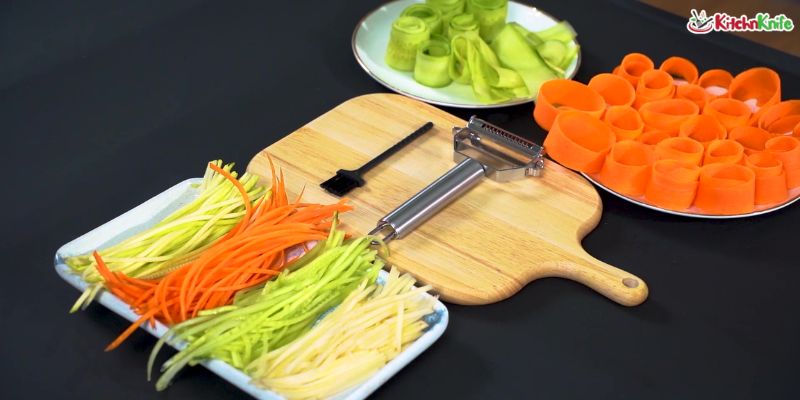
A julienne peeler is a small, handheld kitchen tool. It cuts fruits and vegetables into long, thin strips called julienne cuts. It looks like a regular vegetable peeler but with a serrated or toothed blade.
This guide covers everything you need to know. You will learn what it is, how it works, when to use it, and how to choose a good one.
What Is a Julienne Peeler?
A julienne peeler is a type of vegetable peeler with a special blade. The blade has a row of small teeth or slots. When you drag it across a vegetable, it creates thin, matchstick-like strips.
The word “julienne” comes from French cooking. It refers to a specific cutting style. The strips are usually about 2 to 3 inches long and 1/8 inch wide.
A julienne peeler is also called a:
- Julienne vegetable cutter
- Julienne cutter
- Veggie peeler with julienne attachment
- Julienne tool
It is not the same as a standard vegetable peeler. A regular peeler removes skin in flat strips. A julienne peeler slices through the flesh to make fine strips.
How Does a Julienne Peeler Work?
Using a julienne peeler is simple. You hold the vegetable in one hand. You drag the peeler down the surface with the other hand. The toothed blade grabs and cuts thin strips as it moves.
Most julienne peelers work best on firm vegetables. Think carrots, zucchini, cucumbers, and potatoes. They also work on many fruits.
The cutting motion is the same as peeling. Pull the blade toward you or push it away. Either way, the julienne cutter does the work fast.
Julienne Peeler vs. Regular Vegetable Peeler
Many people confuse the two tools. Here is how they differ.
| Feature | Regular Peeler | Julienne Peeler |
|---|---|---|
| Blade type | Smooth, flat | Toothed or ridged |
| Output | Thin flat strips | Thin matchstick strips |
| Main use | Remove skin | Create julienne cuts |
| Skill needed | Low | Low |
| Speed | Fast | Fast |
A regular fruit peeler or potato peeler removes the outer skin of produce. A julienne peeler slices into the body of the vegetable to create strips. Some tools combine both features in one handle. You flip from one side to the other.
What Can You Make With a Julienne Peeler?
A julienne peeler is more useful than many people think. Here are common uses:
Salads and slaws Use it to make julienne carrots for salads. The thin strips mix well with other ingredients. They are easy to eat and look great on the plate.
Stir-fry dishes Julienne vegetables cook fast in a hot pan. Use a julienne cutter to prep zucchini, peppers, or cabbage in seconds.
Garnishes Chefs use julienne strips to garnish plates. Thin pieces of carrot or cucumber add color and texture.
Noodle alternatives You can turn zucchini into long noodle-like strips. It is a low-carb swap for pasta. A julienne tool makes this quick and easy.
Asian-style dishes Many Asian recipes call for julienne vegetables. Use this veggie peeler to prep ingredients for spring rolls, pad thai, and noodle bowls.
Desserts and fruit plates A julienne peeler also works as a fruit peeler for citrus zest strips. Use it on lemons, limes, or oranges to add flavor to desserts and drinks.
Best Vegetables to Use With a Julienne Peeler
Some produce works better than others. Firm, dense vegetables give the best results.
Great choices:
- Carrots – the most popular choice for julienne carrots
- Zucchini – soft enough to cut smoothly
- Cucumbers – crisp results for salads
- Potatoes – works well for crispy potato strips
- Beets – creates colorful additions to salads
- Apples and pears – adds texture to fruit plates
- Daikon radish – common in Asian cooking
Avoid:
- Soft tomatoes or overripe fruit – too mushy to hold shape
- Leafy greens – not suitable for this type of cutting
- Onions – layers separate and make it hard to peel
Top Brands That Make Julienne Peelers
The market offers many options. A few brands stand out for quality and ease of use.
Zyliss is one of the most trusted names in kitchen tools. The Zyliss julienne peeler is popular among home cooks and professional chefs. It features a comfortable grip, a sharp toothed blade, and a safety cover for storage. Zyliss products are known for durability and ease of cleaning.
Other well-known brands include OXO, Kuhn Rikon, and Kyocera. Each offers a slightly different handle style and blade design.
When you shop for one, look for:
- A comfortable, non-slip handle
- A sharp, stainless steel blade
- A safety guard or cover
- Easy rinse-under-water cleanup
- Lightweight design for easy use
How to Use a Julienne Peeler: Step-by-Step
Follow these steps for clean, even strips every time.
Step 1: Wash your produce Clean the vegetable or fruit under cold water. Pat it dry.
Step 2: Peel the skin if needed Use a regular potato peeler or fruit peeler first to remove the skin. Some recipes keep the skin on.
Step 3: Hold the vegetable firmly Hold it at a slight angle on your cutting board. Or hold it in your hand over a bowl.
Step 4: Drag the julienne peeler Press the blade against the surface. Pull it down in one smooth stroke. Apply light but firm pressure.
Step 5: Repeat Work your way around the vegetable. Stop when you reach the seedy or soft core.
Step 6: Collect your strips Gather the strips and use them right away or store in cold water to keep them crisp.
Tips for Getting the Best Results
- Keep your blade sharp. A dull julienne cutter drags and tears instead of slicing.
- Use firm, fresh produce. Soft or old vegetables do not hold their shape.
- Work in long, even strokes. Short, choppy moves create uneven strips.
- Clean the blade after each use. Vegetable fibers can clog the teeth quickly.
- Use a peeler with a wide blade for faster results.
How to Clean and Store a Julienne Peeler
Cleaning is easy. Most julienne peelers are dishwasher safe. You can also rinse them under running water right after use.
Use a small brush to clean between the teeth. A toothbrush works well for this. Dry the blade before storing it to prevent rust.
Store it with a blade guard if one is included. This protects the teeth and keeps fingers safe when reaching into a drawer.
Julienne Peeler vs. Julienne Vegetable Cutter (Mandoline)
Some people also use a mandoline slicer with a julienne attachment. This is a larger, flat tool with adjustable blades. It works faster for big batches.
A handheld julienne peeler is better for:
- Small amounts of vegetables
- Quick prep without setting up a large tool
- Easy storage in a small kitchen
- Beginners who want a simple tool
A julienne vegetable cutter or mandoline is better for:
- Large batches of food
- More uniform thickness
- Professional or advanced cooking
Why Every Home Cook Needs a Julienne Peeler
A julienne peeler is affordable, small, and easy to use. It does one job very well. It turns whole vegetables into beautiful, uniform strips in seconds.
You do not need special skills to use one. You do not need a lot of counter space. You do not need to spend much money.
This little julienne tool can help you:
- Cook faster
- Make healthier meals with more fresh vegetables
- Improve how your dishes look
- Explore new recipes with confidence
Frequently Asked Questions (FAQ)
Q: What is the difference between a julienne peeler and a vegetable peeler? A: A regular vegetable peeler removes the outer skin of produce in flat strips. A julienne peeler has a toothed blade that cuts the flesh into thin matchstick strips. They look similar but do different jobs.
Q: Can a julienne peeler be used on fruit? A: Yes. It works as a fruit peeler for firm fruits like apples, pears, and citrus rind. Avoid soft or very ripe fruit.
Q: Is a julienne peeler safe to use? A: Yes, with basic care. The blade is sharp, so always peel away from your body. Use a blade guard when storing it.
Q: What is the best julienne peeler to buy? A: Zyliss makes one of the most popular options. It has a comfortable grip and stays sharp with regular use. OXO and Kuhn Rikon are also highly rated by home cooks.
Q: How do I keep julienne strips crisp? A: Place them in a bowl of cold water after cutting. They stay crisp in the fridge for up to 24 hours.
Q: Can I use a julienne peeler on potatoes? A: Yes. A julienne peeler works well on potatoes. It is great for making crispy shoestring fries or adding raw potato strips to salads.
Q: Do I need to peel vegetables before using a julienne peeler? A: Not always. For carrots and cucumbers, you can use the julienne peeler directly on the skin. For tougher skin, like on squash, peel first with a regular potato peeler or veggie peeler.
Final Thoughts
A julienne peeler is one of the most useful small tools in the kitchen. It is affordable, easy to use, and very versatile. Whether you are making julienne carrots for a salad, zucchini noodles for dinner, or citrus strips for a cocktail, this tool gets the job done fast.
If you do not own one yet, it is worth adding to your kitchen. Once you try it, you will wonder how you managed without it.