
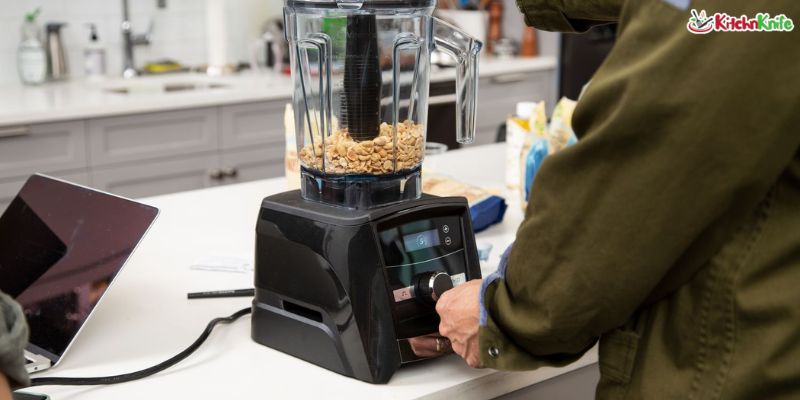
You are standing in the kitchen appliance aisle or scrolling through listings online. You see a Vitamix blender for over four hundred dollars. Next to it is a basic electric blender for thirty dollars. They both blend things. So why is one more than ten times the price of the other?
This is a question I hear constantly. And it is a fair one. The price gap between budget kitchen blenders and premium high-power models is genuinely significant. If you do not understand what drives that difference, the premium price looks hard to justify.
I have used both budget and high-power blenders extensively over the years. I have owned a Vitamix, tested a Breville blender, used Ninja blender models, and compared them all against basic smoothie blenders and small blender options. I know exactly what separates them and why the price difference exists.
In this article I will explain every factor that makes high-power blenders expensive. By the end you will understand exactly what you are paying for and whether it is worth it for your specific needs.
Let us get into it.
The Simple Answer First
High-power blenders cost more because they do more, last longer, and are built from better materials than budget options.
That is the short version. But the details matter. Let me break down each factor so you understand exactly where the price difference comes from.
Reason 1: Motor Power Is the Biggest Cost Driver
The motor is the heart of any kitchen blender. It is also the single biggest factor in the price difference between budget and premium models.
A basic personal blender or small blender typically has a motor between 300 and 600 watts. These motors handle soft fruit, ice, and simple smoothie tasks reasonably well. They struggle with harder ingredients like frozen vegetables, whole nuts, seeds, and fibrous greens.
A high-power blender like a Vitamix blender operates at 1,200 to 2,200 watts. A commercial blender used in professional kitchens runs even higher. That extra power is not just for show.
Higher wattage motors blend faster and more completely. They break down cell walls in vegetables and fruits more thoroughly, releasing more nutrients into the blend. They handle ice, frozen fruit, and tough ingredients without straining or stalling. They process nuts into smooth butter and seeds into fine powder.
Building a motor that delivers this level of consistent, sustained power costs significantly more than building a basic 300-watt unit. Premium motors also need more robust internal components to handle that power safely over years of daily use.
This is why motor wattage is the first thing serious blender shoppers look at. And it is the first reason premium blenders cost what they do.
Reason 2: Blade Quality and Engineering
Budget electric blender models use simple stainless steel blades that are adequate for basic tasks. They cut and chop reasonably well. But they wear down over time and do not create the same ultra-smooth results that high-power blenders achieve.
Premium blenders like the Vitamix and Breville blender use precision-engineered blade assemblies made from hardened stainless steel. The blade angles, thickness, and rotation geometry are carefully calculated to create a specific vortex inside the container that pulls ingredients down and through the blades repeatedly.
This vortex engineering is what produces the ultra-smooth texture that high-power blenders are famous for. It is not just about blade sharpness. It is about how the entire system moves ingredients during blending.
Designing and manufacturing precision blade assemblies at this level costs significantly more than stamping out basic budget blades. That engineering cost is part of what you pay for in a premium blender.
Reason 3: Container and Material Quality
The container of a budget smoothie blender or personal blender is usually made from basic plastic that can crack over time, retain odors, and scratch easily. The seals around the blade assembly are often thin and prone to leaking after repeated use.
High-power blenders use containers made from aircraft-grade polycarbonate or Tritan copolyester. These materials are:
- Impact resistant and highly durable
- BPA-free for food safety
- Resistant to staining and odor absorption
- Capable of handling hot liquids without warping or leaching
The blade assembly seal in a premium blender is also engineered to handle the force of a high-powered motor over thousands of cycles without failing. A cheap seal fails under sustained high-power blending. A premium seal is built to last for years of daily use.
These material choices add cost at every step of manufacturing. Better plastic costs more to source. Tighter engineering tolerances cost more to produce. Stronger seals cost more to design and test.
Reason 4: Sound Dampening and Build Construction
If you have ever used a budget electric blender, you know how loud it is. The motor screams, the container vibrates, and the whole unit rattles on the counter. This is the result of minimal sound dampening and lightweight construction.
Premium blenders from brands like Vitamix and Breville blender use heavy-gauge housing, rubber dampening feet, and in some models, dedicated sound enclosures that significantly reduce operating noise. The internal components are balanced and mounted with precision to reduce vibration at high speeds.
This construction quality serves two purposes. It makes the blender more pleasant to use, especially in a home environment where noise matters. And it reduces the mechanical stress on internal components during operation, which extends the lifespan of the machine.
Building a blender this way costs more. Heavier materials cost more. Sound dampening systems cost more to design and manufacture. Precision balancing of internal components adds to production costs. All of these factors show up in the retail price.
Reason 5: Longevity and Warranty
A budget personal blender or fruit blender brand model typically lasts one to three years with regular use. The motor overheats under sustained high-power tasks. The blades dull. The seals fail. The container cracks. You replace it.
A Vitamix blender is built to last for ten or more years of daily home use. Commercial blender models used in restaurants and cafés run for years under heavy daily workloads. The Vitamix brand backs this with a seven to ten year warranty on their full-size models. Breville offers substantial warranties on their premium blenders as well.
That warranty is not just a marketing promise. It reflects the actual reliability of the product. A manufacturer only offers a seven or ten year warranty when they are confident the product will not fail during that period. That confidence comes from quality materials, rigorous testing, and proven engineering.
The longer lifespan of a premium blender also changes the economics significantly. A budget blender at thirty dollars replaced every two years costs more over a ten-year period than a Vitamix at four hundred dollars that you buy once and use for a decade.
Reason 6: Research, Development, and Testing
Behind every premium blender is years of research and development. Brands like Vitamix have been refining their blender technology for decades. Every component of a Vitamix blender or Breville blender has been tested extensively before it reaches the market.
This includes:
- Motor efficiency and heat management testing
- Blade geometry optimization for different blending tasks
- Container fluid dynamics research
- Seal and gasket durability testing under thousands of cycles
- Noise and vibration reduction engineering
- Safety system development including thermal overload protection
Budget blender brands do not invest at this level. They use existing designs with minimal modification and compete primarily on price. That approach produces a product that works at a basic level but cannot match the performance, durability, or user experience of a blender backed by serious engineering investment.
Research and development costs are real and significant. They are part of what you pay for in every premium kitchen appliance, not just blenders.
Reason 7: Versatility Across More Tasks
A basic smoothie blender does one thing reasonably well. It blends soft fruit and liquids into a drinkable smoothie. Push it beyond that and it struggles or fails entirely.
A high-power blender is genuinely versatile. Here is what a Vitamix blender or similarly powered best blender machine handles without difficulty:
- Green smoothies with tough leafy greens like kale and spinach
- Frozen fruit and ice blended to a completely smooth texture
- Hot soups blended directly in the container from friction heat alone
- Nut butters made from raw almonds, cashews, or peanuts
- Seed and grain milling for flours and powders
- Hummus and thick dips with a completely smooth consistency
- Frozen desserts like banana ice cream and sorbets
- Baby food with ultra-smooth texture from any ingredient
- Whole juice with fiber retained rather than strained out
A portable blender or small blender handles perhaps two or three items on that list adequately. A full high-power blender handles all of them at a consistently excellent level.
That versatility replaces multiple other kitchen appliances. A high-power blender eliminates the need for a separate food processor, juicer, grain mill, and soup blender in many home kitchens. When you factor in the appliances it replaces, the effective cost drops significantly.
Reason 8: Brand Investment and After-Sales Support
Vitamix, Breville, and other premium blender brands invest in customer support, recipe development, and user education that budget brands do not provide.
When you buy a Vitamix blender, you get access to thousands of tested recipes, a detailed guide to getting the most from the machine, and customer support from a brand that has been making blenders for decades. Vitamix blender customer service is consistently rated highly by users who need assistance or warranty support.
Ninja blender models in the mid-range also offer solid customer support and a range of accessories and containers that expand what the machine can do over time.
Budget brands offer minimal after-sales support. If your blender fails, your options are limited. The brand may not offer replacement parts. Customer service may be difficult to access. The warranty may cover very little in practice.
The support infrastructure behind a premium brand has real value. It protects your investment and extends the useful life of the machine.
So Is a High-Power Blender Worth the Price?
The honest answer depends on how you use it.
You should invest in a high-power blender if you:
- Make smoothies, soups, or blended foods regularly
- Want ultra-smooth textures that budget blenders cannot achieve
- Plan to use the blender daily for years
- Want to replace multiple appliances with one machine
- Currently buy smoothies or blended drinks from cafés regularly
A budget personal blender or portable blender is enough if you:
- Blend soft fruit and liquids only a few times per week
- Need a blender for travel or occasional use
- Have a limited budget and basic blending needs
- Do not need the versatility that high-power models offer
For serious home cooks, daily smoothie drinkers, and anyone who wants the best blender machine results from their kitchen tools, a premium high-power blender is absolutely worth the investment. The performance, durability, and versatility justify the price every single day you use it.
Frequently Asked Questions
Why is the Vitamix blender so much more expensive than other blenders? Vitamix blenders use a high-wattage motor, precision-engineered blades, aircraft-grade containers, and commercial-quality construction. They are backed by a seven to ten year warranty and decades of engineering refinement. The combination of performance, durability, and longevity justifies the price for regular users. A Vitamix bought once often costs less over ten years than replacing budget blenders repeatedly.
Is a Ninja blender as good as a Vitamix? Ninja blender models are excellent mid-range options. They offer more power and better performance than budget blenders at a lower price than Vitamix. For most home smoothie and food prep tasks, a Ninja blender performs very well. Vitamix still edges ahead for professional-level performance, longevity, and warranty coverage. The right choice depends on your budget and how intensively you plan to use the machine.
What wattage is considered high power for a blender? Blenders above 1,000 watts are generally considered high power for home use. The best blender machine options for serious home use typically run between 1,200 and 2,200 watts. Commercial blender models used in cafés and restaurants operate at even higher wattages for sustained heavy use throughout the day.