
Last Updated on June 18, 2026 by Susanna Zuyeva
You press the button on your blender and in seconds, your smoothie is ready. But have you ever wondered what those fast spinning blades are actually made of?
The material of a blender blade affects how well it cuts, how safe it is, and how long it lasts. This guide breaks it all down clearly.
The Most Common Material: Stainless Steel
Almost every modern blender uses stainless steel blades. This is the industry standard for a reason.
Stainless steel is an alloy. It is mostly iron, with chromium and small amounts of carbon added. The chromium content (usually 10.5% or more) is what makes it “stainless.” It resists rust and corrosion even when it contacts water and acidic foods daily.
Why Stainless Steel Works So Well
Stainless steel blades offer several key benefits:
- Rust resistance — They do not corrode easily, even with daily washing
- Strength — They handle hard ingredients like ice, frozen fruit, and nuts
- Food safety — They do not react with foods or leach harmful chemicals
- Easy to clean — Smooth surface prevents bacteria buildup
- Durability — A good stainless steel blade lasts for years
Most blender brands including Vitamix, Blendtec, Ninja, and Oster use stainless steel blades.
Types of Stainless Steel Used
Not all stainless steel is the same. Blade manufacturers often use:
420 Stainless Steel — Most affordable. Used in budget blenders. It holds a decent edge but may dull faster with heavy use.
304 Stainless Steel — Also called 18/8 steel. More resistant to rust. Common in mid range blenders.
Hardened Stainless Steel — Heat treated to increase hardness. Used in high performance blenders like Vitamix. Stays sharp longer and handles tougher blending tasks.
Other Materials Used in Blender Blades
While stainless steel dominates the market, a few other materials appear in certain blenders.
Titanium Coated Blades
Some brands advertise titanium coated blades. These are usually stainless steel blades with a thin titanium coating on top.
The coating adds extra hardness and a sleek look. However, over time the coating can chip. Once chipped, the blade performs like standard stainless steel again.
Plastic Blades
A small number of blenders, especially personal blenders or spice blenders, use plastic blades. These are typically made from BPA free nylon or other food safe polymers.
Plastic blades are used only for soft tasks like blending cooked food or grinding dried herbs. They cannot handle ice or hard ingredients. They are not common in full size blenders.
Ceramic Blades
Rare, but they exist. Ceramic blades are extremely hard and stay sharp for a very long time. They do not rust at all. However, they are brittle. They can crack or chip if they hit something hard like a frozen chunk of food. They are expensive and mostly found in specialty kitchen tools.
Why Blade Material Matters
The material of a blade affects your blending results directly.
A dull or weak blade will not break down ingredients fully. You may end up with chunks in your smoothie or uneven results in your sauce.
A strong, sharp stainless steel blade creates a vortex that pulls ingredients down consistently. This gives you smooth, even results every time.
Material also affects food safety. Low quality metals can corrode over time and mix tiny particles into your food. A food grade stainless steel blade eliminates this risk.
Blade Shapes and Their Role
The material is only part of the story. The shape of the blade also matters.
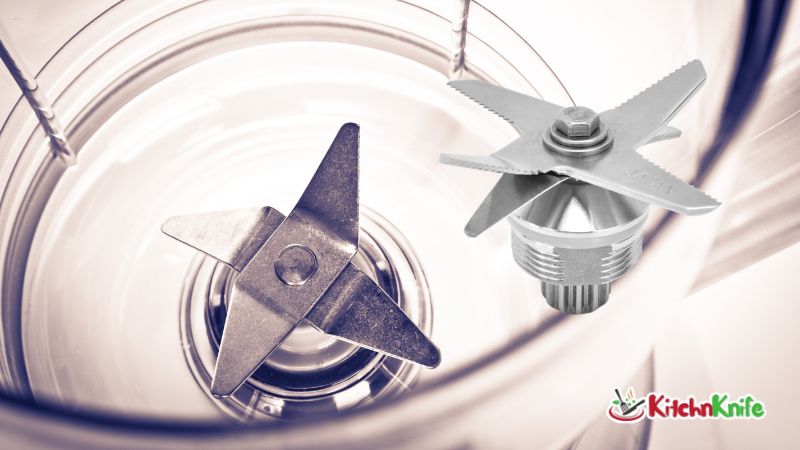
Most blenders use a cross shaped four point blade. Some high end blenders use a six point design. Certain blenders have angled or asymmetrical blades to improve the blending vortex.
The combination of a strong material and a smart blade shape produces the best blending results.
How to Keep Blender Blades in Good Shape
Even the best blades need proper care.
Rinse right after use. Do not let food dry on the blade. Rinse with warm water immediately.
Avoid the dishwasher when possible. High heat and harsh detergents can dull blades over time. Hand washing is gentler.
Do not blend hard solids dry. Always add liquid when blending ice or frozen ingredients. This protects the blade from unnecessary stress.
Inspect regularly. Look for chips, cracks, or warping. A damaged blade should be replaced right away.
Store carefully. Do not leave blades loose in a drawer. They are sharp and can be dangerous if handled carelessly.
FAQ
Can blender blades rust? Standard stainless steel blades resist rust well. However, if left wet for long periods or used in a very low quality blender, some surface rust can appear. Drying the blade after washing prevents this.
Are blender blades dishwasher safe? Many are labeled dishwasher safe, but frequent dishwasher use can dull the edge over time. Hand washing extends blade life.
How often should I replace blender blades? With normal use and good care, blades can last 3 to 5 years or more. Replace them if you notice uneven blending, visible damage, or reduced performance.
Are all blender blades the same size? No. Blades are brand and model specific. Always use the replacement blade designed for your exact blender model.