
Last Updated on August 18, 2026 by Susanna Zuyeva
Mid-century kitchens moved away from plain white appliances. Homeowners wanted color and personality. Brands like Revere Ware, Chantal, and Le Creuset released kettles in bold shades. Yellow became a favorite alongside orange, avocado green, and red.
These kettles were more than tools. They were style statements. A bright kettle on the stove made the kitchen feel lively and modern for its time.
Common Materials and Designs
Vintage yellow tea kettles were made using a few key materials:
- Enamel-coated steel – The most common choice. It gave a smooth, glossy yellow finish.
- Cast iron with enamel coating – Heavier, but very durable and great at holding heat.
- Aluminum – Lighter kettles, sometimes painted or anodized yellow.
- Copper with yellow accents – Less common, but valued by serious collectors.
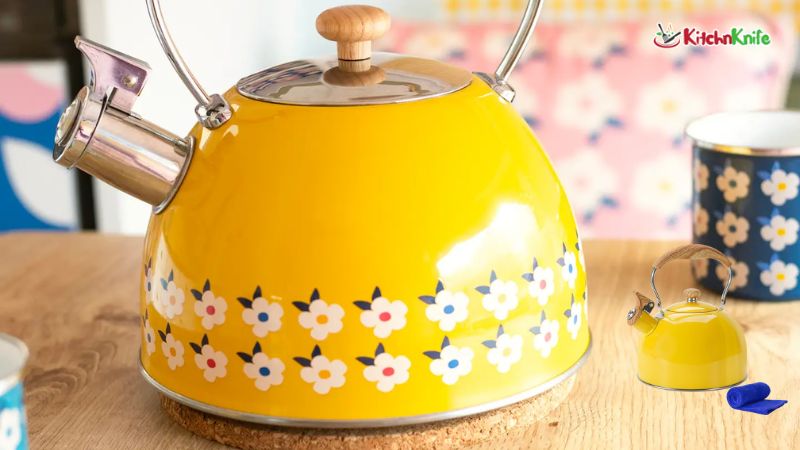
Design-wise, most had a rounded body, a wide base, and a curved spout. Many included a whistle feature. This let users know when the water was ready. Handles were often black, wood, or plastic for a heat-safe grip.
Why People Still Love Them
Vintage yellow tea kettles remain popular for several clear reasons.
- Nostalgia – They remind people of their grandparents’ kitchens.
- Décor value – Yellow adds warmth to modern farmhouse and retro kitchens.
- Durability – Many vintage kettles still work perfectly after 50+ years.
- Craftsmanship – Older kettles were often built with thicker metal and better joints.
- Sustainability – Reusing an old kettle is better for the environment than buying new.
Interior designers also use these kettles as accent pieces. Even non-tea drinkers display them on open shelves or stovetops for visual appeal.
How to Spot a Real Vintage Yellow Tea Kettle
Not every yellow kettle is truly vintage. Some are modern reproductions styled to look old. Here is how to tell the difference:
- Check the bottom stamp. Real vintage kettles often have a brand name, country of origin, or patent number.
- Look at the enamel texture. Older enamel has small imperfections. Reproductions are usually too smooth.
- Inspect the handle material. Bakelite handles suggest an older piece. Bakelite was common before the 1970s.
- Feel the weight. Vintage cast iron and thick steel kettles feel heavier than modern lightweight versions.
- Research the brand. Well-known vintage brands include Revere Ware, Copco, and Descoware.
If you’re shopping at a thrift store, flea market, or estate sale, these checks can help confirm authenticity.
Simple Care Tips for Vintage Kettles
Vintage kettles need gentle care to stay in good shape.
- Hand wash only. Avoid dishwashers, since heat and detergent can damage old enamel.
- Dry it fully after each use to prevent rust, especially on metal parts.
- Avoid high heat. Lower stovetop settings protect old enamel coatings.
- Descale occasionally. A mix of water and vinegar removes mineral buildup inside.
- Store with care. Keep it in a dry place to avoid moisture damage.
Following these steps helps preserve both function and appearance for years to come.
Final Thoughts
A vintage yellow tea kettle is more than an old kitchen tool. It’s a piece of design history. It reflects a time when kitchens embraced bold color and personality. Whether you use it daily or display it as decor, a well-kept vintage yellow kettle brings warmth, character, and a bit of nostalgia into any home.
If you’re starting a collection or simply love retro style, this classic piece is a smart and stylish choice.