
Last Updated on August 18, 2026 by Susanna Zuyeva
The material affects both looks and performance. Here are the most common types you will find.
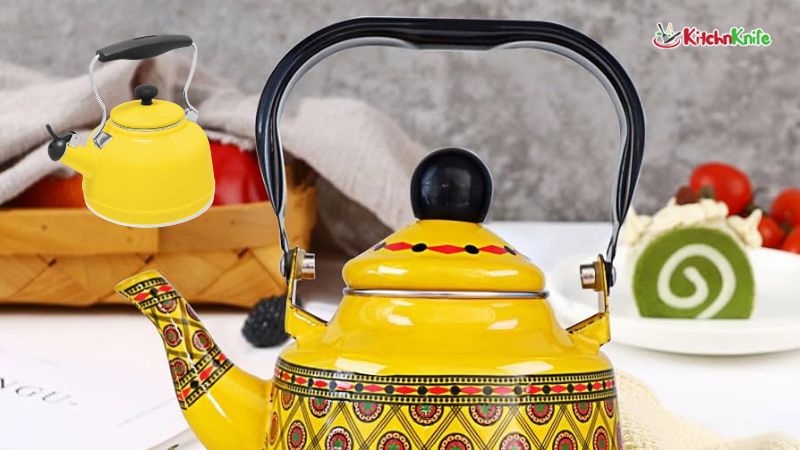
- Enamel on steel: Classic and durable. Common in bright yellow shades from mid century brands.
- Copper with enamel coating: Heats water fast and adds a warm glow.
- Aluminum: Lightweight but can dent easily over time.
- Stainless steel with painted finish: Rust resistant and easy to clean.
Enamel kettles are often the best pick for true vintage style. They hold color well and resist most stovetop damage.
Popular Styles and Eras
Different decades bring different shapes and details. Knowing these helps you choose a kettle that fits your taste.
- 1950s style: Rounded body, short spout, simple whistle top.
- 1960s and 1970s style: Bold patterns, wider base, bright gloss finish.
- Farmhouse style: Matte yellow finish with a wooden handle.
- Modern retro reissues: New kettles made to look vintage, often with better safety features.
Think about your kitchen’s overall look before you decide. A bold 1970s kettle may not suit a soft pastel kitchen.
Size and Capacity Tips
Size matters more than most buyers expect. A kettle that is too small means constant refills. One that is too large may take longer to heat.
- 1 to 2 quarts: Best for one or two people.
- 2 to 3 quarts: Good for small families or frequent tea drinkers.
- 3 quarts and up: Better for larger households or entertaining guests.
Check the base size too. Some vintage kettles have narrow bottoms that do not sit well on modern flat stovetops.
How to Spot Quality and Authenticity
Not every yellow kettle labeled “vintage” is truly old. Use these checks before you buy.
- Look for maker’s marks. Stamps on the bottom often show the brand and country of origin.
- Check the weight. Older enamel kettles usually feel heavier than new ones.
- Inspect the spout and handle. Original rivets and joints look slightly worn, not sharp or new.
- Ask about the seller’s source. Estate sales and antique shops often provide more history than online listings.
If a seller cannot explain the kettle’s age or origin, treat the claim with caution.
Care and Maintenance Tips
Proper care keeps a vintage kettle working and looking good for years.
- Hand wash only. Avoid dishwashers, since heat and detergent can damage old enamel or paint.
- Dry the kettle fully after each use to prevent rust near the spout.
- Avoid high heat on electric stovetops if the base is not flat.
- Check the whistle mechanism for buildup and clean it gently with a soft brush.
- Store in a dry cabinet, away from direct sunlight, to protect the color.
Small steps like these help preserve both function and value.
Where to Buy One
You can find vintage yellow kettles in several places.
- Antique shops: Often have verified pieces with known history.
- Estate sales: A good source for original, well kept kettles.
- Online marketplaces: Wide selection, but always check photos and seller reviews closely.
- Flea markets: Great for unique finds at lower prices.
Always ask for close up photos of the base and spout before buying online. These areas show wear and quality best.
Final Thoughts
A vintage yellow tea kettle is more than a kitchen tool. It adds color, story, and warmth to your daily routine. Focus on material, size, and authenticity when choosing one. With proper care, it can serve your kitchen for many more years to come.
Whether you find it at an estate sale or a local antique shop, the right kettle will bring a small dose of sunshine to your morning tea.