
Last Updated on August 11, 2026 by Susanna Zuyeva
Yellow tea kettles bring warmth and charm to any kitchen. Many collectors love them for their bright color and retro style. But how do you know if a yellow kettle is truly vintage? This guide will help you spot the real signs of age and value.
Why Yellow Tea Kettles Became Popular
Yellow kettles became a kitchen favorite in the 1950s and 1960s. Bright colors matched the cheerful design trends of that era. Brands like Chantal, Revere Ware, and Le Creuset made bold colored kettles. Yellow stood out as a symbol of sunshine and comfort in the home.
Check the Material
Material is one of the first clues to a kettle’s age.
- Enamel over steel: Common in mid century kettles. Look for a smooth, glossy coat.
- Cast iron: Heavier and often used in older, high end kettles.
- Aluminum: Lightweight and common in kettles from the 1940s to 1960s.
- Copper base: Found in premium vintage designs, often with a colored enamel exterior.
Hold the kettle. Older pieces often feel heavier than modern versions made with thinner metal.
Look for a Maker’s Mark
Flip the kettle over and check the bottom.
Most vintage kettles have a stamp, sticker, or engraving with the brand name. Look for:
- Country of origin (like “Made in France” or “Made in USA”)
- Patent numbers
- Old logos that differ from a brand’s current design
If the mark is worn or faded, that is often a sign of real age.
Study the Shape and Handle
Vintage kettles often have unique shapes not seen in newer models.
- Rounded bodies with a wide base were common in the 1950s.
- Bakelite handles were popular before plastic became standard.
- Riveted handles show older manufacturing methods.
Newer kettles often use molded plastic handles. Older ones use metal rivets or wood grips.
Inspect the Paint and Finish
Paint tells a story about age.
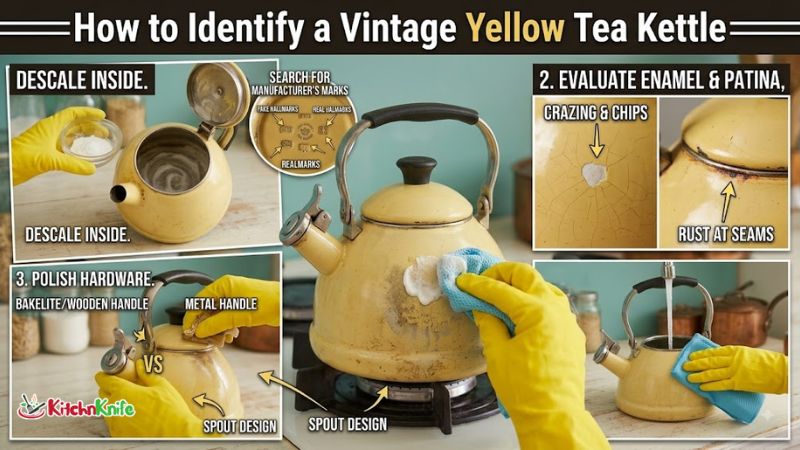
Look closely at the yellow finish. Vintage enamel often has:
- Small chips near the handle or spout
- A slightly uneven gloss
- Fine hairline cracks called crazing
These marks are natural and do not mean the kettle is damaged beyond value. In fact, collectors often see them as proof of authenticity.
Look for Wear and Age Signs
Age leaves clues all over a kettle.
Check for:
- Light rust spots under the base
- Small dents from years of use
- A worn whistle mechanism, if the kettle has one
- Scratches near the burner area
A kettle with zero wear may not be vintage at all. It could be a modern reproduction made to look old.
Check the Spout and Lid
Older kettles often have simple spout designs without extra safety features.
Look at the lid. Many vintage kettles have:
- A flat metal knob instead of plastic
- A snug but not perfectly sealed fit
- Hand fitted parts that show slight gaps
Modern kettles usually fit more precisely due to machine production.
Compare with Known Vintage Brands
Some brands are famous for yellow kettles. Comparing your kettle to their catalogs can help confirm its age.
Popular vintage kettle brands include:
- Chantal
- Revere Ware
- Le Creuset
- Copco
- Descoware
Search old catalogs or auction sites to compare shapes, colors, and marks.
Tips for Buying a Vintage Yellow Kettle
If you plan to buy one, keep these tips in mind.
- Ask the seller for the kettle’s history.
- Check for a maker’s mark before buying.
- Inspect the base for rust or heavy pitting.
- Avoid kettles with replaced parts, since they lower authenticity.
- Compare the price to similar listed items online.
A well kept vintage kettle can still work as a functional piece, not just a display item.
Conclusion
Identifying a vintage yellow tea kettle takes a careful eye. Check the material, maker’s mark, shape, and finish. Look for natural wear that shows real age. With these steps, you can confidently spot an authentic vintage piece and add a bright touch of history to your kitchen.