
Last Updated on August 11, 2026 by Susanna Zuyeva
What You Need Before You Start
Gather these simple items:
- White vinegar
- Baking soda
- Warm water
- Soft sponge or cloth
- Old soft toothbrush
- Dish soap
- Microfiber towel
Avoid steel wool or abrasive pads. These can scratch the enamel or strip the paint.
Step by Step Cleaning Process
1. Empty and Rinse
Empty any leftover water. Rinse the inside with warm water to loosen loose debris.
2. Make a Vinegar Solution
Mix equal parts white vinegar and water. Pour the mixture into the kettle until it is half full.
3. Boil the Solution
Place the kettle on the stove. Bring the mixture to a gentle boil for five to ten minutes. This step loosens mineral deposits inside.
4. Let It Sit
Turn off the heat. Let the solution sit for thirty minutes. This helps break down tough limescale.
5. Scrub Gently
Use a soft sponge to scrub the interior. For tight spots, use an old toothbrush.
6. Rinse Thoroughly
Rinse the kettle several times with clean water. Make sure no vinegar smell remains.
How to Remove Rust and Mineral Stains
Rust spots need extra attention. Follow these steps:
- Sprinkle baking soda on the rusted area
- Add a few drops of water to form a paste
- Gently rub with a soft cloth
- Rinse and dry completely
For stubborn rust, repeat the process. Never use bleach, since it can damage vintage metal and enamel coatings.
Cleaning the Spout and Lid
The spout often collects mineral buildup. Here is how to clean it:
- Dip the toothbrush in the vinegar solution
- Scrub inside the spout carefully
- Rinse with warm water
- Remove the lid and wash separately with warm soapy water
Dry all parts fully before reassembling.
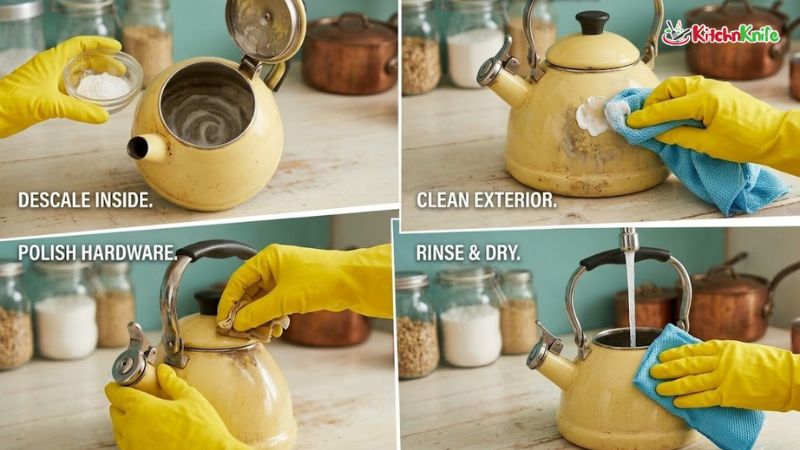
Polishing the Outer Finish
To bring back the bright yellow shine:
- Wipe the exterior with a damp microfiber cloth
- Add a small amount of dish soap for grease spots
- Buff dry with a clean towel
Avoid soaking the outer body if the kettle has exposed metal parts, since moisture can cause rust over time.
Tips to Prevent Future Buildup
Keep your vintage kettle looking fresh with these habits:
- Empty the kettle after each use
- Dry it completely before storing
- Wipe the exterior weekly
- Descale every few months using vinegar
- Store in a dry, ventilated space
These small habits protect both the finish and the metal underneath.
Final Thoughts
Cleaning a vintage yellow tea kettle does not require harsh chemicals or expensive tools. With vinegar, baking soda, and a gentle touch, you can restore its shine and keep it working well for years. Regular care preserves both its function and its timeless charm.
With the right routine, your kettle can stay a beautiful centerpiece in your kitchen for many more years to come.