
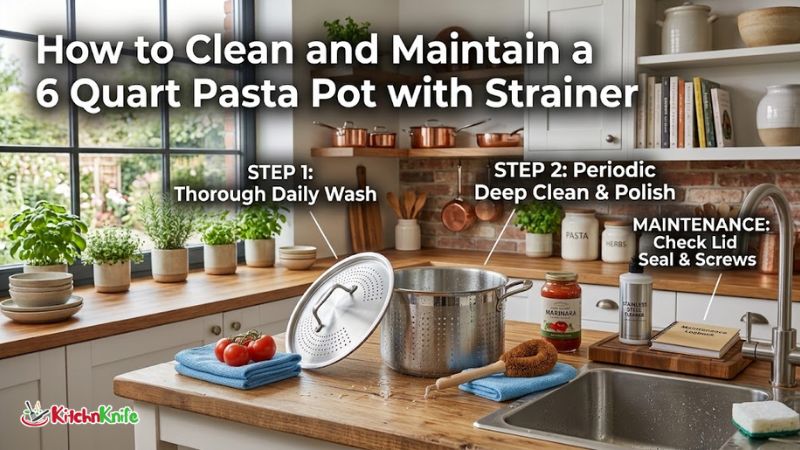
Last Updated on August 19, 2026 by Susanna Zuyeva
Why Proper Cleaning Matters
Food residue and hard water can leave stains on your pot. Over time, this buildup affects performance and appearance. Regular cleaning also stops bacteria from growing. A clean pot cooks better and lasts longer.
What You Need Before You Start
Gather these simple supplies:
- Warm water
- Mild dish soap
- Soft sponge or nonabrasive cloth
- Baking soda
- White vinegar
- Soft bristle brush for the strainer holes
- Dry towel
Avoid steel wool or harsh scrubbers. They can scratch the surface and dull the shine.
Step by Step Cleaning Guide
Follow these steps after every use:
- Let the pot cool completely before washing.
- Empty out any leftover water or food bits.
- Rinse the pot and strainer under warm water.
- Add a few drops of mild dish soap to a sponge.
- Wash the inside and outside gently in circular motions.
- Rinse thoroughly to remove all soap residue.
- Dry with a soft towel to prevent water spots.
This routine takes just a few minutes but protects your pot long term.
How to Clean the Strainer Insert
The strainer often traps small bits of pasta or vegetables. Here is how to keep it spotless:
- Remove the strainer from the pot.
- Rinse under running water to loosen debris.
- Use a soft brush to clean each hole.
- Soak in warm soapy water for five minutes if buildup remains.
- Rinse well and let it air dry.
Cleaning the strainer separately helps you reach every small gap.
Removing Tough Stains and Burnt Food
Sometimes food sticks to the bottom. Try this simple method:
- Fill the pot with warm water.
- Add two tablespoons of baking soda.
- Let it soak for 30 minutes.
- Scrub gently with a nonabrasive sponge.
- Rinse and dry as usual.
For extra shine, add a splash of white vinegar during soaking. It helps break down grease and mineral deposits.
Preventing Rust on Stainless Steel Pots
Rust can form if moisture stays on the metal too long. Follow these tips to avoid it:
- Always dry the pot fully after washing.
- Store it in a dry cabinet, not a damp area.
- Avoid soaking it for long periods.
- Wipe off water spots right after rinsing.
These small habits keep your pot rust free and looking new.
Daily Maintenance Tips
Small actions each day make a big difference. Try these simple habits:
- Wash the pot right after cooking.
- Avoid using metal utensils that can scratch the surface.
- Check the strainer holes for trapped food.
- Wipe the handles to remove grease buildup.
Consistency is the key to long lasting cookware.
Storage Tips to Extend Pot Life
Proper storage protects your pasta pot between uses. Keep these points in mind:
- Store the strainer inside the pot to save space.
- Use a soft cloth between stacked pots to avoid scratches.
- Keep the pot in a dry, ventilated area.
- Avoid placing heavy items on top of it.
Good storage habits reduce wear and keep your pot ready for the next meal.
Common Mistakes to Avoid
Many people damage their pots without realizing it. Watch out for these errors:
- Using abrasive scrubbers that scratch the finish.
- Leaving food to dry before washing.
- Storing the pot while still damp.
- Ignoring small rust spots early on.
Fixing these habits early can add years to your cookware’s life.
Final Thoughts
A 6 quart pasta pot with strainer is a valuable kitchen tool. With simple cleaning steps and mindful storage, it can last for many years. Regular care not only keeps it looking great but also makes cooking safer and more enjoyable.
Take a few extra minutes after each meal to clean and dry your pot. Your future self will thank you every time you cook a perfect pot of pasta.