
Last Updated on July 15, 2026 by Susanna Zuyeva
Why Bamboo Utensils Need Special Care
Bamboo is a natural material. It absorbs moisture. If it stays wet too long, it can crack, warp, or grow mold. That’s why bamboo needs different care than steel or silicone tools.
Good care keeps your utensils:
- Free from cracks and splinters
- Safe from bacteria and mold
- Smooth and comfortable to hold
- Useful for many years
Daily Cleaning Tips
Cleaning bamboo utensils is easy if you do it right after use.
Steps to follow:
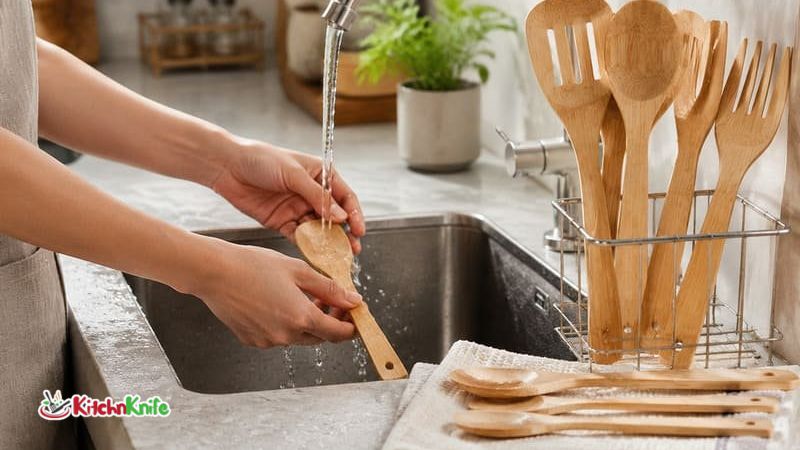
- Rinse the utensil under warm water right after cooking.
- Use a mild dish soap and a soft sponge.
- Avoid scrubbing too hard. Bamboo is softer than metal.
- Rinse well to remove all soap.
- Dry it right away with a clean towel.
Avoid this:
- Do not soak bamboo utensils in water.
- Do not put them in the dishwasher. Heat and steam damage the wood.
Deep Cleaning and Stain Removal
Sometimes bamboo utensils pick up stains or smells from food like turmeric, garlic, or tomato sauce. Here’s how to fix that.
For stains:
- Make a paste with baking soda and water.
- Rub it gently on the stain with a soft cloth.
- Let it sit for 10 minutes, then rinse and dry.
For odors:
- Rub the utensil with half a lemon.
- Or soak a cloth in white vinegar and wipe it down.
- Rinse and dry fully after.
These natural methods clean without harsh chemicals. They keep your utensils safe for food use.
Drying the Right Way
Drying is one of the most important steps in bamboo utensil care. Moisture left on bamboo can cause mold or cracking.
Best drying practices:
- Pat dry with a towel right after washing.
- Stand utensils upright in a holder so air reaches all sides.
- Avoid drying near direct sunlight or heat, which can cause warping.
- Let them air dry fully before storing.
Never store a damp bamboo utensil. Even a small amount of moisture can lead to mold over time.
Oiling and Seasoning Bamboo Utensils
Bamboo, like wood cutting boards, benefits from oiling. This step keeps the wood from drying out and cracking.
How to oil bamboo utensils:
- Clean and fully dry the utensil first.
- Use food-grade mineral oil or coconut oil. Avoid olive oil or vegetable oil, as they can turn rancid.
- Apply a small amount with a soft cloth.
- Let it soak in for a few hours or overnight.
- Wipe off any extra oil before use.
How often to oil:
- New utensils: once a week for the first month.
- After that: once a month, or when the wood looks dry or dull.
This simple habit keeps bamboo looking fresh and prevents splitting.
Proper Storage Tips
Where and how you store bamboo utensils matters just as much as cleaning.
Good storage habits:
- Keep utensils in a dry utensil holder or drawer.
- Avoid damp areas like near the sink or dishwasher.
- Do not store in sealed plastic containers, which trap moisture.
- Keep away from direct heat sources like stovetops or ovens.
Proper airflow helps bamboo stay dry and strong between uses.
Common Mistakes to Avoid
Many people damage bamboo utensils without knowing it. Watch out for these common errors:
- Soaking in water: This causes swelling and cracking.
- Dishwasher use: Heat and steam ruin the wood’s surface.
- Skipping oil: Dry wood becomes brittle and splits faster.
- Using near open flame: Direct heat can scorch or burn bamboo.
- Ignoring stains early: Stains set deeper the longer they sit.
Avoiding these mistakes helps your utensils last much longer.
Final Thoughts
Bamboo utensil care is simple once it becomes a habit. Wash gently, dry fully, oil regularly, and store in a dry space. These small steps protect your utensils from cracks, mold, and early wear.
With the right care routine, bamboo utensils can serve your kitchen well for many years. They stay safe, smooth, and ready for daily cooking.