
Last Updated on June 11, 2026 by Kathay Lee
You clean your kitchen tiles. They look wet and shiny at first. Then they dry and streaks appear everywhere.
It is one of the most frustrating cleaning problems. But it happens for a reason. And once you know the reason, you can fix it fast.
This guide shows you exactly how to clean kitchen tiles without streaks. It covers every tile type from backsplash tiles to porcelain tile floors. You will also find the best homemade and store-bought solutions that leave tiles looking spotless.
Why Do Kitchen Tiles Streak?
Streaks happen when residue is left behind on the tile surface. This residue comes from a few common causes.
- Too much cleaner. Using too much floor cleaner leaves a soapy film behind.
- Dirty mop or cloth. A dirty tool just spreads grime around.
- Hard water. Minerals in tap water dry on the surface and leave marks.
- Not rinsing well enough. Soap that is not fully rinsed dries as a streak.
- Wrong product for the tile type. Some cleaners are too harsh or too oily for certain tiles.
Fix the cause, and you fix the streaks.
What You Need Before You Start
Gather these items before you begin.
- Warm water
- White vinegar
- Dish soap (just a drop or two)
- A clean microfiber mop or cloth
- A second dry microfiber cloth
- A spray bottle
- Bucket (for floor tiles)
Microfiber is key. It picks up grime without leaving lint or residue behind. It is the best tool for streak-free results on any tile surface.
How to Clean Kitchen Wall Tiles Without Streaks
Wall tiles and backsplash tiles collect grease and cooking splatter every day. They also show streaks more clearly than floor tiles.
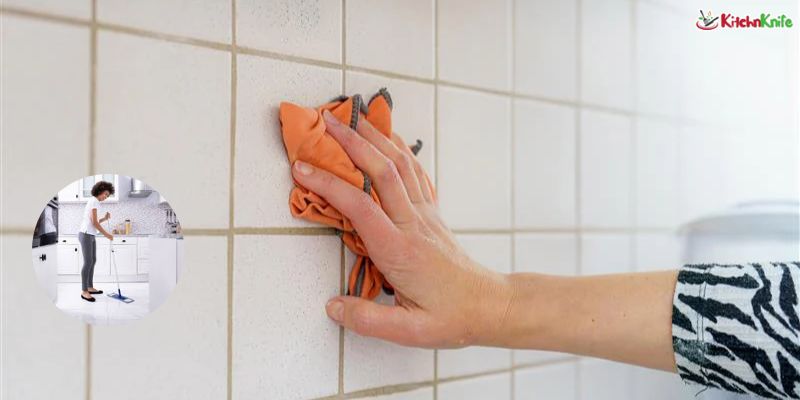
Step 1: Remove loose debris first. Wipe the wall tiles with a dry cloth. Remove dust, crumbs, or dry grease. This prevents you from spreading grime when you apply liquid.
Step 2: Mix your cleaning solution. Fill a spray bottle with one cup of warm water and one cup of white vinegar. Add just one drop of dish soap. Shake gently.
Step 3: Spray and wait. Spray the solution onto the backsplash tiles. Let it sit for one to two minutes. This breaks down grease and cooking residue.
Step 4: Wipe in one direction. Use a damp microfiber cloth. Wipe from top to bottom. Always wipe in one direction not in circles. Circular motions spread residue and cause streaks.
Step 5: Dry immediately. Use a second dry microfiber cloth. Wipe the tiles again right away. Do not let them air dry. Air drying leaves water spots and streaks behind.
This method works on ceramic wall tiles, subway tiles, and most types of backsplash tiles.
How to Clean Porcelain Tile Floors Without Streaks
Porcelain tile floors are durable but show streaks easily. Especially after mopping.
Step 1: Sweep or vacuum first. Always remove loose dirt before mopping. If you mop over dry dirt, you just push it around and it dries as a streak.
Step 2: Use the right floor cleaner ratio. Add one gallon of warm water to a bucket. Add half a cup of white vinegar. Skip the soap entirely for floors soap is the top cause of streaky porcelain tile floors.
Step 3: Wring the mop out well. A soaking wet mop leaves too much water on the floor. That water dries into streaks. Your mop should be damp, not wet.
Step 4: Mop in straight lines. Move the mop in straight lines across the floor. Work backward so you never walk on the area you just cleaned.
Step 5: Rinse with clean water. Go over the floor one more time with a clean mop dampened only in plain warm water. This removes any vinegar residue.
Step 6: Dry the floor. Use a dry microfiber mop or a fan to dry the floor quickly. The faster it dries, the less chance of streaks forming.
How to Clean Gloss Tiles Without Streaks
Gloss tiles look stunning. But they also show every fingerprint, water spot, and smear.
The trick with gloss tiles is to use very little liquid and dry them fast.
- Mix equal parts water and white vinegar in a spray bottle.
- Spray a very small amount onto the gloss tiles.
- Wipe immediately with a clean, damp microfiber cloth.
- Follow at once with a dry microfiber cloth.
- Buff in small circles only at the very end to bring out the shine.
Never use abrasive cloths or sponges on gloss tiles. They scratch the surface and make streaking worse over time.
How to Clean Marble Floors Without Streaks
Marble floors need special care. Vinegar and acidic cleaners damage marble. Do not use them here.
For marble floors, use this method instead.
- Mix a few drops of pH-neutral dish soap in warm water.
- Dampen a soft microfiber mop in the solution.
- Wring it out well. Marble and excess water do not mix.
- Mop in straight lines.
- Rinse with a clean damp mop and plain water.
- Dry immediately with a soft dry cloth or towel.
Never use vinegar, lemon juice, or any acidic floor cleaner on marble floors. Acid etches the surface and creates permanent dull marks.
Common Mistakes That Cause Streaks
Avoid these mistakes and your tiles will look cleaner every time.
| Mistake | Why It Causes Streaks |
|---|---|
| Using too much soap | Leaves soapy film that dries into streaks |
| Air drying tiles | Water minerals settle on the surface |
| Using a dirty cloth | Spreads old dirt and residue |
| Skipping the dry wipe | Moisture dries unevenly |
| Using wrong cleaner for tile type | Can leave oily or acidic residue |
Best Quick Streak-Free Spray Recipe
This works on most kitchen tiles including wall tiles, backsplash tiles, and ceramic floors.
Ingredients:
- 1 cup warm water
- 1 cup white vinegar
- 1 drop dish soap
- 5 drops lemon essential oil (optional, for scent)
How to use it: Spray lightly. Wipe with a damp microfiber cloth. Dry right away with a second cloth. Done.
This gives you a streak-free finish in under two minutes. It costs almost nothing. And it is safe for most tile surfaces.
Frequently Asked Questions
Q: Why do my tiles still streak after cleaning? The most common reason is using too much cleaner or not drying the tiles fast enough. Use less product and always follow up with a dry microfiber cloth immediately after wiping.
Q: Can I use vinegar on all kitchen tiles? Vinegar works well on ceramic, porcelain tile floors, and backsplash tiles. Do not use it on marble floors or natural stone tiles. The acid causes etching and dull patches.
Q: What is the best floor cleaner for streak-free tiles? A diluted vinegar and warm water solution is the best for most tiles. Use half a cup of vinegar per gallon of water. Skip dish soap for floors it leaves too much residue behind.
Q: How do I clean gloss tiles without leaving smears? Use a very light mist of diluted vinegar. Wipe with a damp microfiber cloth. Then immediately buff dry with a clean dry cloth. Gloss tiles need less liquid than any other tile type.
Q: How often should I clean kitchen tiles? Wipe backsplash tiles and wall tiles after cooking two to three times per week. Mop porcelain tile floors once a week. Deep clean grout lines once a month.
Q: Why do my marble floors always look dull after mopping? Acidic cleaners are likely the cause. Use only pH-neutral soap and warm water on marble floors. Dry them quickly with a soft cloth after every clean.
Final Thoughts
Streak-free kitchen tiles are easy to get. You just need the right method for your tile type.
Use vinegar and water for porcelain tile floors, ceramic wall tiles, and backsplash tiles. Use pH-neutral soap for marble floors. Always wipe with a microfiber cloth. Always dry right away.
Small changes in your routine make a big difference. Try these steps on your next clean. Your tiles will look better than they have in months.