
Last Updated on June 18, 2026 by Kathay Lee
Introduction
You want to buy a blender. But which one is right for you?
There are two main types: the personal blender and the regular blender. They look similar. But they work very differently.
This guide breaks down every key difference. By the end, you will know exactly which one fits your lifestyle and kitchen.
What Is a Personal Blender?
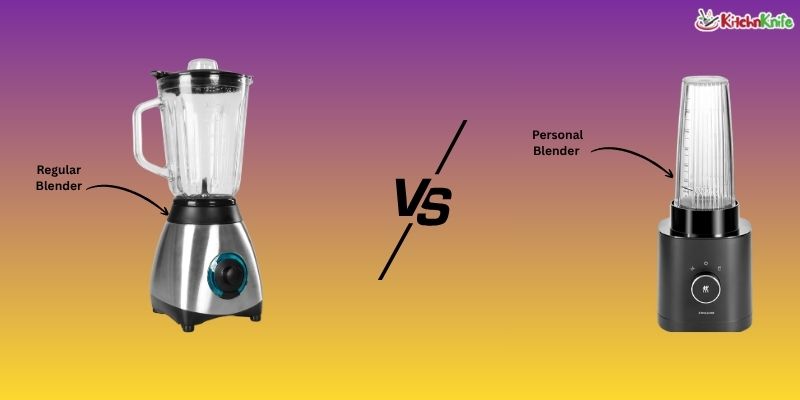
A personal blender is a compact, single-serve blending machine. It blends food or drinks directly into a cup or bottle. That cup then becomes your drinking vessel.
You blend. You drink. You go.
Popular models include the NutriBullet, Magic Bullet, and Ninja Personal Blender. They are built for speed and convenience.
What Is a Regular Blender?
A regular blender, also called a countertop blender or full-size blender, is a larger appliance with a stationary base and a wide jar. It sits on your counter and handles bigger batches.
Popular models include the Vitamix 5200, Blendtec Classic, and Ninja Professional Blender.
Regular blenders are designed for families, meal prep, and heavy blending tasks.
Key Differences at a Glance
| Feature | Personal Blender | Regular Blender |
|---|---|---|
| Size | Small and compact | Large, countertop |
| Capacity | 16 to 32 oz | 48 to 72 oz |
| Motor Power | 250 to 1000 watts | 500 to 1500+ watts |
| Speed Settings | 1 to 3 speeds | 3 to 10+ speeds |
| Best For | Single servings, smoothies | Family meals, soups, large batches |
| Price Range | $20 to $150 | $40 to $600+ |
| Ease of Cleaning | Very easy | Moderate |
| Portability | High | Low |
Size and Capacity
This is the most visible difference.
A personal blender is small. It fits easily in a bag or on a small countertop. It holds 16 to 32 ounces, just enough for one person.
A regular blender is much bigger. Its jar holds 48 to 72 ounces. That is enough for four to six servings at once.
If you live alone or have limited kitchen space, a personal blender wins here. If you cook for a family or host guests, the regular blender is the better choice.
Power and Motor Strength
Power matters when you want smooth results.
Most personal blenders run between 250 and 1000 watts. They handle soft fruits, yogurt, and leafy greens well. High-end personal blenders like the NutriBullet Pro 1000 can even crush ice.
Regular blenders are more powerful overall. They range from 500 to 1500 watts or more. A Vitamix or Blendtec can blend whole almonds, frozen fruit, and fibrous vegetables into a silky texture with ease.
For tough ingredients like nuts, seeds, or frozen chunks, the regular blender usually delivers better results.
Speed and Control Settings
Personal blenders keep it simple. Most have just one speed or a pulse function. You press a button and it blends. There is little room for customization.
Regular blenders offer more control. They come with multiple speed settings, pulse options, and sometimes pre-set programs for smoothies, soups, or ice crushing. This gives you more precision.
If you like to experiment with recipes or need specific textures, the regular blender gives you more flexibility.
Best Uses for Each Type
Personal blender is great for:
- Morning smoothies and protein shakes
- Single-serve green juices
- Baby food in small portions
- Nut butters in small quantities
- Travel or office use
Regular blender is great for:
- Large smoothie batches
- Soups and hot liquids
- Frozen drinks and margaritas
- Hummus and dips
- Nut milks and sauces
- Crushing large amounts of ice
Price Comparison
Personal blenders are more affordable. Budget options start at around $20. Premium models like the NutriBullet RX go up to $150.
Regular blenders have a wider price range. Entry-level models start around $40. Professional models like the Vitamix 750 can cost $500 or more.
If budget is tight and you only need single servings, a personal blender gives great value. If you want long-term durability and power, investing in a quality countertop blender pays off over time.
Which One Should You Buy?
Ask yourself these four questions:
- How many people will use the blender? Solo use points to a personal blender. A family needs a regular blender.
- What will you blend most? Soft smoothies? Personal blender. Soups, whole foods, or tough ingredients? Regular blender.
- How much counter space do you have? Small kitchen? Go personal. Bigger kitchen? A countertop model works great.
- Do you need to blend on the go? Personal blenders are portable. Regular blenders are not.
Final Verdict
Both blenders do their jobs well. The key is matching the right tool to your life.
Choose a personal blender if you want speed, convenience, and portability for everyday single-serve drinks.
Choose a regular blender if you want power, capacity, and versatility for a wide range of recipes and larger portions.
You cannot go wrong either way. You just need to know what you actually need before you buy.