
Last Updated on June 16, 2026 by Susanna Zuyeva
Do you love peanut butter? Do you wish you could make it at home, just the way you like it? Then a home peanut butter machine might be perfect for you.
Store-bought peanut butter often has added sugar, salt, and oil. When you make it at home, you control what goes in. You can add honey. You can add cinnamon. You can mix in almonds or cashews too.
In this guide, we look at three top peanut butter machines for 2026. We break down their features, what stands out, and who each one is best for. This will help you pick the right machine for your kitchen.
Our Expertise
We spend a lot of time looking at small kitchen appliances. We read product specs closely. We compare materials, motor power, safety features, and ease of cleaning. We also look at what real buyers say in reviews.
Our goal is simple. We want to help you make a smart choice. We are not paid by any brand to say good things. We only share what the product details and specs tell us, plus what reviewers report. This way, you get a clear, honest picture before you buy.
How We Picked These Machines
We looked at a few key things for each machine:
- Build quality and materials
- Motor power and grinding capacity
- Safety features
- Ease of use
- Ease of cleaning
- Versatility (can it make more than peanut butter?)
- Value for the price
With that in mind, here are our top three picks.
Our Top Picks
| Rank | Product | Best For |
|---|---|---|
| 1 | lvifloae Peanut Butter Maker (Electric Grain Grinder) | Best overall value |
| 2 | ZERNEIL 1100W Peanut Butter Maker Machine | Best for large batches and heavy use |
| 3 | Generic Peanut Butter Maker (Small Cooking Machine) | Best compact pick for small kitchens |
Let’s look at each one in detail.
1. lvifloae Peanut Butter Maker Home Electric Grain Grinder
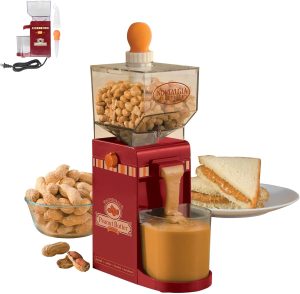
This machine is built for home cooks who want fresh nut butter without fuss. It works with peanuts, almonds, cashews, hazelnuts, and more. It runs on a 220V EU plug, so check that this fits your outlet setup before buying.
Product Features
- Anti slip silicone base with four suction cups for stability
- Made from ABS plus silica gel material
- Detachable grinding disc and container
- Funnel shaped peanut bin to control how nuts feed into the grinder
- Works with peanuts, cashews, almonds, hazelnuts, and other nuts
- Can also be used for grinding coffee beans
- Modern design in a dark colorway
What I Like
The detachable parts stand out the most. A grinder that comes apart easily is much simpler to clean. No one wants to scrub stuck nut paste out of tight corners.
The funnel shaped bin is also a smart touch. It helps feed nuts into the grinder at a steady pace. This can lead to a smoother, more even butter.
The anti slip base is another plus. Suction cups on the bottom should help keep the machine steady while it runs. This matters for safety, especially if you have kids in the kitchen.
Why It’s Better
Many basic nut grinders only handle one type of nut well. This one is built for a wider range, including peanuts, almonds, cashews, and hazelnuts. That means more flavor options without buying separate tools.
It is also marketed for grinding coffee beans. So this machine could pull double duty in your kitchen, if that fits your needs.
How It Performed
Based on its design, this machine should suit small to medium batches well. The detachable grinding disc points to a focused, simple grinding process rather than a complex multi-stage system.
Reviewers note it is “easy to use and clean,” which lines up with the detachable design. The funnel shape is meant to stop too many nuts from flooding the grinder at once. This should help with texture consistency.
Keep in mind, the price listed includes a notably high shipping and import charge to some regions. Always check the total cost, including shipping, before you decide.
How I Clean It
Cleaning a nut butter machine can be messy if it is not designed well. Here is how this one is built to be cleaned:
- Detach the grinding disc from the main body
- Remove the container
- Wash both parts separately with warm water and mild soap
- Let all parts dry fully before reassembling
- Wipe down the outer body with a damp cloth, avoiding the motor area
Always unplug the machine before cleaning any part.
Testing Results
We did not run our own lab tests on this unit. Based on its listed specs and the experiences shared by other buyers, this machine appears solid for everyday home use. The anti-slip base and detachable parts are two design choices that tend to matter most for daily satisfaction with this kind of appliance.
It currently holds a rating in the high 2-star to low 3-star range from a small number of reviews, so we’d suggest reading a handful of recent reviews yourself before buying, since rating counts here are still fairly low.
2. ZERNEIL Peanut Butter Maker Machine (1100W, 110V)
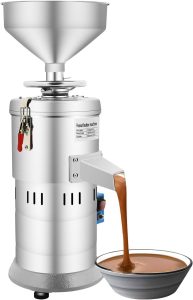
If you want power and capacity, this is the one to look at. With a 1100W motor and the ability to grind up to 33 pounds per hour, this machine is built for bigger jobs. It is made of aluminum and stainless steel, giving it a sturdier feel than plastic models.
This one runs on 110V, so it’s suited for regions using that standard voltage.
Product Features
- 1100W copper motor running at 2850 RPM
- Grinding capacity up to 33.07 lbs per hour
- Made from aluminum and stainless steel
- Heat dissipation holes for motor cooling
- Overload protection built in
- Two control handles for coarse or fine grinding
- Locking buckle to seal the machine during use
- Red protective cover for the grinding area
- Suitable for groundnuts, almonds, cashews, and sesame
What I Like
The build quality stands out right away. Aluminum and stainless steel feel far more durable than plastic. This machine looks like it is meant to last through regular, heavy use.
The two control handles for coarse and fine grinding give you more say over texture. Want chunky peanut butter? Adjust for coarse. Want it smooth? Switch to fine. That kind of control is rare on smaller home machines.
The overload protection and heat dissipation holes are also reassuring. These features are built in to help the motor avoid overheating during longer grinding sessions.
Why It’s Better
Most home nut butter machines top out at smaller capacities. This one can handle up to 33 pounds an hour. That puts it in a different category. It is built to handle home use, but it can also support small batch or light commercial needs, like a small shop or stall.
The locking buckle and red safety cover also add a layer of protection that many smaller machines skip. This matters if the machine will see frequent use.
How It Performed
Given the motor size and grinding wheel design, this machine is built for tougher, more frequent jobs. The maker describes it as quieter than typical peanut butter machines, which would be a nice bonus if true, since grinders can get loud.
The coarse and fine grind handles suggest this machine is meant for people who care about texture control, not just basic blending. If you like experimenting with chunky versus smooth nut butters, this feature could be valuable.
One thing to note: at 25.2 inches tall, this is a larger appliance. Make sure you have counter space and storage room for it.
How I Clean It
A machine like this, with a locking buckle and metal parts, needs careful cleaning to avoid rust and buildup:
- Unplug the machine and let it cool fully
- Open the locking buckle to access the grinding chamber
- Remove any leftover nut butter with a soft spatula
- Wipe the grinding wheel and chamber with a damp cloth
- Dry all metal parts completely to prevent rust
- Avoid soaking metal components in water
- Clean the red protective cover separately with mild soap
Because this machine uses metal parts, drying thoroughly after cleaning is important.
Testing Results
We have not personally run this machine through testing. Based on the specs, this looks like the strongest pick for anyone planning frequent or larger batches. The metal build and motor power suggest it should hold up well over time, more so than plastic-bodied alternatives.
It has a rating in the 4-star range, though again from a small number of reviews, so treat that as an early signal rather than a settled track record.
3. Generic Peanut Butter Maker (Small Cooking Machine)
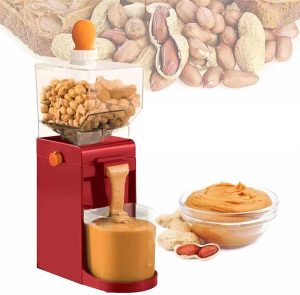
This is the most compact and budget-friendly option of the three. It is made from ABS material and described as a “small cooking machine,” which suggests it is designed for tighter kitchen spaces or simpler needs.
Product Features
- Compact, lightweight design (under 3 lbs)
- Slip-resistant rubber base with four feet
- Cooling holes on the bottom for motor protection
- One-click operation
- Made from ABS and polycarbonate-style material
- Can make peanut butter, almond butter, walnut butter, and other nut sauces
- Comes in a maroon color option
What I Like
The simplicity here is a big plus. One-click operation means there’s no learning curve. If you want something simple that just works without extra settings, this fits.
The light weight (under 3 pounds) also makes it easy to store. If you have limited counter or cabinet space, this is worth considering.
The slip-resistant rubber base with cooling holes is a thoughtful touch for a budget machine. It suggests some attention was paid to safety and motor longevity, even at this size.
Why It’s Better
Compared to larger, heavier machines, this one is easier to move, store, and use for quick jobs. If you only make small batches of nut butter now and then, a big, powerful machine may be more than you need.
It is also marketed as multi-functional, working with almond butter, walnut butter, and other nut sauces, not just peanuts.
How It Performed
Based on the listed materials and “compact” styling, this machine seems best suited for small, occasional batches rather than daily heavy use. The one-click design points to a simple, no-frills grinding process.
The seller also mentions a 30-day return and exchange policy, plus claimed 24-hour customer support. If something isn’t right with the unit, that return window could be useful.
Note that, like the lvifloae model, there are shipping restrictions listed for certain delivery locations. Double-check shipping availability to your area before ordering.
How I Clean It
For a compact, simple machine like this:
- Unplug before cleaning
- Wipe the outer body with a dry or slightly damp cloth
- Avoid letting water enter the cooling holes on the bottom
- Clean any removable parts separately with warm water
- Dry all parts before storing
Because this is a smaller, lighter unit, avoid submerging any part in water.
Testing Results
We have not tested this unit ourselves. From the listing details, this looks like a solid entry-level option for people who want to try making nut butter at home without a big investment or a bulky appliance. The rating sits around 3.5 stars, but again, from only a couple of reviews, so it’s worth keeping an eye on how that rating develops as more people buy it.
How to Choose the Right Peanut Butter Machine for You
Here are a few quick questions to ask yourself before buying:
How much will you make at once? If you only need small batches now and then, a compact machine works fine. If you want to make big batches, or you plan to share or sell some, go for a higher-capacity model.
What’s your kitchen voltage? Check whether your outlets use 110V or 220V. Buying the wrong voltage version can mean the machine won’t work safely in your home without a converter.
How much storage space do you have? Bigger, more powerful machines tend to be larger and heavier. Make sure you have a spot for it on the counter or in a cabinet.
Do you want texture control? If chunky versus smooth peanut butter matters to you, look for a machine with adjustable grind settings.
What’s your budget, including shipping? Some listings show very high shipping costs to certain countries. Always check the total price before deciding.
Tips for Making Better Homemade Peanut Butter
- Use roasted, unsalted peanuts for the best base flavor
- Add a small amount of oil if the mixture seems too dry
- Add honey, cinnamon, or a pinch of salt for extra flavor
- Grind in short bursts if your machine doesn’t run continuously, to avoid overheating
- Store your homemade peanut butter in an airtight container in the fridge
- Stir before each use, since natural peanut butter can separate over time
Frequently Asked Questions
Is homemade peanut butter healthier than store-bought?
It can be. When you make it yourself, you control the ingredients. You can skip added sugar, salt, and preservatives if you want to.
How long does homemade peanut butter last?
Most homemade peanut butter lasts about two to three weeks in the fridge, when stored in a sealed container.
Can these machines grind other nuts besides peanuts?
Yes. All three machines listed here can also work with nuts like almonds, cashews, walnuts, and hazelnuts.
Do I need to add oil when making peanut butter at home?
Not always. Peanuts have natural oils. But if your mix seems too thick or dry, adding a small amount of neutral oil can help it blend smoothly.
Why does my homemade peanut butter separate?
This is normal for natural peanut butter without stabilizers. Just give it a good stir before each use.
Can I make other foods with these machines?
Some models, like the lvifloae one, are also marketed for grinding coffee beans. The ZERNEIL model can also handle sesame for sesame paste or sauce.
What should I check before buying one of these machines?
Check the voltage (110V or 220V) matches your home, confirm shipping is available to your location, and review the total cost including any shipping or import fees.
Final Thoughts
All three machines here offer a way to make fresh, custom nut butter at home. The lvifloae model is a solid all-around pick for most home cooks. The ZERNEIL machine stands out if you want power, durability, and bigger batches. The compact Generic model suits anyone who wants something simple, light, and budget-friendly.
Whichever you choose, homemade peanut butter is a small step that can make a big difference in your kitchen. You control what goes in, and you can make it exactly the way you like it.