
Last Updated on June 16, 2026 by Susanna Zuyeva
Greasy kitchens are messy, sticky, and hard to clean. Grease also attracts dust and bacteria. The good news is that you can stop it before it spreads. With a few smart habits, your kitchen can stay clean and fresh all year.
Why Grease Builds Up So Fast
Cooking releases tiny oil particles into the air. These particles land on walls, cabinets, and stovetops. Over time, they mix with dust and form a sticky film. Frying, grilling, and sautéing create the most grease. Poor airflow makes it worse.
Once grease sits for a few days, it becomes harder to remove. That is why quick action matters.
Daily Habits That Stop Grease Early
Small daily steps make a big difference. Try these simple habits:
- Wipe down the stove after every meal
- Clean splatters right after cooking
- Use lids on pots and pans when possible
- Turn on the exhaust fan before you start cooking
- Open a window for fresh airflow
These habits take less than five minutes but save hours of scrubbing later.
Best Cleaning Tools and Products
Choosing the right tools helps you clean faster and smarter. Here are some helpful options:
- Microfiber cloths trap grease better than paper towels
- Dish soap and warm water cut through light grease easily
- Baking soda paste works well on stubborn spots
- White vinegar spray breaks down grease naturally
- Degreaser sprays are great for heavy buildup
Always test a new cleaner on a small area first. This helps protect painted walls and finished surfaces.
Deep Cleaning Tips for Tough Spots
Some areas need extra attention. These spots collect grease the fastest.
Stovetop and Range
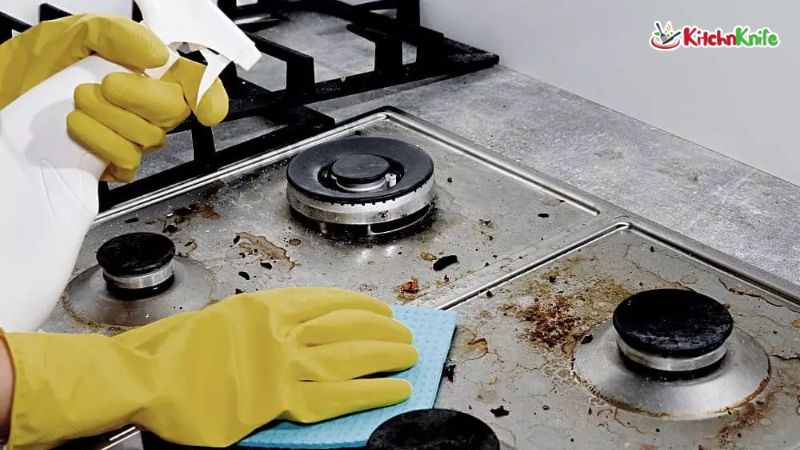
Clean burners and knobs weekly. Soak grates in warm soapy water for thirty minutes. This loosens grease without hard scrubbing.
Range Hood and Filters
Grease often hides inside the hood filter. Remove it monthly and soak it in hot water mixed with degreaser. A clean filter improves airflow and reduces smoke buildup.
Cabinet Surfaces
Grease sticks to cabinet doors near the stove. Wipe them weekly with a vinegar and water mix. This keeps wood and laminate looking new.
Walls and Backsplash
A light layer of grease forms on walls over time. Use a damp cloth with mild soap to wipe them down every week. For tile, a baking soda paste works well on grout lines.
Floors
Grease can drip onto floors near the stove. Mop weekly using warm water and a few drops of dish soap. This prevents slippery spots and sticky residue.
Smart Kitchen Setup Changes
Sometimes prevention starts with how your kitchen is arranged. Consider these upgrades:
- Install a strong range hood with good airflow
- Add a removable splatter guard near the stove
- Use a stove mat to catch drips
- Keep frequently used pans covered with lids
- Store oils and sauces away from open flames
These small changes reduce the amount of grease that escapes into the air.
Final Thoughts
Preventing grease build up does not require fancy tools or hours of work. Small daily habits, smart tools, and a few weekly cleaning routines can keep your kitchen fresh and shiny. Start with simple steps like wiping surfaces daily and using your exhaust fan. Over time, these habits will protect your kitchen and make deep cleaning much easier.
A clean kitchen is a happy kitchen. With consistent care, you can enjoy cooking without worrying about sticky surfaces or stubborn grease stains.