
Last Updated on August 24, 2026 by Susanna Zuyeva
Good coffee at home should not be hard to make. But picking the right espresso machine can feel confusing. There are so many brands. So many features. So many prices.
This guide makes it simple. I looked closely at three popular home espresso machines. I compared their features, their prices, and their real buyer ratings. Below, you will find clear picks for different needs and budgets.
Whether you want a solid steel machine built to last, or a cheap and cheerful starter model, this guide will help you choose with confidence.
Our Expertise
This guide is built on careful research, not guesswork. Here is how we picked these machines:
- We reviewed official product specs from each brand.
- We checked verified customer ratings and review counts.
- We compared price, build quality, and key features side by side.
- We focused on machines that are popular right now with real buyers.
We are not baristas by trade. We are coffee lovers who want to help you spend your money wisely. Every claim below is based on manufacturer data and public buyer feedback, not personal use. We link only to real product pages so you can check details yourself before buying.
Our Top Picks at a Glance
| Machine | Best For | Rating | |
|---|---|---|---|
| Gaggia RI9380/46 E24 | Best Overall / Most Durable | 4.4 stars (3,170 reviews) | |
| Gaggia Espresso Evolution | Best for Programmable Brewing | 3.1 stars (50 reviews) | |
| CASABREWS 3700 Essential | Best Budget Pick | 4.3 stars (3,645 reviews) |
Now let’s break down each one in detail.
1. Gaggia RI9380/46 E24 Espresso Machine – Best Overall
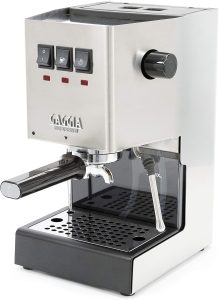
This is the most premium machine on our list. It is made in Italy with a solid steel housing. That means it should hold up well over years of daily use.
Product Features
- Solid steel housing, made in Italy
- 9 bar espresso extraction pressure
- Stainless steel 58mm commercial-style portafilter
- Commercial three-way solenoid valve
- Commercial steam wand for milk frothing
- 2.1 liter water tank
- Available in five colors, including Brushed Stainless Steel and Thunder Black
What We Like
- Built like a commercial machine. The 58mm portafilter and solenoid valve are features usually found on cafe equipment, not home machines.
- Strong buyer trust. Over 3,000 buyers have rated it, and the average score is 4.4 out of 5 stars.
- Large water tank. At 2.1 liters, you will not need to refill it often.
- Solid steel build. This should mean less plastic wear and a longer machine life.
Why It’s Better Than the Competition
Many home espresso machines use plastic parts to cut costs. This model uses steel housing and commercial-grade internal parts instead. That is a big deal if you want a machine that lasts for years, not just months.
The 9 bar extraction pressure also sits in the sweet spot that most espresso experts recommend for proper crema and flavor extraction.
Who Should Buy This
This machine fits best for:
- Coffee lovers who drink espresso daily
- Buyers who want a machine built to commercial standards
- Anyone who values steel construction over plastic parts
- Buyers comfortable spending closer to $450–$530 depending on color
How to Clean It
Based on the manufacturer’s guidance for this model:
- Rinse the portafilter after every use.
- Wipe down the steam wand right after frothing milk, before it dries.
- Empty and rinse the drip tray daily.
- Descale the internal boiler every 1–3 months, depending on your water hardness.
2. Gaggia Espresso Evolution – Best for Programmable Brewing
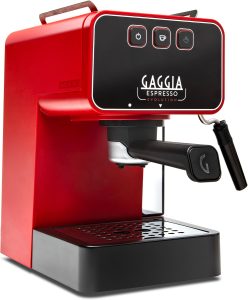
This model sits in the middle of our list on price. It brings smart features like PID temperature control, which is normally found on higher-end machines.
Product Features
- Made and designed in Italy
- PID-controlled boiler for steady brewing temperature
- Automatic pre-infusion function
- Memo function to save your preferred shot volume
- 1.2 liter water tank
- Auto shut-off and programmable settings
What We Like
- PID temperature control. This keeps water temperature steady, which helps avoid burnt or weak shots.
- Pre-infusion feature. The machine gently wets the grounds before full pressure kicks in. This can lead to a more even, balanced extraction.
- Memo button. Program your ideal shot size once, and repeat it with a single press every time.
- Auto shut-off. Good for safety and energy savings if you forget to turn it off.
Why It’s Better Than the Competition
Pre-infusion and PID control are features you usually only see on machines priced well above $300. Having them here, at $249, makes this a strong pick if you care more about shot consistency than raw build weight.
Who Should Buy This
This machine may suit:
- Buyers who want consistent shots without manual guesswork
- Anyone who wants programmable brewing without a steep price tag
- Coffee drinkers who prefer a smaller footprint (10″D x 7.8″W x 11.9″H)
One honest note: this model has fewer reviews than the other two on this list, so it is worth reading current buyer feedback on the product page before you decide.
How to Clean It
- Rinse the portafilter basket after each shot.
- Wipe the drip tray and remove any coffee grounds daily.
- Run a descaling cycle every 1–2 months, following the manual’s instructions.
- Keep the water tank clean and dry it fully before refilling.
3. CASABREWS 3700 Essential – Best Budget Pick
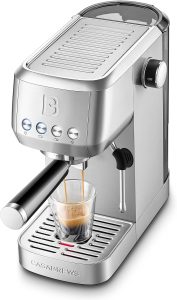
If you want to try espresso at home without spending a lot, this is the machine to consider. It is Amazon’s Choice in its category, and thousands of people bought it last month alone.
Product Features
- 20 bar Italian-style pump pressure
- 1350W heating system
- Powerful steam wand for milk frothing
- 43.9 oz removable water tank
- One-cup and two-cup brewing filters included
- Comes with portafilter, tamper, and spoon
- Available in five colors
What We Like
- Very affordable. At under $100, it is the cheapest option here by a wide margin.
- High buyer volume. With 3,645 ratings and thousands of recent purchases, it clearly works well for many people.
- Complete starter kit. It comes with everything you need to begin, including a tamper and both filter sizes.
- Compact design. At 12.6″D x 5.7″W x 12.5″H, it fits easily in small kitchens.
Why It’s Better Than the Competition
This machine wins on value. You get a 20 bar pump, a steam wand for lattes and cappuccinos, and a large 43.9 oz tank, all for around $100. For someone new to espresso, that is a low-risk way to start.
Who Should Buy This
This machine is a good fit for:
- First-time espresso machine buyers
- Small kitchens or apartments
- Anyone who wants milk-based drinks like lattes and cappuccinos at home
- Budget-conscious buyers who still want a steam wand
How to Clean It
The manufacturer recommends a “first use cycle” before your first coffee. After that:
- Remove the rubber plug at the tank base only during first setup, as instructed in the manual.
- Rinse the portafilter and filter baskets after each use.
- Clean the steam wand immediately after frothing to prevent dried milk buildup.
- Remove and wash the drip tray regularly.
- Check the brand’s official user guide videos for detailed care steps.
How to Choose the Right Espresso Machine for You
Still not sure which one fits your needs? Here is a simple way to decide:
- Want the most durable, commercial-style machine? Choose the Gaggia RI9380/46 E24.
- Want smart features like PID control at a mid-range price? Choose the Gaggia Espresso Evolution.
- Want to try espresso at home on a small budget? Choose the CASABREWS 3700 Essential.
Think about how often you will use it, how much counter space you have, and how much you want to spend. All three machines serve different types of buyers well.
Frequently Asked Questions
1. What does “bar pressure” mean in an espresso machine?
Bar pressure measures how much force pushes water through the coffee grounds. Most experts agree that 9 bars is the ideal pressure for classic espresso extraction.
2. Is a higher price always better for espresso machines?
Not always. Higher prices often mean better materials or extra features. But budget machines, like the CASABREWS 3700, can still make great espresso for casual drinkers.
3. Do I need a steam wand?
Only if you want milk-based drinks like lattes or cappuccinos. All three machines in this guide include one.
4. How often should I descale my espresso machine?
Most manufacturers suggest descaling every 1 to 3 months. This depends on how hard your tap water is and how often you use the machine.
5. What is PID control, and do I need it?
PID control keeps your water temperature steady during brewing. It is helpful if you want very consistent shots, but it is not required for good espresso.
6. Can beginners use these machines easily?
Yes. All three machines are designed for home use. The CASABREWS model is especially beginner-friendly due to its low price and simple setup.
7. Are these machines good for small kitchens?
Yes. All three have compact dimensions under 15 inches tall, making them suitable for standard kitchen counters.
Final Thoughts
Choosing an espresso machine comes down to your budget, your daily habits, and how much you care about extra features. The Gaggia RI9380/46 E24 offers commercial-grade durability. The Gaggia Espresso Evolution brings smart brewing technology at a mid-range price. The CASABREWS 3700 Essential gives new buyers an affordable way to start.
Whichever one you pick, check the current price and latest buyer reviews on the product page before buying, since prices and stock can change.