
Last Updated on August 20, 2026 by Susanna Zuyeva
Why Material Matters for a Pasta Pot
A pasta pot works hard. It holds boiling water, handles heavy pasta loads, and often gets lifted while full and hot. The strainer insert adds extra weight and stress too. Weak materials can warp, dent, or wear out fast under these conditions.
Good material choice means:
- Even heat distribution
- Long-lasting durability
- Safe, easy handling
- Better cooking results
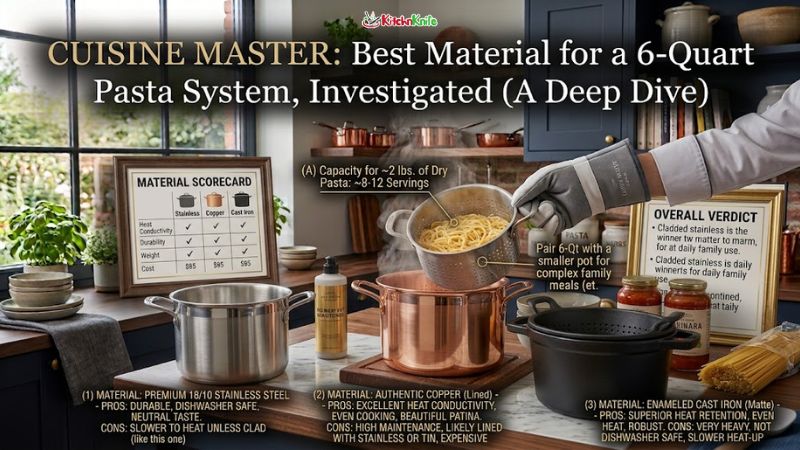
Stainless Steel: The Top Overall Choice
Stainless steel is the best all-around material for a 6 quart pasta pot with strainer. It’s the choice most professional kitchens rely on, and for good reason.
Why stainless steel wins:
- Durable. It resists dents, scratches, and rust.
- Non-reactive. It won’t affect the taste of tomato sauce or acidic foods.
- Easy to clean. It’s dishwasher safe and doesn’t stain easily.
- Long lifespan. A quality stainless pot can last decades.
The one downside is heat conduction. Stainless steel alone heats unevenly. That’s why the best pots pair it with an aluminum or copper core (more on that below).
Aluminum: Lightweight but Less Durable
Aluminum heats up fast and spreads heat evenly. It’s also budget-friendly and light, which makes lifting a full pot easier.
The tradeoffs:
- Aluminum can react with acidic foods like tomato sauce, causing a metallic taste.
- Uncoated aluminum scratches and dents more easily.
- It’s less durable over time than stainless steel.
Anodized aluminum solves some of these issues. The anodizing process hardens the surface and makes it non-reactive. If you want a lighter pot and don’t mind spending a bit more, hard-anodized aluminum is a solid pick.
Nonstick Coating: Good for Easy Cleanup
Nonstick pasta pots are convenient, but they’re not always the best fit for boiling pasta. Since pasta doesn’t stick the way eggs or fish do, the nonstick coating isn’t as useful here.
Consider nonstick if:
- You want the easiest possible cleanup
- You cook sauces directly in the same pot
- You prefer a lower price point
Skip it if:
- You want maximum durability
- You often cook at high heat (coatings wear down faster)
- You care about avoiding coating chemicals over time
Copper Core and Tri-Ply Options
Some premium 6 quart pasta pots use a tri-ply design. This means a layer of aluminum or copper sits between two layers of stainless steel.
Benefits of tri-ply construction:
- Combines fast, even heating with stainless steel’s durability
- Non-reactive cooking surface
- Resists warping over time
This is often considered the best of both worlds. The tradeoff is cost. Tri-ply pots usually cost more than single-material options, but they offer better performance and a longer lifespan.
What to Avoid
Not every material works well for a pasta pot. Watch out for these:
- Thin, uncoated aluminum. It warps easily and reacts with acidic foods.
- Low-grade nonstick coatings. These can peel or degrade faster at high heat.
- Cheap stainless steel without a core. It heats unevenly and can develop hot spots.
Also check the strainer insert. It should match the pot’s quality. A flimsy strainer can bend or rust even if the main pot is well made.
Final Verdict
For most home cooks, stainless steel with an aluminum or copper core is the best material for a 6 quart pasta pot with strainer. It offers the right mix of durability, safety, and even heating.
If budget is tight, anodized aluminum is a strong second choice. It’s lighter and heats quickly, though it may not last as long as stainless steel.
Whichever you choose, look for:
- A thick, multi-layer base
- Sturdy handles
- A well-fitted strainer insert
- Oven-safe and dishwasher-safe ratings
A good pasta pot is a long-term kitchen investment. Choosing the right material now saves you money and hassle down the road.