
Last Updated on June 9, 2026 by Kathay Lee
Grease on kitchen walls is a common problem. Every time you cook, tiny oil droplets fly through the air. They land on your walls and stick. Over time, this builds up into a sticky, dark layer. A dirty kitchen feels unwelcoming and hard to clean.
The good news? You do not need strong chemicals. You can remove grease stains with simple tools and everyday items. This guide walks you through every step.
What You Need Before You Start
Gather these items first:
- Warm water
- Dish soap
- White vinegar
- Baking soda
- A soft sponge or cloth
- A cleaner spray bottle (empty, for mixing)
- Microfiber cloth
- Old towel or drop cloth (to protect your floor)
Start from the top of the wall. Work your way down. This stops dirty water from dripping onto clean areas.
How to Clean Painted Kitchen Walls
Painted walls need gentle care. Scrubbing too hard can peel or dull the paint.
Step 1: Mix warm water with a few drops of dish soap in a bowl.
Step 2: Dip a soft cloth into the mix. Wring it out well. The cloth should be damp, not wet.
Step 3: Wipe the greasy area in small circles. Do not press too hard.
Step 4: Rinse the area with a clean, damp cloth.
Step 5: Dry the wall with a dry towel right away.
For stubborn spots, make a paste with baking soda and water. Apply it to the stain. Wait 5 minutes. Then wipe it off gently.
Avoid using vinegar on painted walls. It can strip the finish over time.
How to Clean Kitchen Tiles
Kitchen tiles are strong and easy to clean. But the grout between tiles traps grease too.
For the tile surface:
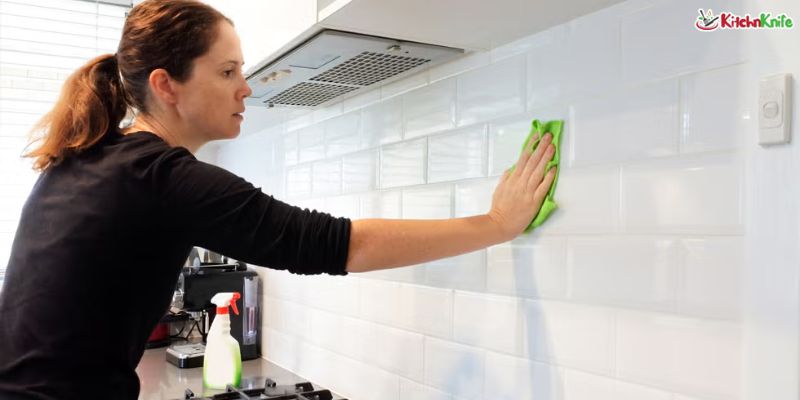
Fill your cleaner spray bottle with equal parts white vinegar and warm water. Spray the tiles. Wait 2 minutes. Then wipe with a microfiber cloth.
For heavy grease, add a drop of dish soap to the mix. Spray, wait, then scrub with a soft sponge.
For the grout:
Make a thick paste with baking soda and water. Apply it to the grout lines. Use an old toothbrush to scrub. Rinse with warm water.
Vinegar works well on tiles because it cuts through oil fast. But avoid it on natural stone tiles like marble. It can cause damage.
How to Clean Kitchen Cabinets
Kitchen cabinets sit close to the stove. They collect the most grease. The top of cabinets is usually the worst area.
Cleaning Greasy Cabinets
Greasy cabinets need a strong but safe cleaner. Dish soap is your best friend here. It was made to cut through grease on dishes. It works just as well on cabinets.
Mix one cup of warm water with one tablespoon of dish soap. Dip a cloth into the mix. Wring it out. Wipe down the cabinet surface. Use gentle pressure.
For thick buildup, a good cabinet cleaner spray with a degreaser formula works fast. Spray it on. Let it sit for 2 to 3 minutes. Then wipe clean.
Always dry the cabinet after cleaning. Leftover moisture can warp the surface.
How to Clean Wood Cabinets
Wood cabinets need extra care. Water can soak into the wood and cause swelling or cracking.
Use a barely damp cloth. Never soak it. Mix a small amount of dish soap with warm water. Wipe along the grain of the wood. Do not rub across the grain.
After cleaning, dry the wood right away. You can finish with a wood conditioner to protect the surface.
Avoid vinegar on sealed or unfinished wood. It can dull the finish or cause staining.
To clean cabinets deeply once a month, use a mix of warm water, dish soap, and a small splash of white vinegar (for non-wood surfaces only). This keeps them fresh and grease free.
Best Homemade Solutions to Remove Grease Stains
You do not need to buy expensive products. These homemade mixes work very well to remove grease stains:
1. Dish Soap and Warm Water This is the simplest and most effective option. Dish soap breaks down oil at a molecular level. It works on most wall surfaces.
2. Baking Soda Paste Mix 3 parts baking soda with 1 part water. Apply to the greasy spot. Scrub gently. Rinse clean. Great for thick, dried grease.
3. Vinegar Spray Mix equal parts white vinegar and warm water in a spray bottle. Spray on the wall. Let it sit for 2 minutes. Wipe with a microfiber cloth. Works well on tiles and non-porous surfaces.
4. Vinegar and Dish Soap Combo Add 5 drops of dish soap to your vinegar spray. This is stronger for very dirty kitchen walls.
5. Lemon Juice and Baking Soda Squeeze fresh lemon juice onto baking soda directly on the stain. Let it fizz. Then wipe away. This also leaves a fresh smell.
How to Remove Oil Stains From Walls
Fresh oil stains are easy to treat. Old, dried stains need more effort.
For fresh stains:
Act fast. Blot the spot with a dry paper towel. Do not rub. Rubbing spreads the oil. Once you have blotted up the excess, apply dish soap directly to the spot. Rub gently with a damp cloth. Rinse and dry.
For old or dried oil stains to remove oil stains that have set in:
- Spray the spot with your vinegar and water mix. Let it soak for 5 minutes.
- Apply a baking soda paste on top.
- Let it sit for another 5 minutes.
- Scrub with a soft brush or sponge.
- Wipe with a damp cloth. Dry right away.
Repeat if needed. Some old stains need two or three treatments.
Tips to Keep Kitchen Walls Grease Free Longer
Cleaning a dirty kitchen takes time. But preventing grease buildup is easier than removing it.
Follow these simple habits:
- Use a splatter screen when frying. It catches oil before it hits the walls.
- Wipe down walls weekly. A quick wipe with a damp cloth stops grease from hardening.
- Run your range hood every time you cook. It pulls greasy air up and out.
- Clean spills right away. Fresh grease wipes off in seconds. Old grease needs much more work.
- Spray walls lightly with vinegar spray once a week in the cooking zone. It prevents buildup before it starts.
These small steps make a big difference. Your kitchen stays cleaner between deep cleans.
FAQ
Q: What is the best way to clean greasy kitchen walls? The best way is to use warm water and dish soap on a damp cloth. For tougher grease, baking soda paste or a vinegar spray works well. Always wipe from top to bottom and dry the wall after cleaning.
Q: Can I use vinegar on all kitchen walls? No. Vinegar is safe on tiles and most painted walls. But avoid it on natural stone, unfinished wood, and sealed wood cabinets. It can dull or stain these surfaces.
Q: How do I remove old, dried grease from walls? Spray the area with a vinegar and water mix. Let it sit for 5 minutes. Then apply a baking soda paste. Scrub gently and rinse. You may need to repeat this two or three times for very old stains.
Q: How often should I clean kitchen walls? Wipe down walls in the cooking zone once a week. Do a deeper clean once a month. This stops grease from building up into a thick, hard layer.
Q: Is dish soap safe on all wall types? Yes. Dish soap mixed with warm water is gentle enough for painted walls, tiles, and most cabinet surfaces. Just make sure your cloth is damp and not dripping wet.
Q: What should I avoid when cleaning kitchen walls? Avoid using abrasive scrubbers on painted walls. They scratch the surface. Also avoid soaking wood cabinets with water. And never mix bleach with vinegar the fumes are harmful.
Grease on kitchen walls is normal. But it does not have to stay. With the right tools and simple homemade cleaners, you can keep every surface in your kitchen spotless. Start with dish soap and warm water. Move to baking soda or vinegar for tougher jobs. Clean regularly, and your kitchen walls will stay bright and grease free all year.