
Last Updated on May 13, 2026 by Susanna Zuyeva
Kitchen floor mats collect grease, food crumbs, bacteria, and odors every single day. A dirty mat can make your entire kitchen feel unclean. Worse, it can become a safety hazard when grease builds up and makes the surface slippery.
Cleaning your mats regularly keeps your kitchen hygienic and fresh. It also extends the life of your mats, saving you money in the long run.
What You Need Before You Start
You do not need fancy products. Gather these simple items first:
- Dish soap or mild laundry detergent
- White vinegar
- Baking soda
- A stiff scrub brush or old toothbrush
- A bucket or bathtub
- A garden hose (optional)
- Warm water
Having everything ready saves time and makes the process much smoother.
How to Clean Kitchen Floor Mats by Type
Not all mats are the same. Always check the care label before cleaning.
Rubber or Anti Fatigue Mats These are the most common kitchen mats. They handle scrubbing well and dry fast. Hand wash or hose them down outdoors.
Fabric or Cotton Mats Most fabric mats are machine washable. Check the tag first. Wash on a gentle cycle with warm water.
Memory Foam Mats Never put memory foam in a washing machine. Hand wash only. Squeeze gently and never wring.
Microfiber Mats These go in the washing machine on a cold, gentle cycle. Avoid fabric softener as it reduces absorbency.
Step by Step Cleaning Method
Follow these steps for the best results.
Step 1: Shake It Out Take the mat outside. Shake it firmly to remove loose dirt, crumbs, and debris. This makes the rest of the cleaning much easier.
Step 2: Pre Rinse Rinse the mat with warm water. A garden hose works great. This loosens surface grime before scrubbing.
Step 3: Apply Soap Add a few drops of dish soap directly to the mat. Spread it around with your hands or a wet brush.
Step 4: Scrub Thoroughly Use a stiff brush to scrub both sides of the mat. Pay extra attention to corners and edges where grime builds up.
Step 5: Rinse Completely Rinse off all the soap. Leftover soap can attract more dirt and make the mat feel sticky.
Step 6: Dry Properly Shake off excess water. Air dry completely before placing the mat back on the floor.
How to Remove Tough Stains and Grease
Kitchen mats face some of the toughest stains. Here is how to handle them.
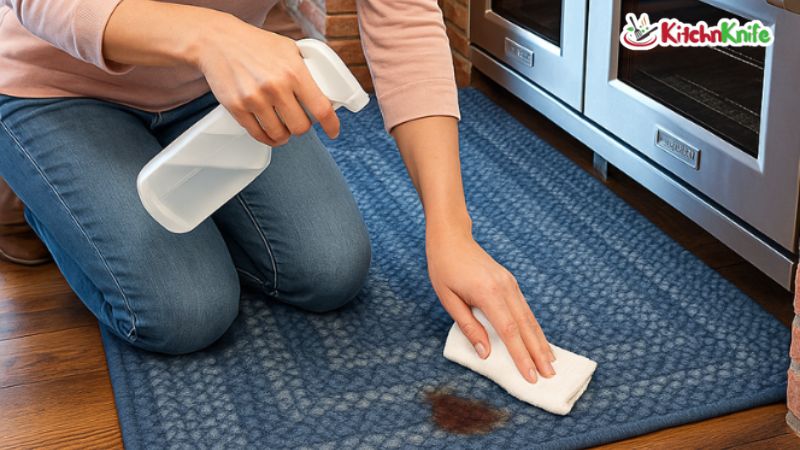
For Grease Stains Sprinkle baking soda directly on the greasy spot. Let it sit for 10 minutes to absorb the oil. Then scrub with dish soap and warm water. Dish soap cuts through grease naturally.
For Food Stains Mix equal parts white vinegar and warm water. Apply the mixture to the stain and let it soak for 5 minutes. Scrub and rinse clean.
For Odors Sprinkle baking soda over the entire mat. Leave it on for 15 to 30 minutes. Shake it off or rinse it away. Your mat will smell fresh again.
For Mold or Mildew Mix one cup of white vinegar with two cups of warm water. Scrub the affected area and rinse well. Let the mat dry fully in sunlight if possible. Sunlight naturally kills bacteria and mold spores.
How to Dry Mats the Right Way
Drying is just as important as washing. A damp mat can grow mold and smell bad within hours.
Always air dry kitchen mats flat or hang them over a railing. Make sure both sides dry completely. Never place a damp mat back on the floor. If you are in a hurry, use a fan to speed up drying time.
Avoid putting rubber or memory foam mats in a dryer. High heat can crack rubber and break down foam.
How Often Should You Clean Them
The kitchen is a high traffic area, so mats need regular attention.
- Light cleaning: Shake or vacuum once or twice a week
- Deep cleaning: Once every two to four weeks
- After spills: Clean immediately to prevent stains and odors from setting in
If you cook every day, lean toward cleaning more often. A clean mat lasts longer and performs better
Tips to Keep Mats Clean Longer
A few simple habits go a long way.
- Sweep or vacuum near the mat daily
- Wipe up spills right away before they soak in
- Rotate the mat occasionally so it wears evenly
- Use a mat with a non slip backing to prevent movement and bunching
- Store a second mat to swap in while the other dries